
What safety measures should be considered during mobile pressure washing?
Mobile pressure washing requires a site risk assessment, suitable PPE, trained operators, and controls for water, electricity, chemicals, vehicles and public access. Traffic and pedestrian management, safe equipment operation, controlled runoff and protection of nearby surfaces help protect workers, clients, the public and the property being cleaned.
Mobile pressure washing should be planned as a controlled work activity, not treated as straightforward outdoor cleaning. The essential safeguards are a documented site risk assessment, competent operators, suitable personal protective equipment, properly maintained equipment, controlled water and chemical use, and effective separation from vehicles, pedestrians, electrical hazards and other site activities.
Complete a site assessment before setting up. The operator should inspect the work area and identify hazards specific to the premises and the cleaning method. This includes vehicle movements, pedestrian routes, uneven or fragile surfaces, overhead obstructions, access restrictions, drainage points, nearby electrical installations, contaminated areas, falling objects and the risk of spray reaching neighbouring property. The assessment should also consider the pressure and temperature required, the cleaning chemicals involved, weather conditions and how wastewater will be contained or discharged.
Controls should be agreed with the client before work begins. On an occupied commercial or industrial site, this may require a method statement, permit to work, site induction or coordination with the facilities, construction or highways team. The work area should be reviewed again if conditions change, such as a change in traffic flow, unexpected contamination, worsening weather or the discovery of a surface that is unsuitable for the planned cleaning method.
Use trained and competent operators. Pressure washing equipment can cause serious injury and property damage if it is misused. Operators should understand the machine controls, pressure and flow settings, nozzle selection, hose management, chemical dilution, emergency shutdown procedures and the limitations of the surfaces being cleaned. They should be able to recognise hazards such as damaged render, loose pointing, unstable coatings, asbestos-containing materials, lead paint or contaminated deposits, and stop work where specialist advice is needed.
Operators should never direct a jet at a person, animal, vehicle occupant, electrical fitting or unprotected opening. The lance should be held securely with both hands where necessary, and the operator should maintain stable footing while avoiding sudden movements or excessive hose tension. Equipment should not be left pressurised and unattended.
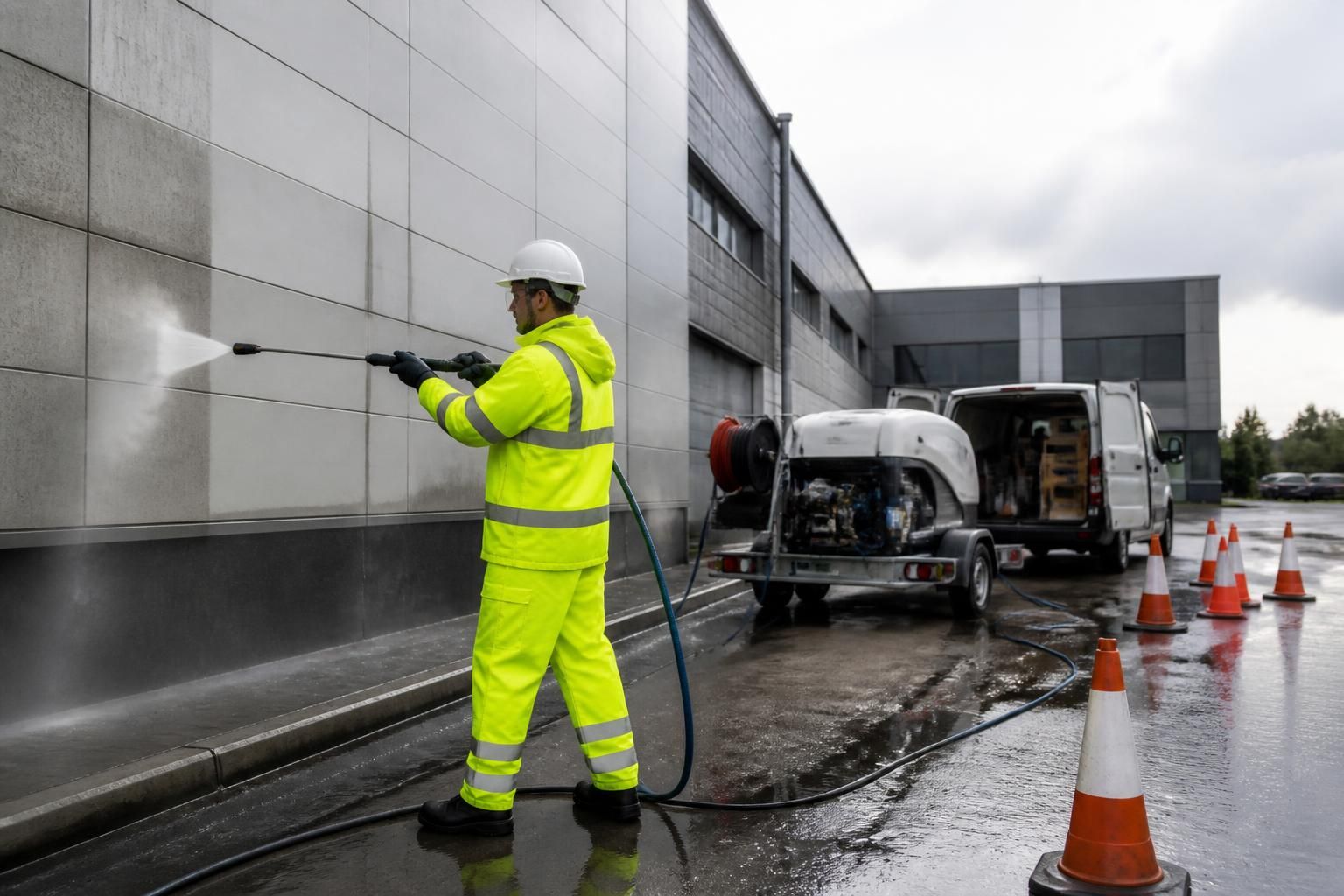
Wear task-appropriate PPE. The precise PPE depends on the equipment, pressure, temperature, chemicals and contamination present, but commonly includes:
- Water-resistant protective clothing or coveralls to protect against spray, dirt and cleaning products.
- Safety footwear with suitable grip and toe protection for wet or uneven surfaces.
- Eye protection or a face shield to guard against rebound, debris and chemical splashes.
- Protective gloves selected for the chemicals and conditions involved.
- Hearing protection where equipment creates hazardous noise levels or work is prolonged.
- Respiratory protection where the risk assessment identifies harmful aerosols, dust or vapours that cannot be adequately controlled by other means.
- Head protection and fall protection where the surrounding site or access arrangement requires it.
PPE is the final layer of protection rather than a substitute for safe planning. It must be compatible, correctly fitted, inspected and replaced when damaged or contaminated.
Inspect and maintain the mobile equipment. Before use, the operator should check the pressure washer, pump, hoses, couplings, trigger gun, lance, nozzles, water tank, fuel system, electrical leads and safety devices. Hoses should be free from cuts, bulges, exposed reinforcement and damaged fittings. Connections should be secure, and the machine should be operated only within the manufacturer’s limits. Defective equipment should be taken out of service rather than repaired temporarily on site.
Hoses and cables should be routed to prevent trip hazards, crushing by vehicles or contact with sharp edges. Where they cross a walkway or access route, they should be avoided where possible or protected using suitable covers and additional barriers. The vehicle and trailer should be parked on stable ground, with brakes applied and any required stabilisation in place. Equipment, fuel and chemicals must be secured during transport and positioned so that they cannot move or spill.
Control electrical risks and water. Water and electricity must be kept apart. Electrical equipment used near the cleaning area should be suitable for the environment, protected by appropriate residual-current protection and positioned away from spray, standing water and runoff. Operators should not use damaged leads, plugs or portable equipment, and should isolate electrical installations before cleaning where required. Any uncertainty about an installation should be referred to a competent electrical professional or the site representative.
Water can quickly create slip hazards, weaken ground, enter buildings or affect sensitive equipment. The work area should be checked for low points, open drains, floor penetrations and routes into occupied areas. Uncontrolled water should not be allowed to collect around entrances, loading bays, electrical cabinets or vehicle routes.
Manage traffic and protect pedestrians. Mobile pressure washing often takes place in car parks, service yards, roads, loading areas and other locations where vehicles continue to operate. A safe system may include a vehicle exclusion zone, cones, barriers, warning signs, a banksman, temporary route changes or a planned closure. The controls should be appropriate to the site rather than relying on signs alone. Drivers and pedestrians should have a clear, dry route around the work area, and reversing should be avoided or controlled in accordance with the site’s traffic plan.
Where work affects a public footway, road or other shared area, the necessary permissions and traffic or pedestrian management arrangements should be established before starting. Spray, mist, noise and debris should not be allowed to affect passing members of the public, adjacent businesses or neighbouring vehicles. Work should pause if barriers are moved, visibility is reduced or unauthorised people enter the exclusion zone.
Handle cleaning chemicals safely. Chemicals should be selected for the surface and contamination, stored securely and used in accordance with the manufacturer’s instructions and the site’s COSHH assessment. Operators should understand the required dilution, contact time, ventilation and PPE. Chemicals must not be mixed unless the manufacturer specifically permits it, as incompatible products can generate harmful gases or heat.
Containers should be labelled, sealed when not in use and transported in a way that prevents tipping. Spill materials should be available, and operators should know how to respond to skin or eye contact. Food preparation areas, ventilation intakes, planted areas and occupied spaces may need additional protection. Chemical application should be controlled to prevent drift onto people, vehicles, glazing, painted finishes and adjacent property.
Control runoff and prevent pollution. Dirty water may contain oil, detergents, heavy metals, biological contamination, paint residues or other pollutants. It should not be allowed to enter surface-water drains, watercourses or soil without confirming that the discharge is permitted and appropriately controlled. Drain covers, bunding, wet vacuums, temporary containment, filtration or recovery systems may be needed, depending on the site and contaminants.
Before cleaning, the drainage layout and discharge route should be confirmed with the client. Wastewater should be collected, treated or disposed of through an authorised route where required. Any spill or unplanned discharge should be stopped, contained and reported under the site’s environmental procedure. This protects the environment and prevents the cleaning activity from creating a separate compliance issue.
Choose a safe method for each surface. Pressure, temperature, nozzle type, distance and chemical strength should be adjusted to the material. Excessive pressure can remove pointing, drive water behind cladding, damage coatings, etch masonry, break seals or worsen existing defects. Test cleaning should be carried out in an inconspicuous area, particularly on painted surfaces, render, historic masonry, roof coverings, timber, joints and materials with unknown finishes.
Windows, vents, doors, roof edges, expansion joints and service penetrations should be protected where water ingress is possible. Operators should not clean unstable façades or roofs from an unsafe position. Fragile, high-level or contaminated areas may require a different method, specialist access equipment or inspection by an appropriate professional before cleaning proceeds.
Use safe access arrangements. Ladders should not be used as a substitute for a suitable access plan when the work requires prolonged pressure washing, forceful lance operation or frequent movement. Mobile elevated work platforms, scaffolding, water-fed poles or other access systems must be selected, inspected and operated by competent personnel. Ground conditions, overhead services, platform reach, wind and rescue arrangements should be considered. Operators must not overreach from a platform or work from an unstable surface.
For roof and high-level cleaning, edge protection, fall-restraint or fall-arrest measures may be required. Fragile roof areas, skylights and unprotected edges should be identified before access is arranged. Equipment and hoses should be managed so that they cannot pull an operator off balance or fall onto people below.
Consider weather, visibility and working conditions. High winds can affect spray control, access equipment and the stability of temporary barriers. Frost, rain, algae and cleaning residues can make surfaces slippery, while poor light can conceal defects, trip hazards and pedestrians. Work should be postponed, modified or stopped when conditions prevent effective control. The operator should also consider cold-water exposure, heat, fatigue, hydration and suitable rest arrangements during extended projects.
Protect the surrounding property. Doors, windows, air-conditioning units, signage, lighting, vehicles, stock and sensitive machinery should be identified and protected before cleaning. Where water or spray could enter a building, openings should be closed or suitably covered, with the client confirming any equipment that must be isolated. A pre-work inspection and photographs can help record existing defects and prevent confusion between pre-existing damage and cleaning-related damage.
Have emergency procedures in place. The team should know how to stop the pump, isolate power or fuel, deal with a burst hose, respond to chemical exposure, treat an injury, contain a spill and contact the site representative or emergency services. First-aid provision, eye-washing facilities and emergency contact details should be available where the risk assessment requires them. Incidents, near misses and equipment defects should be recorded and reviewed so that controls can be improved.
For clients, the most useful preparation is to provide accurate information about site hazards, drainage, access restrictions, working hours, fragile surfaces, underground or overhead services and any areas that must remain operational. Agreeing the work zone, traffic controls, water-discharge arrangements and emergency contacts in advance allows the cleaning team to work safely without disrupting essential site activities.
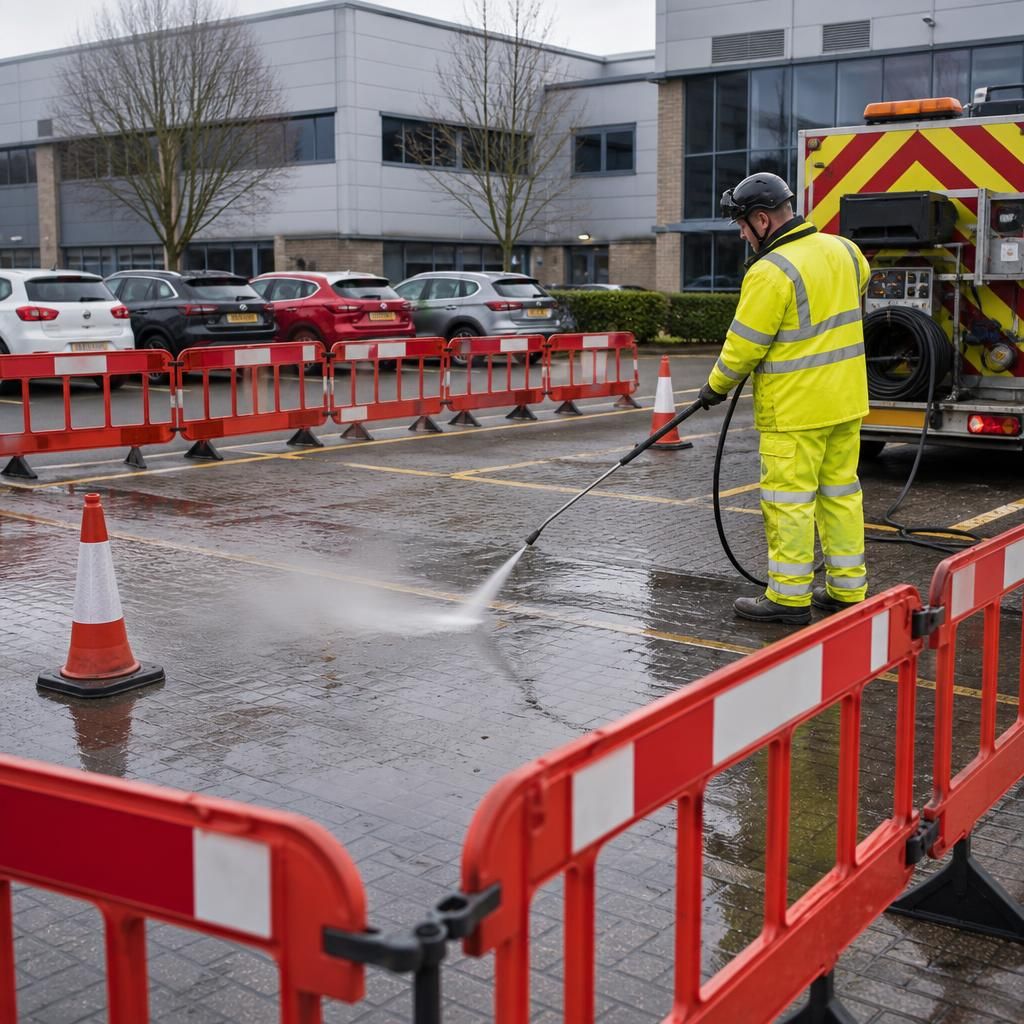
Traffic and pedestrian separation is a core safety measure during mobile pressure washing, particularly in car parks, service yards, loading areas and public-facing commercial sites. The cleaning zone should be clearly separated from moving vehicles and people before equipment is operated.
Depending on the site, suitable controls may include barriers, cones, warning signs, temporary route changes, a vehicle exclusion zone or a trained banksman. Hoses and cables should be routed away from walkways and protected where they cross an access route. Drivers and pedestrians must have a clear, stable route around the work area, while reversing vehicles and unauthorised access should be controlled.
These arrangements should be agreed with the site representative before work begins and checked throughout the task. Cleaning should stop if barriers are moved, visibility deteriorates or people enter the exclusion zone.
Discuss Your Mobile Pressure Washing Requirements
Discuss your mobile pressure washing requirements with Encanto Exterior Cleaning, including site hazards, access arrangements, traffic controls and wastewater management. We can help plan a safe, suitable cleaning approach for your commercial or industrial premises.