
What factors should businesses consider when scheduling mobile pressure and power washing services?
When scheduling mobile pressure and power washing services, businesses should consider the condition and size of the site, suitable cleaning methods, access for vehicles and equipment, surface protection, weather conditions, safety requirements and the need to minimise disruption. Agreeing the scope, timing, site access, water and drainage arrangements, costs and any required permits in advance helps ensure the work is completed safely and efficiently.
Businesses should schedule mobile pressure and power washing around the site condition, cleaning requirements, access arrangements, surface protection, weather, health and safety, environmental controls and operational activity. Confirming the scope of work, preferred timing, vehicle access, water and drainage arrangements, costs and any permits before the visit helps the cleaning team work safely while limiting disruption to staff, visitors, residents and other contractors.
Assess the site and define the scope
Start with a site assessment or a clear set of photographs and plans showing the areas to be cleaned. The contractor needs to understand the size and layout of the site, the type and severity of soiling, the surfaces involved and whether access is available at ground level or requires specialist equipment. Oil, algae, moss, chewing gum, traffic film, construction residue and graffiti may require different pressures, temperatures, detergents and treatment times.
The agreed scope should identify the specific elevations, paved areas, loading bays, roofs, cladding, car parks, plant areas, walls or street furniture included in the work. It should also state whether the service covers stain treatment, rinsing, waste-water recovery, graffiti removal, protective treatments or the removal of loose debris. A defined scope reduces uncertainty when comparing quotations and prevents important areas or remedial tasks being missed.
Choose a suitable date and working window
Timing should reflect how the premises are used. Cleaning outside trading hours, during planned closures or alongside existing maintenance can reduce contact with pedestrians, vehicles and staff. At commercial premises, it may be preferable to work before deliveries begin, after vehicle movements have ended or in sections so that access remains available.
Allow enough time for preparation, equipment set-up, cleaning, rinsing, drying and any inspection. Larger sites may need to be divided into manageable zones rather than treated as a single uninterrupted operation. If the work forms part of a construction or refurbishment programme, coordinate it with scaffolding removal, façade repairs, painting, line marking, landscaping and final handover cleaning.
Weather is particularly important for external work. Heavy rain can affect cleaning results, water control and safe access, while freezing conditions can create slip hazards and may affect water-fed equipment. Strong winds can spread spray, affect the use of access equipment and make chemical application unsuitable. A contingency date should be agreed where weather could prevent safe or effective completion.
Confirm vehicle and equipment access
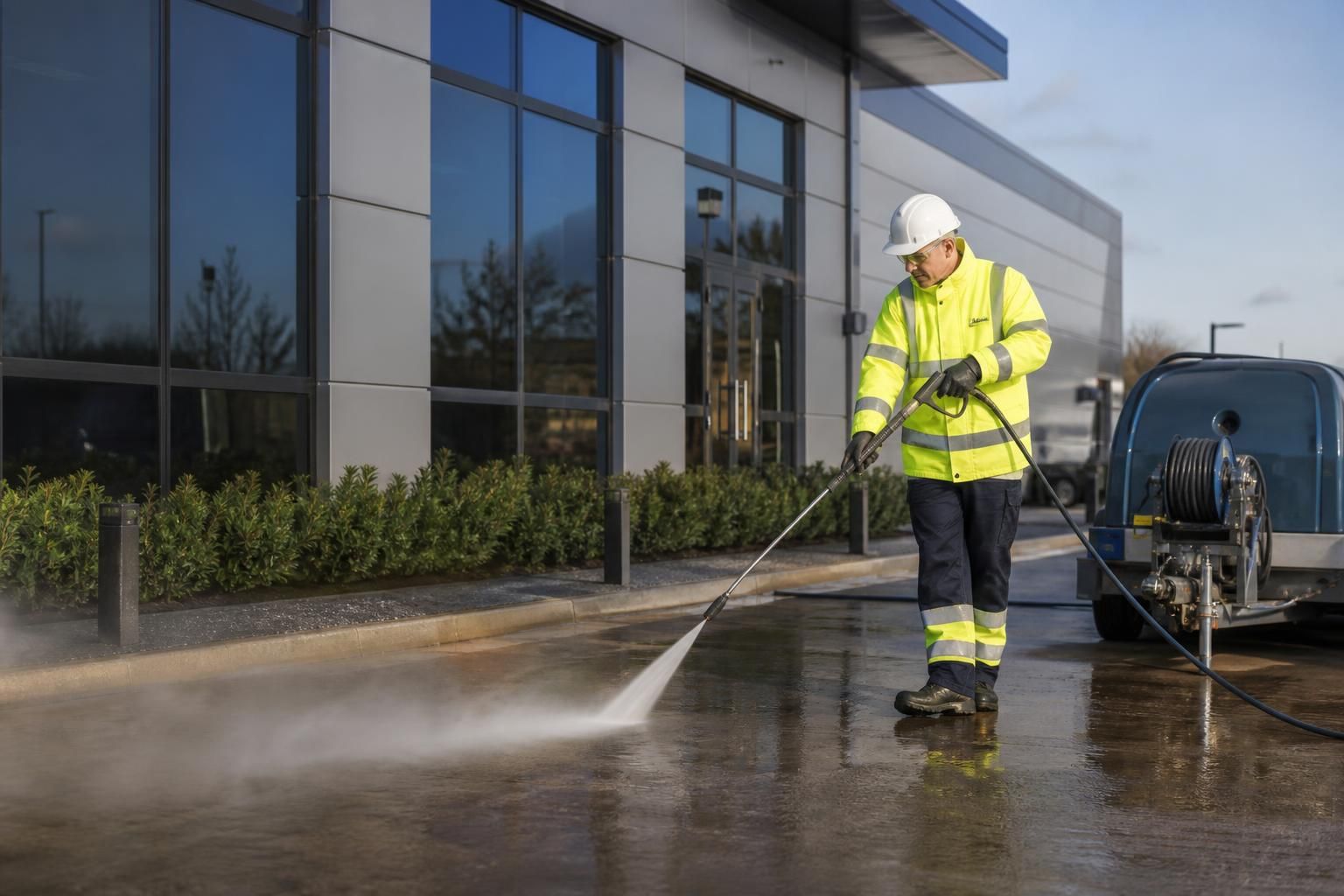
Mobile services bring pumps, pressure-washing equipment, hoses, water containers, recovery systems and sometimes access equipment to the site. Confirm the route to the working area, the position of parking or loading, the width and height restrictions, ground conditions and any weight limits. Consider gates, barriers, underground car parks, low entrances, restricted delivery hours and shared access roads.
Hoses should not create uncontrolled trip hazards or obstruct emergency routes. Where they must cross a pedestrian or vehicle route, the arrangement should be agreed in advance and protected using suitable ramps, barriers or an alternative route. The site contact should also identify areas where equipment cannot be placed, including fire exits, disabled access routes, drainage covers or sensitive landscaping.
Check water supply, drainage and waste-water control
Some projects can use an approved on-site water supply, while others require the contractor to bring water. Establish the available connection point, flow, access and any restrictions before the appointment. Water consumption and collection requirements vary according to the surface, equipment and cleaning method.
Run-off must be controlled so that dirty water, detergents, oils, paint residues or other contaminants do not enter surface-water drains, watercourses, neighbouring land or public areas. Confirm whether drains can be isolated, whether water needs to be collected and filtered, and how recovered waste water will be removed or disposed of. Local requirements, the site’s drainage system and the nature of the contamination may determine the controls needed.
Consider surface condition and cleaning method
Pressure and power washing are not interchangeable approaches for every surface. The cleaning plan should account for the material, age, condition, previous coatings, joints, seals and repairs. Masonry, concrete, tarmac, block paving, cladding, painted surfaces, render, timber and roofing materials may each require different pressure levels, temperatures, nozzle choices and detergents.
A competent contractor should inspect vulnerable or damaged areas before work begins and identify surfaces that could be affected by excessive pressure, heat, moisture or chemicals. Loose pointing, failed sealant, cracked render, deteriorated coatings and fragile roof coverings may need repair, isolation or a gentler cleaning method first. A small test area can help confirm the process and expected finish without committing the whole surface to an unsuitable treatment.
Plan health and safety requirements
Agree the site rules, induction requirements, welfare arrangements and emergency procedures before the work starts. The risk assessment and method statement should address high-pressure water, electrical equipment, chemicals, wet surfaces, public access, vehicle movements, overhead services, confined areas and any work at height. Where access platforms, towers or other equipment are required, the ground conditions and working area must be suitable.
Identify who will maintain exclusion zones and how pedestrians, residents, employees and other contractors will be diverted. Cleaning may release debris or contaminants, so nearby doors, air intakes, vehicles, stock, electrical installations and sensitive equipment may need protection. Make sure the site contact is available to approve isolation arrangements and deal with unexpected conditions.
Minimise disruption to operations
Scheduling should take account of deliveries, waste collections, public opening times, shift changes, events, tenant access and emergency routes. Cleaning in sections can keep essential areas operational, but the sequence should be agreed so that freshly cleaned surfaces are not immediately soiled by construction, traffic or landscaping work.
Notify affected occupants and provide clear information about temporary closures, wet floors, restricted parking, noise and vehicle movements. On public-facing sites, barriers and warning signs should remain in place until surfaces are safe to use. If noise or spray could affect neighbouring premises, agree working hours and containment measures in advance.
Review environmental and site-specific requirements
Ask the contractor to explain how detergents will be selected, how run-off will be controlled and how waste will be handled. Where appropriate, lower-impact cleaning methods, controlled water use, steam cleaning or targeted treatment may reduce chemical use and prevent unnecessary disturbance to surrounding areas. The right method depends on the material, contamination and required result rather than on pressure alone.
Sites with environmental permits, drainage restrictions, conservation requirements or sensitive occupants may need additional documentation and controls. Listed or historic buildings, protected surfaces and premises close to rivers or drainage channels should be identified at the planning stage, not after equipment arrives.
Agree costs and contractual details
Request a written quotation based on the defined areas, cleaning method, access requirements and site controls. Check whether the price includes equipment transport, water, detergents, access equipment, traffic management, waste-water recovery, permits, out-of-hours working and post-cleaning inspection. Additional work may be required if the inspection identifies heavy contamination, damaged surfaces or restricted access, so agree how variations will be authorised.
For recurring cleaning, establish the inspection and maintenance frequency according to the rate of soiling, footfall, traffic, weather exposure and the importance of the area. A planned maintenance schedule can make costs more predictable and prevent heavily ingrained contamination, but the interval should be reviewed when site use or conditions change.
Complete a final pre-start check
Before the appointment, provide the site address, contact details, access instructions, parking arrangements, operating hours, site rules, known hazards and any relevant plans or photographs. Confirm the arrival window and who can make decisions on site. Recheck weather, access, water, drainage, isolation and notification arrangements shortly before work begins.
After cleaning, inspect the agreed areas with the site representative and record any limitations caused by permanent staining, damaged materials or inaccessible sections. This provides a clear completion record and helps determine whether further treatment, repairs or a revised maintenance plan is needed.
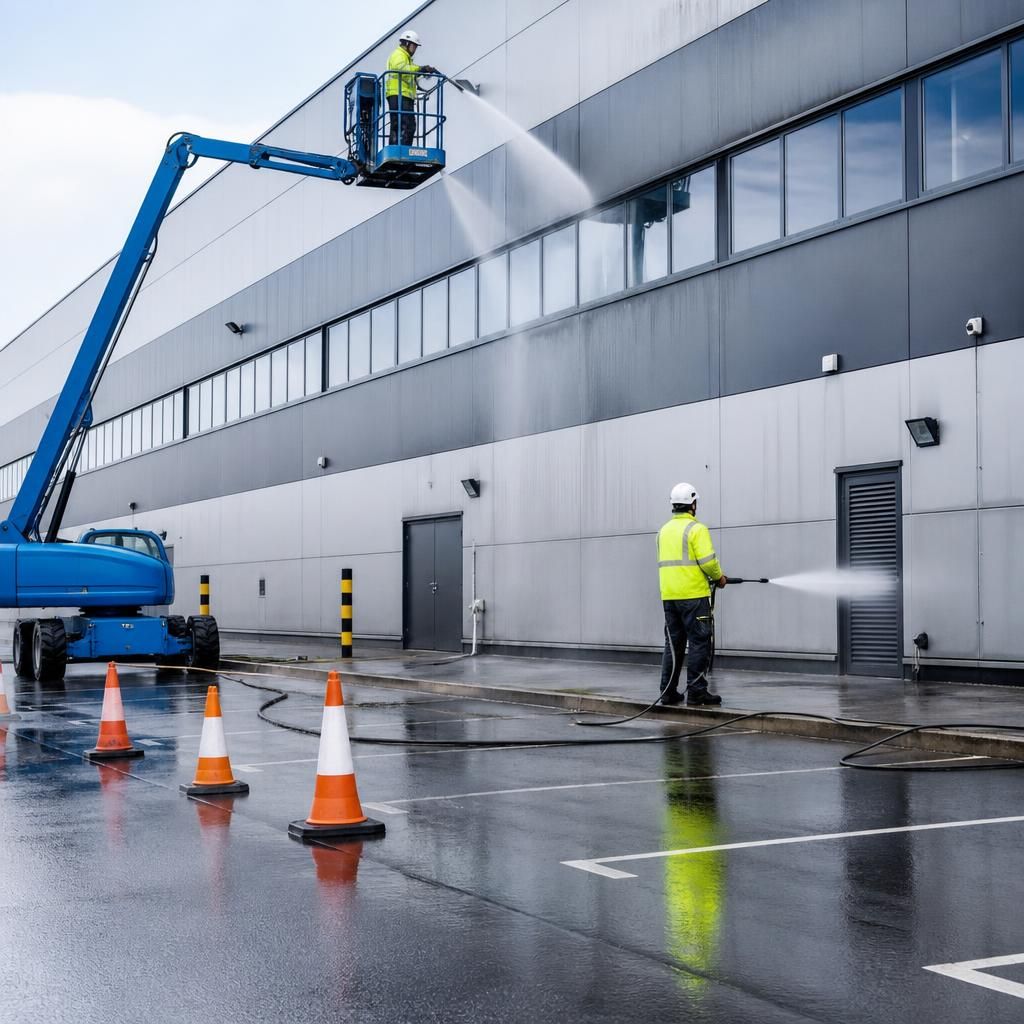
Scheduling mobile pressure and power washing around site operations helps control disruption and maintain safe access. Cleaning should be planned for quieter periods, such as before deliveries, after trading hours or during a planned closure, with the work divided into sections where the premises must remain operational.
Before the visit, confirm vehicle access, hose routes, pedestrian diversions, exclusion zones and temporary closures with the site contact. This allows barriers and warning signs to be positioned in advance and ensures that freshly cleaned, wet surfaces are not immediately affected by traffic, deliveries or other contractors.