
What equipment and technology are commonly used in mobile pressure and power washing services?
Mobile pressure and power washing services commonly use vehicle-mounted hot- or cold-water pressure systems, water tanks, pumps, hoses, adjustable nozzles and surface-cleaning attachments. For specialist work, operators may also use steam cleaners, rotary equipment, water-recovery systems and access equipment such as telescopic poles, cherry pickers or scaffolding, selected according to the surface, site conditions and cleaning requirements.
Mobile pressure and power washing services use vehicle-mounted or transportable cleaning systems that bring pumps, water, hoses, heating equipment and specialist attachments directly to the site. The equipment is selected according to the surface, level of soiling, available water and drainage, access restrictions, working height and any environmental controls required. A typical setup may combine high-pressure water, heated water or steam, rotary cleaning tools, recovery equipment and access systems to deliver controlled cleaning across commercial and industrial premises.
Vehicle-mounted pressure washing systems
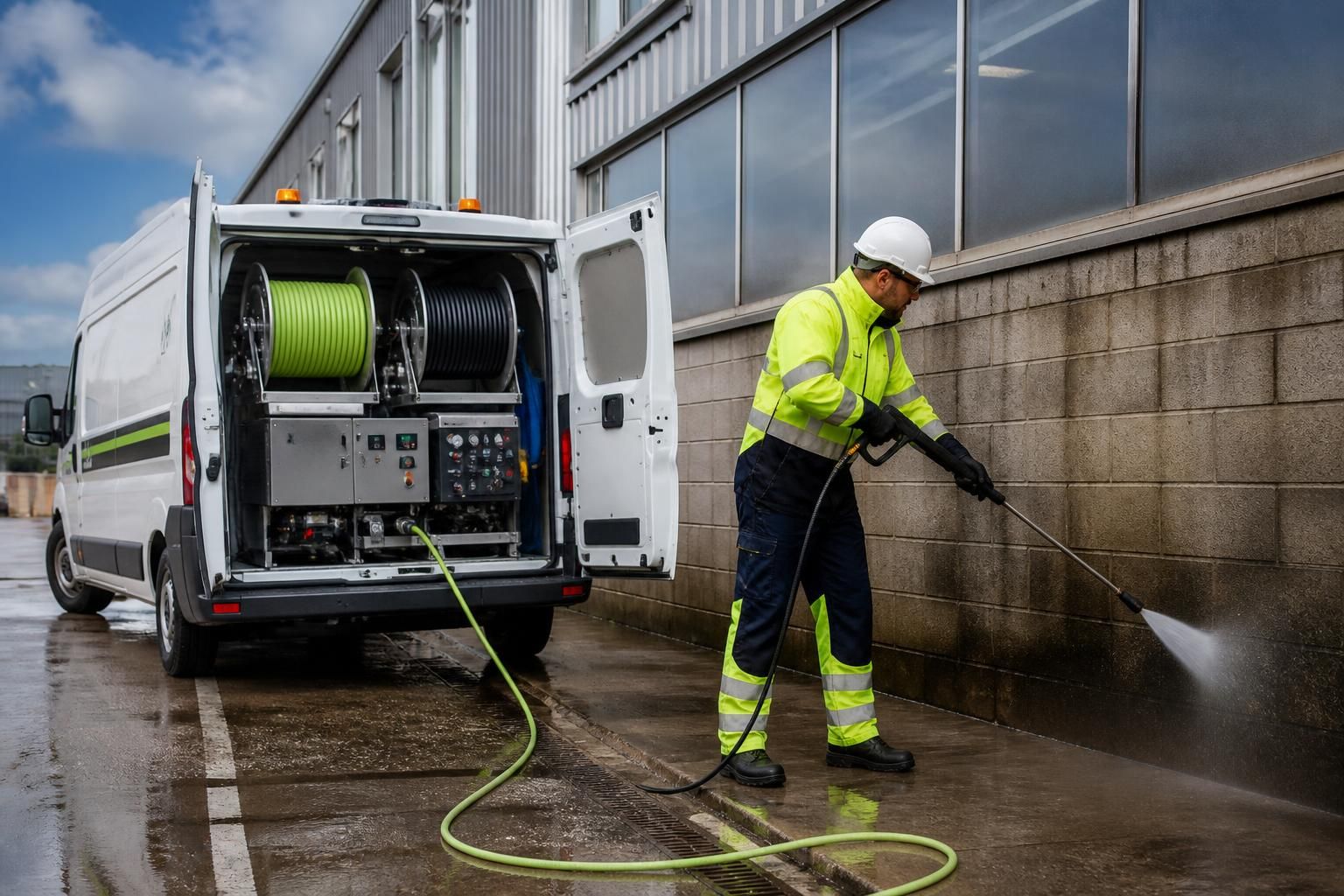
Mobile units are commonly installed in or transported by vans, trailers or other service vehicles. This arrangement provides a self-contained working platform for larger sites and areas where fixed cleaning equipment is unavailable or impractical. A typical system includes a pump, engine or power supply, water storage tank, heating unit where required, hose reels and controls for adjusting pressure and flow.
Vehicle-mounted equipment is particularly useful for car parks, industrial yards, building façades, loading areas, construction sites and other extensive surfaces. Operators can move around the site without repeatedly setting up separate portable machines, while hoses and accessories can be selected for the specific task.
High-pressure pumps and water systems
The pump creates the pressure needed to remove dirt, algae, moss, oil residues, loose coatings and other deposits. Commercial systems offer greater capacity and longer operating periods than many domestic machines, but pressure is not simply increased to the highest available setting. Operators adjust pressure and water flow to avoid damaging joints, coatings, pointing, seals, membranes or vulnerable finishes.
Water may come from a suitable on-site supply or from a tank carried by the cleaning vehicle. Storage tanks allow work to continue where the supply is limited, intermittent or too far from the cleaning area. Flow controls help operators balance cleaning performance with water use and drainage capacity.
Hot-water pressure washers
Hot-water systems heat the water before it reaches the surface. Heat helps break down grease, traffic film, oily deposits, food residues and ingrained dirt, often making them suitable for industrial yards, service areas, plant equipment and heavily soiled hard surfaces. Heated water can also improve cleaning efficiency where cold water would require more mechanical action or detergent.
The temperature is controlled according to the material being cleaned. Some surfaces, coatings and sealants can be affected by excessive heat, so the operator assesses the substrate and carries out suitable checks before full cleaning begins.
Steam cleaning equipment
Steam cleaners use very hot, low-moisture vapour for applications where heat and controlled moisture are more important than high water volume. Steam can be useful for delicate building features, some façades, signage, chewing gum removal, sanitisation-related tasks and areas where reducing run-off is important.
Steam cleaning is not suitable for every surface or every type of contamination. It may need to be combined with gentle agitation, a compatible cleaning solution or a separate rinsing process. The method is chosen after considering the material, the type of soiling and the required finish.
Hoses, lance systems and adjustable nozzles
Hoses transfer water from the mobile unit to the working area, often through hose reels that help with deployment and storage. Lance systems provide reach and control, while different nozzle patterns alter the shape and intensity of the water jet.
- Fan nozzles spread water across a wider area and are commonly used for general surface cleaning.
- Pencil or concentrated jets deliver a narrower stream for specific deposits, but require careful handling because they can mark or erode unsuitable materials.
- Low-pressure or soft-washing nozzles support applications where chemical treatment and dwell time are more appropriate than force.
- Rinse nozzles help remove loosened dirt and cleaning residues from the surface.
Operators maintain a suitable distance and use controlled movement rather than holding a concentrated jet in one place. This is important when cleaning masonry, rendered façades, painted cladding, timber, roof materials and other surfaces that may be damaged by excessive impact.
Surface-cleaning attachments and rotary tools
Rotary surface cleaners use enclosed rotating jets to clean large areas more evenly than a hand-held lance. Their housing helps contain spray and reduces the risk of striping, making them useful for concrete, block paving, tarmac and other hard surfaces when the substrate is suitable.
Other attachments may include rotary dirt blasters, telescopic lance systems, brush heads, gutter-cleaning tools and specialist nozzles. The correct accessory improves productivity and control, but it must match the surface. A tool designed for robust concrete would not automatically be appropriate for painted cladding or weathered stone.
Detergent and chemical application systems
Some mobile systems can apply detergents, biocides, degreasers or other treatment products through an injector, downstream application system or dedicated sprayer. These products help break down organic growth, grease, traffic film and other contamination before rinsing.
Product selection depends on the material, the contamination and the surrounding environment. Responsible operators follow the product instructions, control application, protect nearby vegetation and prevent untreated run-off from entering drains or watercourses. Chemical treatment is not a substitute for correct pressure and surface assessment.
Water-recovery and filtration equipment
Where run-off could carry oil, sediment, cleaning chemicals or contaminated dirt into drainage systems, contractors may use wet vacuums, drain covers, bunding, silt filters, interceptor systems or dedicated water-recovery units. Recovered water can then be filtered, stored and disposed of in accordance with site requirements and applicable regulations.
This equipment is especially relevant for industrial premises, fuel or service areas, underground car parks, loading bays, sensitive drainage locations and sites with strict environmental controls. Recovery arrangements should be agreed during planning rather than added after cleaning has started.
Access equipment for elevated and difficult areas
Mobile cleaning teams may use telescopic water-fed poles, extendable lances, mobile towers, scaffolding, powered access platforms or other access systems to reach façades, roofs, cladding, canopies and high-level signage. The choice depends on the building height, ground conditions, obstruction risks, working position and the amount of control required at the surface.
Access equipment is used alongside a suitable risk assessment and safe system of work. Operators consider overhead services, traffic, pedestrians, falling water or debris, platform stability and exclusion zones. Water-fed poles can reduce the need to work directly from a ladder, while powered access equipment may be appropriate for larger or more complex elevations.
Monitoring and control technology
Modern mobile systems may include gauges, flow controls, temperature controls, dosing controls and digital or mechanical monitoring devices. These allow the operator to adjust the process during cleaning and maintain consistent results across changing surfaces.
Site teams may also use inspection cameras, photographs, moisture checks or marked test areas to assess the condition of a surface before and after work. For larger projects, photographic records and method statements help coordinate cleaning stages, identify sensitive areas and provide a clear record of the completed work.
How the equipment is selected
Equipment is not chosen solely by the maximum pressure or heating capacity. A professional assessment considers:
- the substrate, coating, age and existing condition of the surface;
- the type and depth of contamination;
- the required cleaning standard and appearance;
- water availability, drainage and run-off controls;
- access, working height, traffic and pedestrian movements;
- noise, heat, overspray and proximity to occupied areas; and
- the need for detergents, steam, recovery systems or specialist attachments.
For example, a rotary surface cleaner and controlled hot-water system may be appropriate for a heavily soiled concrete yard, whereas a low-pressure detergent application, soft brush or steam system may be safer for a delicate façade. Matching the technology to the site is what provides effective cleaning while protecting the building, surrounding areas and people using the premises.
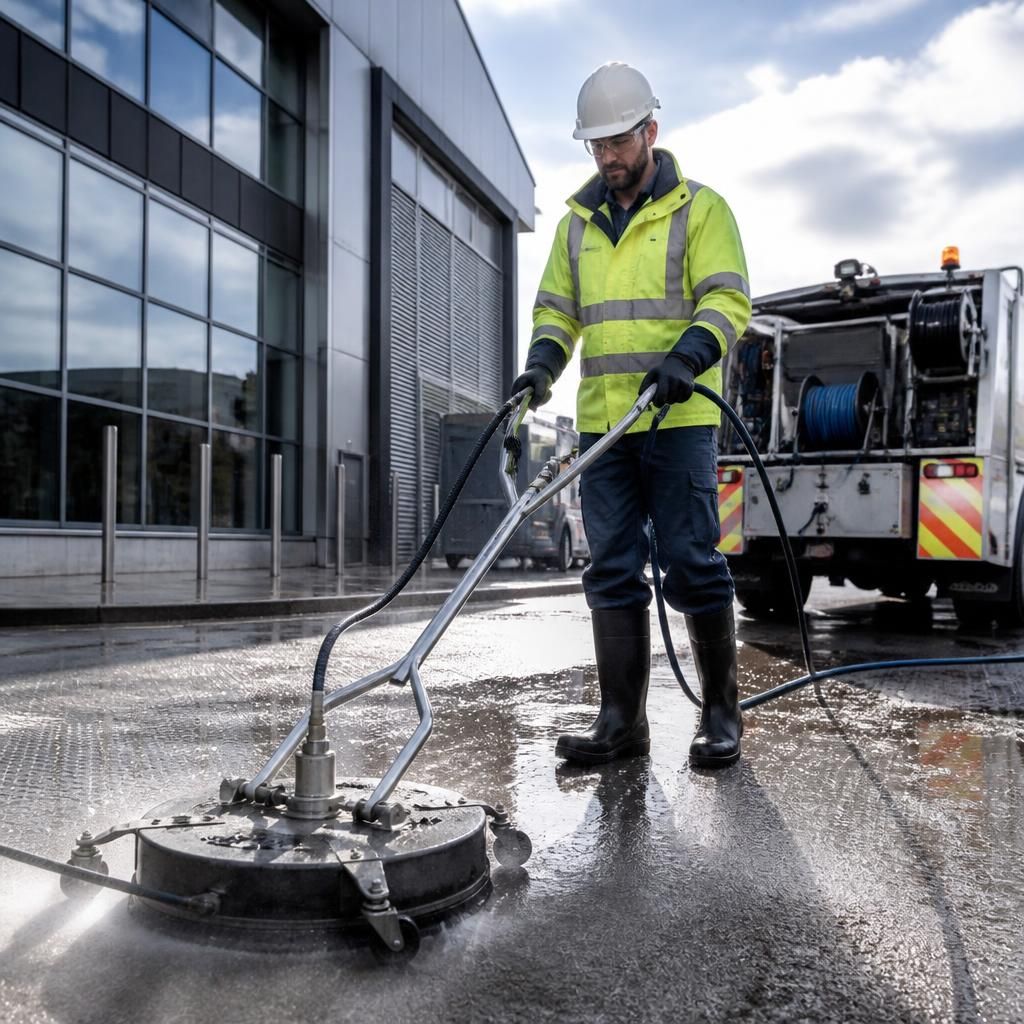
Mobile pressure washing equipment is selected according to the surface, contamination and site conditions, rather than simply using the highest available pressure. A rotary surface cleaner and controlled hot-water system may suit a heavily soiled concrete yard, while a low-pressure detergent application, soft brush or steam cleaner is more appropriate for delicate façades, painted cladding or sensitive architectural details.
Before cleaning begins, the operator assesses the substrate, existing coatings, drainage, access, nearby people and potential run-off. Pressure, temperature, water flow, nozzle type and cleaning products can then be adjusted to remove contamination effectively while reducing the risk of marking, erosion, coating failure or uncontrolled discharge.