
What are the environmental benefits of mobile pressure and power washing?
Mobile pressure and power washing can reduce environmental impact by using water and cleaning products more efficiently, while targeted cleaning limits runoff and avoids unnecessary surface replacement. Responsible wastewater recovery and disposal further help protect drainage systems, soil and local waterways.
Mobile pressure and power washing can reduce the environmental impact of exterior cleaning when the work is properly planned, carried out with efficient equipment and supported by responsible wastewater management. The main benefits are lower water consumption, more controlled use of cleaning products, reduced runoff, fewer replacement materials and longer service life for buildings, paved areas and site equipment.
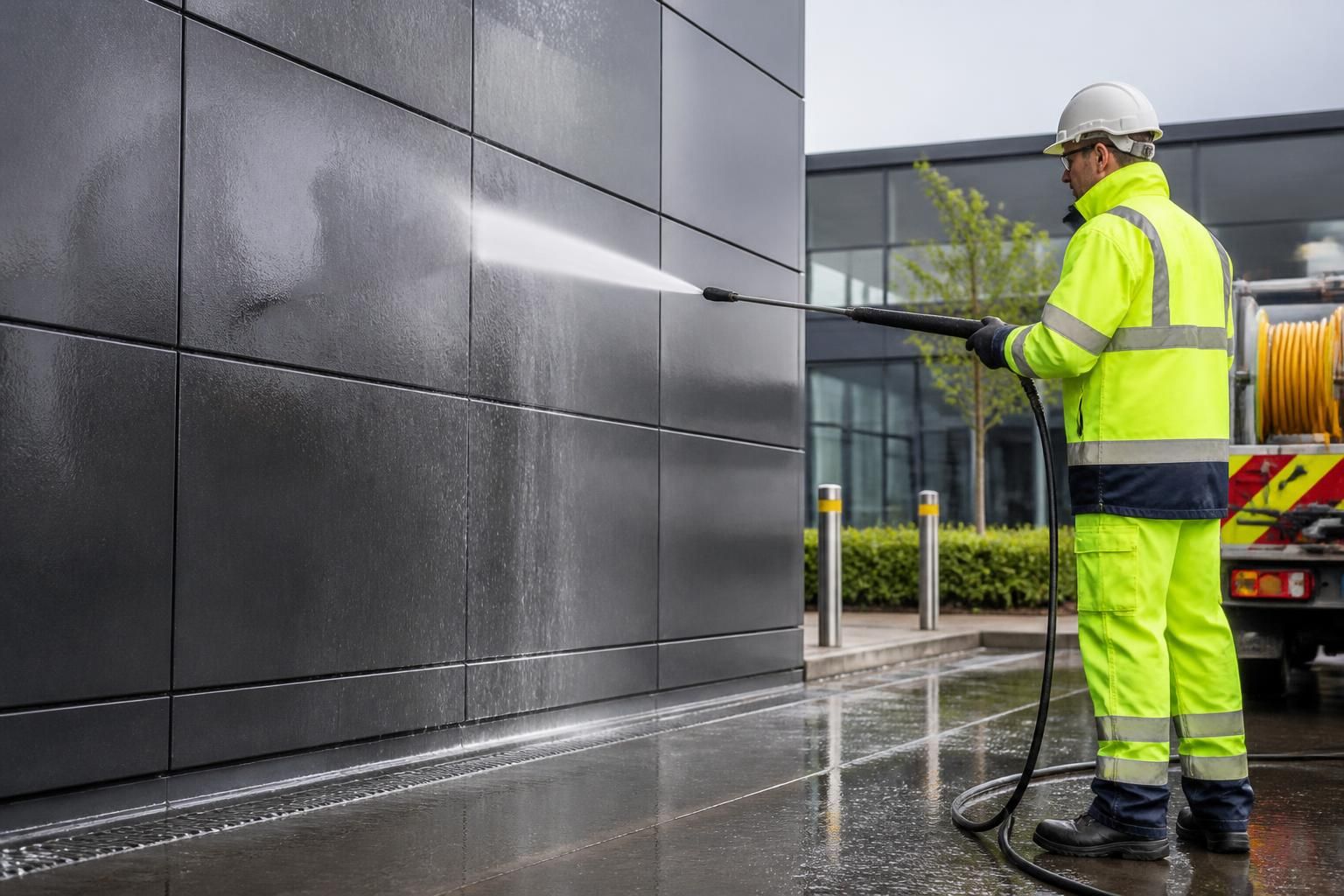
More efficient water use: Professional mobile systems can apply water at a controlled pressure and flow rate suited to the surface and type of soiling. This is generally more efficient than uncontrolled hosing, particularly when cleaning large façades, cladding, roofs, yards and car parks. Operators can adjust the equipment for tasks such as rinsing, detergent application, steam cleaning or the removal of ingrained deposits, avoiding unnecessary water use where a lower-flow method is sufficient.
Water efficiency depends on the cleaning method rather than pressure alone. Excessive pressure can create splashback, damage surfaces and require repeat cleaning, while an unsuitable nozzle or flow setting can waste water without improving the result. A competent contractor assesses the material, soiling and drainage arrangements before selecting the appropriate pressure, temperature and cleaning technique.
Reduced reliance on harsh chemicals: Pressure, hot water and steam can loosen and remove many types of dirt, algae, grease and biological growth without relying on strong chemical treatments. Where a cleaning product is necessary, accurate application helps limit the amount used. The product should be selected for the material and contamination, applied only where required and removed in accordance with its instructions.
This approach can reduce the quantity of chemical residue entering surface-water systems. It also helps avoid the environmental consequences associated with unnecessary chemical manufacture, storage and disposal. Cleaning products should never be allowed to enter drains or watercourses simply because they have been diluted. Their use and disposal must be controlled according to the product information, site requirements and applicable UK environmental obligations.
Better control of runoff: Mobile cleaning teams can plan how dirty water will be contained, collected, filtered or directed to an appropriate foul-water connection. This is particularly important when removing oil, traffic film, paint, silt, algae, moss or other contaminants from car parks, loading areas and industrial surfaces. Preventing polluted water from reaching gullies, soil and local watercourses protects the surrounding environment and reduces the risk of blocked drainage systems.
Runoff controls may include drain covers, bunding, temporary barriers, wet vacuums, recovery equipment and staged cleaning. The correct arrangement depends on the site, the substances being removed and the available drainage infrastructure. A responsible method statement should identify where water will go before cleaning begins, rather than treating wastewater as an afterthought.
Lower material waste through maintenance: Regular exterior cleaning can remove contaminants that contribute to staining, corrosion, biological growth and surface deterioration. Keeping cladding, masonry, roofing materials, paving and external equipment in serviceable condition may delay premature repair or replacement. This reduces the demand for new materials and the environmental effects associated with manufacturing, transporting and disposing of them.
Cleaning is not a substitute for repair. Damaged coatings, failed joints, degraded roofing and contaminated materials may need specialist treatment before washing. Using the least aggressive effective method helps preserve the existing surface instead of causing damage that creates additional waste.
Potentially lower energy use: Efficient pressure washing can complete some cleaning tasks more quickly than slower manual methods, while hot-water and steam systems can remove certain deposits without extensive chemical dwell times or repeated passes. However, heating water and operating pumps require energy. The environmental outcome depends on the equipment, fuel source, operating settings, travel requirements and the way the job is managed.
For this reason, mobile cleaning should be planned to avoid unnecessary journeys, equipment idling and repeat visits. Combining compatible cleaning tasks during a planned site visit, using well-maintained machinery and selecting cold-water pressure washing where heat is not needed can all help reduce energy consumption and emissions.
Reduced disturbance to the site: Targeted mobile cleaning can limit the need for abrasive methods, extensive dismantling or the removal of sound materials. It may also reduce dust compared with some dry cleaning processes, although pressure washing can create spray and contaminated mist if it is poorly controlled. Operators should consider nearby vegetation, occupants, pedestrians, vehicles and drainage points, and use suitable containment and access measures.
Environmental benefits are not automatic. Poorly managed pressure washing can waste water, spread contaminants, damage surfaces, use unsuitable chemicals or discharge polluted wastewater. Before work starts, businesses should confirm the cleaning scope, surface types, water supply, drainage arrangements, access requirements and disposal method. It is also sensible to ask for the proposed cleaning method and any controls for chemical use and wastewater recovery.
For commercial and industrial sites, the most sustainable approach is a risk-assessed cleaning plan that matches the method to the contamination and surface. Efficient equipment, careful water control, minimal chemical use, protection of drainage systems and responsible disposal work together to reduce the environmental impact while maintaining safe, presentable premises.
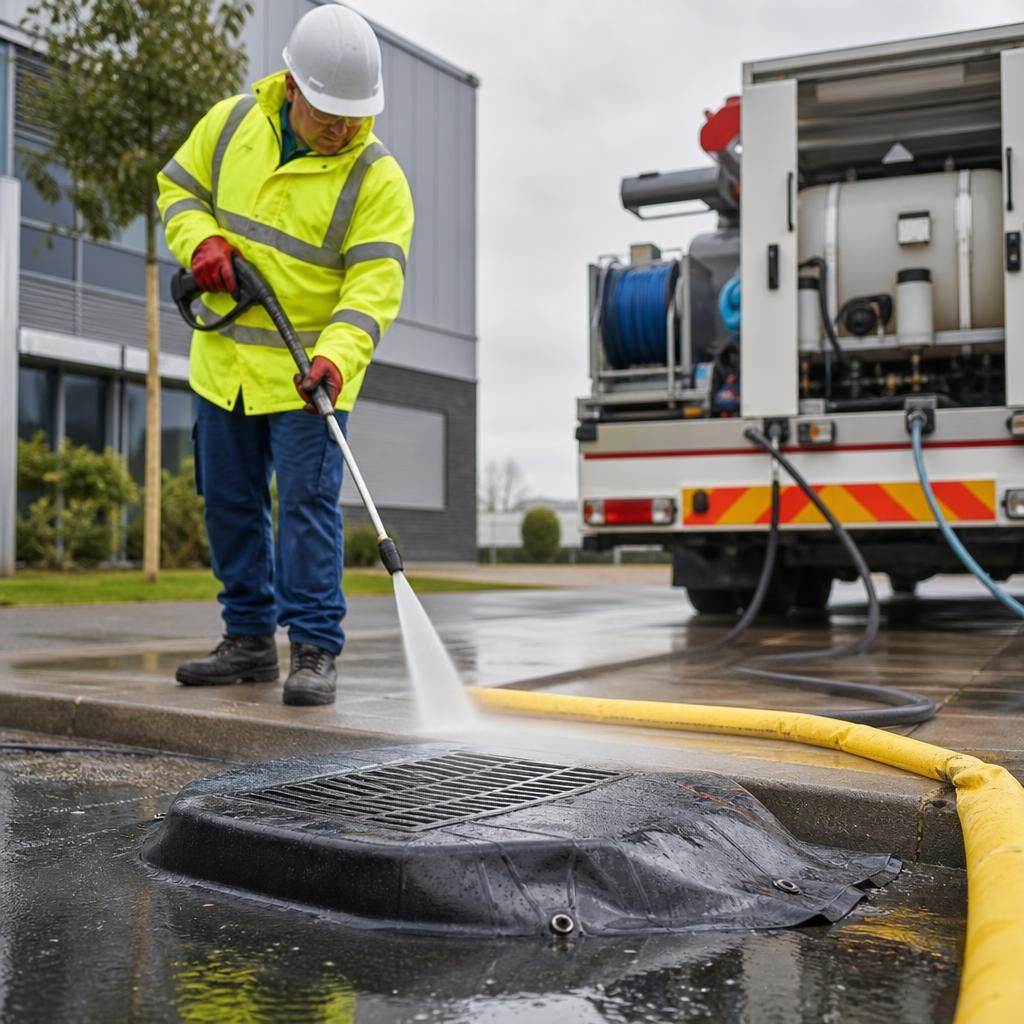
The strongest environmental benefit of mobile pressure and power washing is controlled cleaning: water, heat and cleaning products can be directed only where they are needed, while contaminated runoff is contained and managed responsibly.
On commercial and industrial sites, operators can protect surface-water drains with drain covers, bunding and temporary barriers, then recover dirty water using wet vacuums or suitable recovery equipment. This helps prevent oil, silt, algae, traffic film and cleaning residues from reaching soil or local watercourses. Where detergents are required, accurate application reduces unnecessary chemical use, but recovered wastewater must still be handled in line with site procedures, product instructions and applicable UK environmental requirements.
These controls make the environmental outcome depend on the complete method, not simply on using a pressure washer. A pre-cleaning assessment should confirm the surface, contamination, drainage route, water requirements and disposal arrangements before work begins.