
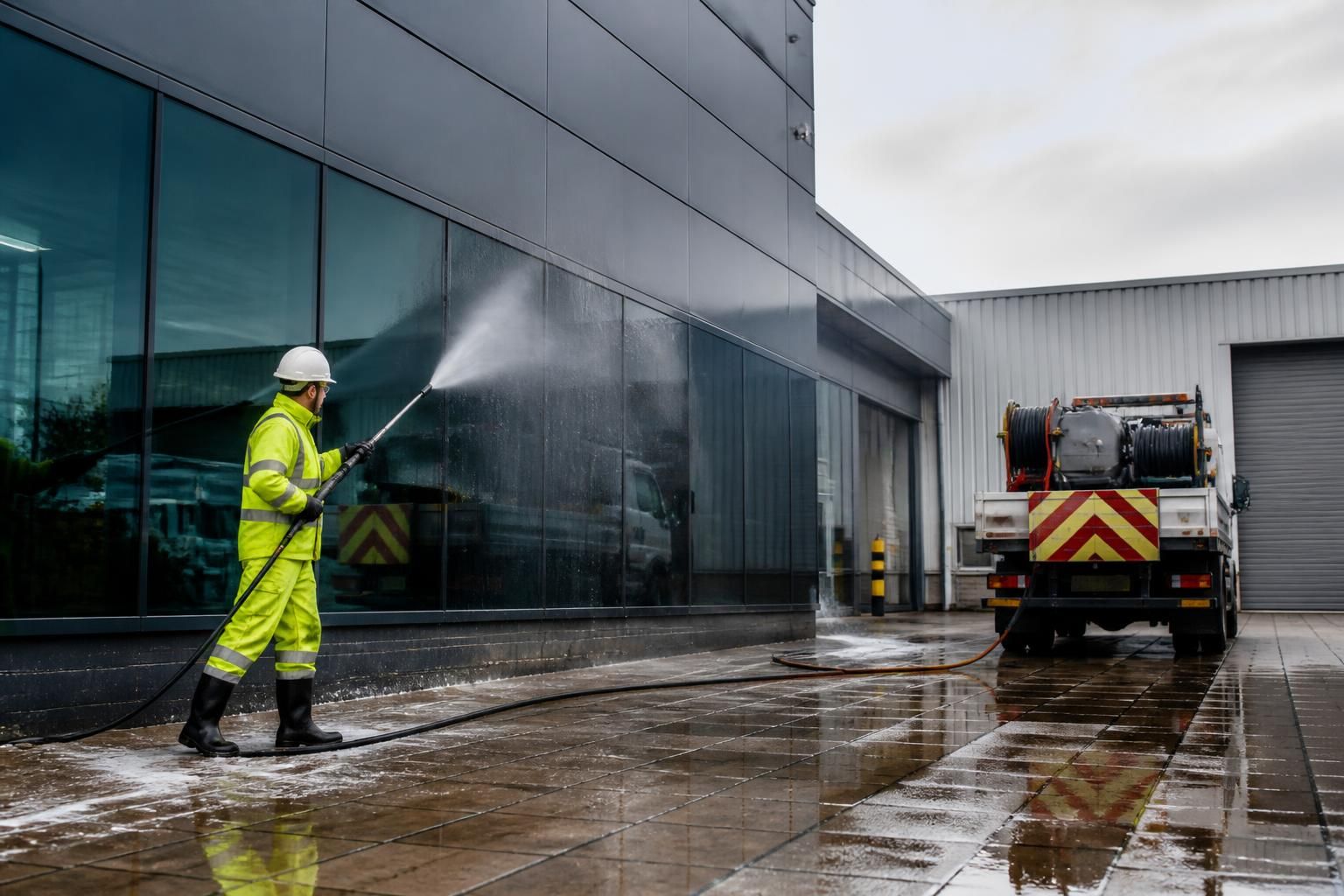
What are the cost considerations for mobile pressure and power washing services?
The cost of mobile pressure and power washing depends on the size and condition of the area, cleaning method, access requirements, equipment, water and waste arrangements, and the frequency of service. A reliable quotation should account for the full site assessment, preparation, cleaning and any specialist access or environmental controls required.
The cost of mobile pressure and power washing is determined by the total work required on site, not simply by the area being cleaned. A reliable commercial quotation should consider the size and condition of the surfaces, the cleaning method, access, equipment, water and waste arrangements, site restrictions, and whether the work is a one-off project or part of a planned maintenance programme.
Mobile services can involve bringing specialist machinery, water, recovery systems and access equipment directly to the premises. This can make the service suitable for large or difficult sites, but the quotation needs to reflect the resources required to mobilise and operate safely. A site assessment is usually the most accurate way to establish the likely cost.
Project size and surface area
The amount of cladding, façade, paving, roofing, car park or other external surface affects labour time, water consumption, equipment use and waste management. However, a large area that is open, accessible and lightly soiled may be more straightforward than a smaller area with heavy contamination or restricted access. Measurements should therefore be considered alongside the layout and condition of the site.
Where several surfaces can be cleaned during the same visit, mobilisation and set-up resources may be shared across the work. This can be more efficient than arranging separate visits, provided the programme is practical and does not compromise safety or cleaning quality.
Condition and type of contamination
General dirt, dust and surface deposits may require a different process from oil, grease, algae, moss, chewing gum, cement residue, paint or graffiti. Heavier or established contamination can increase preparation time and may require pre-treatment, repeated passes, lower-pressure washing, steam cleaning or specialist detergents.
The surface itself is also important. Concrete, brick, stone, render, metal cladding, roofs and painted finishes have different tolerances and cleaning requirements. A suitable method may take longer than using high pressure alone, but it reduces the risk of etching, paint loss, water ingress or other damage. Cost should therefore be assessed against the correct method for the surface, rather than the fastest apparent method.
Access and working conditions
Access is often one of the most significant cost considerations on commercial sites. Ground-level areas with clear vehicle access are generally simpler to service than façades, roofs, elevated structures, enclosed yards or areas obstructed by vehicles and plant. Costs may increase where the work requires mobile elevated work platforms, water-fed poles, scaffolding, long hose runs, traffic management or additional operatives.
Restricted working hours, busy public areas, security procedures, nearby pedestrians and the need to keep entrances or traffic routes open can also extend the programme. If access equipment is required, the quotation should identify what type is proposed, how it will be used and whether any additional site controls are needed.
Choice of pressure washing, power washing or steam cleaning
Pressure washing and power washing use pressurised water to remove dirt and deposits, while steam cleaning uses heated water and may be more appropriate for sensitive surfaces, grease or areas where chemical use needs to be limited. The selected process affects fuel or energy use, production time, water demand, detergents and the level of operator control required.
Higher pressure does not automatically represent better value. The correct combination of pressure, temperature, flow rate, nozzle selection and cleaning agent should be chosen for the material and contamination. A professional quotation should explain the proposed approach where the method has a material effect on cost or surface safety.
Water, power and mobile equipment
Mobile equipment may include pressure washers, power washers, steam systems, water tanks, generators, surface cleaners, vacuum recovery units and access equipment. The cost can vary according to the size and type of machinery required, whether the equipment must be transported between areas, and whether the site can provide suitable water or power supplies.
If an on-site water supply is unavailable, inadequate or unsuitable for the planned work, a water bowser or tanked supply may be needed. Likewise, remote locations or sites without appropriate electrical capacity may require self-contained equipment or a generator. These arrangements should be confirmed before work begins rather than added unexpectedly during the project.
Wastewater recovery and environmental controls
Run-off cannot always be allowed to enter surface-water drains. Where wastewater may contain oil, sediment, detergents, paint residue or other contaminants, it may need to be contained, collected, filtered, treated or removed in accordance with the site requirements and applicable environmental controls. Drain protection, bunding, vacuum recovery and disposal arrangements can add to the cost, but they are important parts of responsible commercial cleaning.
The quotation should make clear whether wastewater recovery and disposal are included. It should also state any assumptions about drainage, water supply and the use of cleaning products. This is particularly relevant for car parks, industrial premises, loading areas, fuel-related sites and locations close to watercourses.
Labour, preparation and site management
Cleaning time is only one part of the work. Labour may also be required for setting up equipment, protecting doors and sensitive areas, moving vehicles or obstructions, placing warning signs, managing exclusion zones, rinsing down, checking the finished surface and clearing the site. Larger or higher-risk projects may require a supervisor or additional operatives to coordinate the work safely.
Where a site has specific induction, permit, security or reporting requirements, these should be discussed during the survey. Preparation is especially important for occupied commercial premises, public areas and sites where cleaning must be coordinated with other contractors.
One-off work compared with planned maintenance
A one-off deep clean may cost more per visit than recurring maintenance because it can involve heavier soiling, additional preparation and a longer initial mobilisation. Regular cleaning helps control the build-up of dirt, algae, moss, grease and other deposits, which may make future visits more predictable and easier to schedule.
For property portfolios, retail estates, industrial sites and local authority premises, a planned programme can provide a clearer overall budget. The frequency should be based on the surface type, exposure, footfall, site use and required appearance or safety standard, rather than applying the same interval to every area.
What a commercial quotation should include
- A clear description of the surfaces and areas included.
- The proposed cleaning method and any pre-treatment or specialist processes.
- Expected preparation, cleaning and completion activities.
- Access equipment, traffic management and other site controls.
- Water, power, fuel and equipment assumptions.
- Wastewater recovery, treatment and disposal arrangements.
- Any exclusions, access limitations or client responsibilities.
- Whether the price is fixed, estimated or based on an hourly or daily rate.
- Applicable taxes and any additional charges for variations or return visits.
When comparing quotations, check that each contractor has priced the same scope and environmental controls. A lower initial price may not represent better value if it excludes access equipment, wastewater handling, difficult sections of the site or necessary preparation. Conversely, a detailed quotation may appear higher because it includes controls and resources that another estimate has omitted.
To help produce an accurate cost assessment, provide site plans or photographs where available, identify restricted areas, confirm the availability of water and power, explain any drainage constraints, and disclose known contamination or sensitive surfaces. It is also useful to state the required completion dates, working hours and whether the work needs to be coordinated with tenants, staff, vehicles or the public.
The most useful cost comparison is therefore based on the complete scope, the cleaning standard required and the risks associated with the premises. A site survey and written quotation can identify the practical requirements in advance, reduce variations and ensure that mobile pressure or power washing is delivered safely and efficiently.
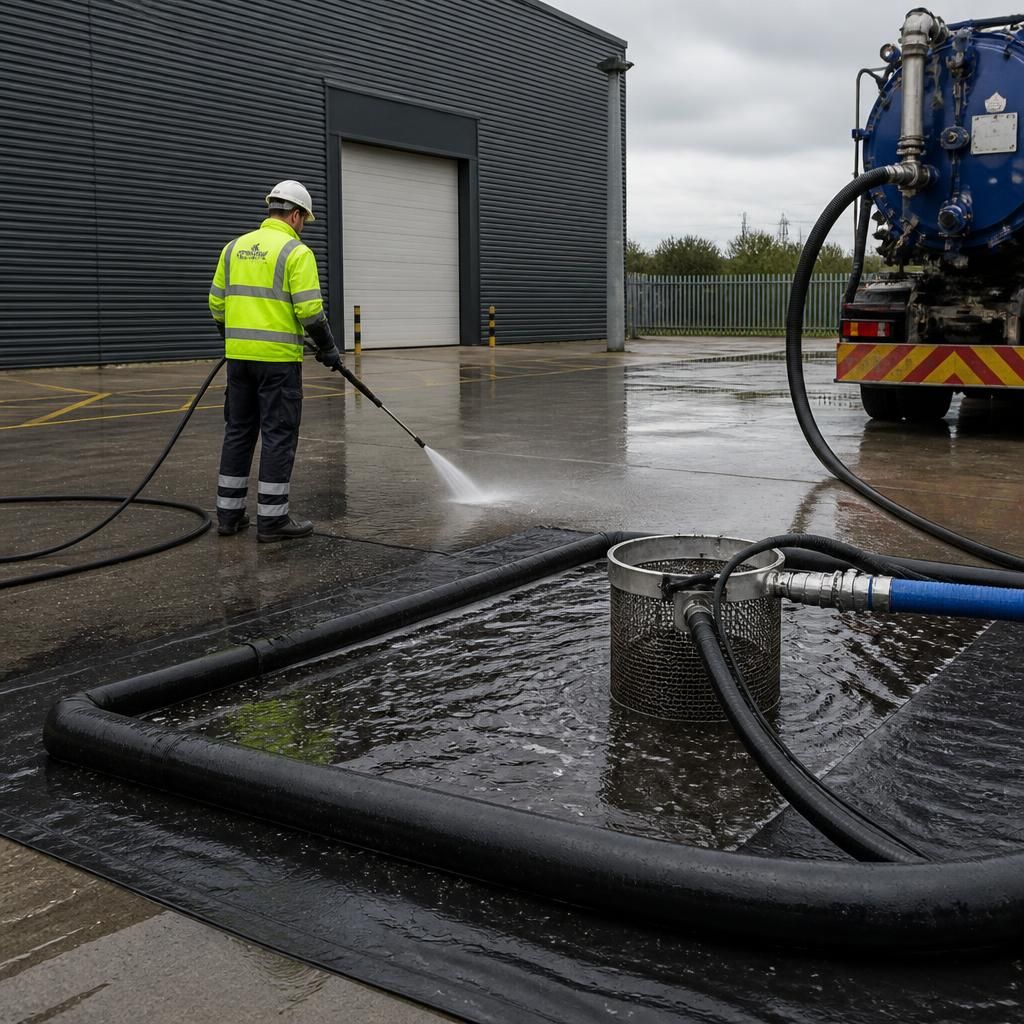
Wastewater recovery is an important cost consideration for mobile pressure and power washing, particularly on car parks, industrial sites, loading areas and surfaces contaminated with oil, sediment or cleaning residues. Run-off may need to be contained, collected, filtered, treated or removed instead of being allowed to enter surface-water drains.
The quotation should state whether drain protection, bunding, vacuum recovery, filtration and wastewater disposal are included. Confirming drainage arrangements and contamination risks during the site assessment helps prevent unexpected charges and ensures the cleaning method meets the site’s environmental requirements.
Request a Detailed Mobile Pressure and Power Washing Quote
Request a detailed mobile pressure and power washing quote based on your site’s surfaces, access requirements, cleaning method and wastewater arrangements. Provide your site details and preferred schedule so we can assess the work accurately.