
What are the benefits of using mobile pressure and power washing services for large-scale commercial properties?
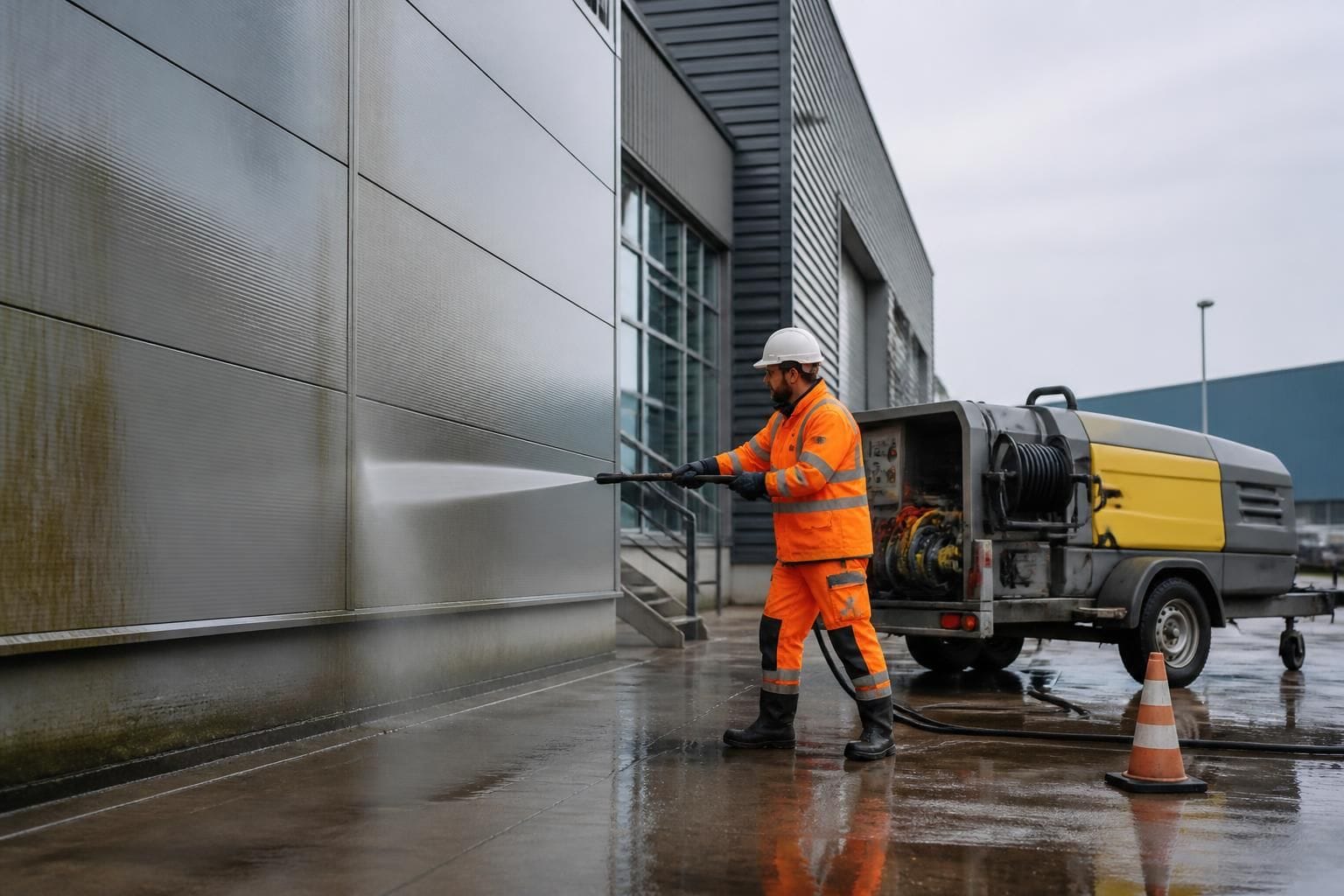
Mobile pressure and power washing services provide large commercial properties with efficient, consistent cleaning using equipment brought directly to site. They can cover extensive areas such as façades, cladding, roofs, car parks and loading areas while reducing disruption, improving site safety and supporting planned maintenance.
Mobile pressure and power washing services benefit large-scale commercial properties by bringing the required cleaning equipment, water management systems and access solutions directly to the site. This allows extensive areas such as façades, cladding, roofs, car parks, loading bays and service yards to be cleaned efficiently, with less disruption than arranging separate equipment, operators or cleaning visits for each area.
Efficient coverage of large areas
Large commercial sites often contain several surface types spread across wide or difficult-to-access areas. A mobile cleaning team can move between these areas with the appropriate equipment and attachments, maintaining a planned workflow rather than relying on fixed cleaning points. This is particularly useful for industrial estates, retail parks, warehouses, offices, construction sites, public buildings and managed property portfolios.
Pressure washing can remove loose dirt, algae, moss, traffic film, oil residues and other deposits more quickly than many manual methods. Where a lower-pressure approach is required, steam cleaning or controlled soft washing can be used instead. Selecting the right method for each surface helps the team maintain productivity without treating the whole site as though it requires the same cleaning process.
Less disruption to business operations
Cleaning can be scheduled around deliveries, staff movements, tenant access, customer footfall and other site activities. Because the equipment is brought to the property, there is less need to transport items between locations or create a permanent cleaning setup. Work can be divided into suitable zones, allowing unaffected parts of the site to remain operational wherever practical.
Planned mobile cleaning is also useful for properties that cannot close for a full cleaning programme. Car parks, entrances, loading areas and pedestrian routes can be managed in stages, with suitable exclusion zones and clear communication about the work taking place.
Consistent results across the property
Large premises need a consistent standard of presentation, not just isolated areas of visible cleaning. A professional mobile service can use an agreed method statement, site plan and inspection process so that comparable surfaces receive comparable treatment. This supports a uniform appearance across elevations, access routes, external hardstanding and shared areas.
Consistency is especially important for property managers responsible for multiple buildings or sites. Records of the work completed, areas treated and any defects identified can help inform future maintenance decisions and provide a clearer service history.
Suitable equipment for different surfaces
Commercial properties commonly include brickwork, concrete, stone, render, metal cladding, coated surfaces, paving, tarmac and roofing materials. These surfaces vary in strength, porosity, age and coating condition. Mobile contractors can select from pressure washing, power washing, steam cleaning and other controlled techniques, adjusting pressure, temperature, flow rate, cleaning solution and working distance as necessary.
This flexibility reduces the risk of using an unnecessarily aggressive method. A façade may need a controlled low-pressure clean, while a heavily soiled concrete yard may require a more intensive process. Specialist attachments can also improve cleaning around edges, drainage channels, textured surfaces and other areas where a standard lance would be less effective.
Improved access to difficult areas
Large commercial properties often have high façades, canopies, roofs, plant areas and restricted service yards that are difficult to clean from ground level. Depending on the site assessment, mobile services can be combined with access equipment such as telescopic systems, water-fed poles, elevated platforms or other suitable methods.
Using the right access solution can reduce the need for unsafe overreaching, ladders or improvised working positions. Access arrangements must still be planned around the building, ground conditions, overhead obstructions, traffic routes and the requirements of working at height.
Better control of site safety
Professional cleaning of a large property involves more than directing water at a surface. High-pressure water can cause injury, damage building components, create slippery ground and disturb contaminants. A properly managed mobile service includes a site assessment, risk assessment and method statement, with controls for pedestrians, vehicles, electrical equipment, drainage, chemical use and falling debris where relevant.
Work areas can be cordoned off and equipment positioned to keep hoses, cables and vehicles away from active routes. Operatives can also identify hazards such as damaged paving, loose pointing, defective coatings or blocked drains before or during cleaning. These observations should not be treated as a substitute for a formal building inspection, but they can help clients arrange follow-up repairs.
More effective water and waste management
Run-off from commercial cleaning may contain silt, oil, cleaning products, biological growth or other contaminants. Mobile contractors can plan how water will be contained, diverted, collected or treated in accordance with the site’s drainage arrangements and applicable environmental requirements. This is particularly important for car parks, workshops, industrial yards and areas near surface-water drains.
Controlled water use, suitable nozzles and efficient working methods can also reduce unnecessary consumption. Where wastewater cannot enter a drain, recovery or specialist disposal arrangements may be required. The correct approach depends on the surface, contaminants, drainage system and local site conditions, so it should be agreed before work begins.
Support for preventative maintenance
Regular removal of moss, algae, dirt and other deposits can help external surfaces remain serviceable and presentable between major refurbishment projects. Cleaning does not repair failed coatings, defective joints, corrosion or structural damage, but it can make these issues easier to see and assess.
Planned cleaning can therefore form part of a wider maintenance schedule. For example, a property manager may arrange façade cleaning before an external inspection, roof cleaning alongside gutter maintenance, or car park cleaning before line marking and surface repairs. Coordinating related tasks can reduce repeated site access and make the overall programme easier to manage.
Predictable planning and costs
For large sites, a mobile service can be scoped according to the areas, surface types, access requirements, level of soiling, water arrangements and working hours involved. This gives the client a clearer basis for comparing planned maintenance with reactive cleaning. A site survey is often useful because visible area alone does not determine the time or equipment required.
Costs may be affected by restricted access, traffic management, wastewater recovery, work at height, specialist equipment and the need to work outside normal operating hours. Identifying these factors in advance helps avoid unsuitable assumptions and reduces the likelihood of delays or additional arrangements during the work.
Useful for ongoing commercial contracts
Mobile pressure and power washing is well suited to recurring programmes because the same service can be adapted as site conditions change. A contractor may provide periodic cleaning for a property portfolio, seasonal removal of organic growth, responsive treatment of heavily soiled areas or additional cleaning following construction and refurbishment work.
The most effective programme is based on the property’s use, exposure, surface condition and operational requirements rather than an arbitrary cleaning frequency. Clear scopes, agreed priorities and documented completion checks help ensure that the service remains focused on the areas that matter most to safety, appearance and asset maintenance.
In practice, the main benefit for a large commercial property is the combination of mobility, specialist equipment and coordinated site management. A suitable provider can clean extensive and varied surfaces while limiting operational disruption, protecting vulnerable materials, managing run-off responsibly and contributing useful information to the client’s wider maintenance plan.
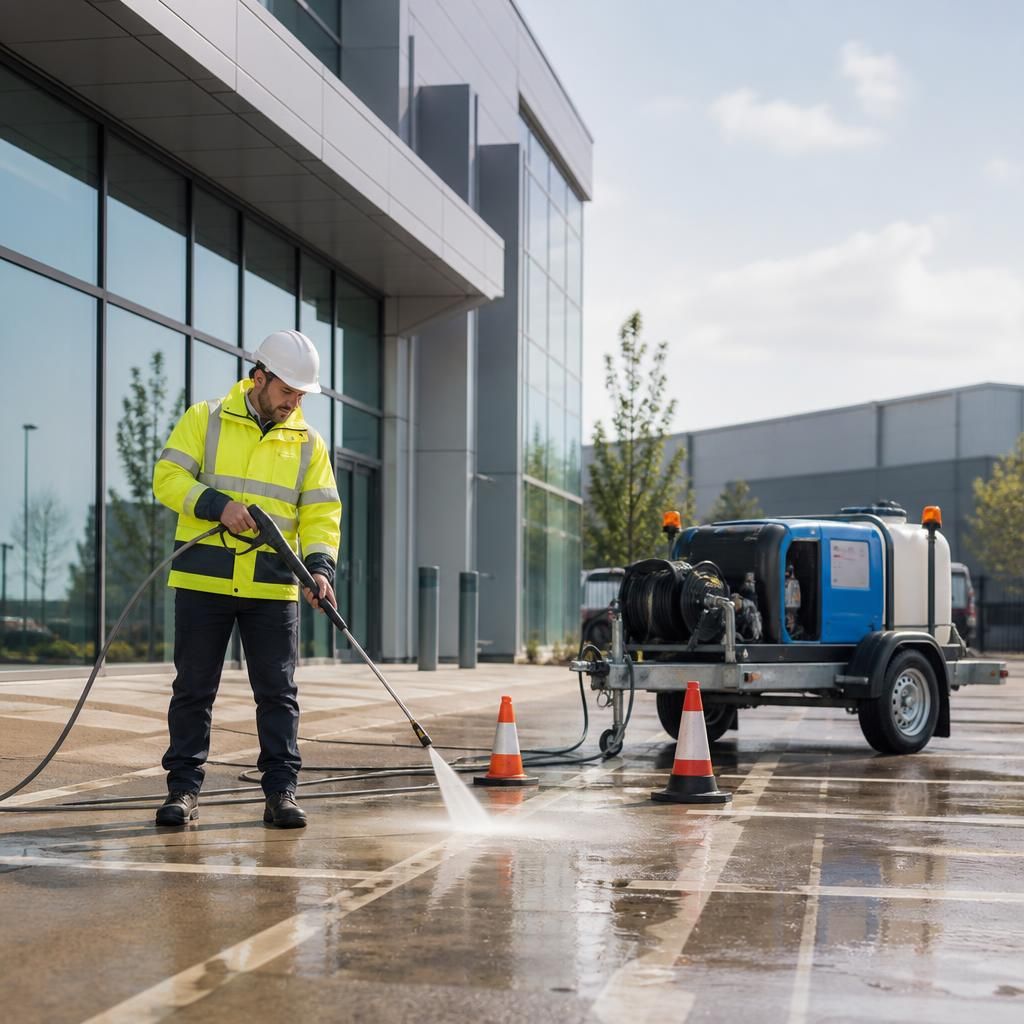
Mobile pressure and power washing helps large commercial properties stay operational because the equipment is brought directly to the site and cleaning can be organised in manageable zones. Entrances, car parks, loading bays and pedestrian routes can be treated in stages around deliveries, tenant access, staff movements and customer footfall, rather than requiring the whole property to close.
A planned service also allows the cleaning team to coordinate exclusion zones, hose routes, access equipment and water management before work begins. This reduces avoidable disruption while maintaining appropriate controls for pedestrians, vehicles and nearby building users. The work programme can then be adjusted to suit the property’s operating hours and the condition of each surface.