
How does mobile pressure washing ensure the safety of different surfaces during cleaning?
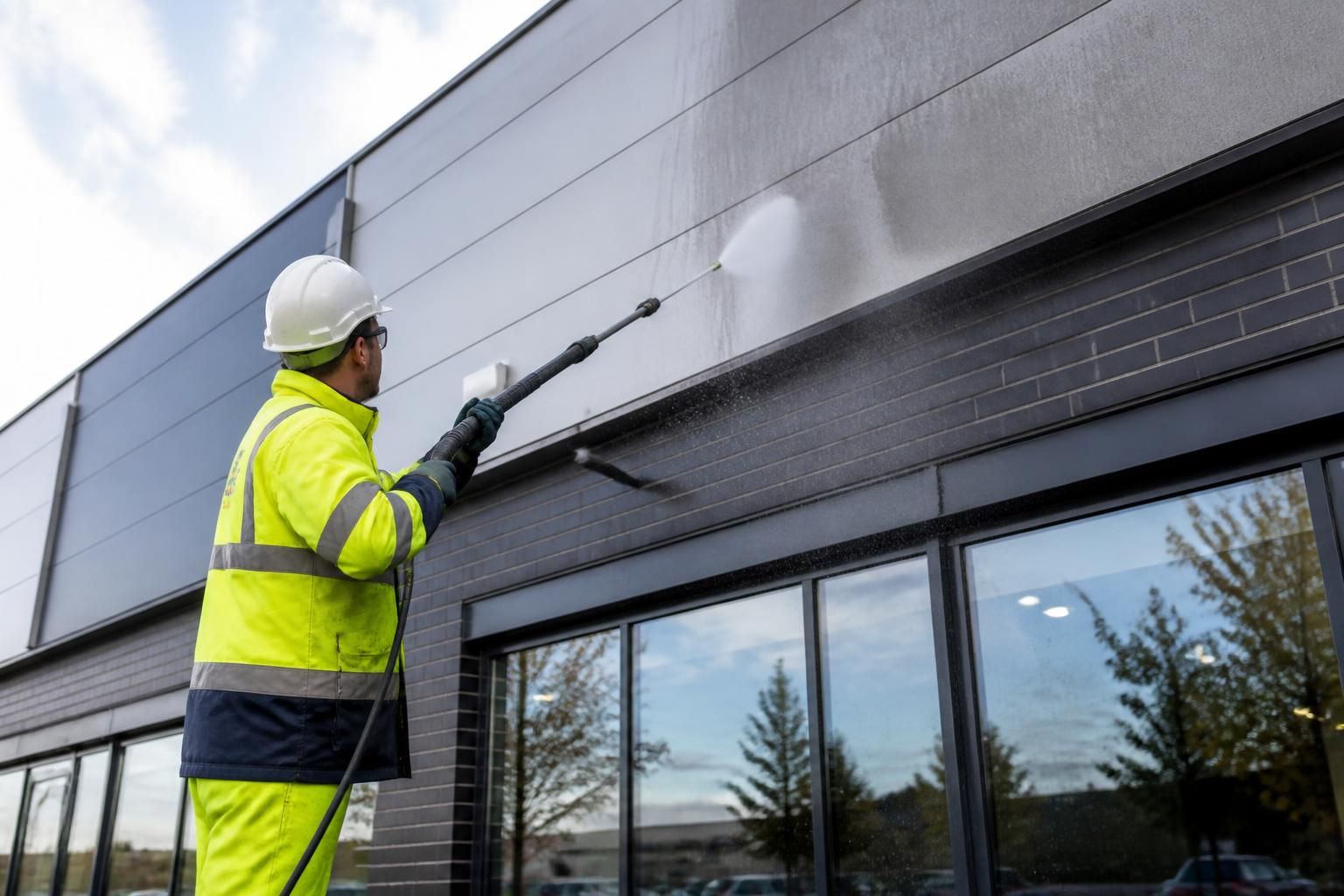
Mobile pressure washing protects different surfaces by matching the water pressure, temperature, nozzle, cleaning solution and technique to the material and its condition. Pre-cleaning inspections and controlled application help remove dirt, algae, oil and graffiti without causing unnecessary damage to façades, roofs, cladding, paving or other exterior surfaces.
Mobile pressure washing protects different surfaces by adapting the cleaning method to the material, its condition and the type of contamination present. Before work begins, the operative assesses the surface, selects suitable pressure and flow settings, chooses the correct nozzle and working distance, and determines whether cold water, heated water, steam or a compatible cleaning solution is most appropriate. This controlled approach removes dirt effectively while reducing the risk of etching, cracking, discolouration, water ingress or surface erosion.
Surface assessment comes first. A visual inspection identifies loose coatings, failed pointing, damaged sealants, surface cracks, fragile edges, previous repairs and areas where water could enter the building. The inspection also considers the contamination: traffic film, oil, algae, moss, bird fouling, cement residue and graffiti may each require a different treatment. Where the surface or coating is unfamiliar, a small test area can be cleaned first to confirm that the chosen method is suitable.
Pressure is adjusted rather than applied uniformly. High pressure is not automatically the safest or most effective option. A lower-pressure application may be appropriate for painted façades, render, older brickwork or delicate masonry, while more robust concrete paving may tolerate a stronger setting. The operator also controls the nozzle type, spray pattern, distance and angle. Keeping the lance moving and avoiding prolonged application in one area helps prevent lines, gouging and uneven cleaning.
Water temperature can reduce the need for aggressive pressure. Heated water helps loosen grease, oil and embedded traffic film, allowing these contaminants to be removed with a more controlled application. Steam cleaning may be suitable for some sensitive areas, detailed façades and situations where reduced water use is beneficial. The chosen temperature must still be compatible with the surface, coatings, sealants and adjacent materials.
Cleaning solutions are selected for the material and contamination. A suitable detergent or biocidal treatment can break down organic growth or oil before rinsing, reducing mechanical force. Solutions should be applied at a controlled concentration, prevented from drying on the surface and thoroughly rinsed where required. Operatives also protect nearby planting, drainage systems, vehicles and building entrances from overspray or run-off. Cleaning products are never treated as a substitute for assessing the substrate.
Different exterior materials require different precautions:
- Brick and masonry: Lower-pressure washing, controlled rinsing and suitable detergents help avoid eroding soft faces, damaging mortar joints or driving water into defective areas. Older or weathered brickwork may need a gentler method than newer, dense masonry.
- Render and painted façades: The condition of the coating is checked for flaking, chalking and weak areas. A broad, low-impact spray pattern and suitable working distance help limit marking or paint loss. Areas with failed render or exposed substrate may require repair before cleaning.
- Metal cladding: Pressure, temperature and chemical choice are controlled to avoid damaging protective finishes, joints, fixings and sealants. Rinsing is important where residues could cause staining or accelerate corrosion.
- Glass and glazed surfaces: The method is selected to avoid scratching, seal damage and residue around frames. Abrasive particles are removed carefully, and particular attention is given to gaskets, vents and drainage channels.
- Roofs: Roof cleaning is planned around the covering, pitch, age and condition. Excessive pressure can dislodge tiles, damage protective finishes or force water beneath laps and flashings. Soft washing, low-pressure rinsing or specialist access methods may be more suitable than conventional high-pressure cleaning.
- Concrete and paving: A suitable pressure and nozzle can remove dirt, algae, tyre marks and surface deposits without creating streaks or exposing aggregate unnecessarily. Oil contamination may need pre-treatment, while damaged or porous paving requires additional care.
- Asphalt and resin-bound surfaces: The operator avoids settings that could loosen aggregate, disturb the binder or lift the surface. Testing is particularly useful where the material has aged or been repaired.
Run-off and water ingress are managed as part of surface protection. Operatives use controlled spray techniques, suitable collection or diversion measures and careful rinsing around doors, vents, expansion joints and drainage points. Sensitive openings may be covered or avoided. On large commercial sites, the work plan also accounts for pedestrians, vehicles, electrical equipment and other contractors, helping prevent secondary damage while cleaning is under way.
Access equipment supports safer application. When façades, roofs or elevated cladding cannot be reached safely from ground level, suitable access equipment allows the operator to work at the correct angle and distance rather than stretching a lance or directing water indiscriminately from below. Access arrangements are selected according to the building, ground conditions and site risk assessment.
Mobile equipment makes it possible to bring the appropriate combination of pressure washing, heated water, steam, recovery equipment and access systems to the site. The benefit is not simply greater mobility; it allows the cleaning process to be configured for different areas of the same property. For example, robust paving may be treated separately from a delicate façade, while oil-affected areas can be handled differently from algae-covered cladding.
After cleaning, the surface should be checked for remaining contamination, unwanted marks, coating loss or water-related issues. Any areas that do not respond as expected can be reviewed before further treatment is attempted. This inspect, test, clean and review process is especially important for older buildings, coated surfaces and large sites where conditions can vary across the elevation.
Businesses can help protect their surfaces by providing information about known defects, previous treatments, sensitive materials, drainage arrangements and areas that must remain operational. Agreeing the cleaning method, test area, access plan and run-off controls in advance gives the contractor the information needed to work safely and helps preserve façades, roofs, cladding, paving and other exterior assets during maintenance.
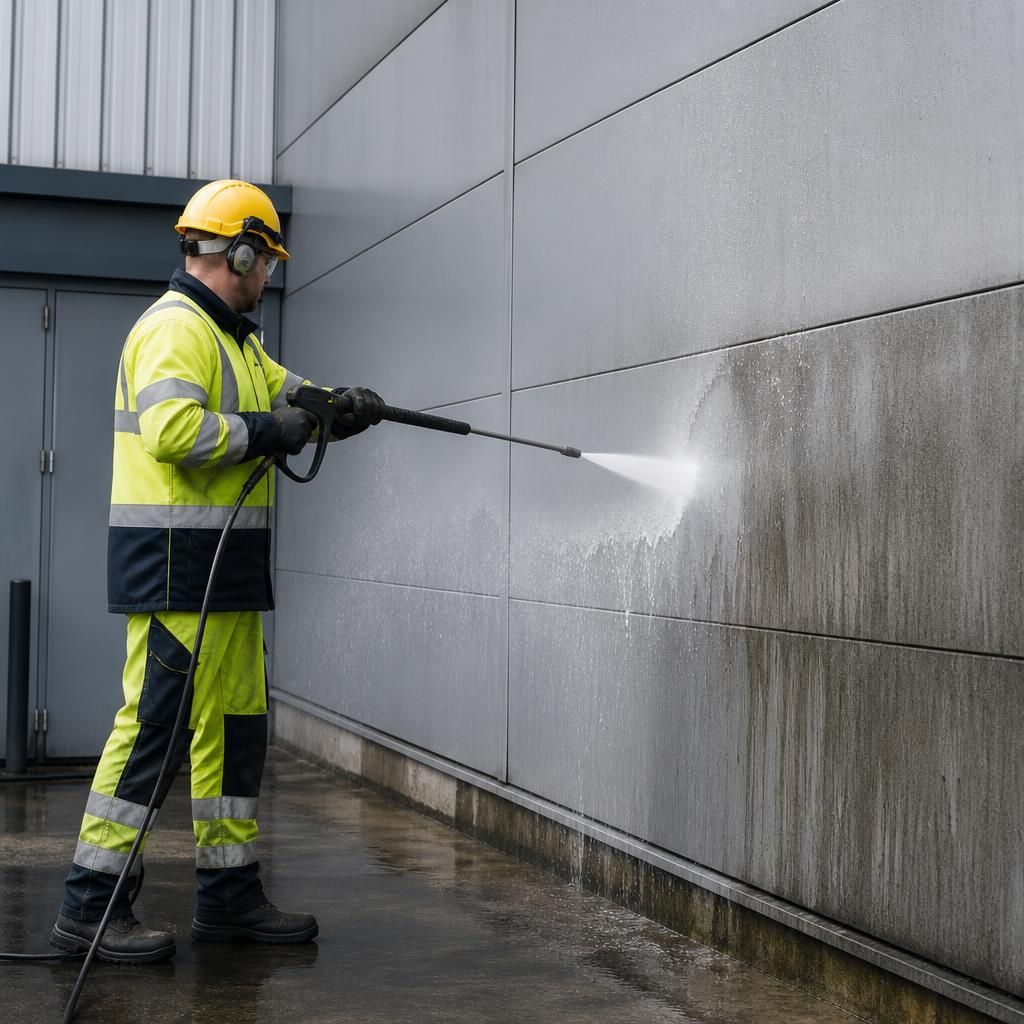
Mobile pressure washing protects surfaces by using a controlled combination of pressure, water temperature, nozzle type and working distance suited to the material being cleaned. The operative first checks the surface and contamination, then tests the proposed method in a small, inconspicuous area before proceeding.
This approach is important on painted façades, older brickwork, render, metal cladding, roofs and resin-bound paving, where excessive pressure or unsuitable chemicals could cause coating loss, etching, water ingress or surface erosion. Heated water or a compatible cleaning solution may loosen oil, algae or traffic film, reducing the need for aggressive pressure.
During cleaning, the lance is kept moving and sensitive features such as joints, sealants, vents, doors and drainage points are treated carefully. The surface is reviewed after cleaning so that any remaining contamination can be addressed without repeatedly applying unnecessary force.