
How does mobile pressure washing differ from traditional pressure washing services?
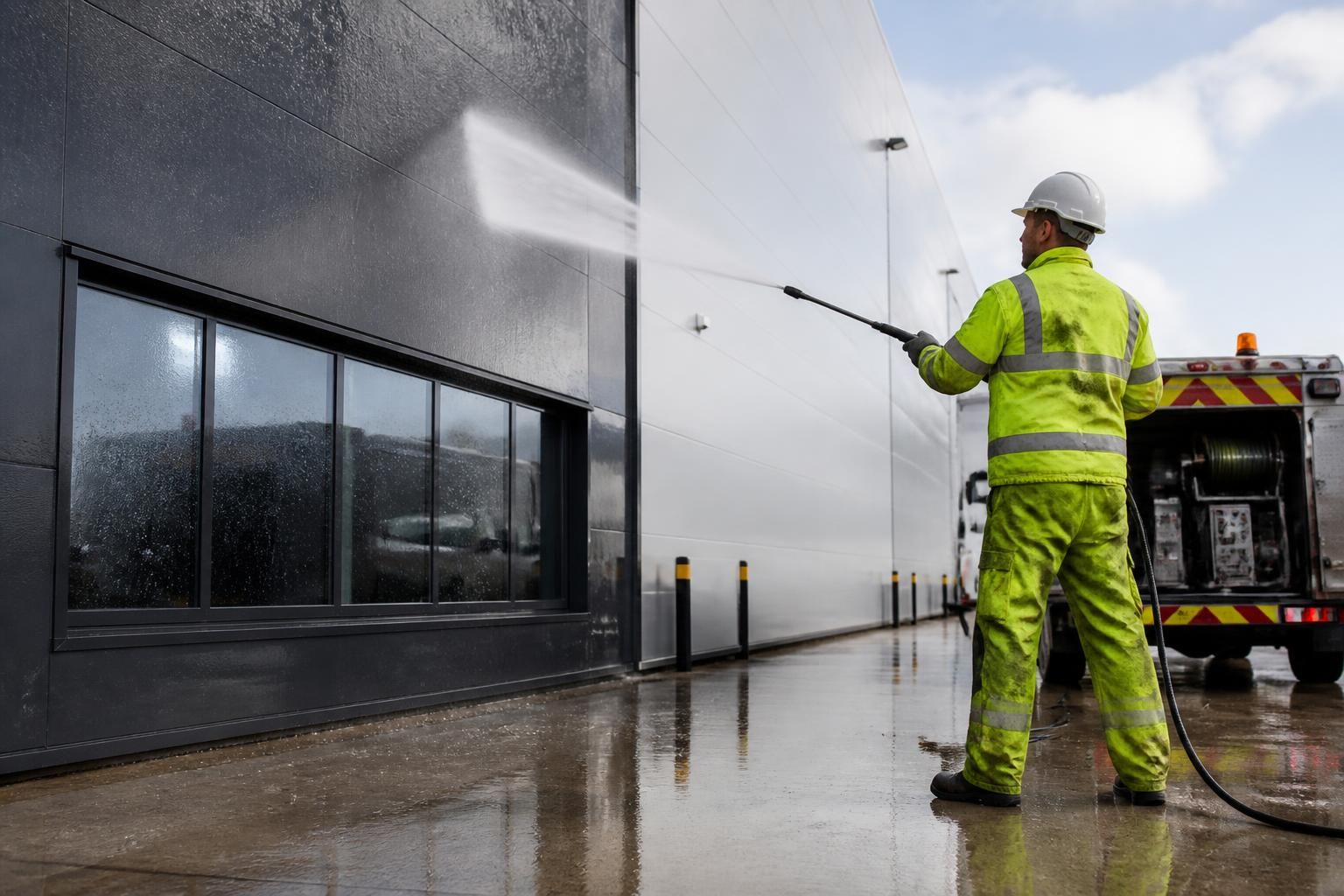
Mobile pressure washing uses vehicle- or trailer-mounted equipment that brings the water supply, power and cleaning system directly to the site, whereas traditional services often rely on portable equipment and the customer’s on-site utilities. This makes mobile cleaning more flexible for large, remote or multi-location properties, while both approaches can deliver effective results when the equipment, pressure and cleaning method are matched to the surface.
Mobile pressure washing uses vehicle- or trailer-mounted equipment that brings the water supply, power source, pressure-washing system and, where required, recovery equipment directly to the site. Traditional pressure washing generally uses smaller portable equipment connected to the customer’s water and electricity supplies. Both methods can produce a high standard of cleaning; the main difference is how the service is supplied, organised and adapted to the site.
For commercial and industrial properties, the choice between mobile and traditional equipment affects preparation, productivity, access, water management and the range of locations that can be cleaned. A site assessment is still essential, because the correct pressure, temperature, cleaning agent, nozzle and recovery method depend on the surface and the type of contamination.
Key differences between mobile and traditional pressure washing include:
- Water and power supply: Mobile systems can carry their own water and may use an integrated generator or other independent power source. Traditional systems commonly depend on an available mains tap and electrical supply at the premises.
- Equipment capacity: Vehicle- and trailer-mounted units can accommodate larger pumps, longer hoses, hot-water systems, tanks and specialist attachments. Portable units are often more suitable for smaller areas or sites with good access to utilities.
- Site flexibility: Mobile equipment can operate at remote locations, construction sites, car parks, industrial estates and multiple premises where suitable water or electrical connections are limited. Traditional equipment may be restricted by the position and capacity of the customer’s utilities.
- Set-up and movement: A mobile unit can remain in a designated position while hoses are routed across the work area. This can reduce the need to move heavy equipment repeatedly, although hose routes must be planned to protect pedestrians, vehicles and site operations.
- Scale of work: Mobile systems are particularly useful for large façades, extensive paving, cladding, roofs, yards and car parks. Portable systems may be efficient for confined areas, spot cleaning or work close to an existing water and power supply.
Traditional pressure washing is not limited to domestic work and is not automatically less effective. A suitably specified portable system can clean commercial surfaces successfully where the area is accessible and the premises can provide adequate utilities. It may also be the practical option for internal courtyards, small service areas or locations where a vehicle or trailer cannot be positioned safely.
Mobile equipment provides greater independence from the customer’s infrastructure. This is important where the available water supply has low flow, where electrical circuits cannot support the equipment, or where using site utilities would interfere with normal operations. It also allows cleaning to be carried out at locations without a permanent water connection, subject to suitable arrangements for filling tanks and managing wastewater.
Hot-water capability is another common distinction. Mobile systems may be configured to heat water for removing oil, grease, traffic film, food residues and other tenacious deposits. Heated water can improve cleaning efficiency on suitable hard surfaces and reduce the need for aggressive mechanical action or excessive chemical use. Cold-water cleaning remains appropriate for many tasks, particularly general dirt removal, and the temperature must always be matched to the material being cleaned.
Mobile pressure washing can also support a more organised approach to large-scale work. Equipment, hoses, tanks, surface cleaners, vacuum recovery systems and access-related tools can be transported together, allowing the cleaning method to be adapted on site. For a multi-location contract, the same operating setup can be deployed across several premises, helping maintain consistency in procedures and finish standards.
There are practical limitations to consider. Mobile units need a suitable area for parking or positioning, and the vehicle or trailer must be able to reach the work zone without creating a risk to buildings, underground services, pedestrians or traffic. Long hose runs may be necessary on congested sites, so they require proper segregation and supervision. Tank capacity, refilling arrangements, drainage and wastewater recovery also need to be considered when planning a project.
Traditional portable equipment can sometimes provide quicker access for a small isolated task because there is less equipment to position. It may also be preferable where noise, vehicle movements or space restrictions make a larger mobile unit unsuitable. The decision should therefore be based on the site rather than on the equipment category alone.
Surface protection is relevant to both approaches. Higher pressure does not necessarily produce better cleaning. Masonry, render, painted surfaces, cladding, roofing materials, timber, jointing and ageing concrete can all respond differently to pressure, heat and cleaning chemicals. An experienced contractor will inspect the substrate, identify vulnerable areas, test the proposed method where appropriate and control the distance, pressure, temperature and nozzle selection. Soft washing, steam cleaning or low-pressure chemical treatment may be more suitable than conventional high-pressure cleaning for some façades and roof surfaces.
Environmental controls can also differ depending on the equipment and site arrangement. A mobile system may carry water for controlled use and can be combined with recovery equipment to collect contaminated wash water. Traditional equipment can also be used responsibly, but the contractor must plan how water will be contained, filtered, treated or disposed of. Oils, silt, detergents, paint residues and other pollutants should not be allowed to enter surface-water drains. The appropriate arrangements depend on the contamination, drainage layout and local requirements.
Cost is influenced by more than the type of machine used. The size and condition of the area, access requirements, water and power availability, cleaning method, labour, traffic management, access equipment, wastewater controls and the frequency of service all affect the overall price. Mobile cleaning may be more economical for a large or remote project because it reduces reliance on site utilities and supports continuous work. For a small, accessible area, portable equipment may involve less mobilisation and be the more proportionate choice.
In practice, mobile pressure washing is generally the stronger option when a project involves extensive external areas, limited utilities, multiple locations, heavy contamination or a need for integrated water and power management. Traditional pressure washing can remain appropriate for smaller or well-serviced areas where a compact setup provides safe and efficient access. The best method is determined by the site survey, the surfaces being cleaned, the contamination present and the operational restrictions of the premises.
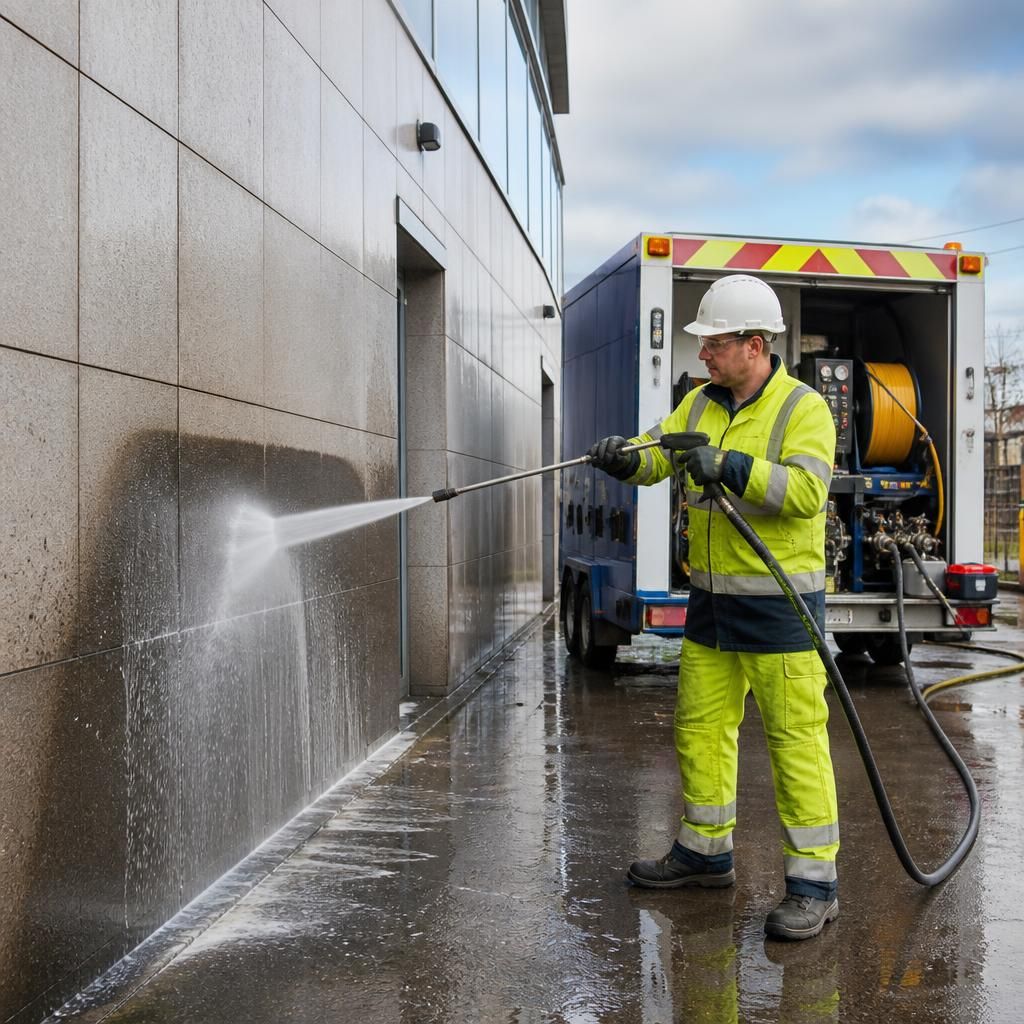
Mobile pressure washing differs from traditional pressure washing mainly because the equipment, water supply and power source are brought to the site in a vehicle- or trailer-mounted unit. Traditional equipment is usually transported separately and connected to the customer’s available water and electricity supplies.
This independence is particularly useful for large commercial areas, construction sites, remote locations and premises where using on-site utilities would disrupt operations. A mobile unit can also carry larger water tanks, hot-water systems, longer hose runs and wastewater recovery equipment, allowing the cleaning process to be adapted to the site.
Traditional portable equipment remains suitable for smaller areas or locations with reliable utilities and restricted vehicle access. The most appropriate option depends on the size of the work, surface condition, contamination, access, drainage arrangements and the need for water or power management.