
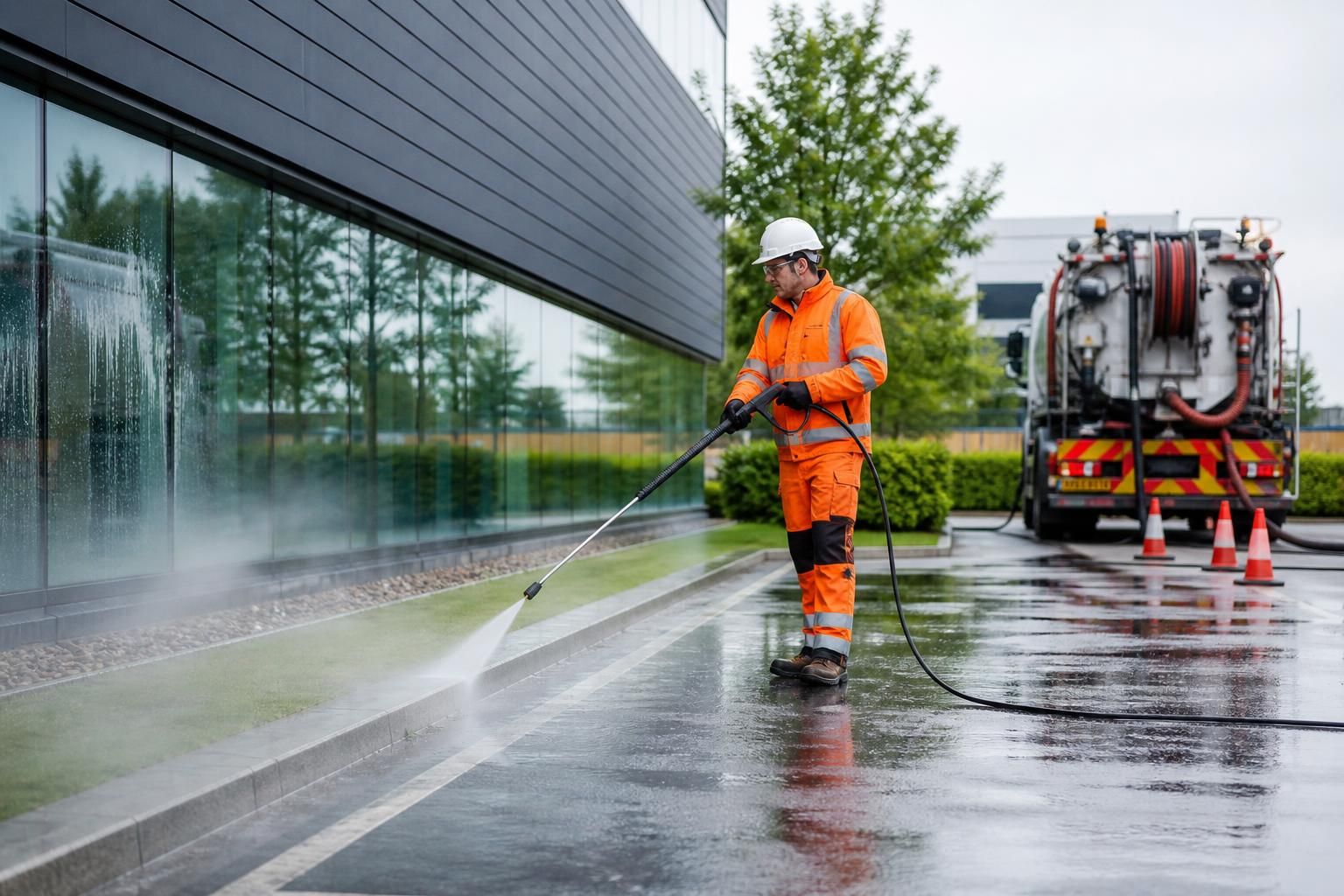
How do mobile pressure and power washing services contribute to sustainability and eco-friendly practices?
Mobile pressure and power washing services support sustainability by using water-efficient equipment, targeted cleaning methods and responsible wastewater management. Cleaning teams can also reduce transport, chemical use and disruption by bringing the appropriate machinery directly to commercial and industrial sites.
Mobile pressure and power washing services contribute to sustainability by using targeted cleaning methods, water-efficient equipment and controlled wastewater practices at the customer’s premises. When properly planned, the service can reduce unnecessary water use, limit chemical application, prevent polluted runoff entering drainage systems and avoid replacing or resurfacing materials that can be restored through effective cleaning.
Water efficiency starts with using the right cleaning method. Pressure washing directs water at a controlled pressure and flow rate, allowing operators to remove dirt, algae, oil residues and surface deposits without continuously flooding the area. The required settings depend on the surface, so experienced technicians adjust the equipment rather than applying excessive pressure or water. A lower-flow approach may be suitable for some façades or paved areas, while hot water, steam or specialist attachments can improve cleaning efficiency where deposits are difficult to remove.
Mobile equipment also allows the cleaning method to be matched to the site. Operatives can bring suitable machinery for façades, cladding, roofs, car parks, loading areas and industrial surfaces instead of relying on a general-purpose process. This reduces repeat cleaning, unnecessary passes and avoidable rework. A pre-cleaning inspection is important because it identifies the type of contamination, surface condition, drainage layout and any areas requiring containment before work begins.
Wastewater control is one of the most important environmental considerations. Water collected from a car park, industrial yard or loading bay may contain oil, fuel residues, metals, silt, detergents or other contaminants. It should not be allowed to flow unchecked into surface-water drains, watercourses or neighbouring land. Depending on the site and the contamination, responsible practice may include drain covers, bunding, temporary containment, wet vacuum recovery, filtration and controlled disposal. Trade effluent or discharge requirements may also apply, so the site operator and cleaning contractor should agree how recovered water will be handled before work starts.
Cleaning teams can reduce chemical impact by selecting the least aggressive product that will achieve the required result and applying it only where necessary. Mechanical action, controlled pressure, hot water or steam may remove some deposits without a heavy chemical treatment. Where detergents or biocides are needed, they should be used in accordance with the product instructions and the site’s control measures. The term “biodegradable” does not mean that a product is harmless in every situation; dilution, disposal and the sensitivity of nearby drains, soil and watercourses still need to be considered.
Mobile delivery can also support lower transport-related impact when visits are planned efficiently. Bringing the required machinery directly to a commercial or industrial site can avoid sending assets away for cleaning or arranging separate transport for equipment and materials. The benefit depends on sensible route planning, combining tasks where practical and selecting equipment that is appropriate for the job. A poorly planned visit, repeated call-outs or unnecessary idling can reduce this advantage, so access arrangements, work areas and cleaning specifications should be confirmed in advance.
Protecting existing surfaces is another sustainability benefit. Regular removal of contaminants can help prevent the gradual deterioration of paving, cladding, façades, roofs and other external assets. Oil, organic growth, corrosive deposits and embedded dirt may contribute to staining, blocked drainage or surface degradation if left untreated. Cleaning does not replace repair or maintenance, but it can help preserve serviceable materials and reduce the need for premature refurbishment, coating replacement or disposal. Operators must use appropriate pressure and temperature settings to avoid etching, coating failure, joint damage or water ingress.
Equipment condition affects environmental performance as well. Well-maintained pumps, hoses, burners, recovery systems and water tanks operate more reliably and are less likely to leak, overuse water or require repeat work. Preventive maintenance also supports accurate pressure and flow control. Where hot-water systems are used, the operator should balance the energy needed for heating against the reduced time, water or chemical use that hot cleaning may provide for a particular deposit.
Businesses arranging mobile pressure washing can support an eco-friendly approach by:
- providing details of the surface, contamination and site drainage before the visit;
- identifying nearby surface-water drains, foul-water drains, watercourses and sensitive landscaping;
- agreeing how wastewater, sludge and contaminated debris will be contained and disposed of;
- asking for the cleaning method to be matched to the surface rather than using maximum pressure by default;
- confirming whether detergents, biocides or degreasers are necessary and how they will be controlled;
- co-ordinating access and work areas to minimise repeat visits, vehicle movements and disruption; and
- retaining relevant waste transfer, discharge or service records where the project requires documented environmental controls.
Mobile pressure and power washing is not automatically sustainable simply because the equipment travels to the site. Its environmental performance depends on water management, chemical selection, energy use, transport planning and the safe handling of recovered waste. For commercial and industrial premises, a written method statement or site-specific plan can set out these controls clearly and provide a practical basis for consistent, lower-impact exterior cleaning.
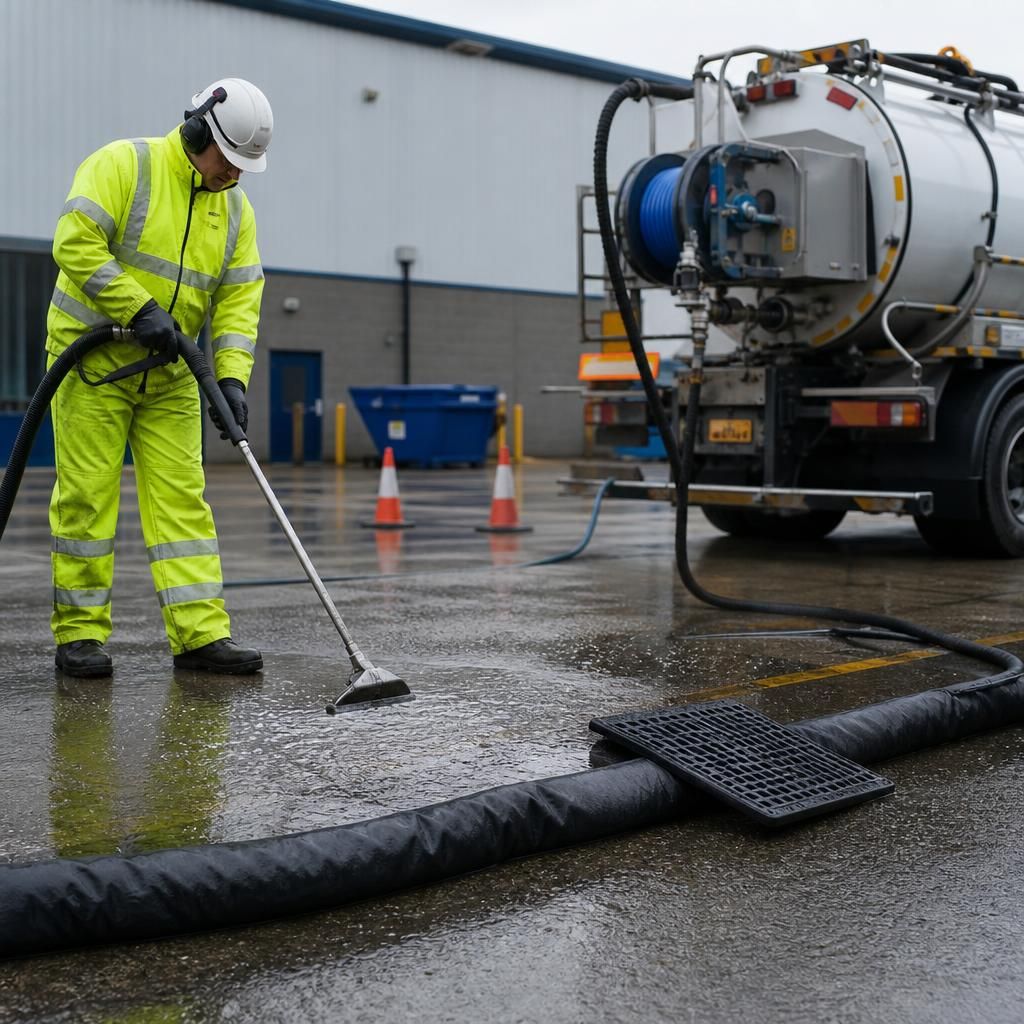
Responsible wastewater recovery is a key part of sustainable mobile pressure washing. Water from car parks, loading bays and industrial areas may contain oil, fuel residues, silt, detergents or other pollutants, so it should not be allowed to run into surface-water drains, watercourses or neighbouring land.
Before cleaning begins, the team should assess the drainage layout and agree suitable controls. These may include drain covers, temporary bunding, wet-vacuum recovery, filtration and controlled disposal. The correct approach depends on the site and the contaminants present, and trade effluent requirements may also apply. Containing and handling wastewater properly helps prevent pollution while allowing the cleaning process to use water more efficiently.