
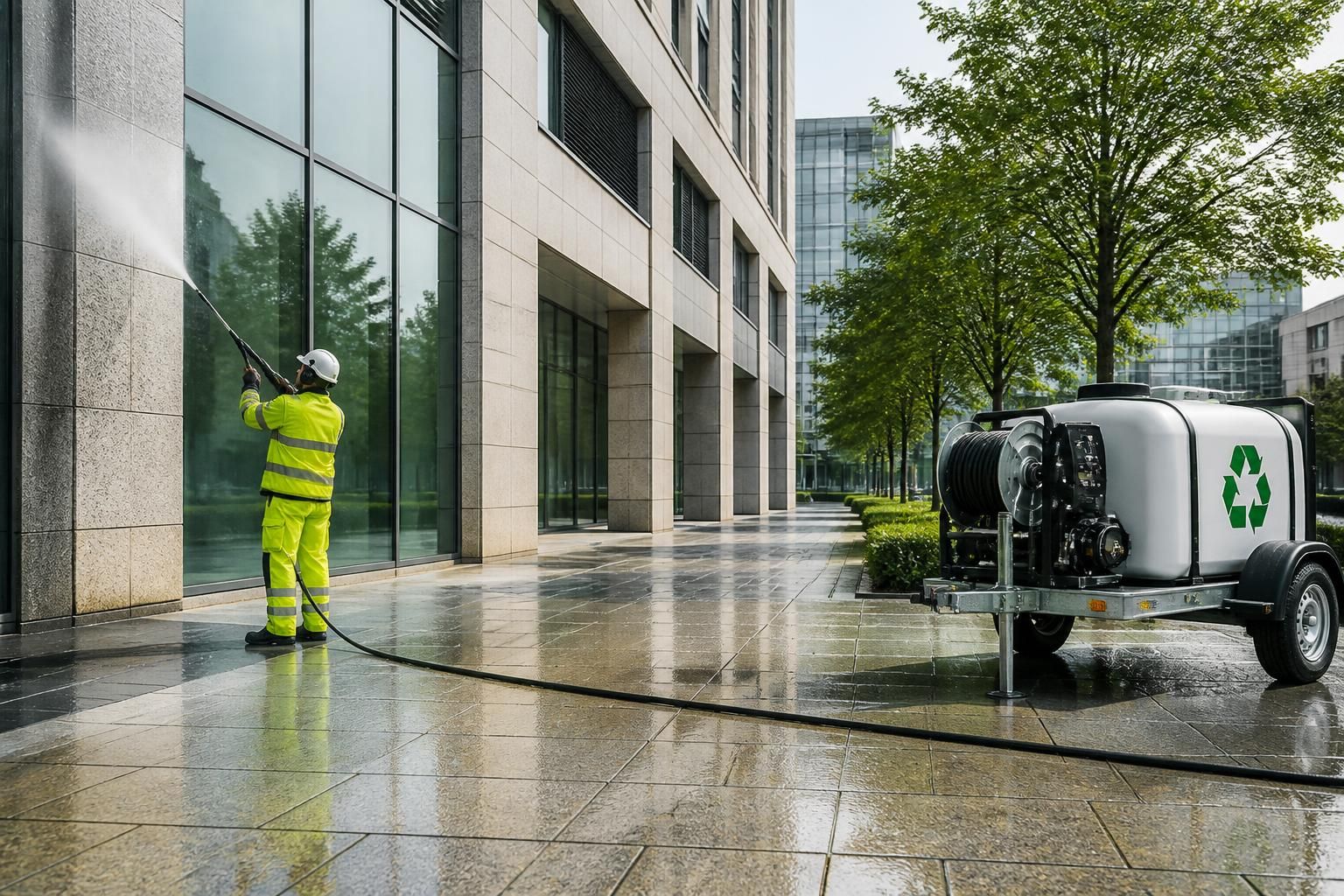
How does commercial exterior cleaning contribute to environmental sustainability?
Commercial exterior cleaning supports environmental sustainability by using water-efficient methods, controlling wastewater and chemical use, reducing waste, and extending the service life of building materials. Regular, targeted maintenance can help prevent deterioration, reducing the need for resource-intensive repairs or premature replacement.
Commercial exterior cleaning can support environmental sustainability when it is planned around water efficiency, responsible chemical use, controlled wastewater and the protection of existing building materials. Regular, targeted cleaning removes contaminants before they cause deterioration, helping façades, cladding, roofs, paving and other external assets remain serviceable for longer and reducing the environmental cost of repair or replacement.
Water use should be matched to the cleaning requirement. High-pressure washing can be effective for robust surfaces, but pressure alone is not always the most sustainable option. Using the correct pressure, nozzle, flow rate and working method avoids unnecessary water consumption and reduces the risk of surface damage. Steam cleaning or low-pressure methods may be more appropriate for delicate façades, sensitive coatings, listed materials or areas where controlled moisture is important. Pre-treatment, localised cleaning and mechanical removal of loose debris can also reduce the amount of water needed.
Water-efficient cleaning does not mean using the lowest possible volume in every situation. An unsuitable low-flow method may take longer, produce a poor result or require repeat visits. The sustainable approach is to select the method that removes the contaminant effectively while minimising water, energy, chemical use and rework. A site assessment should consider the surface, type of soiling, drainage arrangements, access requirements and the result required by the client.
Wastewater needs to be contained and managed responsibly. Run-off from external cleaning can carry silt, oil, detergents, paint residues, biological growth and other contaminants into surface-water drains or surrounding ground. Before work starts, drainage points should be identified and, where necessary, protected using suitable drain covers, bunding, wet vacuums or temporary collection systems. Collected water should be filtered, treated or removed for appropriate disposal in line with site requirements and applicable environmental regulations. It should never be allowed to enter a watercourse or surface-water system without confirming that this is permitted.
Good wastewater control also protects the property. Uncontrolled run-off can stain paving, affect landscaping, spread contamination across a site and create slip hazards. Industrial premises, loading areas, car parks and sites with oil or chemical residues require particular care because the cleaning water may need specialist containment and disposal arrangements.
Responsible chemical selection reduces pollution risks. Many external surfaces can be cleaned with water, steam or carefully controlled mechanical action, particularly where the contamination is loose dirt, algae or atmospheric deposits. Where a detergent, biocide, degreaser or graffiti-removal product is necessary, the product should be selected for the specific surface and contaminant rather than applied routinely. Using the correct dilution and dwell time helps prevent over-application and reduces the volume of chemical entering wastewater.
Cleaning teams should follow product instructions, safety data sheets and the site’s environmental controls. Chemicals must be stored securely, kept away from drains and handled by trained operatives. Run-off from biocidal treatments, oil removal and graffiti cleaning may need additional containment. Vegetation, water features, drainage systems and adjacent properties should be protected before treatment begins.
Cleaning can reduce material consumption by extending asset life. Deposits such as algae, moss, bird fouling, traffic film, industrial grime and pollutants can retain moisture or create conditions that accelerate staining, corrosion, biological growth and coating failure. Removing these deposits as part of a planned maintenance programme allows defects to be identified earlier and can help prevent avoidable deterioration. Maintaining the existing façade, cladding, roof covering or paved surface is generally less resource-intensive than replacing sound materials because of neglected contamination.
Cleaning must, however, be compatible with the material. Excessive pressure, unsuitable chemicals, aggressive abrasion or poorly controlled access equipment can remove coatings, open joints, damage pointing or drive water into vulnerable areas. A sustainable specification therefore includes a method suited to the substrate, a controlled test area where appropriate and inspection of the finished work. Preventing damage is as important as removing dirt.
Exterior cleaning can reduce waste from repairs and replacement. Where maintenance prevents premature failure, fewer damaged panels, tiles, coatings, signs, paving units or other components need to be removed and transported for disposal. Cleaning may also reveal failed sealants, cracked surfaces, blocked outlets or corrosion before those issues become more extensive. The cleaning itself does not replace planned refurbishment, but it can form part of a wider condition-management programme that prioritises repair and reuse over unnecessary replacement.
There are energy and transport considerations as well. Efficient planning can reduce repeat visits by combining compatible tasks, surveying the site in advance and selecting access equipment suited to the building. Equipment should be correctly maintained so that pumps, steam systems and recovery units operate efficiently. Where practical, cleaning schedules can be coordinated with other planned works, while still ensuring that safety, access and the required cleaning standard are not compromised.
Environmental performance depends on controls before, during and after the work. A responsible commercial cleaning plan should include:
- A survey of surfaces, contaminants, drainage routes, nearby vegetation and sensitive areas.
- A cleaning method selected for effectiveness with the lowest practical water, energy and chemical demand.
- Protection of drains, watercourses, landscaping, vehicles and adjacent property.
- Clear arrangements for capturing, filtering, treating or disposing of wastewater and collected debris.
- Correct storage, dilution and application of detergents, biocides, degreasers and other treatments.
- Inspection of the cleaned surface to confirm that the method has not caused damage or created additional maintenance needs.
- Records of the work, including products used, wastewater arrangements, access controls and any defects identified.
Waste should be separated where possible, with removed debris, absorbent materials, packaging and contaminated residues handled according to their nature. Reusable equipment and durable cleaning accessories can also help reduce disposable waste, provided they are maintained hygienically and safely.
For businesses managing multiple buildings or large sites, sustainability is improved by using condition-based cleaning rather than treating every area in the same way at the same frequency. High-traffic entrances, service yards, loading bays and shaded elevations may need more attention than low-use areas. A planned programme can focus resources where contamination is most likely to affect safety, appearance, drainage or material condition, avoiding unnecessary cleaning of areas that remain satisfactory.
Environmental objectives should be included in the contractor brief and reviewed alongside the required cleaning outcome. Ask how the contractor will control wastewater, select methods, protect drainage, manage chemicals, reduce repeat work and report any environmental incident. The most credible approach is based on site-specific controls and documented working practices rather than broad claims about being green.
In practice, commercial exterior cleaning contributes to sustainability when it combines effective maintenance with prevention: using only the necessary resources, keeping pollutants out of drainage systems, reducing avoidable chemical and material waste, and preserving the useful life of the building. For each project, the method should be proportionate to the surface and contamination, with environmental controls designed into the work from the initial survey through to final waste handling.
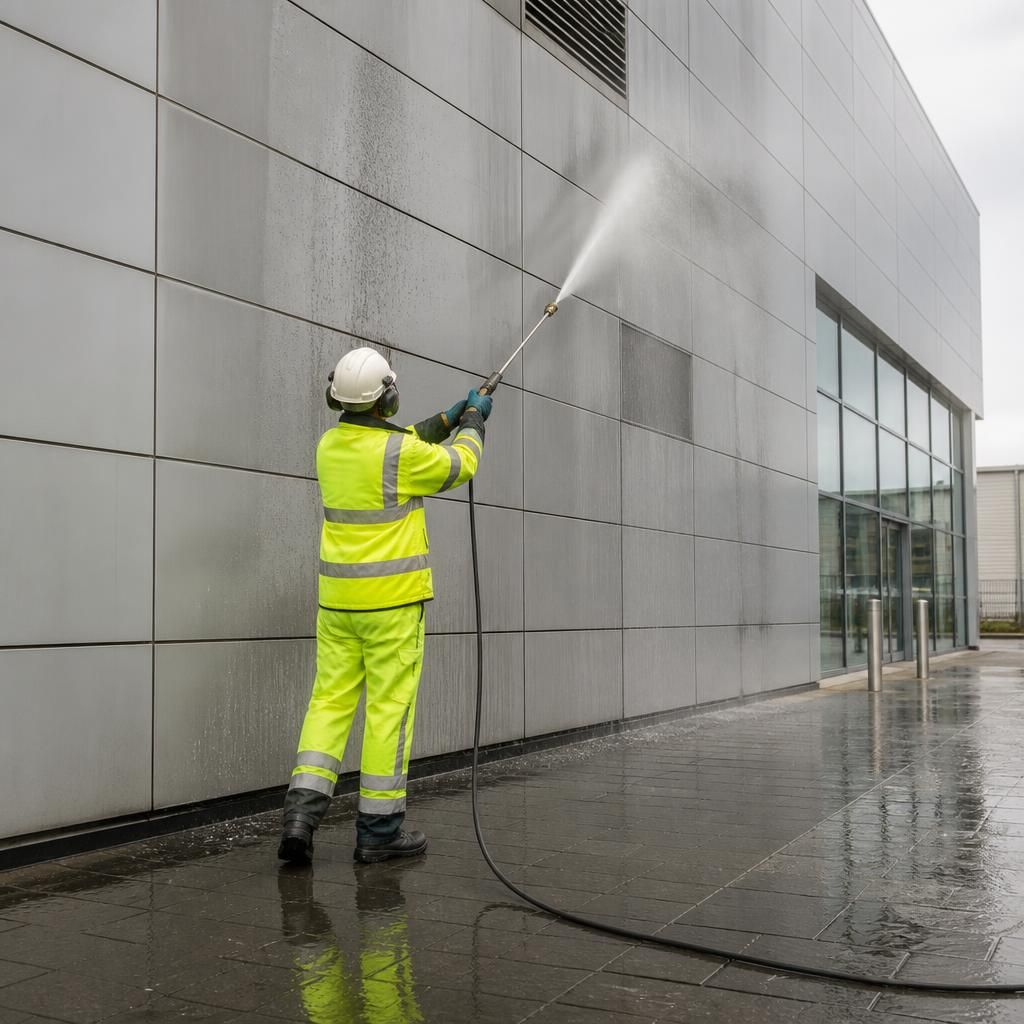
Commercial exterior cleaning supports environmental sustainability by extending the useful life of façades, cladding, roofs, paving and other external surfaces. Removing algae, moss, bird fouling, traffic film and industrial deposits helps limit moisture retention, staining, corrosion and coating deterioration, reducing the need for premature repairs or replacement.
This benefit depends on using a method suited to the material. Excessive pressure, aggressive chemicals or uncontrolled abrasion can damage coatings, pointing and joints, creating additional waste. A site-specific assessment, controlled test area and appropriate cleaning technique help preserve the existing surface while achieving the required standard.
Plan a More Sustainable Exterior Cleaning Programme
Speak to Encanto Exterior Cleaning about a site-specific cleaning programme that reduces water, chemical and waste impacts while protecting your building’s external surfaces. We can assess your premises and recommend suitable methods and environmental controls.