
How can the environmental impact of commercial exterior cleaning methods be minimised while ensuring effective results?
Commercial exterior cleaning can reduce environmental impact by using the least water- and chemical-intensive method suitable for each surface, such as controlled pressure washing, steam cleaning and biodegradable treatments. Effective results also depend on preventing contaminated runoff, recovering wastewater where required, selecting efficient equipment and disposing of residues in line with environmental regulations.
The environmental impact of commercial exterior cleaning is minimised by matching the cleaning method to the surface and contamination, using the lowest practical water pressure and temperature, limiting chemical use, and controlling all wastewater and residues. Effective cleaning does not depend on using more water or stronger chemicals; it depends on suitable equipment, careful preparation, trained operators and verification of the finished result.
Assess the site before choosing a method
A site assessment should identify the surface material, type and severity of soiling, nearby drains and watercourses, access limitations, sensitive landscaping and any risks to people or property. Façades, cladding, roofs, paving and industrial surfaces can respond differently to pressure, heat and cleaning agents. Testing a small, inconspicuous area helps confirm that the selected method removes the contamination without damaging coatings, joints, masonry or sealants.
Method selection should follow a least-impact principle:
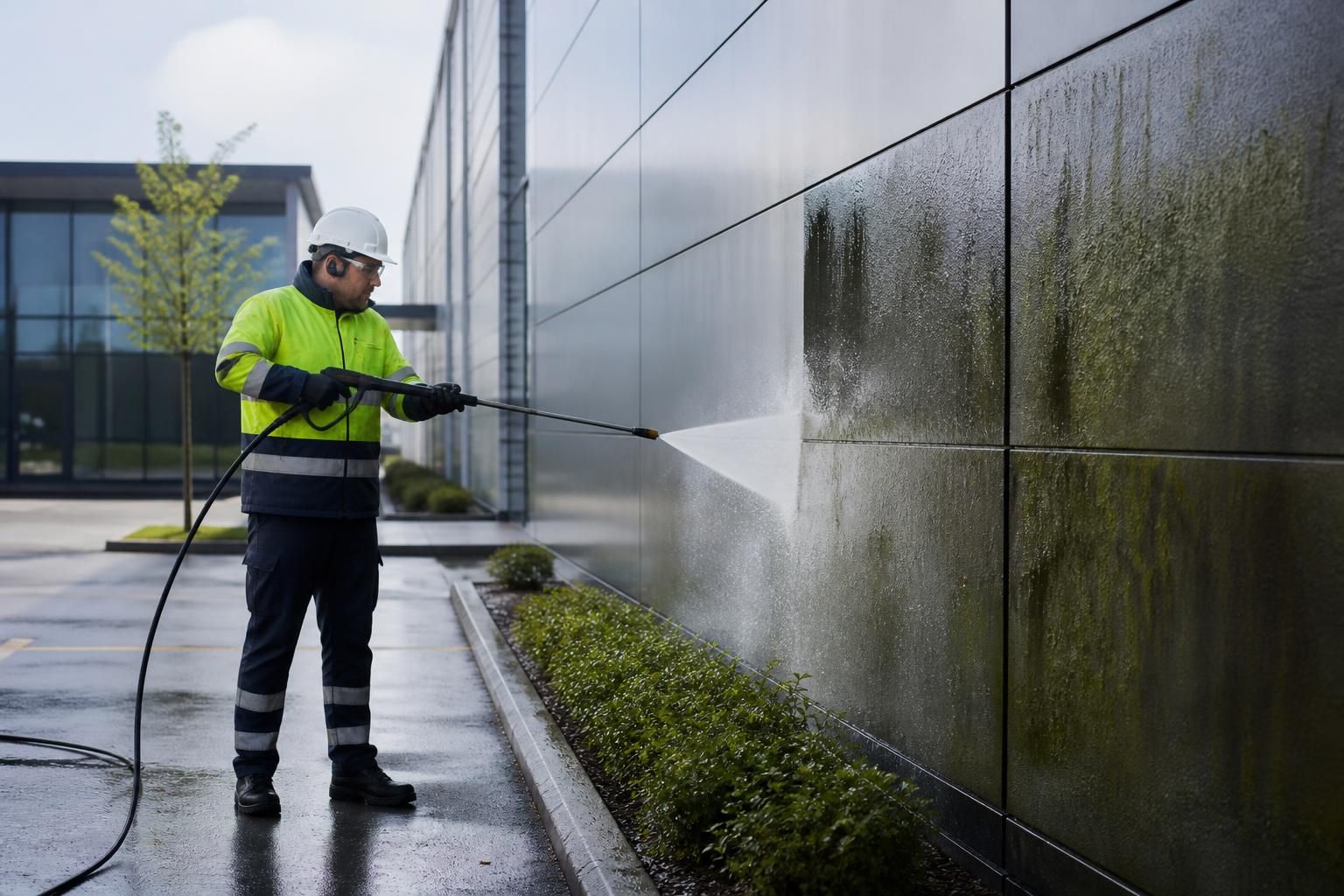
- Controlled pressure washing can remove dirt, algae, moss and deposits efficiently when pressure, flow rate, nozzle type and working distance are properly controlled. Using excessive pressure can damage surfaces and create additional waste through remedial work.
- Steam cleaning uses heated water to soften grease, biological growth and ingrained deposits, often reducing the need for detergents. It is useful where lower water volumes and controlled application are appropriate, although operators must still assess heat sensitivity and runoff.
- Low-pressure or soft-washing techniques are suitable for vulnerable finishes and delicate building materials. Any treatment solution should be selected for the contamination and applied at the lowest effective concentration.
- Mechanical methods, such as brushing or scraping, can remove loose deposits without water, but they must be used carefully to avoid scratching coatings or dispersing contaminated dust.
Reduce water consumption without compromising cleaning
Water efficiency starts with removing loose debris before washing, pre-treating heavily soiled areas and cleaning in planned sections rather than allowing water to run unnecessarily. Trigger-controlled equipment, correctly sized nozzles and efficient pumps help prevent excess flow. Operators should avoid repeatedly rinsing an area when a controlled final rinse is sufficient.
Where site conditions and legal requirements allow, recovered or treated water may be suitable for selected stages of the work. Its use must not transfer contamination between areas or affect the appearance and hygiene requirements of the surface. Any water-recovery system should be appropriate for the type of sediment, oil or chemical residue involved.
Use chemicals selectively and responsibly
Chemicals should not be used as a default substitute for appropriate pressure, heat or dwell time. Where a detergent, biocide, degreaser or graffiti treatment is necessary, the product should be suitable for the surface and contamination, applied precisely and removed in accordance with its instructions. Biodegradable or lower-impact products can reduce environmental burden, but biodegradable does not mean that a product can be discharged untreated into a drain or watercourse.
Operators should follow the product safety data sheet and control storage, dilution, application and rinsing. Over-application increases chemical consumption, may damage surfaces and creates more contaminated wastewater. Empty containers, unused product and absorbent materials must be stored and disposed of through appropriate waste channels.
Prevent contaminated runoff
Runoff is a key environmental consideration, particularly when cleaning oil-stained car parks, industrial yards, façades affected by pollutants or areas treated with chemicals. Before work starts, drains should be identified and protected where required. Temporary drain covers, bunding, booms, wet vacuums and collection tanks can help prevent dirty water entering surface-water drainage systems.
Collected wastewater should be assessed according to its contents and managed through an authorised disposal or treatment route. Surface-water drains generally discharge to the environment and must not be treated as a convenient disposal point for silt, detergents, oil, paint residue or biocidal wash water. Foul drainage may also have restrictions, so permission and suitable controls should be confirmed with the relevant site operator or water authority where necessary.
Cleaning teams should have a clear runoff plan covering drain protection, collection, temporary storage, spill response and disposal records. This is especially important on sites with fuel storage, manufacturing residues, construction dust or heavy traffic contamination.
Control waste and prevent pollution at the source
Loose moss, silt, paint flakes, chewing gum residue and other solid material should be collected rather than washed into drainage systems. Waste must be separated where practical and handled according to its characteristics. Materials contaminated with oils, chemicals or hazardous substances require more controlled storage and disposal than ordinary swept debris.
Preventing spills is preferable to dealing with them afterwards. Equipment should be checked for leaking hoses, fittings, fuel and hydraulic fluids before arriving on site. Chemicals and fuels should be kept secure, labelled and protected from impact. Spill kits should be available where the work presents a realistic spill risk, with staff knowing how to use them and who to notify.
Use efficient equipment and responsible access planning
Well-maintained pressure washers, steam cleaners, pumps and vacuum systems operate more efficiently and are less likely to leak or require repeat passes. Equipment should be selected for the scale of the work rather than being unnecessarily oversized. Electric equipment may reduce local exhaust emissions where the site has suitable power and the operational requirements permit it. If fuel-powered equipment is required, efficient operation, preventative maintenance and avoiding unnecessary idling can reduce fuel use and emissions.
Access planning also affects environmental performance. Combining tasks during a planned visit can reduce repeat travel, while suitable access equipment can allow operators to work accurately and minimise overspray. Equipment must never be selected solely for efficiency if it creates unacceptable risks to workers, building users or the public.
Protect surrounding habitats, occupants and materials
Cleaning should be scheduled to limit disturbance to occupants, pedestrians, wildlife and sensitive landscaping. Plants, soil, air-intake systems, electrical equipment and stored goods may need shielding or temporary relocation. Weather conditions matter: wind can spread spray and vapour, while heavy rain can overwhelm runoff controls and carry contaminants beyond the work area.
Particular care is required around nesting birds, protected species, watercourses and areas with established vegetation. The work plan should account for relevant site restrictions and environmental duties, rather than treating protection measures as an afterthought.
Verify that lower-impact cleaning has still achieved the required result
Environmental performance should be assessed alongside cleanliness, surface condition and operational requirements. A completion inspection can confirm that contamination has been removed, no coating or substrate damage has occurred, drains and surrounding areas are clean, and collected wastewater and waste have been handled correctly. Photographic records, method statements, product details and disposal documentation can provide useful evidence for facilities managers and compliance audits.
For ongoing contracts, the findings from each visit should inform future maintenance. Removing light soiling at planned intervals may require less water, heat and chemical treatment than allowing deposits to become heavily ingrained. A documented cleaning schedule can therefore reduce the environmental impact over the life of the building while maintaining safe, presentable premises.
In practice, the most sustainable approach is not a single cleaning technique. It is a controlled process: survey the site, select the least intensive effective method, use water and chemicals precisely, contain runoff, manage waste lawfully, maintain equipment and check the result. This approach supports effective commercial exterior cleaning while reducing avoidable pollution, resource use and repeat work.
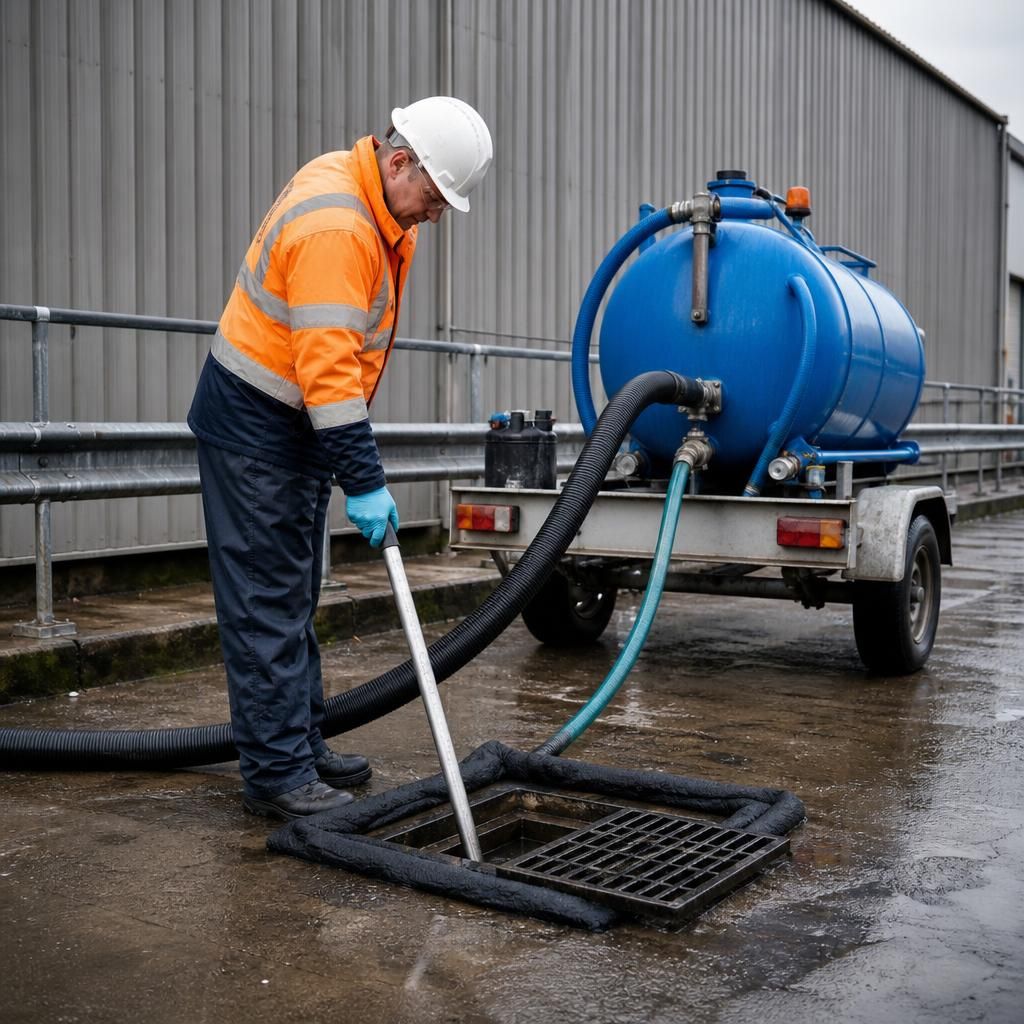
Controlling contaminated runoff is one of the most important ways to reduce the environmental impact of commercial exterior cleaning. Water carrying oil, silt, detergents, paint residue or biocidal treatments must be prevented from entering surface-water drains, soil or nearby watercourses.
Before cleaning begins, the team should identify drainage points and assess the contamination present. Where necessary, drains can be protected with temporary covers or bunding, while wet vacuums, booms and collection tanks help recover dirty water. Solid debris such as moss, silt and paint flakes should be collected rather than washed away.
Collected wastewater must be managed through an appropriate treatment or disposal route. Drainage permissions and site requirements should be confirmed in advance, particularly when cleaning oil-contaminated yards, industrial areas or chemically treated surfaces. This approach allows effective cleaning while controlling pollution at its source.