What types of equipment are used in factory and warehouse exterior cleaning?
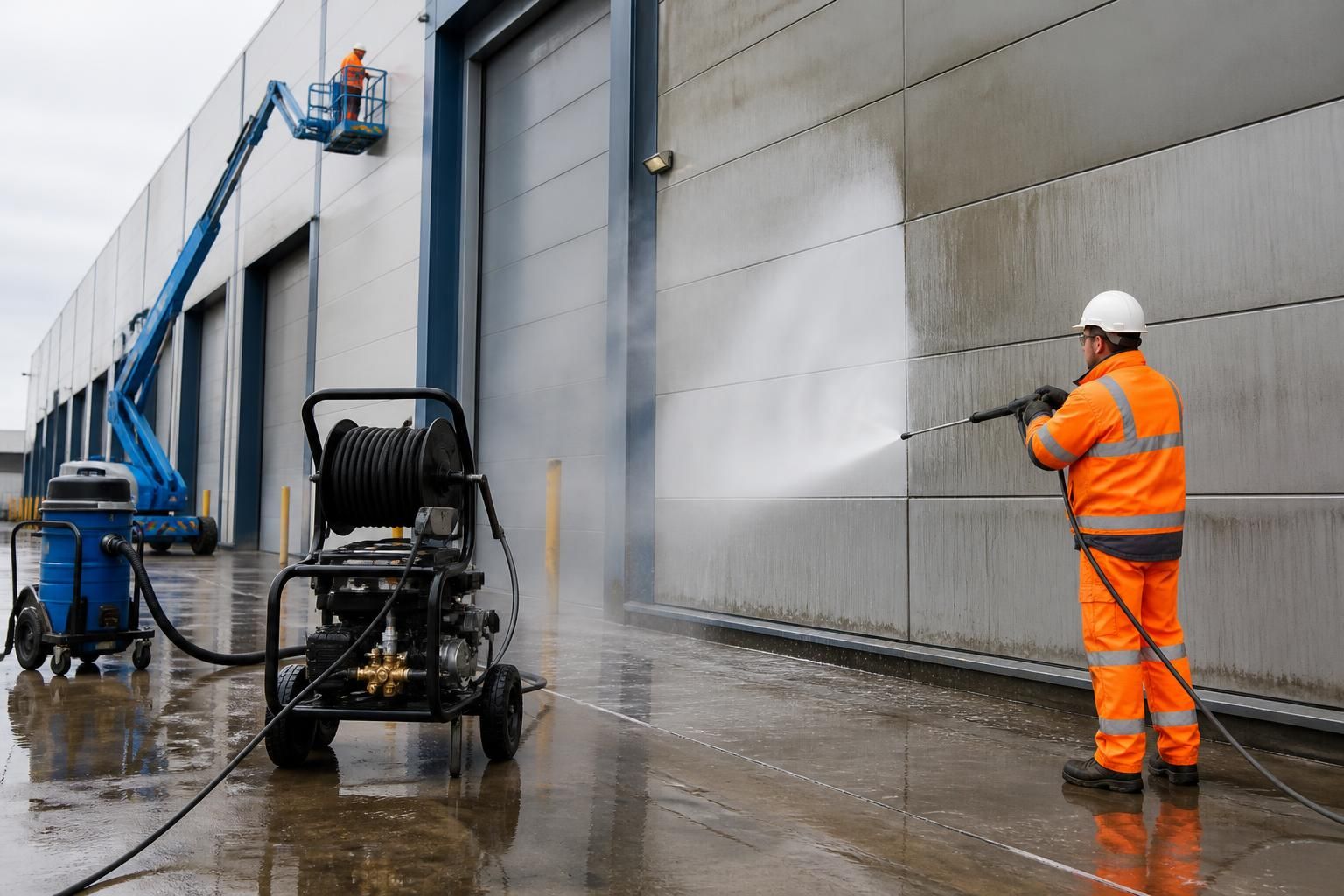
Factory and warehouse exterior cleaning typically uses pressure washers, steam-cleaning equipment, soft-washing systems, industrial vacuums and water-recovery equipment, selected according to the surface and contamination. Access equipment such as mobile elevated work platforms, cherry pickers, scaffolding or telescopic systems enables safe cleaning of high façades, roofs, cladding and other hard-to-reach areas.
Factory and warehouse exterior cleaning uses a combination of pressure-washing, steam-cleaning, soft-washing, vacuum, water-recovery and access equipment. The correct combination depends on the surface, height, contamination, drainage arrangements and operational conditions at the site. Equipment is selected to remove dirt effectively without damaging cladding, coatings, sealants, roofing materials, windows or surrounding assets.
Pressure-washing equipment is used for robust surfaces and heavy deposits such as traffic film, mud, algae, moss, oil residues and loose dirt. Commercial pressure washers can deliver controlled water flow at different pressures, allowing operators to clean concrete yards, loading areas, paving, brickwork, retaining walls and suitable cladding. Adjustable lances, rotary surface cleaners and specialist nozzles help produce an even finish while limiting splashback and reducing the risk of surface damage.
Pressure is not applied uniformly across a building. A high setting may be suitable for some concrete surfaces but inappropriate for painted panels, mortar joints, fragile coatings or older masonry. Experienced operatives adjust the pressure, nozzle, distance and cleaning angle after assessing the material and carrying out a test area where necessary.
Steam-cleaning equipment uses heated water, often at lower pressure than conventional power washing, to loosen grease, oil, biological growth and ingrained staining. It is useful around food, manufacturing and logistics premises where surfaces may have accumulated stubborn residues. Steam can also help clean sensitive areas where excessive pressure could force water beneath cladding joints, seals or fixtures. The process still requires suitable surface assessment and controlled water management.
Soft-washing systems apply a suitable cleaning solution at low pressure to break down algae, moss, mould and other organic contamination. They are commonly used on roofs, coated cladding, render, painted surfaces and areas where aggressive mechanical cleaning could cause damage. The solution must be selected for the material and contamination, applied in a controlled manner, allowed appropriate contact time and rinsed or managed in accordance with the site requirements.
Soft washing is not simply a low-pressure alternative to power washing. It involves chemical handling, protection of nearby vegetation and drainage controls, as well as careful rinsing. The operator must prevent overspray from reaching vehicles, ventilation openings, electrical equipment, stored goods and occupied areas.
Water-fed poles and specialist window-cleaning systems are used for glazing, windows, glazed curtain walling and some high-level surfaces. Purified water helps reduce spotting as it dries and allows cleaning from a safer position at ground level where the building and access conditions permit. These systems are particularly useful for regular maintenance, although they are not suitable for every height, façade design or type of contamination.
Industrial vacuum systems remove dry debris, loose dust, cobwebs, nesting material and contaminated residues from external ledges, canopies, vents and sheltered areas. Wet-and-dry vacuums may be used where water and debris need to be collected together. Vacuum equipment is especially valuable near doorways, loading bays, drainage channels and areas where uncontrolled runoff could create a slip, pollution or housekeeping risk.
Water-recovery and wastewater-management equipment captures contaminated wash water so it can be contained, filtered, treated or disposed of through an approved route. This may include wet vacuums, recovery mats, bunding, drain covers, silt filters, collection tanks and pumping equipment. The required arrangement depends on the contaminants present, the site drainage system and the environmental controls specified for the work. Wash water containing oil, chemicals, heavy sediment or other pollutants should not be allowed to enter surface-water drains without appropriate controls.
Access equipment provides a safe working position for high-level façades, roofs, canopies, gutters, signs and warehouse elevations. The equipment used may include:
- Mobile elevated work platforms, including scissor lifts and boom lifts, for reaching elevated façades and areas with a suitable firm base.
- Cherry pickers or articulated boom platforms where the work requires horizontal outreach or access over obstacles.
- Truck-mounted platforms for sites requiring flexible positioning across a large external area.
- Telescopic systems and long-reach cleaning poles for selected high-level tasks that can be completed from ground level.
- Scaffolding or temporary access platforms where prolonged work, repeated access or detailed façade cleaning requires a stable working platform.
- Rope-access systems in appropriate circumstances, subject to a specific assessment, competent operatives and suitable rescue arrangements.
Access equipment is chosen according to ground conditions, working height, outreach, building layout, overhead obstructions, nearby traffic and the weight of the operator and equipment. A machine that can reach the required height may still be unsuitable if the ground cannot support it, if the platform would obstruct vehicle routes or if wind conditions make its use unsafe.
Ancillary equipment is also important to the cleaning process. This can include hoses and reels, water tanks, generators, extension systems, surface brushes, scrapers, squeegees, gutter-cleaning tools, lance attachments and containment sheeting. For industrial sites, operators may also use warning barriers, cones, exclusion-zone equipment, signage and temporary protection for doors, vents, lights and electrical fittings.
Cleaning equipment is normally selected through a site assessment rather than by using one machine for every task. The assessment considers:
- the construction and condition of the surface, including cladding, concrete, brick, render, roofing membranes, glazing and painted finishes;
- the type and severity of contamination, such as dust, grease, oil, algae, moss, bird fouling, graffiti or construction residue;
- the height, shape and accessibility of each elevation;
- the availability and location of water, power and suitable drainage;
- the presence of vehicles, machinery, stock, staff, pedestrians and neighbouring properties;
- weather conditions, particularly wind, frost, rain and conditions affecting work at height;
- the need to keep entrances, loading bays, production areas and vehicle routes operational; and
- requirements for wastewater recovery, chemical control and protection of the surrounding environment.
Safe operation requires more than having the correct machine. Equipment must be inspected, maintained and used by trained operatives in line with the manufacturer’s instructions and the site-specific risk assessment. Hoses and cables should be routed to avoid trip hazards, electrical equipment should be protected from water, and access platforms should be positioned on suitable ground with the required exclusion zones in place. Operators also need appropriate personal protective equipment, which may include eye and face protection, gloves, protective footwear, hearing protection, respiratory protection and fall-arrest equipment where required.
For large factories and warehouses, the most effective approach is usually a planned combination of equipment. For example, a contractor may use an access platform and low-pressure system for upper cladding, a rotary surface cleaner for concrete yards, steam equipment for oily loading areas, a soft-washing system for roof growth and water-recovery equipment around drainage-sensitive zones. This matched approach improves control, reduces unnecessary water or chemical use and helps protect the building while delivering a consistent clean.
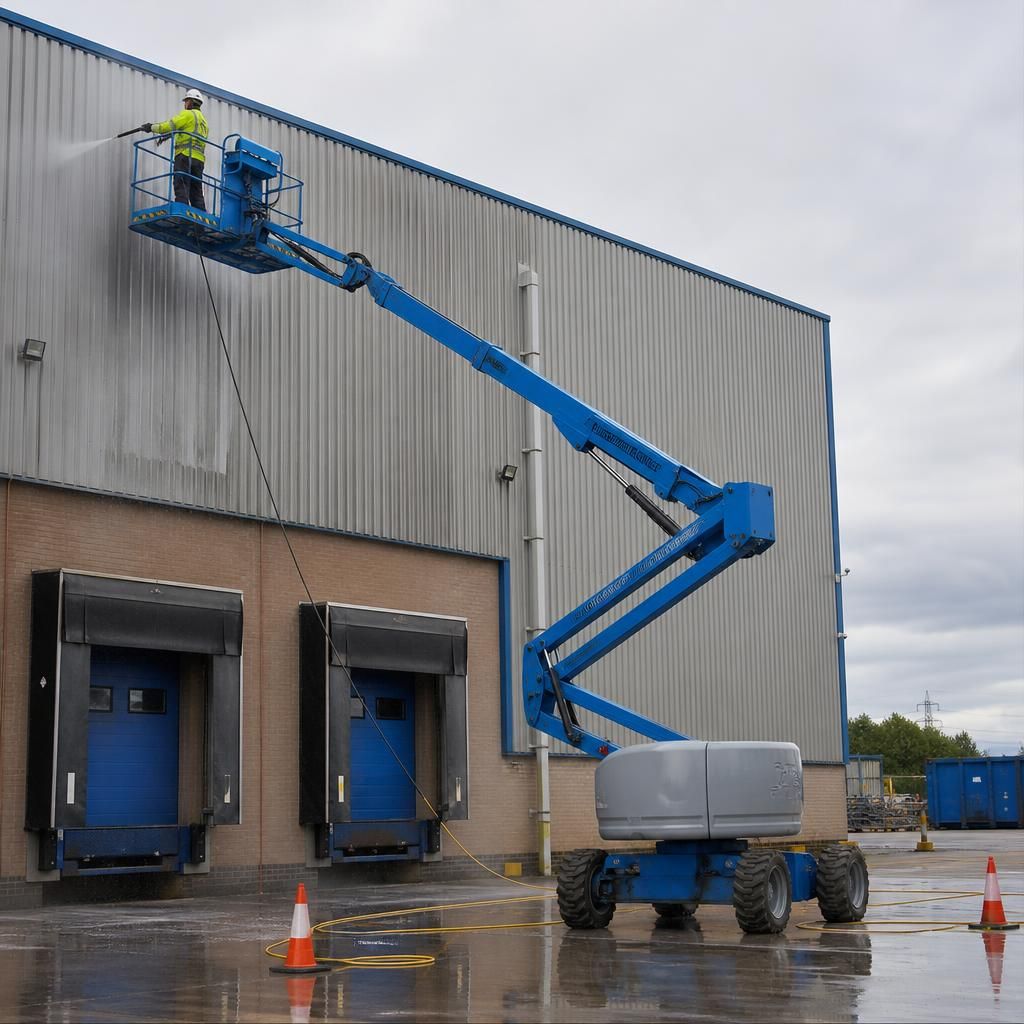
Access equipment provides a safe, stable working position for cleaning high-level factory and warehouse exteriors, including façades, cladding, roofs, canopies, gutters and signage. Depending on the building layout, this may include scissor lifts, articulated boom platforms, truck-mounted platforms, scaffolding or long-reach cleaning systems.
The equipment is selected according to working height, horizontal reach, ground conditions, overhead obstructions, nearby traffic and the weight of the operator and cleaning tools. A platform must be suitable for the surface beneath it and positioned within a controlled exclusion zone. Where ground-level systems can safely reach the area, they may reduce the need for work at height; otherwise, a properly assessed platform provides more controlled access for detailed cleaning.