
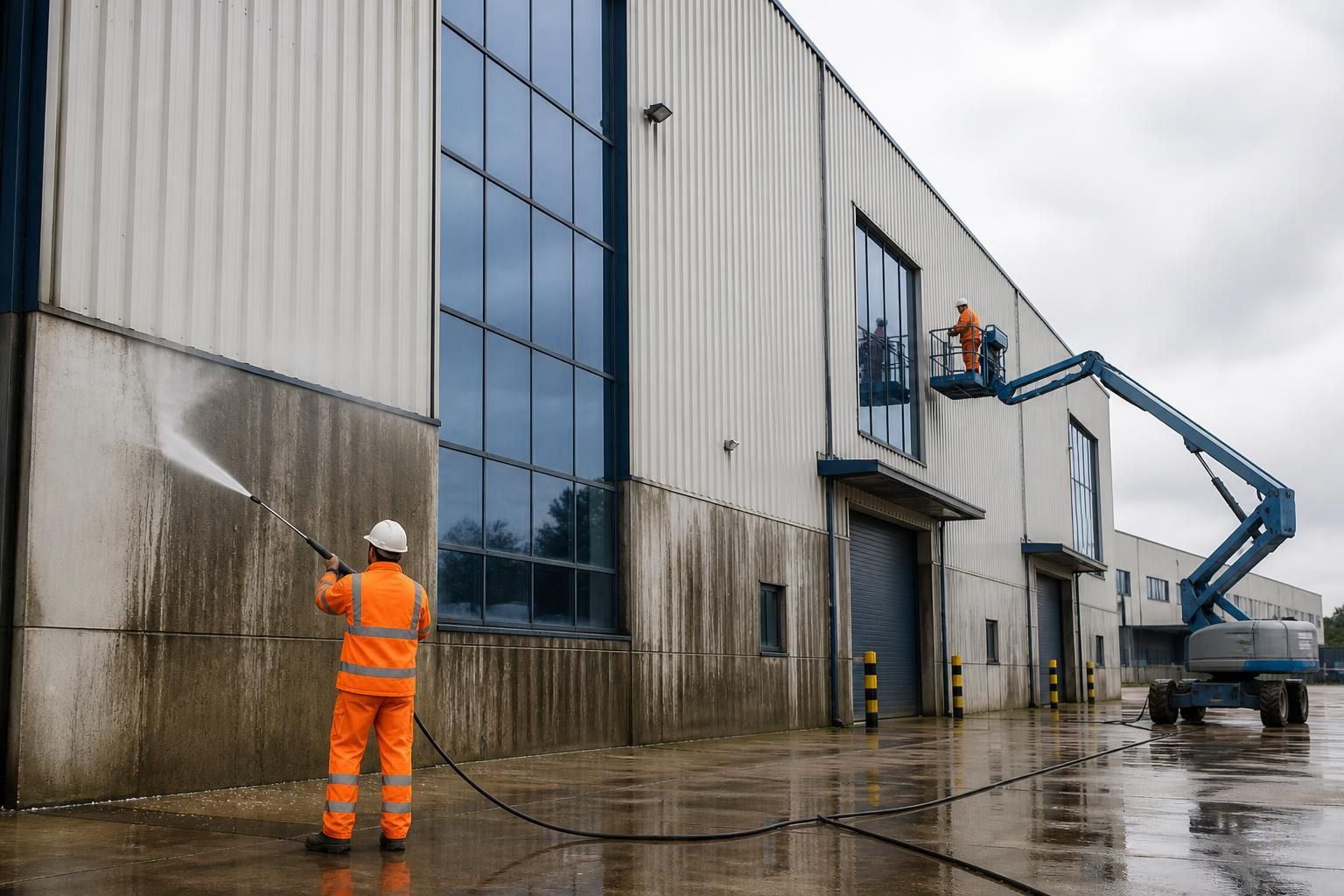
What factors should be considered when selecting a factory and warehouse exterior cleaning service?
When selecting a factory and warehouse exterior cleaning service, consider the contractor’s relevant industrial experience, health and safety procedures, cleaning methods, access equipment, environmental controls, insurance and ability to work around your operations. Check that the proposed service includes a clear site assessment, method statement, risk assessment, schedule and transparent quotation tailored to your buildings and surfaces.
The most important factors when selecting a factory and warehouse exterior cleaning service are relevant industrial experience, a properly assessed scope of work, safe working procedures, suitable equipment, appropriate cleaning methods and a quotation that clearly defines what is included. The contractor should be able to work around loading areas, vehicles, staff and production activities without creating avoidable risks or disrupting site operations.
Factory and warehouse exteriors often combine cladding, brickwork, concrete, coated metal, glazing, roofing materials, paved areas and drainage systems. These surfaces can have different levels of weathering and contamination, so a suitable service should be based on the condition and construction of the buildings rather than a standard pressure washing package.
Relevant commercial and industrial experience
Check whether the contractor regularly works on facilities similar to yours. Experience should include large elevations, high-level surfaces, loading bays, service yards, car parks, roofs or canopies where these form part of the required work. Industrial cleaning also requires an understanding of operational constraints, including delivery movements, restricted access, security controls, pedestrian routes and areas where cleaning water or equipment cannot interfere with machinery.
Ask for evidence of comparable work, suitable references or a clear explanation of how the proposed team will manage your type of site. A contractor experienced in domestic or small commercial cleaning may not have the planning, access equipment or site controls required for a busy factory or distribution warehouse.
A detailed site survey and defined scope
A site visit should be used to inspect the building elevations, surface materials, contamination, access points, drainage, water supply, electrical considerations and areas that may be vulnerable to water ingress. The survey should also identify fragile cladding, damaged coatings, defective sealants, loose materials and locations where cleaning could worsen an existing defect.
The quotation should distinguish between the areas to be cleaned and any items excluded from the work. It should describe whether it covers façades, cladding, roofs, windows, doors, dock levellers, yard surfaces, signage, canopies, gutters, fences or graffiti removal. This avoids uncertainty when work begins and makes quotations easier to compare.
Cleaning methods suited to each surface
The contractor should explain why a particular method is appropriate. Pressure washing can be effective on robust masonry, concrete and hard-standing areas, but excessive pressure or unsuitable nozzles can damage coatings, joints and softer materials. Steam cleaning or lower-pressure methods may be more appropriate for sensitive surfaces, delicate finishes, ingrained biological growth or areas where reduced water use is beneficial.
Where detergents or biocidal treatments are proposed, ask what they are intended to remove, how they will be applied and how run-off will be controlled. A small test area can help confirm the result and identify any reaction between the cleaning system and the surface coating. The aim should be to remove contamination without stripping finishes, forcing water behind panels or causing unnecessary wear.
Access equipment and high-level work
High-level cleaning may require mobile elevated work platforms, truck-mounted platforms, towers, specialist poles, rope access or other access systems. The correct choice depends on height, reach, ground conditions, obstacles, overhead services and the need to keep routes open.
Ask how the contractor will position equipment on your premises and whether the ground, yard layout and traffic management arrangements are suitable. Access equipment should be operated by trained and competent personnel, inspected as required and used in accordance with the relevant manufacturer’s instructions. Where a platform, tower or other system is unsuitable, the contractor should propose a safer alternative rather than relying on improvised access arrangements.
Health and safety controls
Request a site-specific risk assessment and method statement before work starts. These documents should address work at height, pressure and steam equipment, chemicals, electrical risks, falling objects, slippery surfaces, vehicle movements, public or employee access, weather conditions and emergency arrangements.
Confirm how the work area will be segregated and how pedestrians, forklifts, delivery vehicles and other site users will be protected. Barriers, warning signs, banksmen, temporary closures and agreed exclusion zones may be needed. The contractor should also explain how equipment failures, injury, chemical exposure, unexpected structural defects and other emergencies will be managed.
Competence is as important as paperwork. Check that the operatives have appropriate training for the cleaning systems and access equipment they will use, and that subcontractors are subject to the same safety and quality requirements. The work should be coordinated with your own site rules, permit systems and contractor induction process.
Environmental and wastewater arrangements
Cleaning a large industrial site can generate contaminated water containing dirt, oils, paint residues, detergents or biological material. Before appointing a contractor, establish how water will be contained, collected, filtered or disposed of. Run-off should not be allowed to enter surface-water drains where it could cause pollution.
The service should identify any sensitive drainage points, watercourses, landscaped areas or neighbouring premises. Where detergents are necessary, the contractor should use them in a controlled manner and follow the product instructions and site requirements. Consideration should also be given to water consumption, noise, chemical storage and the prevention of residue being transferred to clean areas.
Ability to work around your operations
Factories and warehouses cannot always close for cleaning. A suitable contractor should be able to plan work around production, deliveries, shift changes, security restrictions and peak traffic periods. Discuss whether cleaning can be completed in separate zones, outside operating hours or during planned shutdowns.
The programme should set out the sequence of work, expected site requirements, areas that must be made available and any temporary restrictions. Good planning reduces the likelihood of wet floors, blocked access routes, overspray, noise or equipment obstructing essential activity.
Insurance, documentation and contractual clarity
Verify that the contractor holds appropriate public liability and employer’s liability insurance, with cover suitable for the scale and nature of the work. You should also receive clear contact details, written terms and confirmation of who is responsible for permits, traffic management, wastewater handling and any specialist access arrangements.
A professional quotation should state the cleaning methods, areas, preparation, access equipment, labour, chemical use, waste or wastewater arrangements, programme and any assumptions. It should also explain how additional work will be authorised if hidden defects, difficult contamination or access restrictions are discovered. Comparing like-for-like quotations is more useful than choosing solely on the lowest price.
Quality checks and protection of the building
Ask how the completed work will be inspected and recorded. This may include agreed completion standards, photographs, a walk-round with the site representative and a list of areas requiring further attention. The contractor should report defects such as cracked panels, failed sealant, damaged coatings or blocked drainage rather than concealing them through cleaning.
It is also important to understand what the cleaning service can and cannot achieve. Some staining, corrosion, etching, paint failure or deeply embedded contamination may not be removable without damaging the substrate. A reliable assessment will explain these limitations and identify whether repair, repainting or specialist treatment is required.
Ongoing maintenance capability
If the site needs more than a one-off clean, consider whether the contractor can provide a planned maintenance schedule. Regular inspections and cleaning can help control algae, moss, atmospheric soiling, graffiti and the build-up of dirt in loading or pedestrian areas. The frequency should reflect the building’s materials, location, exposure, usage and contamination levels, rather than being set without a site assessment.
Agree what will be reviewed during future visits, how access and operational changes will be handled, and how any newly identified defects will be reported. A documented maintenance plan can make budgets easier to manage and reduce the need for disruptive reactive cleaning.
Before appointing a service, ask for a site-specific proposal covering the scope, cleaning methods, access plan, risk controls, environmental arrangements, programme, insurance and full cost. If the contractor can explain each decision in relation to your buildings and operations, provide the required documentation and communicate any limitations clearly, you are better placed to select a safe, suitable and dependable factory and warehouse exterior cleaning service.
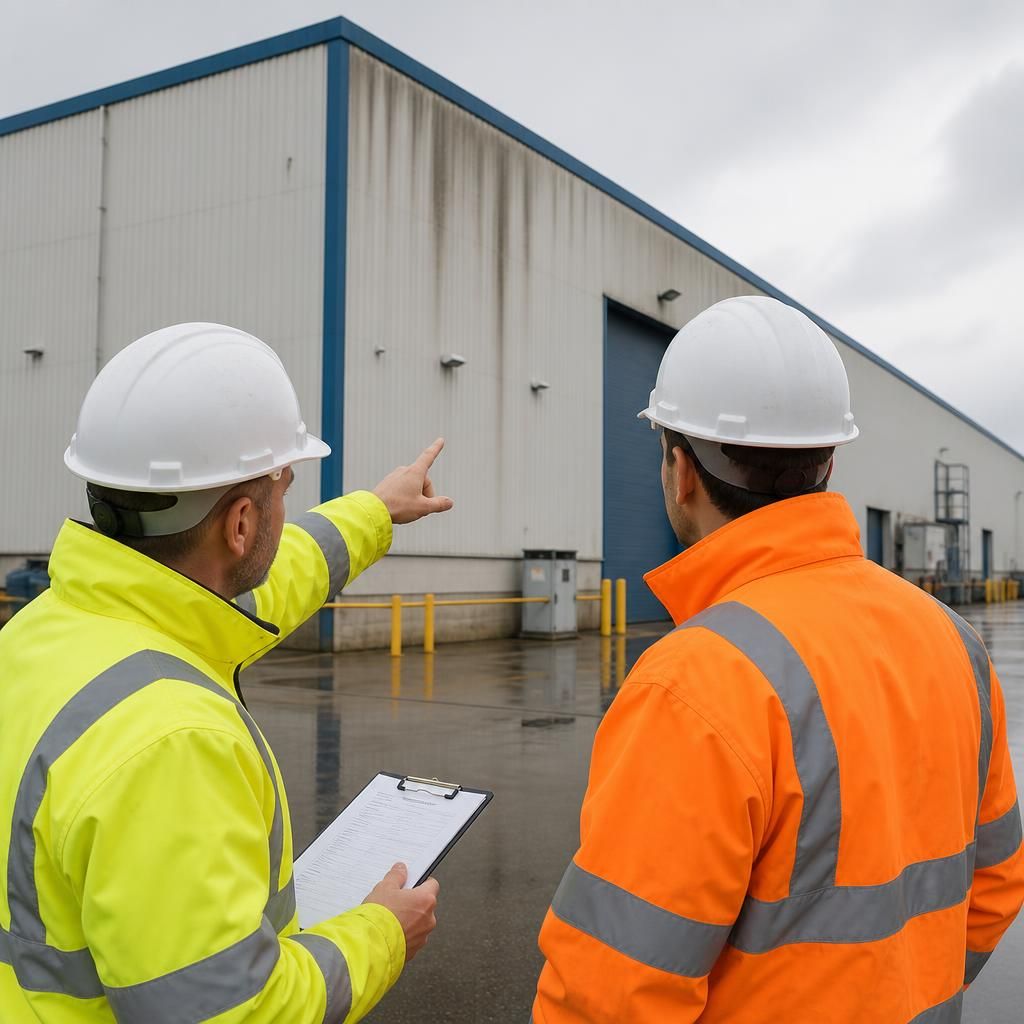
A site-specific survey is essential when selecting a factory and warehouse exterior cleaning service because it identifies the surfaces, contamination, access requirements and operational risks before work begins. The contractor should assess cladding, brickwork, concrete, roofs, loading areas, drainage and high-level sections, then explain which cleaning methods and equipment are suitable for each area.
The resulting proposal should clearly state what is included, any exclusions, how cleaning water and run-off will be managed, and how work will be coordinated around deliveries, staff and production. This makes quotations easier to compare and helps prevent unsuitable pressure, unexpected disruption or additional costs once cleaning has started.
Arrange a Site-Specific Exterior Cleaning Assessment
Arrange a site-specific exterior cleaning assessment to review your factory or warehouse surfaces, access requirements, operational constraints and wastewater controls. We can then provide a clear proposal covering suitable methods, safety measures, programme and costs.