
What factors influence the cost of factory and warehouse exterior cleaning?
The cost of factory and warehouse exterior cleaning is influenced by the size and height of the building, the condition and type of surfaces, access requirements, cleaning methods, site location and any additional services needed. Recurring maintenance, restricted working areas and specialist equipment can also affect the final quotation.
Factory and warehouse exterior cleaning costs are determined by the scale and height of the premises, the type and condition of the surfaces, access requirements, the level of soiling, and the cleaning methods needed. Site location, operational restrictions, health and safety controls, environmental requirements and any additional works can also affect the final quotation. A professional estimate should therefore be based on a site assessment rather than building size alone.
Building size, layout and height
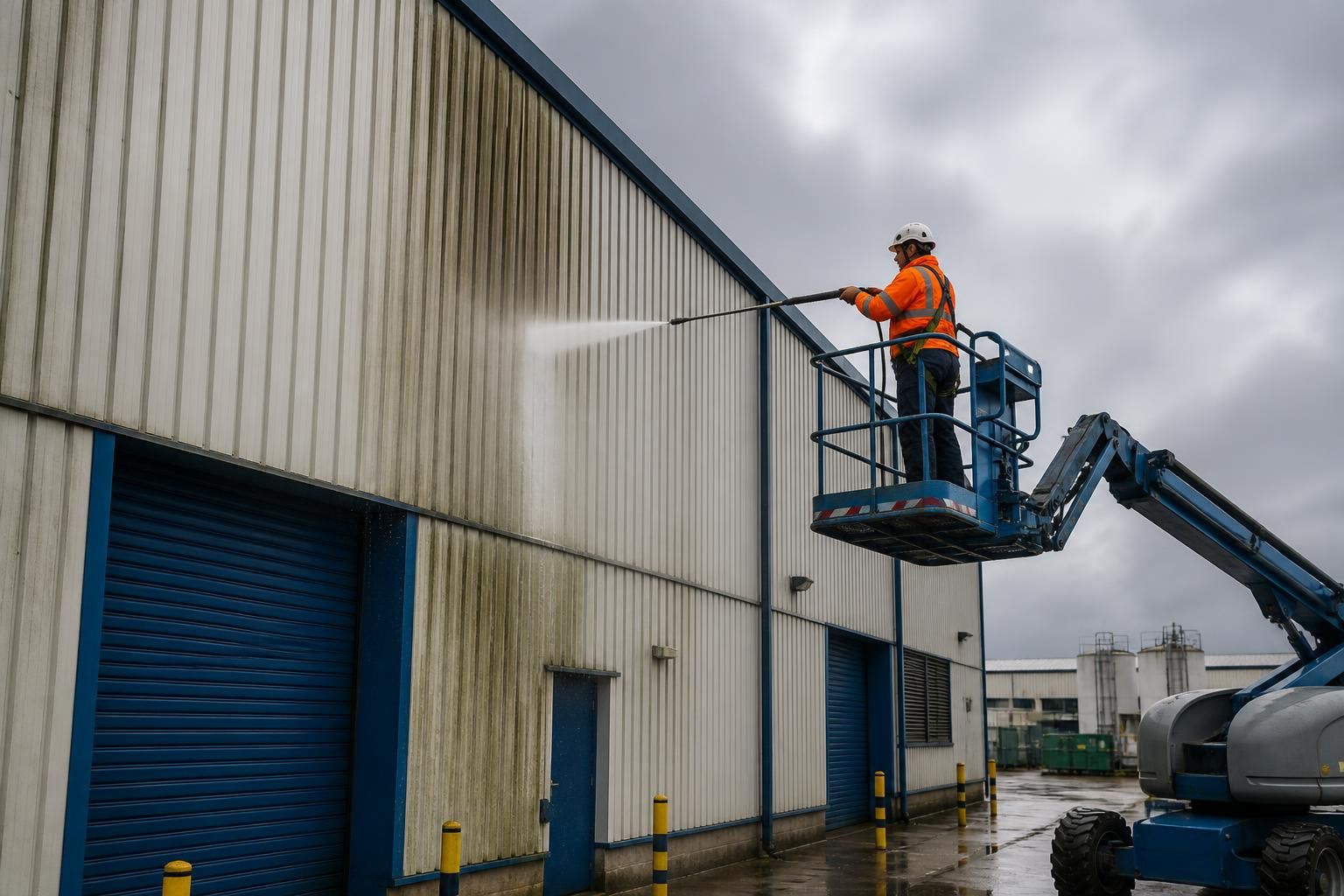
The total area requiring cleaning is an obvious cost factor, but the layout of a site is equally important. A large, open warehouse elevation may be relatively straightforward to clean, whereas a site with multiple buildings, extensions, recessed loading bays, covered walkways and complex rooflines will require more preparation and movement between work areas. Tall elevations may require powered access equipment, water-fed systems or other specialist methods, increasing equipment, setup and operator costs.
Cleaning a complete facility will usually involve more than the main walls. The quotation may need to account for cladding, brickwork, concrete, render, windows, doors, dock levellers, canopies, roof edges, external stairways, service yards and hardstanding. Clearly identifying which areas are included helps prevent unexpected additions later.
Surface type and condition
Different materials respond to different levels of pressure, temperature and chemical treatment. Metal cladding, painted surfaces, brickwork, concrete, render and delicate architectural finishes each require an appropriate cleaning approach. A surface that can be cleaned efficiently with a controlled pressure wash may require a slower, lower-pressure or steam-cleaning process if there is a risk of damage.
The existing condition of the surface also affects the work involved. Light dust and general atmospheric soiling can often be removed more efficiently than heavy oil deposits, ingrained dirt, algae, moss, bird fouling, rust staining or traffic film. Long-neglected surfaces may require pre-treatment, agitation, repeated passes or localised stain treatment. Where coatings, sealants or paint are damaged, cleaning may need to be carried out more cautiously and may reveal repairs that fall outside the cleaning scope.
Access and working conditions
Access is often one of the most significant factors in industrial cleaning costs. The assessment will consider whether operatives can work from ground level or whether specialist access equipment is required. This may include mobile elevated work platforms, scissor lifts, boom lifts, telescopic systems, water-fed poles or other equipment suited to the building and surroundings.
Equipment selection depends on more than the building height. Ground conditions, available working space, overhead obstructions, nearby traffic, power lines, roof structures and the position of parked vehicles can all affect the safe method of access. Restricted areas may require additional setup time, traffic management, exclusion zones or phased working. If access equipment must be transported between separate parts of a site, this can also influence the quotation.
Cleaning method and equipment
Pressure washing, soft washing, steam cleaning and specialist chemical treatment each have different labour, equipment and preparation requirements. The selected method should be based on the surface, contamination and risk of damage rather than price alone.
- Pressure washing can be effective for robust concrete, paving and some cladding, subject to suitable pressure control and water management.
- Steam cleaning may be appropriate where lower water use, controlled temperature or careful removal of certain contaminants is required.
- Soft washing or chemical treatment can help address biological growth and delicate surfaces, but requires correct dilution, dwell time, rinsing and protection of surrounding areas.
- Specialist stain removal may be needed for graffiti, oil, rust, cement residue or other contamination that cannot be removed through general cleaning alone.
The use of specialist equipment, detergents, filtration systems, water recovery equipment or temporary power and water supplies may add to the cost. The quotation should explain whether these requirements are included.
Level and type of contamination
Industrial premises can accumulate different contaminants depending on their location and use. Dust from manufacturing or construction activity, exhaust residue, grease, oil, algae, moss, bird fouling and graffiti each require different preparation and controls. Contamination around loading areas and vehicle routes may be more deeply embedded than soiling on sheltered elevations.
Where contaminants could enter surface-water drains, additional measures may be necessary. These can include drain protection, controlled rinsing, water recovery, filtration or responsible disposal. Such precautions can increase the work involved but are important for protecting the drainage system and complying with site and environmental requirements.
Site location and logistics
The location of the premises can affect mobilisation, travel, equipment transport and the availability of suitable water, drainage and parking arrangements. A site in a busy industrial estate or urban area may require more coordination than an isolated facility. Narrow access roads, shared yards and neighbouring businesses can restrict where vehicles and equipment are positioned.
Where a project covers multiple facilities, the quotation may consider the distance between sites, the sequence of work and whether equipment can remain on location. These logistical details should be agreed in advance so that the cleaning plan reflects normal site operations.
Operating hours and disruption controls
Factories and warehouses often need to remain operational while cleaning takes place. Work may therefore need to be scheduled around deliveries, forklift routes, production activities, customer access or staff movements. Out-of-hours, weekend or phased working can require additional planning and labour, although it may reduce disruption and allow larger areas to be isolated safely.
The condition of the site during the work can also affect productivity. Clear access to elevations, temporary removal of stored materials and the availability of a site contact can help the work proceed efficiently. If these arrangements cannot be made, extra setup time or separate work phases may be required.
Health, safety and compliance requirements
Industrial exterior cleaning requires a method statement and risk assessment appropriate to the site. The scope may include work at height, access equipment, moving vehicles, electrical hazards, chemical handling, water near electrical systems and control of public or staff access. Sites with more complex hazards may require additional inductions, permits, supervision, barriers or traffic management.
These controls are not simply administrative additions. They can affect the number of personnel required, the equipment selected and the time needed to prepare and complete the work. Providing accurate information about site rules, hazards and operational constraints helps produce a more reliable quotation.
Additional services and remedial requirements
Exterior cleaning is sometimes combined with related services, such as graffiti removal, chewing gum removal, canopy cleaning, gutter and fascia cleaning, car park and yard cleaning, stain treatment or application of a protective coating. These services should be priced according to their separate preparation, materials and equipment requirements.
Cleaning may also expose damaged cladding, failed sealant, cracked render, blocked drainage or corroded components. Cleaning contractors can report visible defects, but repair, replacement and redecoration are normally separate works unless specifically included in the agreed scope.
Frequency and maintenance planning
One-off deep cleaning usually involves more preparation where dirt has accumulated over a long period. A planned maintenance programme can make subsequent visits more predictable by controlling soiling before it becomes heavily ingrained. The cost of a recurring service will depend on the agreed areas, cleaning frequency, access arrangements and the condition maintained between visits.
For an accurate quotation, provide details of the buildings and elevations required, the types of surfaces, known contamination, preferred working hours, access restrictions, drainage arrangements and any compliance requirements. A site survey can then confirm measurements, identify hazards and establish the safest effective method. The resulting quotation should clearly state the included areas, cleaning techniques, access equipment, preparation, waste or water management, exclusions and any assumptions on which the price is based.
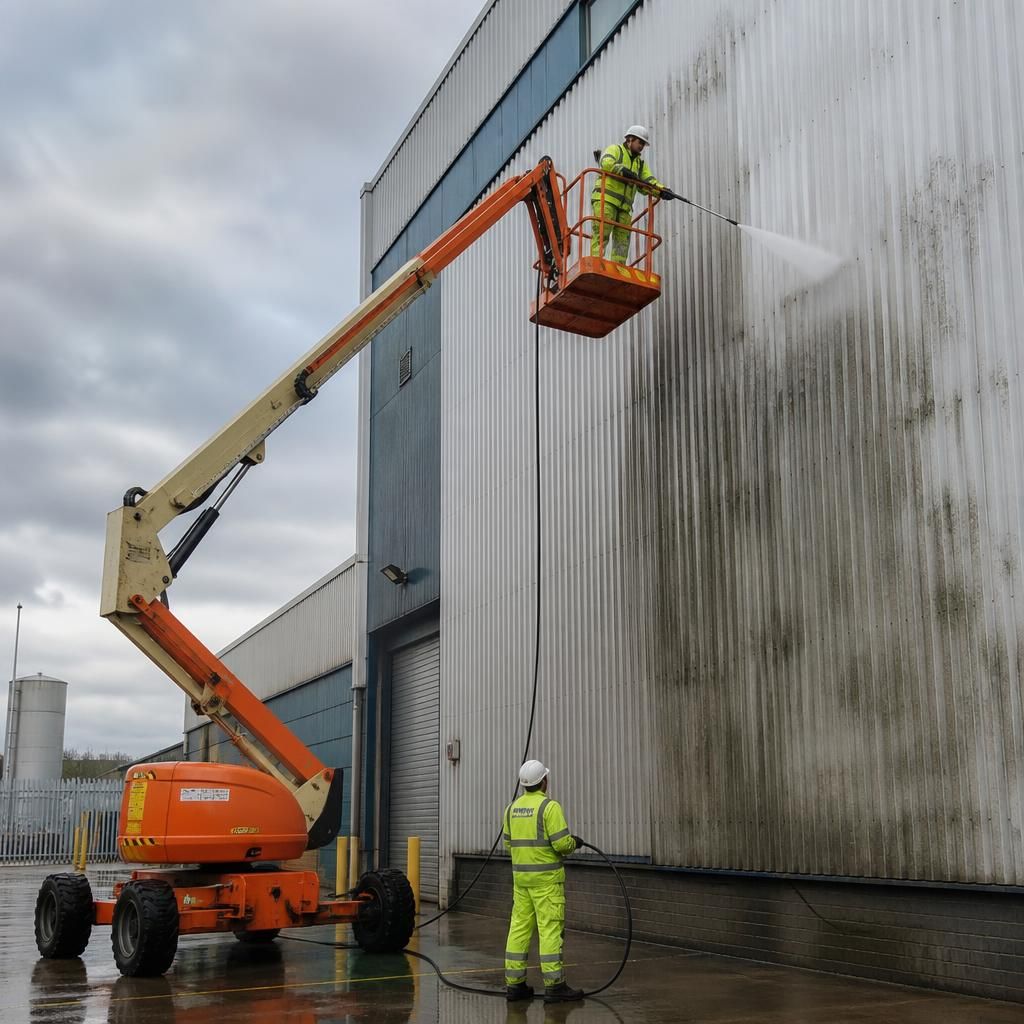
Access requirements can have a significant effect on factory and warehouse exterior cleaning costs because they determine the equipment, preparation and labour needed to reach each surface safely. Ground-level walls may be cleaned efficiently from within a controlled work area, while high elevations, recessed loading bays and obstructed façades may require powered access equipment, exclusion zones and additional setup.
The quotation should account for ground conditions, available space, overhead hazards, vehicle movements and the need to relocate equipment around the site. Providing clear information about access restrictions and operating hours helps ensure the proposed method is practical and reduces the risk of unexpected costs during the work.