
What environmental considerations are involved in factory and warehouse exterior cleaning?
Environmental considerations in factory and warehouse exterior cleaning include controlling water use, preventing contaminated runoff from entering drains or soil, and selecting cleaning chemicals that minimise harm to people, surfaces and local habitats. Effective planning also covers responsible wastewater and waste disposal, protection of nearby vegetation and wildlife, and using appropriate equipment and methods to reduce noise, emissions and unnecessary repeat cleaning.
Environmental considerations in factory and warehouse exterior cleaning centre on using resources responsibly and preventing contaminated water, chemicals, debris and waste from harming drains, soil, buildings or nearby habitats. A suitable method should control water consumption, contain and dispose of wastewater lawfully, use the least harmful effective products, and reduce noise, emissions and disturbance while still achieving the required cleaning standard.
Site assessment and environmental planning
Environmental controls should be agreed before work begins. The assessment should consider the building materials, the type of soiling, nearby watercourses, surface-water drains, landscaped areas, neighbouring premises and the possibility of contaminated residues from industrial activity. Oil, fuel, metal deposits, dust, soot, bird fouling, algae, paint and chemical residues may require different controls.
Cleaning should also be coordinated with the site’s environmental management system, drainage plan and operating requirements. A factory may have separate foul, trade-effluent and surface-water drainage systems, and these must not be treated as interchangeable. Where wastewater could contain oil, chemicals, heavy metals or other pollutants, the responsible drainage authority or sewerage undertaker may require approval, sampling or a trade-effluent consent before discharge.
Water use and method selection
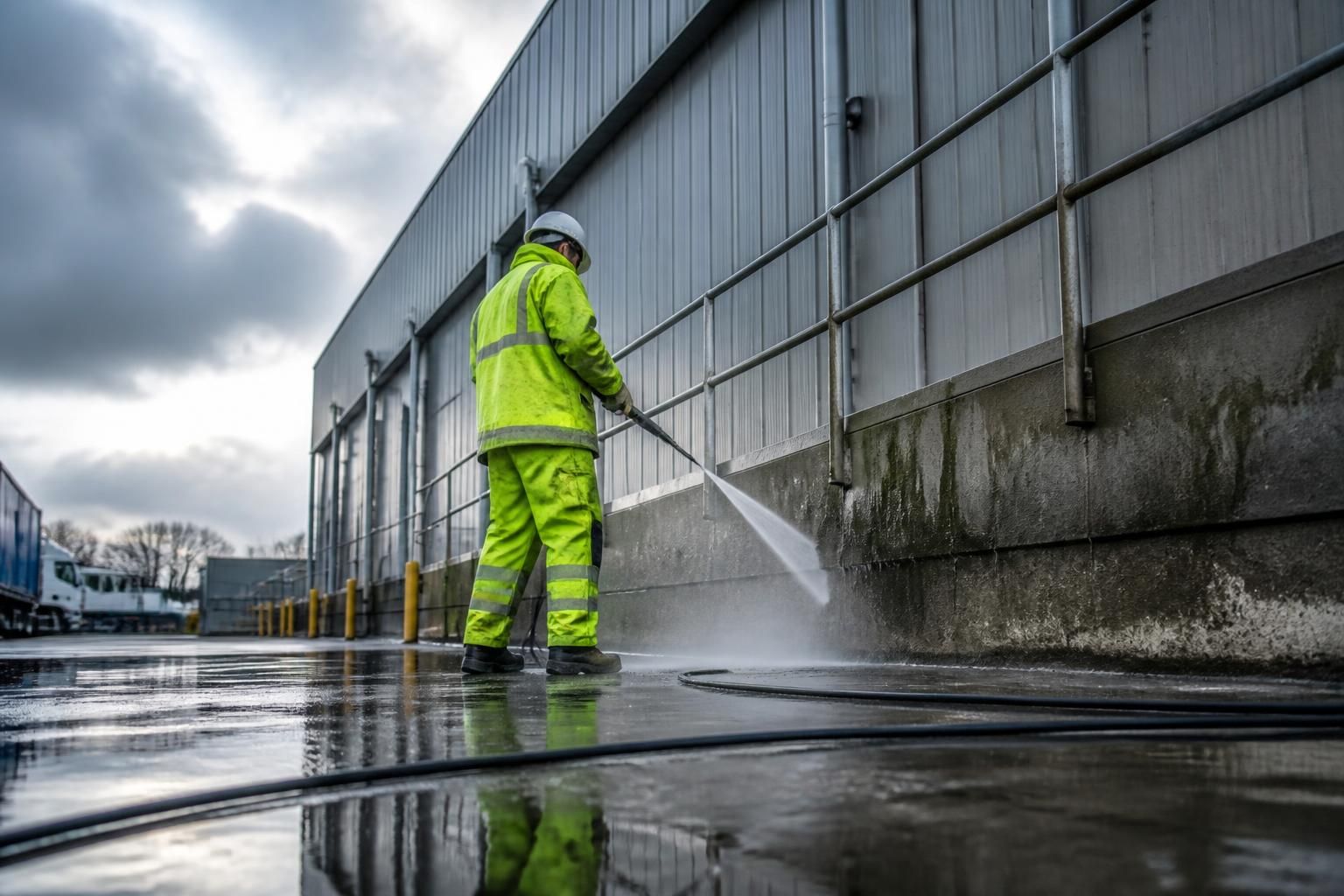
Pressure washing can use substantial volumes of water if it is carried out without control. Contractors should select the lowest-water method that is suitable for the surface and contamination, rather than applying high-volume cleaning as a default. Controlled pressure washing, steam cleaning, targeted rinsing and mechanical removal can all be appropriate, depending on the substrate and the type of dirt present.
Water use can be reduced by:
- preparing the surface and removing loose debris before wet cleaning;
- using correctly sized nozzles, pressure settings and flow rates;
- cleaning in manageable sections rather than allowing water to run over untreated areas;
- avoiding unnecessary rinsing and repeat visits through proper preparation; and
- recovering suitable wastewater for controlled treatment or disposal where the equipment and site arrangements allow.
Reducing water use must not compromise surface protection or result in contaminated water being spread over a wider area. The appropriate balance depends on the façade, cladding, roof finish, paving and any coatings that could be damaged by excessive pressure or heat.
Runoff and wastewater control
Preventing polluted runoff from entering surface-water drains, soil or watercourses is one of the most important environmental controls. Surface-water systems often discharge directly to the environment, so wastewater from cleaning should not be allowed to enter them simply because a drain is nearby.
Practical controls may include drain covers, temporary bunds, booms, suction recovery, wet vacuums, collection tanks and staged cleaning. The cleaning area should be inspected during the work, particularly where gradients, open channels or damaged paving could allow water to escape. Dry residues should be collected before washing, and any spill or unexpected discharge should be stopped and reported in accordance with the site’s incident procedure.
Collected wastewater should be assessed before disposal. It may need filtration, settlement, separation of oil or other treatment, but treatment equipment does not automatically make every discharge acceptable. Wastewater must be discharged only through an approved route and in line with the relevant site permission, sewerage requirements and environmental regulations. If it cannot be lawfully discharged, it should be removed by an appropriately authorised waste contractor.
Cleaning chemicals and surface treatments
Products should be selected according to the contaminant and the surface, using the least hazardous effective formulation and the smallest practical quantity. A mild detergent may be sufficient for general dirt, whereas biological growth, oil or heavy deposits may require a specialist treatment. Stronger chemicals should not be used merely to shorten the cleaning process.
Product information and safety data should be reviewed before use. This helps identify risks to aquatic life, vegetation, workers, building materials and drainage systems. Chemical containers should be stored securely, kept away from drains and protected from damage. Dilution should follow the manufacturer’s instructions; over-concentrated mixtures can increase environmental harm, surface damage and disposal requirements without improving the result.
Biocidal or specialist treatments may be subject to additional controls, particularly where overspray could affect plants, water or neighbouring property. Application should be targeted, with suitable exclusion zones and rinsing or recovery arrangements. Chemicals should never be mixed unless the manufacturer specifically permits it.
Protection of vegetation and wildlife
Industrial sites can contain planted borders, mature trees, drainage ponds, nesting locations and habitat around unused land or roof areas. Cleaning solutions, hot water, high-pressure spray and contaminated runoff can damage vegetation or affect wildlife, even when those areas are outside the main work zone.
Before work starts, vulnerable planting and other sensitive areas should be identified and protected. Overspray should be controlled, and runoff should be prevented from reaching soil, tree pits and ponds. Work may need to be adjusted if active nests, protected species or other ecological constraints are identified. This is especially relevant for roof cleaning, façade washing and graffiti removal near ledges, eaves and sheltered structures.
Contaminated deposits and hazardous materials
Factory and warehouse exteriors can accumulate residues that require more than ordinary cleaning controls. Oil, fuel, chemical powder, metal particles, lead-containing paint, asbestos-containing materials or other hazardous substances may be present, particularly on older buildings or sites with a history of industrial use.
Cleaning should stop if the material is unknown or appears hazardous. It should not be aggressively disturbed until the risk has been assessed by a competent person. Asbestos-containing materials, for example, require specialist management and must not be treated as ordinary dirt or removed through uncontrolled pressure washing. Similarly, contaminated sludge, filters, absorbents and collected debris may need to be classified and handled as controlled or hazardous waste.
Waste management
Good environmental practice covers solid waste as well as wastewater. Removed moss, silt, packaging, spent filters, absorbent materials, paint flakes and contaminated debris should be collected, stored securely and separated where practical. Waste should be transferred using the appropriate documentation to an authorised facility or contractor, particularly where its composition is uncertain or contamination is suspected.
Reusable equipment, refillable containers and accurate chemical ordering can reduce packaging waste. Waste should never be swept into a drain, buried on the premises or placed in general bins without confirming that this is permitted.
Noise, emissions and energy use
Industrial cleaning equipment can create noise and exhaust emissions, especially when diesel-powered access equipment, pumps or pressure washers are used near offices, housing or other occupied premises. Work planning should take account of operating hours, nearby receptors and any site restrictions.
Environmental impacts can be reduced by using well-maintained equipment, selecting electric or lower-emission machinery where suitable, avoiding unnecessary idling, and choosing equipment with the correct capacity rather than excessive power. Noise can be limited through sensible scheduling, equipment positioning and the use of barriers or lower-noise methods where practicable. These controls also reduce disruption to the factory’s normal operations.
Access equipment and ground protection
Access equipment can reduce the need for repeated cleaning passes and help operators work precisely, but it also creates environmental risks if fuel, hydraulic oil or wash water leaks. Machines should be checked before use and positioned on suitable ground. Spill kits, drip trays and exclusion measures should be available where a leak could reach drains or soil.
Vehicle movements should be planned to avoid damaging verges, landscaped areas, drainage channels and vulnerable paving. Access routes should be kept clear, and any damage or spill should be dealt with promptly rather than left for rain to distribute across the site.
Timing and weather conditions
Weather affects both cleaning quality and pollution risk. Heavy rain can overwhelm containment measures and carry residues beyond the work area, while strong wind can spread spray or chemical mist. Freezing conditions can create additional water-management and surface-safety problems. Work should be postponed or adapted when weather conditions make effective containment unlikely.
Timing can also protect wildlife and reduce nuisance. Cleaning near occupied offices, neighbouring businesses or public areas should be scheduled to limit noise, spray and access disruption. Any required pre-cleaning inspection should be completed before equipment and chemicals are brought to site.
Records and verification
Environmental controls are more reliable when they are documented. The site record should identify the cleaning method, products used, drainage arrangements, wastewater route, waste transfer arrangements, incidents and any follow-up actions. Photographs can help confirm the condition of drains, containment measures and cleaned areas before and after the work.
For larger or higher-risk projects, the method statement should clearly allocate responsibility for checking drainage, monitoring runoff, managing chemicals and responding to spills. Reviewing the outcome after completion can identify whether a lower-water method, improved containment or a different cleaning interval would reduce future environmental impact without reducing the required standard of cleanliness.
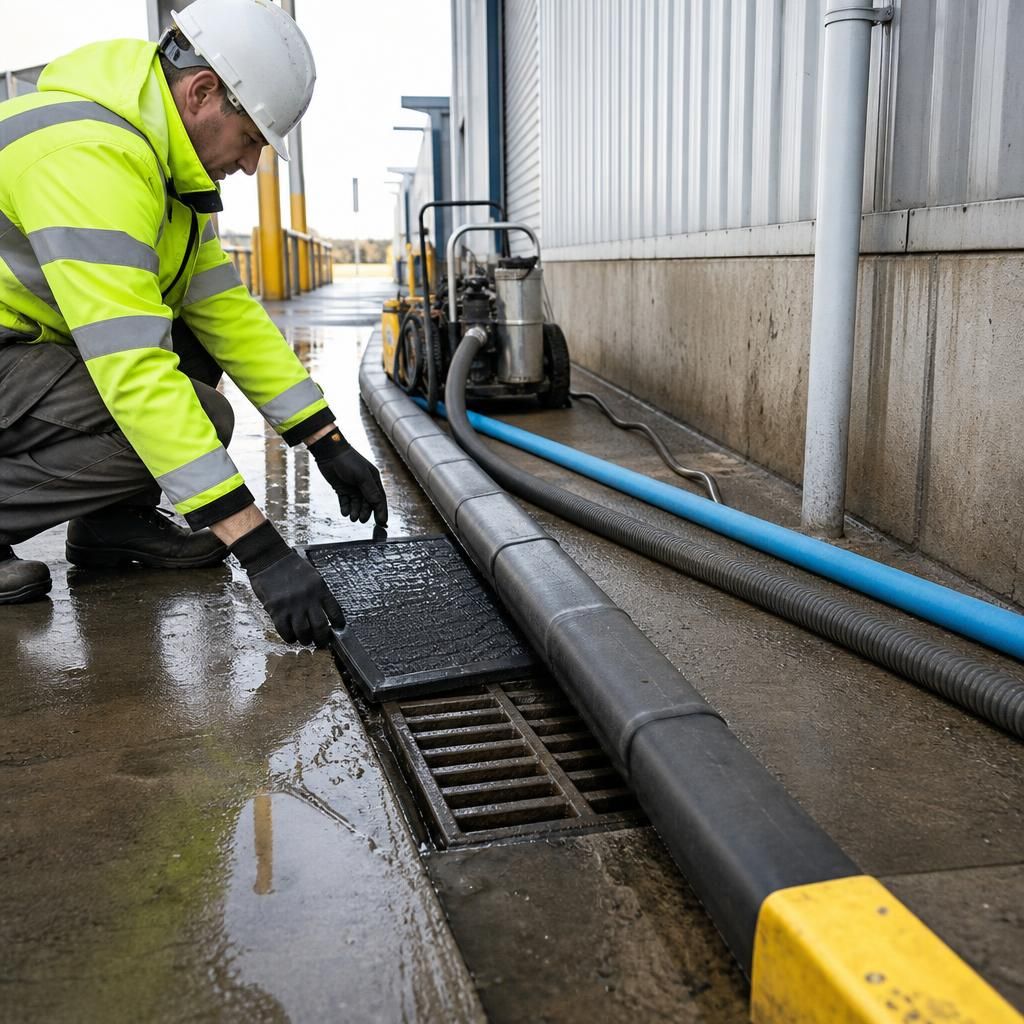
Controlling contaminated runoff is a central environmental consideration when cleaning factory and warehouse exteriors. Water used to remove oil, fuel, metal deposits, chemicals, bird fouling or paint residues must not be allowed to enter surface-water drains, soil or nearby watercourses.
Before cleaning begins, the drainage layout should be checked and suitable controls selected, such as drain covers, temporary bunds, suction recovery or wet vacuums. Collected wastewater should be assessed and discharged only through an approved route. Where it cannot be lawfully discharged, it should be removed by an appropriately authorised waste contractor.