
What are the specialised techniques involved in factory and warehouse exterior cleaning?
Specialised factory and warehouse exterior cleaning combines surface-appropriate pressure washing, steam cleaning and soft-washing treatments with high-level access equipment for façades, cladding, roofs, loading areas and hardstanding. Techniques are selected according to the material, contamination and access conditions, with controlled water use, suitable detergents and careful capture or management of runoff to protect the building and surrounding environment.
Specialised factory and warehouse exterior cleaning uses different methods for different surfaces, contaminants and access conditions. The main techniques include controlled pressure washing, steam cleaning, soft washing, targeted chemical treatment, high-level access, surface-specific façade and cladding cleaning, roof and gutter cleaning, graffiti removal, and the safe management of dirty water and runoff.
Site assessment and method selection
Cleaning should begin with a site assessment rather than a single standard treatment. The condition of the façade, cladding, roof, hardstanding and loading areas is reviewed alongside the type of contamination, drainage arrangements, nearby operations and available access points. This helps determine the appropriate pressure, water temperature, cleaning solution and equipment.
Operators should also identify vulnerable features such as damaged coatings, exposed seals, electrical equipment, air intake points, vents, signage, fragile rooflights and areas where water could enter the building. A small test area can be cleaned first to confirm that the method removes the contamination without marking, etching or loosening the substrate.
Controlled pressure washing
Pressure washing is commonly used for robust external surfaces, including concrete yards, loading bays, block paving, kerbs, steps and some types of masonry. It removes dirt, algae, moss, traffic film, loose coatings and general weathering by combining water pressure with the correct nozzle, flow rate and cleaning technique.
Professional cleaning is not simply a matter of using the highest available pressure. Excessive pressure can damage mortar joints, strip protective coatings, force water behind cladding panels or dislodge surface finishes. Operators adjust the pressure and working distance to suit the substrate, often using rotary surface cleaners on large areas to produce a more even finish and reduce overspray.
Where oil, grease or embedded industrial deposits are present, pressure washing may be combined with a suitable degreaser or detergent. The cleaning solution must be compatible with the surface and controlled so that it does not contaminate soil, drains or nearby watercourses.
Steam cleaning and hot-water cleaning
Steam and hot-water cleaning are useful where lower water volumes, controlled heat or effective removal of greasy contamination are required. Heat helps soften oil, fuel residues, food deposits, traffic film, chewing gum and some biological growths, allowing them to be removed with less mechanical force.
Steam cleaning can be particularly suitable for detailed architectural features, sensitive surfaces and areas where excessive water use would be undesirable. It can also support the removal of weeds and organic growth from hardstanding, although the required treatment depends on the extent and type of growth. Temperature and dwell time must be carefully controlled to avoid damaging paint, sealants, plastics or delicate coatings.
Soft washing and biocidal treatments
Soft washing uses a low-pressure application of a surface-appropriate cleaning solution to treat algae, moss, lichen, mould and other organic soiling. It is often used on rendered walls, painted surfaces, coated cladding and other areas where forceful pressure could cause damage.
The solution is allowed to work for an appropriate dwell time before the surface is rinsed or gently cleaned. This approach treats the contamination rather than relying entirely on mechanical impact. Any biocidal or chemical product must be selected and applied in accordance with its instructions, with suitable protection for vegetation, drainage systems, workers and building occupants.
Soft washing is not suitable for every surface or every type of dirt. Heavy grease, rust, cement residue and some mineral deposits may require different treatments, and incompatible chemicals can discolour coatings or damage metals. Surface testing and careful rinsing are therefore important.
Façade and cladding cleaning
Factory and warehouse façades may include profiled metal cladding, composite panels, brickwork, concrete, render, glass and painted finishes. Each material responds differently to water pressure, temperature and chemicals.
Cladding cleaning generally involves applying a compatible detergent or specialist cleaning solution, agitating the surface where necessary and rinsing from a controlled position. The work should follow the direction of the panels and joints to reduce the chance of forcing water behind the system. Particular attention is required around fixings, laps, sealants, vents and damaged coating.
Brick and concrete may need low- or medium-pressure washing, steam cleaning or a specialist treatment for carbon deposits and biological growth. Efflorescence, rust staining, paint and cement splashes may need targeted products rather than general detergent. Abrasive cleaning should only be considered after assessing the substrate, as it can permanently alter the surface profile and appearance.
Roof, gutter and rainwater-system cleaning
Roof cleaning involves removing moss, lichen, leaves, dirt and other debris while protecting roof sheets, membranes, rooflights, flashings and joints. The selected technique depends on the roof construction and condition. Low-pressure methods are often preferred for coated metal and vulnerable roofing materials, while heavier deposits may require manual removal, controlled washing or a suitable treatment.
Gutters, downpipes and drainage channels are cleared so that rainfall can flow freely and water does not overflow onto façades, walkways or stored goods. Downpipes may need flushing or checking for blockages. Roof work requires a planned access and fall-protection system; operatives should not treat fragile roof surfaces as ordinary walkways.
High-level and restricted-access cleaning
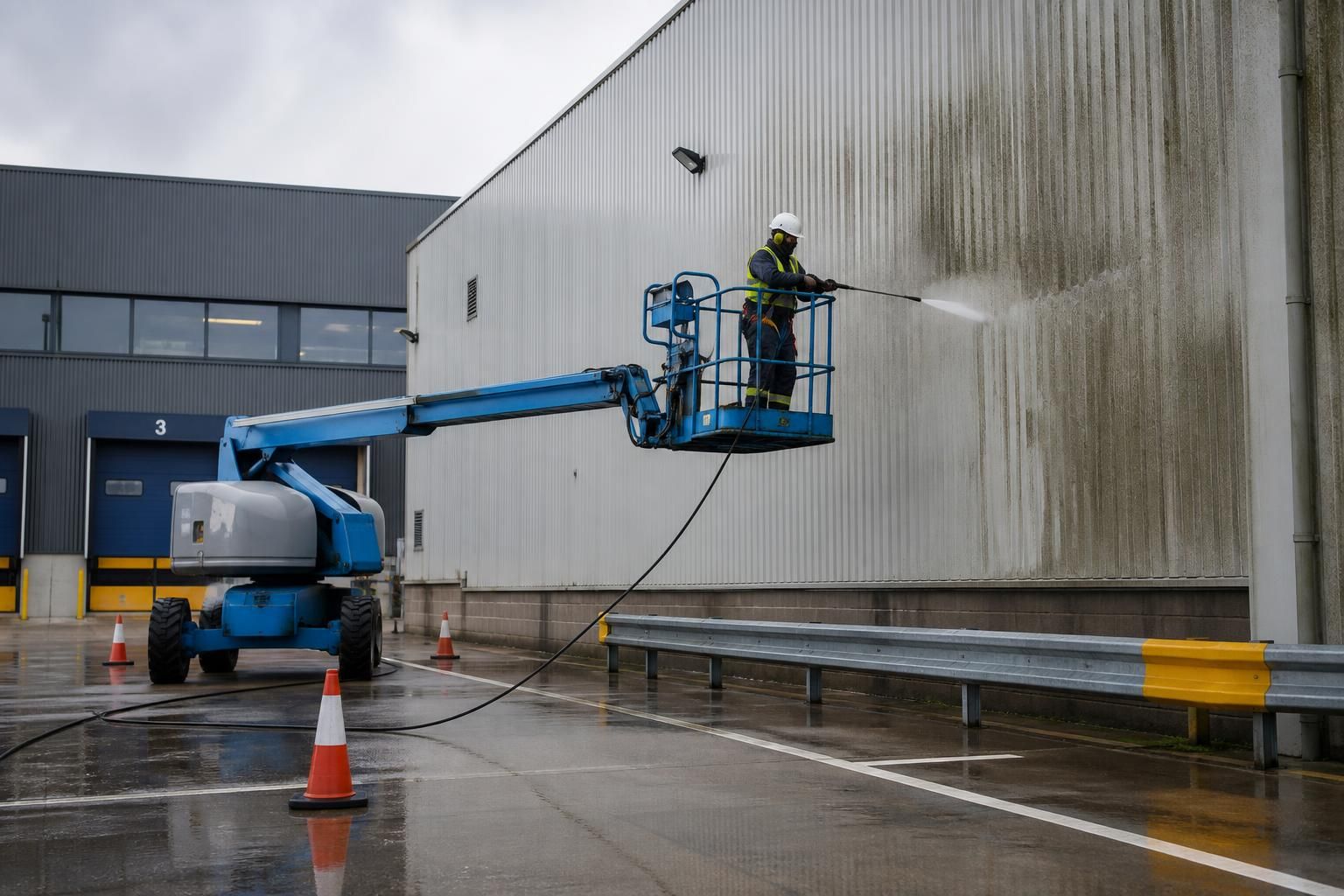
Elevated façades, roof edges, canopies, signs and warehouse elevations may be cleaned using access equipment such as mobile elevating work platforms, powered access platforms, scaffolding, towers or telescopic systems. In suitable locations, water-fed poles and long-reach systems can reduce the need for personnel to work directly at height.
The access method is selected according to the building height, ground conditions, obstructions, working radius and the need to control spray. Equipment must be suitable for the surface and site, with trained operators, exclusion zones and appropriate checks in place. For confined or difficult areas, specialist long-reach tools can clean around loading structures, service yards and overhead features without placing workers in unnecessarily exposed positions.
Graffiti, paint and adhesive removal
Graffiti removal requires a targeted approach because paint, marker ink and adhesive residues behave differently on brick, concrete, render, metal and coated panels. A compatible remover may be applied first, followed by low-pressure rinsing, steam cleaning or carefully controlled agitation.
The aim is to remove the unwanted material without creating a visible patch, spreading pigment or stripping the underlying finish. Porous masonry may need additional treatment because paint can penetrate the surface. Where appropriate, a protective anti-graffiti coating can make future removal easier, but its compatibility with the existing substrate and appearance should be checked before application.
Cleaning loading areas and hardstanding
Loading bays, car parks, service yards and pedestrian routes often require a combination of sweeping, degreasing, pressure washing and spot treatment. Oil, rubber marks, food residues, mud and hydraulic-fluid contamination may be concentrated around vehicle routes and equipment storage areas.
Operators typically remove loose debris first, apply a suitable detergent to affected areas, allow it to dwell and then clean using a controlled pressure-washing system. Rotary cleaners can help maintain an even finish across broad concrete or paved surfaces. Particular care is needed around drainage channels, dock levellers, electrical installations and occupied access routes.
Runoff control and post-cleaning checks
Water and loosened contaminants should be managed as part of the cleaning method, not left as an afterthought. Depending on the site, this may involve drain protection, temporary bunding, wet vacuum recovery, controlled discharge or collection for appropriate disposal. The correct approach depends on the contaminant, local drainage arrangements and applicable environmental requirements.
After cleaning, the area should be inspected for missed deposits, blocked outlets, standing water, chemical residue and any change to the surface finish. Access equipment and protective measures are removed only when the area is safe, and walkways, entrances and operational routes are left suitable for use.
For large factory and warehouse sites, the most reliable results usually come from combining techniques rather than applying one treatment everywhere. A planned method statement can set out the surface-specific process, access arrangements, protection measures, runoff controls, work sequence and inspection requirements before cleaning begins.
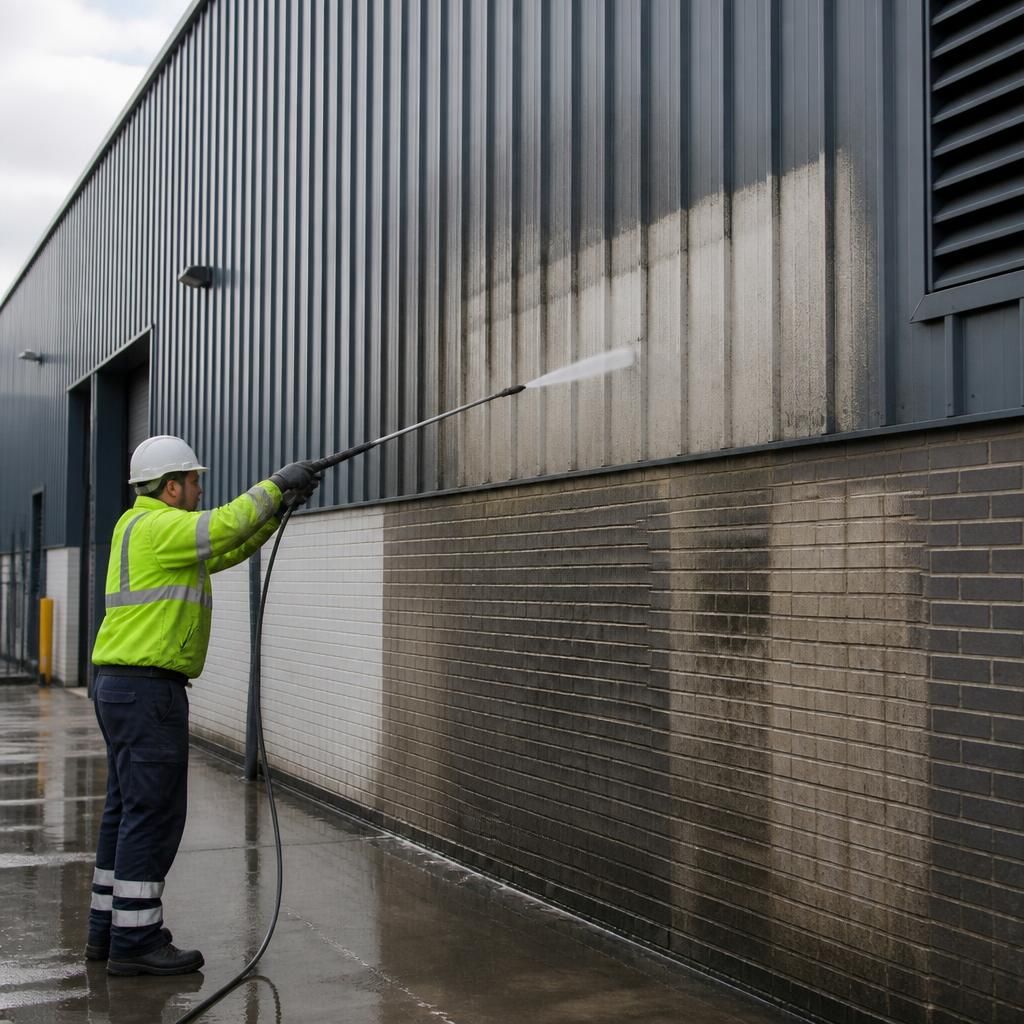
Surface-specific cleaning is essential because factory and warehouse exteriors commonly combine metal cladding, brickwork, concrete, render, glass and coated finishes. Pressure, temperature, detergents and rinsing methods should be adjusted for each material rather than applying one treatment across the whole building.
A small test area helps confirm that the selected technique removes contamination without damaging coatings, mortar joints, sealants or roof materials. This is particularly important where oil, biological growth, rust staining or cement residue requires targeted treatment instead of standard pressure washing.
Discuss your factory and warehouse cleaning requirements
Discuss your factory and warehouse cleaning requirements with our team to identify suitable techniques, access arrangements and runoff controls for your site. We can help plan a surface-specific cleaning programme around your operational needs.