
What are the benefits of incorporating regular exterior maintenance for factory and warehouse facilities?
Regular exterior maintenance helps factory and warehouse facilities remain safe, presentable and operational by removing dirt, algae, oil, graffiti and other contaminants before they cause damage or hazards. It can also extend the service life of façades, cladding, roofs and paved areas, reduce reactive repair costs, support compliance and maintain a professional image for staff, visitors and customers.
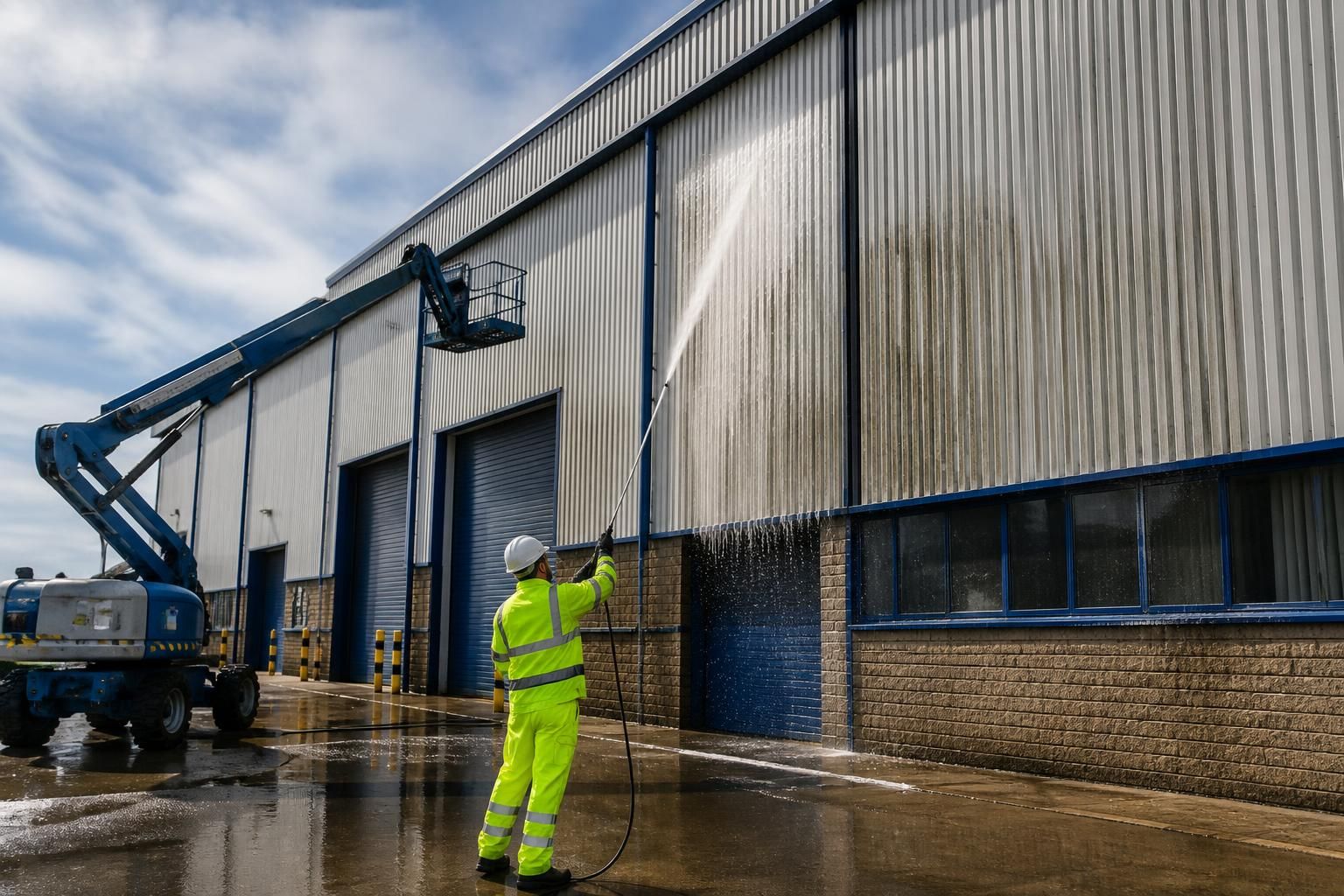
Regular exterior maintenance keeps factory and warehouse facilities safe, operational and presentable by removing contamination before it contributes to surface deterioration, access hazards or costly reactive work. A planned programme can cover façades, cladding, roofs, loading areas, yards, car parks, drainage features and external service areas, with the frequency and cleaning method matched to the building, its use and the surrounding environment.
Improved safety for employees, visitors and contractors
External contamination can create practical risks around an industrial site. Algae, moss and accumulated dirt may make walkways, ramps, steps and loading areas slippery, while oil, grease and process residues can increase the risk of slips in vehicle and pedestrian zones. Graffiti, loose deposits and poorly maintained surfaces can also affect visibility and site presentation.
Routine cleaning helps identify and deal with these issues before they become more serious. Pressure washing, steam cleaning and other controlled methods can remove deposits from hard surfaces, while planned inspections can highlight damaged paving, blocked drainage, deteriorating coatings or defects around access points. Cleaning alone does not replace repairs or a formal risk assessment, but it supports a safer, better-maintained external environment.
Protection of façades, cladding and building materials
Dirt, atmospheric pollution, bird fouling, algae and other contaminants can hold moisture against external surfaces. On some materials, prolonged contamination may contribute to staining, corrosion, coating failure or biological growth. Metal cladding, painted surfaces, masonry, concrete and composite panels each respond differently, so the cleaning process should be selected to avoid unnecessary abrasion, excessive pressure or chemical damage.
Regular maintenance removes contaminants while they are easier to manage and provides an opportunity to monitor the condition of the building envelope. This can help facilities teams distinguish between removable soiling and underlying defects, such as rusting fixings, cracked sealant, damaged coatings or failed joints. Early identification allows repairs to be planned rather than discovered during an urgent maintenance issue.
Longer service life for roofs and external assets
Roof areas and associated components can be affected by moss, algae, leaves, silt and general debris. Build-up around gutters, outlets and drainage routes may restrict water flow and increase the likelihood of localised ponding or overflow. A suitable maintenance programme can remove manageable deposits and help keep drainage routes clear, subject to safe access and an appropriate inspection process.
Cleaning does not make a roof watertight or correct structural defects. It should be combined with checks for damaged membranes, flashings, penetrations, rooflights and drainage components. Where defects are found, they should be referred to the relevant building or roofing specialist. This distinction is important because aggressive cleaning or unsuitable access methods can damage roof coverings and invalidate maintenance assumptions.
Lower reactive maintenance and repair costs
Planned exterior cleaning is generally easier to budget and schedule than emergency work caused by neglected contamination, blocked drainage, persistent graffiti or deteriorating surfaces. Regular visits can also reduce the need for intensive restoration where staining and biological growth have been allowed to become established.
The financial benefit is not simply the cost of cleaning. A well-maintained exterior can reduce disruption associated with unplanned repairs, help protect building finishes and make defects easier to prioritise. Cleaning schedules should therefore be coordinated with planned building maintenance, roof inspections, repainting, resurfacing and other contractor activity rather than treated as an isolated task.
More efficient site operations
Factories and warehouses often operate around vehicle movements, deliveries, shift changes and production deadlines. Accumulated dirt in yards, loading bays and access routes can interfere with normal operations, affect drainage or require areas to be taken out of use at short notice. Planned cleaning allows work to be arranged around operational constraints, with suitable segregation, signage and access controls.
Coordinated maintenance also reduces repeated mobilisation. For example, façade cleaning, cladding washing, yard cleaning and graffiti removal may be assessed together where access equipment and site controls can be planned safely. The exact approach depends on the building layout, working height, surface type, water management requirements and the presence of staff, vehicles or sensitive equipment.
Consistent professional appearance
The exterior of an industrial facility influences how customers, suppliers, employees, contractors, auditors and members of the public perceive the organisation. Clean façades, entrances, loading areas and parking facilities demonstrate that the site is being actively managed. This is particularly relevant where a warehouse or factory receives regular deliveries, hosts visitors or forms part of a managed commercial estate.
Regular maintenance also prevents isolated issues, such as graffiti or heavy staining at prominent entrances, from becoming a persistent feature of the site. Where graffiti occurs, prompt removal can reduce visual impact and may make repeat tagging less attractive. The method should be chosen according to the substrate so that removal does not leave etching, ghosting or damage to the finish.
Support for compliance and site management
Exterior maintenance contributes to broader facilities management responsibilities, including keeping access routes, work areas and premises in a suitable condition. It may support internal inspections, landlord requirements, audit preparation and documented planned-maintenance systems. The precise legal duties depend on the site’s activities, building arrangements and risk profile, so cleaning should support—not replace—formal compliance procedures and competent inspections.
Useful records can include the areas treated, observed defects, cleaning methods, access arrangements, waste or wastewater controls and recommendations for follow-up work. These records provide a clearer maintenance history and help responsible managers demonstrate that external conditions are being monitored and addressed.
Better environmental control
Planned work allows the cleaning method, water use, detergents and wastewater controls to be considered before the contractor arrives. Low-pressure or steam-based techniques may be appropriate for some surfaces, while targeted pressure washing may be suitable for robust paving or heavily soiled areas. The objective is effective cleaning without unnecessary water use, chemical application or damage to surrounding surfaces.
Run-off must be managed carefully where it may contain oil, detergents, paint residues, heavy dirt or other pollutants. Depending on the site and the contamination, this may involve drain protection, collection, controlled discharge or appropriate disposal arrangements. A competent contractor should assess these requirements in advance and agree them with the site representative.
How to make regular maintenance effective
A useful programme starts with a site survey covering surface materials, contamination types, working heights, roof and drainage features, vehicle movements, pedestrian routes, water availability and any sensitive areas. The resulting plan should identify priorities, recommended methods, access equipment, isolation requirements and the evidence to be provided after each visit.
Cleaning frequency should reflect exposure rather than follow an arbitrary calendar. Sites near busy roads, industrial processes, coastal conditions, trees or high levels of foot and vehicle traffic may need closer monitoring than less exposed premises. Roofs, gutters, yards, entrances and high-visibility façades may also require different maintenance intervals.
Overall, regular exterior maintenance gives factory and warehouse operators better control over safety, appearance, asset condition and planned expenditure. The strongest results come from combining appropriate cleaning techniques with inspections, documented recommendations and timely repair of defects. For larger or higher-level areas, work should be planned by competent operatives using suitable access equipment and site-specific controls, so maintenance improves the facility without creating additional operational or safety risks.
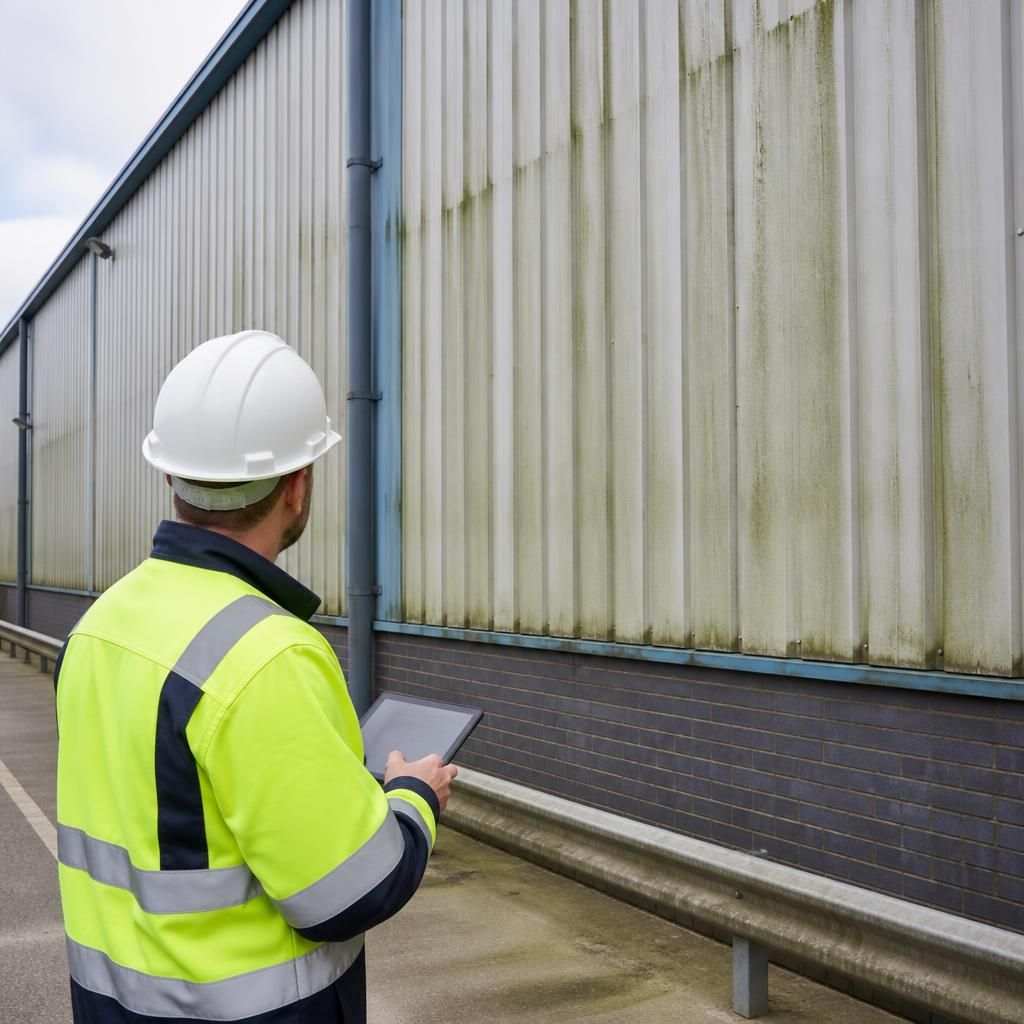
Regular exterior maintenance helps factory and warehouse operators identify surface defects before they develop into disruptive repairs. Cleaning removes dirt, algae, bird fouling, oil and other deposits, making it easier to distinguish removable contamination from corrosion, cracked sealant, damaged coatings, blocked drainage or failing joints.
This early visibility supports better maintenance planning. Façades, cladding, roofs, yards, loading areas and drainage features can be assessed during scheduled work, allowing repairs to be prioritised alongside other planned activities. Addressing defects promptly may help protect building materials, reduce the need for intensive restoration and limit disruption to deliveries, production and site access.
Cleaning should not be treated as a substitute for structural, roofing or formal safety inspections. A competent exterior cleaning programme should record any defects observed and refer issues requiring repair to the appropriate specialist.
Arrange your factory and warehouse exterior maintenance plan
Arrange your factory and warehouse exterior maintenance plan with Encanto Exterior Cleaning, covering façades, cladding, roofs, yards, loading areas and drainage features. Contact us to discuss a suitable cleaning schedule and site-specific requirements.