
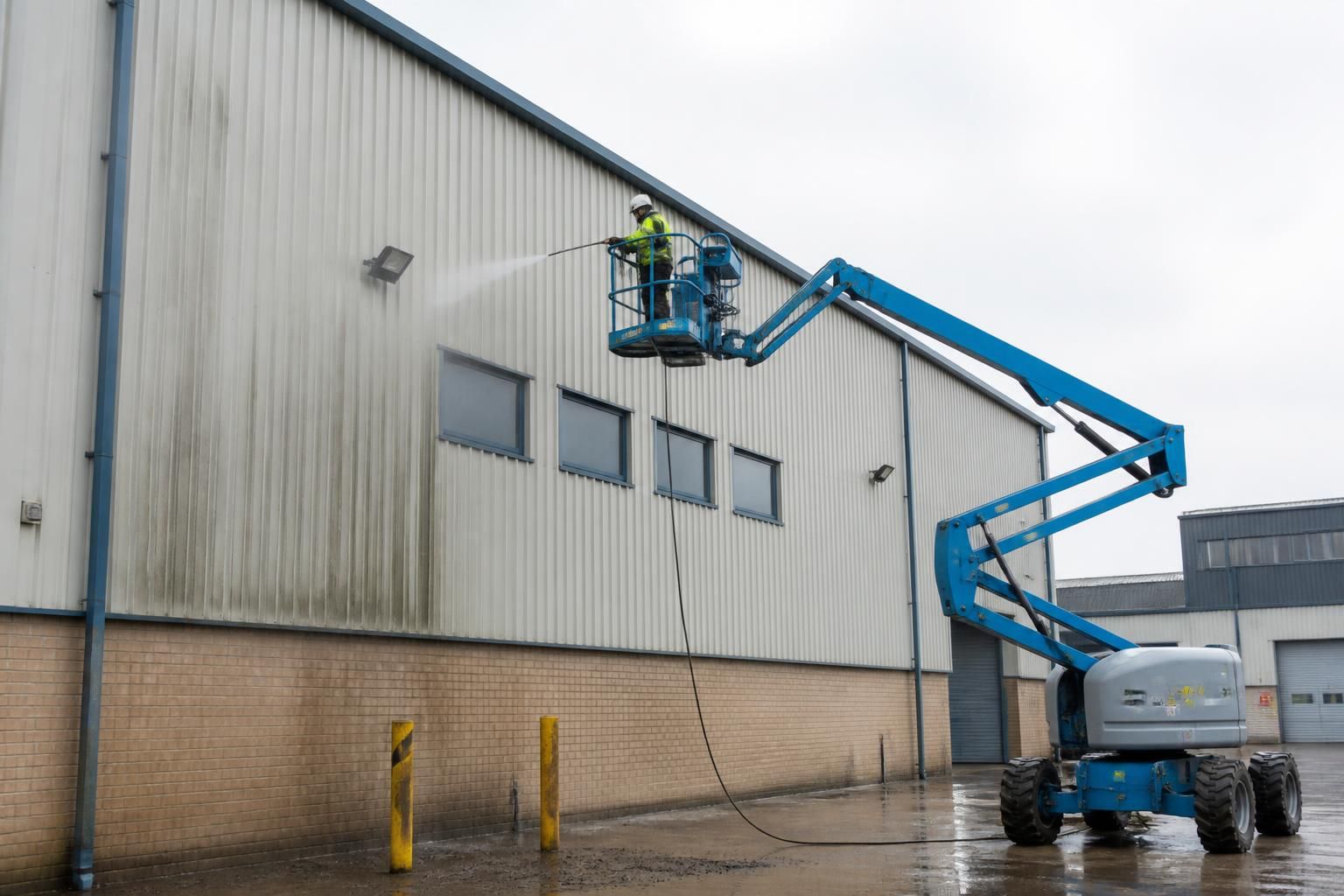
How often should factory and warehouse exteriors be cleaned?
Factory and warehouse exteriors should usually be professionally cleaned at least annually, with more frequent cleaning where premises are exposed to heavy traffic, industrial dust, pollution, grease, algae or weathering. Regular inspections can identify soiling and safety issues early, allowing the schedule to be adjusted for the building’s materials, location and operational conditions.
Factory and warehouse exteriors should generally receive a professional clean at least once a year. Buildings exposed to heavy traffic, industrial dust, pollution, grease, algae, loading activity or severe weather may need cleaning more frequently, while lightly soiled premises may be suitable for a longer interval following a site assessment. The most reliable approach is to combine a planned cleaning schedule with regular inspections, rather than waiting until the exterior looks heavily soiled.
A practical starting schedule
- Annual cleaning: Suitable for many factories and warehouses with moderate exposure and no persistent contamination issues.
- Six-monthly cleaning: Often appropriate for sites near busy roads, construction activity, industrial processes, coastal conditions or areas with significant algae and organic growth.
- Quarterly or targeted cleaning: May be required for high-traffic premises, food or manufacturing sites with grease and residue, facilities with frequent deliveries, or buildings where appearance and safety standards are especially important.
- Event-driven cleaning: Additional work may be needed after construction, refurbishment, severe weather, accidental spills, graffiti or a process-related release of dust, oil or other deposits.
These intervals are guidelines rather than fixed rules. A warehouse in a rural location may remain presentable for longer than a factory beside a busy industrial estate, even where both buildings have similar cladding. The condition of the external surfaces, the surrounding environment and the type of contamination should all be considered before setting the frequency.
Factors that affect the required frequency
- Location: Traffic fumes, road spray, airborne dust and pollution can quickly discolour façades, cladding, windows, gates and paved areas.
- Industrial activity: Manufacturing processes, vehicle movements and material handling can create deposits of dust, grease, oil or other residues that require targeted cleaning.
- Weather and shade: Rain, frost and prolonged dampness can contribute to staining, while shaded elevations may develop algae, moss or lichen more readily.
- Surface materials: Metal cladding, brickwork, concrete, render, roofing systems and painted surfaces have different cleaning tolerances and may need different methods and intervals.
- Building use: Premises receiving visitors, customers, deliveries or inspections may need more consistent presentation than low-traffic operational buildings.
- Health and safety requirements: Slippery paths, contaminated loading bays, blocked drainage and heavy biological growth can make cleaning a maintenance and safety priority, not only an appearance issue.
- Previous cleaning history: Established staining and embedded deposits may require an initial deep clean before a routine maintenance programme can be effective.
Use inspections to adjust the schedule
Exterior inspections should take place throughout the year and before planned cleaning. Check façades, cladding joints, roof edges, gutters, canopies, loading areas, access routes, car parks, fire exits and areas beneath vents or outlets. Look for streaking, grease, algae, moss, graffiti, corrosion, loose surface coatings, blocked drainage and deposits that could become slippery when wet.
Photographic records and site notes can help compare conditions over time. If contamination is returning quickly after cleaning, the cause should be investigated rather than simply increasing the cleaning frequency. Possible causes include leaking gutters, defective drainage, faulty extraction, vehicle movements, nearby construction or unsuitable previous cleaning methods.
Plan cleaning around site operations
Factory and warehouse cleaning should be coordinated with production, deliveries, vehicle routes and access restrictions. Work may be scheduled during quieter operating periods to reduce disruption, with suitable controls for pedestrians, vehicles, water run-off and overhead or elevated work. A planned programme also allows the correct access equipment and cleaning method to be arranged for each elevation.
Cleaning should not be treated as a substitute for repairs. Damaged cladding, failed sealants, leaking roofs, defective gutters and deteriorating coatings can continue to create staining or allow water ingress after the exterior has been cleaned. Where defects are identified, they should be recorded and referred for appropriate remedial work.
For most sites, an annual professional clean supported by routine inspections is a sensible minimum. Increase the frequency where contamination, weather exposure, operational activity or safety risks justify it, and use the building’s actual condition to refine the programme over time.
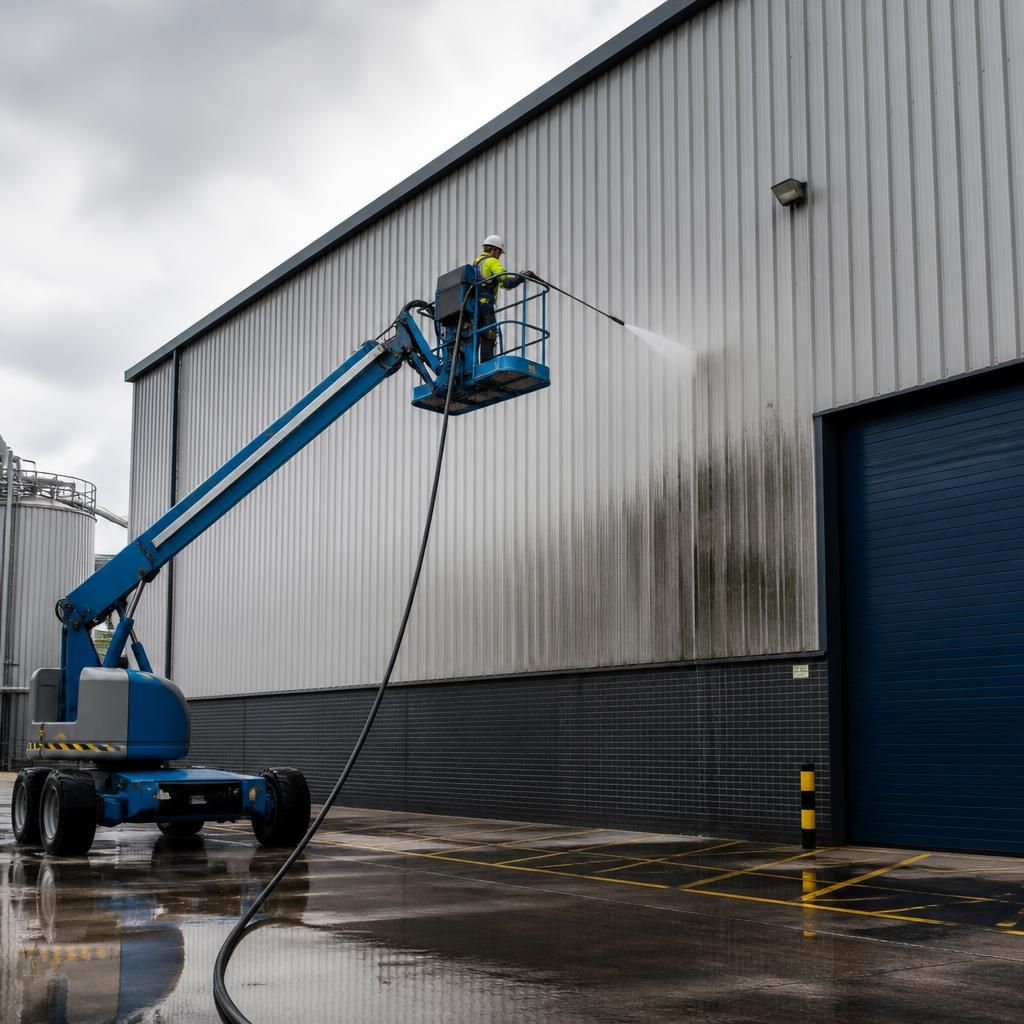
Most factories and warehouses benefit from a professional exterior clean at least annually, but the correct interval depends on how quickly contamination returns. Buildings beside busy roads, construction sites or industrial processes may need six-monthly or targeted cleaning, while sheltered premises with limited soiling may require less frequent work.
Regular inspections help refine the schedule. Check cladding, façades, loading bays, access routes, gutters and drainage for dust, grease, algae, staining or slippery deposits. If contamination reappears soon after cleaning, investigate possible causes such as leaking gutters, faulty extraction or vehicle activity rather than simply increasing the cleaning frequency.