
What techniques are used for cleaning different exterior building materials?
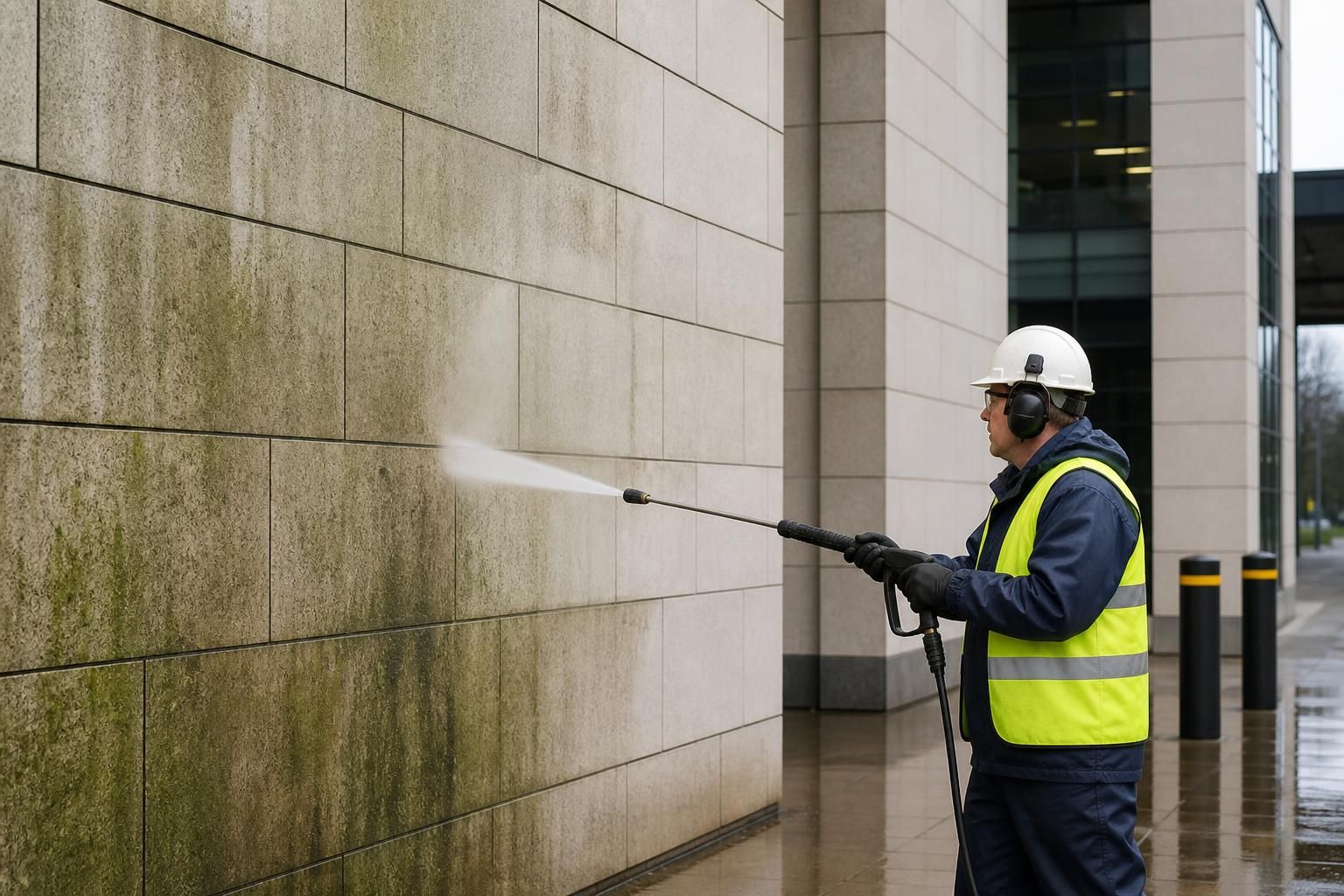
Different exterior building materials require tailored cleaning techniques: low-pressure washing and steam cleaning are often suitable for brick and masonry, while stone, cladding and concrete may need carefully controlled pressure, soft washing or specialist treatments. The method should be selected after assessing the material, surface condition, staining and risk of damage, with test cleaning used where appropriate.
Exterior building materials are cleaned using different combinations of pressure, water temperature, detergents, steam and access equipment. The correct technique depends on the material’s porosity, age, surface finish and condition, as well as the type of soiling present. A method that is suitable for robust concrete may damage soft brick, historic stone, painted cladding or render, so the surface should be assessed before work begins and the cleaning system adjusted accordingly.
Brick and masonry
Brickwork is commonly cleaned with controlled low- to medium-pressure washing, steam cleaning or a carefully selected masonry detergent. These methods can remove traffic film, atmospheric dirt, algae, moss, bird fouling and some organic staining without relying on excessive pressure. Steam is particularly useful where heat helps loosen ingrained deposits or where reduced water use and controlled run-off are important.
Porous or weathered bricks require extra care. High pressure can erode the face of the brick, expose the softer inner material, widen existing defects or damage the mortar joints. Cleaning should normally proceed from the least aggressive suitable method, with pressure, nozzle selection, distance and water volume controlled by the operative. Stubborn cement, paint or carbon deposits may require a specialist chemical treatment, but the product must be compatible with both the brick and the mortar.
Natural and reconstituted stone
Stone cannot be treated as a single material. Limestone, sandstone, granite, slate and reconstituted stone have different levels of hardness, porosity and chemical sensitivity. Soft or porous stone is often cleaned using low-pressure washing, nebulous water misting, steam or a pH-appropriate detergent. Harder stone may tolerate more pressure, but this should still be verified on the specific surface.
Acidic products can etch or discolour carbonate-based stone such as limestone and some types of marble. Alkaline products may also affect certain finishes if they are used incorrectly or allowed to dry on the surface. Rust, oil, paint and biological growth may each require a different treatment, followed by thorough rinsing and appropriate control of the waste water. Test cleaning is especially important on historic, listed or previously repaired stonework.
Concrete
Concrete is generally robust, but its surface can be damaged by excessive pressure, aggressive rotary cleaning or unsuitable chemicals. Controlled pressure washing is often effective for removing dirt, algae, moss, tyre marks and general atmospheric soiling from walls, precast panels, loading areas and other external surfaces. Hot water or steam can help with grease and oil, subject to suitable run-off controls.
Exposed aggregate, polished concrete and older concrete need a more controlled approach than sound, plain concrete. Cleaning can reveal differences in weathering or expose existing cracks and surface defects. Where staining has penetrated the concrete, a suitable degreaser, biocide or specialist poultice may be more effective than increasing pressure. Any repairs, sealants or coatings should be identified before cleaning because they may respond differently to water, heat or chemicals.
Metal cladding and composite panels
Powder-coated, painted and anodised metal cladding is usually cleaned with a low-pressure system, a soft brush or a neutral detergent. The aim is to remove dirt without dulling the coating, lifting paint, scratching the finish or forcing water behind joints and trims. Rinsing should be thorough, particularly where detergent residue could leave streaks or affect the appearance of the façade.
Composite panels and insulated cladding systems may have vulnerable edges, seals, vents and joints. Operatives should avoid directing high-pressure water into these areas and should check the manufacturer’s cleaning guidance where it is available. Solvent-based products, abrasive pads and untested acidic cleaners can cause permanent discolouration or coating failure.
Render, painted surfaces and external coatings
Render and painted façades are cleaned with soft washing, low-pressure rinsing, steam or a gentle detergent selected for the coating. Biological growth is often treated with a suitable biocidal solution before being rinsed away, rather than being forcibly blasted from the surface. This reduces the risk of removing the finish or opening small cracks.
Loose, chalking or poorly adhered paint and render should be identified before cleaning. Water penetration can worsen delamination, while high pressure can strip sound coating along with the damaged areas. A small test section helps establish whether the finish can withstand the proposed process and whether preparation or repair is needed before full cleaning.
Glass, uPVC and coated plastics
Glass is normally cleaned with a suitable detergent, a soft applicator and controlled rinsing. Abrasive tools and unsuitable blades can scratch the surface, while dried chemicals may leave permanent marks. Particular care is required around seals, frames, vents and façade joints.
uPVC and other plastics generally respond well to low-pressure washing and a non-abrasive detergent. Strong solvents, harsh abrasives and excessive heat may soften, stain or distort the material. Weathered plastic can also have a changed surface finish, so an apparently clean area may not match newer sections after treatment.
Roofs, paving and hardstanding
Roof tiles, membrane roofs, paving and car parks each need a method suited to their construction. Concrete paving may tolerate controlled pressure washing, whereas roof membranes, aged tiles and coated surfaces may require soft washing, gentle brushing or steam. Moss and algae should be treated in a way that removes the growth without loosening tiles, damaging waterproofing or forcing water beneath laps and flashings.
Oil and fuel contamination on hardstanding usually requires a compatible degreaser, agitation and managed rinsing. Simply increasing pressure may spread the contamination or drive it further into porous concrete. Run-off must be contained and disposed of in accordance with applicable environmental requirements rather than allowed to enter surface-water drains.
How the correct technique is selected
- Identify the material, coating, age, construction details and any previous repairs.
- Assess the type and severity of soiling, including biological growth, pollution film, oil, rust, paint and cement residue.
- Check for cracks, open joints, friable surfaces, failed seals, loose coatings and water-sensitive details.
- Choose the least aggressive method that can achieve the required result, combining pressure, temperature, detergent and dwell time rather than relying on force alone.
- Carry out a test clean where the material, finish or staining creates a risk of damage or uneven results.
- Protect windows, vents, signage, landscaping, vehicles and adjacent finishes before work starts.
- Control overspray, collect contaminated water where necessary and complete a final inspection after the surface has dried.
Professional cleaning is therefore a material-specific process rather than a single pressure-washing operation. For commercial and industrial premises, the cleaning specification should record the surfaces involved, the proposed technique, test-area findings, access arrangements, protection measures and waste-water controls. This creates a clear basis for consistent maintenance and helps prevent avoidable damage to the building fabric.
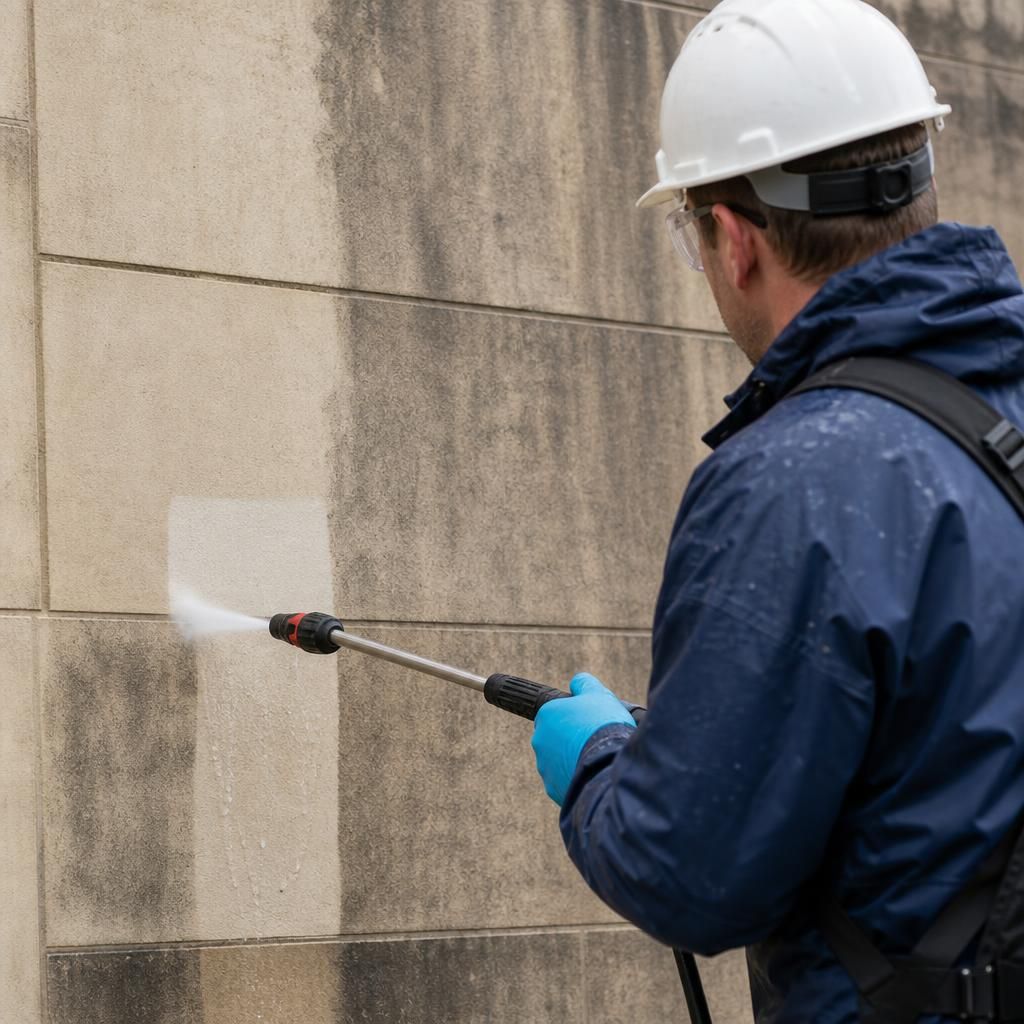
The safest way to clean an exterior building material is to begin with the least aggressive method likely to remove the specific soiling. A small test area can then confirm whether the surface, coating and mortar joints tolerate the proposed pressure, temperature, detergent and rinsing process.
This assessment is particularly important for porous brick, natural stone, painted cladding, render and older roofs. If the test reveals colour change, surface erosion, coating loss or water penetration, the technique can be adjusted before full cleaning begins. This helps achieve a consistent finish while reducing the risk of avoidable damage to the building fabric.
Discuss the Right Cleaning Technique for Your Building
Discuss your building materials, surface condition and cleaning requirements with our team so we can recommend a suitable, controlled technique. We can assess the site and agree any test cleaning, access arrangements and protection measures before work begins.