
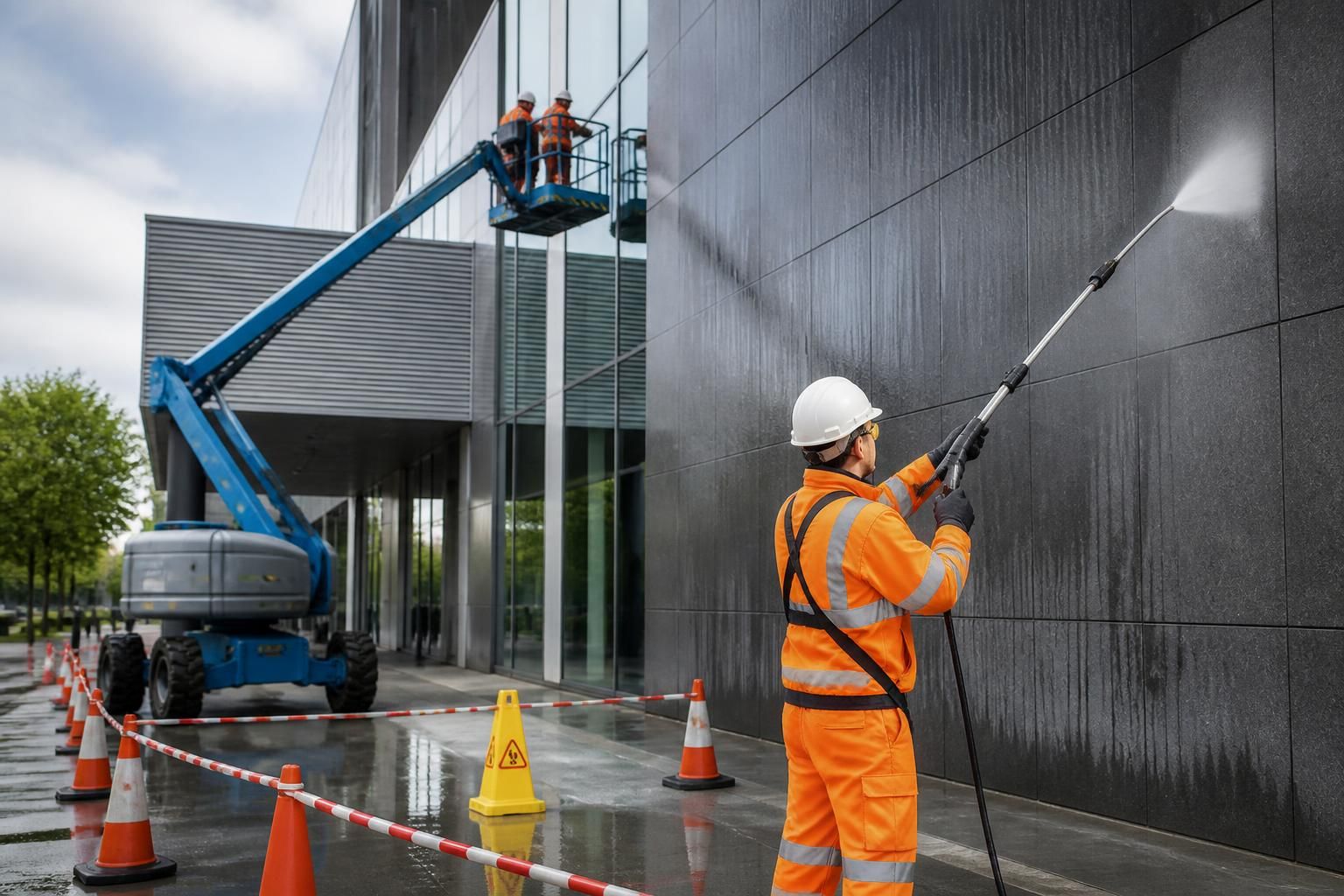
What safety measures are in place during exterior building and wall cleaning?
Exterior building and wall cleaning is managed through a site-specific risk assessment and method statement, with controls for work at height, pressure and steam equipment, chemical use, falling debris, public access and nearby property. Trained operatives use suitable access equipment and personal protective equipment, while exclusion zones, signage, equipment checks and safe water and waste management help protect workers, occupants, pedestrians and the building.
Exterior building and wall cleaning is controlled through a site-specific risk assessment and method statement, supported by trained operatives, suitable access equipment, personal protective equipment and clear site controls. The precautions are selected for the building, cleaning method, surrounding area and people who may be affected, including occupants, visitors, pedestrians, road users and other contractors.
Site assessment and planning
Before work starts, the site is assessed for hazards such as height, fragile surfaces, unstable masonry, overhead services, restricted access, traffic, public footways, adjacent properties and areas where water or debris could cause harm. The assessment also considers the building materials and the risks associated with pressure washing, steam cleaning, detergents, biocides and other treatments.
A method statement sets out the planned sequence of work, equipment, controls and emergency arrangements. Where site conditions change, the work is reviewed before continuing. Operatives are briefed on the controls, site rules, communication arrangements and responsibilities, so that the cleaning team and the client’s representatives understand how the work will be managed.
Work at height controls
Work at height is planned in line with the Work at Height Regulations. The preferred approach is to complete as much work as possible from ground level. Where elevated access is necessary, the most suitable equipment may include powered access platforms, scaffold, towers, roof access systems or specialist equipment, depending on the height, reach, ground conditions and building layout.
Access equipment is selected for the task rather than used as a standard solution. It is checked before use, positioned on suitable ground and operated by people with the appropriate training and competence. Guardrails, gates, stabilisers, outriggers and other safety features must be used as intended. Harnesses and restraint systems are used where the equipment and risk assessment require them, with suitable anchorage and a rescue plan in place.
Equipment is not used in unsafe weather or visibility conditions. High winds, lightning, ice, heavy rain and poor visibility can affect access platforms, ladders, surfaces and operator control. Work is paused or rearranged where weather creates an unacceptable risk.
Protecting people on and around the site
Exclusion zones prevent people from entering areas below or beside the cleaning operation. Barriers, cones and warning signs are positioned according to the site layout, and a banksman or other form of supervision may be used where vehicles, pedestrians or restricted visibility create additional risk. Public routes, entrances, fire exits and emergency access are kept clear or managed through an agreed temporary arrangement.
Where cleaning takes place near roads, car parks or busy entrances, the controls may include traffic management, timed work, controlled vehicle movements and coordination with the building manager. Occupants and other contractors are informed about affected areas, temporary access changes, wet surfaces and any restrictions needed during the work.
Pressure, steam and chemical safety
Pressure washing and steam cleaning can cause injury, damage surfaces and dislodge materials if they are used incorrectly. Operators use the correct pressure, temperature, nozzle, distance and technique for the substrate. The equipment is checked for damaged hoses, fittings, trigger mechanisms and connections, and it is isolated before adjustments, clearing blockages or maintenance.
Cleaning products are assessed under the Control of Substances Hazardous to Health requirements. Product instructions and safety data are followed, and chemicals are stored, labelled, diluted and applied correctly. Suitable gloves, eye protection, respiratory protection or protective clothing are used where the assessment requires them. Chemicals are never mixed unless the manufacturer specifically permits this, and nearby people, vehicles, plants and sensitive surfaces are protected from spray or drift.
Electrical equipment is kept away from uncontrolled water wherever possible. Residual current protection, suitable connections and safe cable management are used where applicable. Hoses and cables are routed to reduce trip hazards and are removed or secured when they cross a working route.
Falling debris and building condition
Loose render, mortar, paint, masonry, tiles and other deteriorated material can fall during cleaning. The façade is inspected before work, and unstable areas are dealt with through an agreed safe method rather than being subjected immediately to high-pressure cleaning. The exclusion zone is maintained until the risk of falling material has been controlled.
Protective sheeting, debris nets, temporary coverings or controlled collection methods may be used where appropriate. Windows, doors, vents, signs, lighting, external fittings and vulnerable finishes are protected from water, impact and cleaning products. Any unexpected defect or movement is reported so that cleaning can be stopped and the client can arrange further assessment if necessary.
Personal protective equipment and operator competence
Personal protective equipment is the final layer of protection and is selected for the specific task. This may include safety footwear, gloves, eye or face protection, hearing protection, protective clothing, head protection and respiratory protection. PPE is inspected, maintained and worn correctly, but it is not used as a substitute for safe planning, guarding or exclusion zones.
Operatives must be competent to use the relevant pressure washers, steam equipment, access systems and chemical products. Competence includes understanding the equipment limitations, recognising changes in surface condition, controlling spray and debris, responding to faults and following emergency procedures. Specialist access or lifting equipment is used only by suitably trained and authorised personnel.
Water, runoff and waste controls
Wash water, sludge, paint residue, chemical solution and other waste are managed so that they do not enter unsuitable drains, watercourses, neighbouring land or occupied areas. Drain covers, bunding, collection systems or filtration may be used where the site assessment identifies a runoff risk. The method depends on the cleaning product, contamination present, drainage arrangements and local requirements.
Waste is contained and disposed of through an appropriate route. This is particularly important when removing graffiti, coatings, oil, biological growth or other contaminants. Operatives also control overspray and prevent cleaning residues from reaching vehicles, landscaping, air-conditioning units and building entrances.
Inspection and emergency arrangements
Equipment is checked before use and during the work, with defects removed from service. Access equipment, lifting accessories and other work equipment are maintained and inspected in accordance with the relevant requirements, including the Provision and Use of Work Equipment Regulations and, where applicable, the Lifting Operations and Lifting Equipment Regulations.
The site plan includes arrangements for dealing with injury, chemical contact, equipment failure, falling objects, sudden weather changes, a person becoming stranded at height and accidental damage to property. First-aid provision, communication methods and emergency access are confirmed before work begins. If an unsafe condition develops, the cleaning operation is stopped, the area is made safe and the client is informed before work resumes.
These measures are applied proportionately to the site and cleaning method rather than treated as a fixed checklist. For complex façades, occupied premises, restricted public areas or high-level work, early access planning with the site manager helps ensure that the controls are practical, documented and maintained throughout the project.
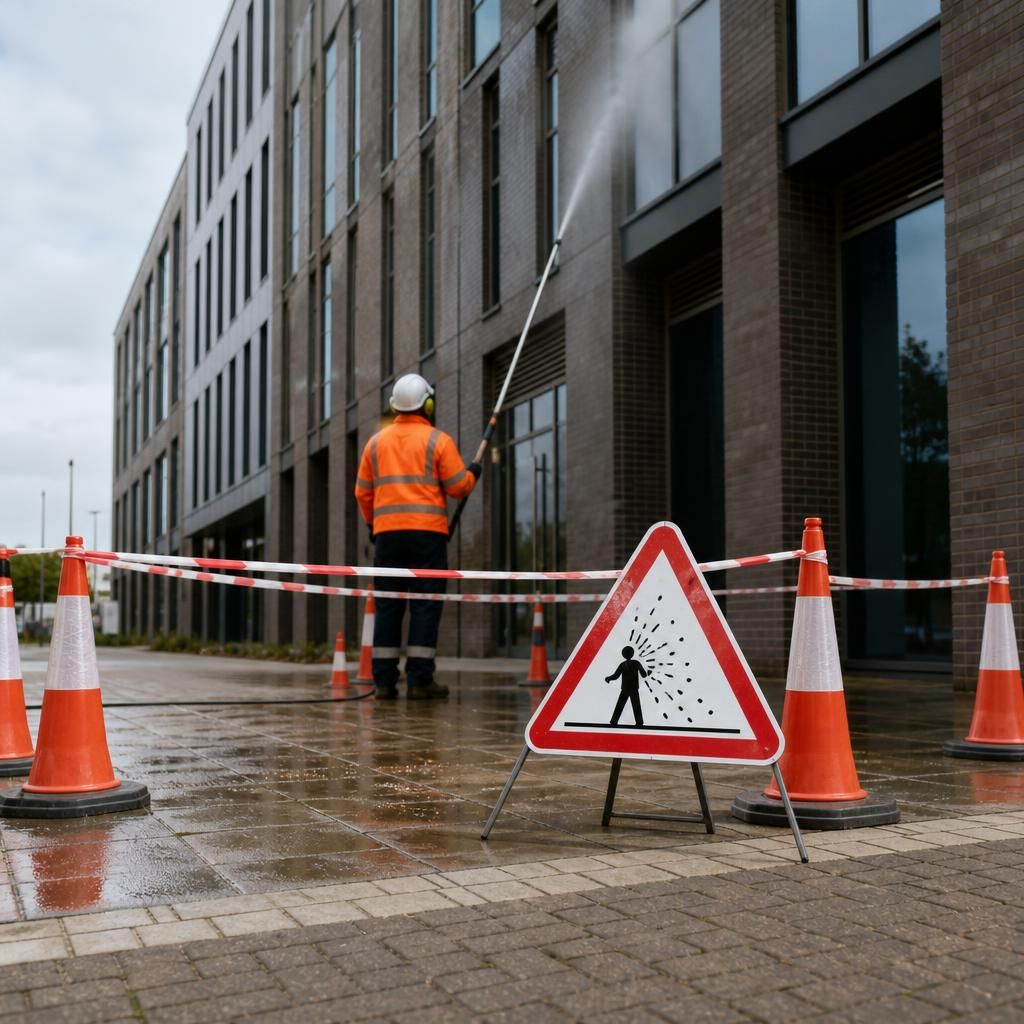
Exclusion zones are a key safety control during exterior building and wall cleaning. Barriers, cones and warning signs keep pedestrians, occupants, vehicles and other contractors away from areas affected by falling debris, pressurised water, steam, chemical spray or wet surfaces.
The zone is positioned according to the building layout, cleaning height, equipment and surrounding public access. Entrances, fire exits and footways are kept clear wherever possible, or managed through an agreed temporary route. Where work takes place near roads, car parks or busy entrances, operatives may use a banksman, controlled vehicle movements and timed cleaning to maintain safe separation throughout the task.