
What is the best method for cleaning delicate building materials without causing damage?
The safest method for cleaning delicate building materials is usually low-pressure soft washing or controlled steam cleaning, selected according to the material, coating and type of soiling. A trained contractor should assess and test the surface first, then use compatible solutions, controlled pressure and careful rinsing to remove dirt without causing erosion, staining or coating damage.
The safest method for cleaning delicate building materials is usually low-pressure soft washing or controlled steam cleaning, selected according to the material, its coating and the type of soiling. Before work begins, the surface should be assessed and a small test area completed. This allows the cleaning method, solution strength, dwell time, pressure and rinsing process to be confirmed without risking widespread damage.
Delicate materials can be affected by excessive water pressure, unsuitable chemicals, abrasive tools, thermal shock and aggressive scrubbing. Damage may include erosion of the surface, loss of pointing, staining, etched glass, flaking paint, exposed aggregate or failure of protective coatings. A method that is suitable for robust concrete or modern brick may be inappropriate for soft brick, natural stone, historic masonry or rendered façades.
Soft washing for sensitive surfaces
Soft washing uses a low-pressure application of water and a compatible cleaning solution to loosen organic growth, atmospheric dirt and some staining. The solution is applied evenly, allowed to work for a controlled period and then rinsed away at low pressure. Because the cleaning action comes mainly from the solution and dwell time rather than force, soft washing can reduce the risk of surface erosion.
The solution must be chosen carefully. Its concentration should reflect the material, the type of contamination and the surrounding environment. Porous stone, painted surfaces, metals, glazing, vegetation and drainage systems may all require different controls. Chemicals should never be allowed to dry on the surface, and run-off must be contained or managed in accordance with applicable environmental requirements.
Steam cleaning for controlled removal
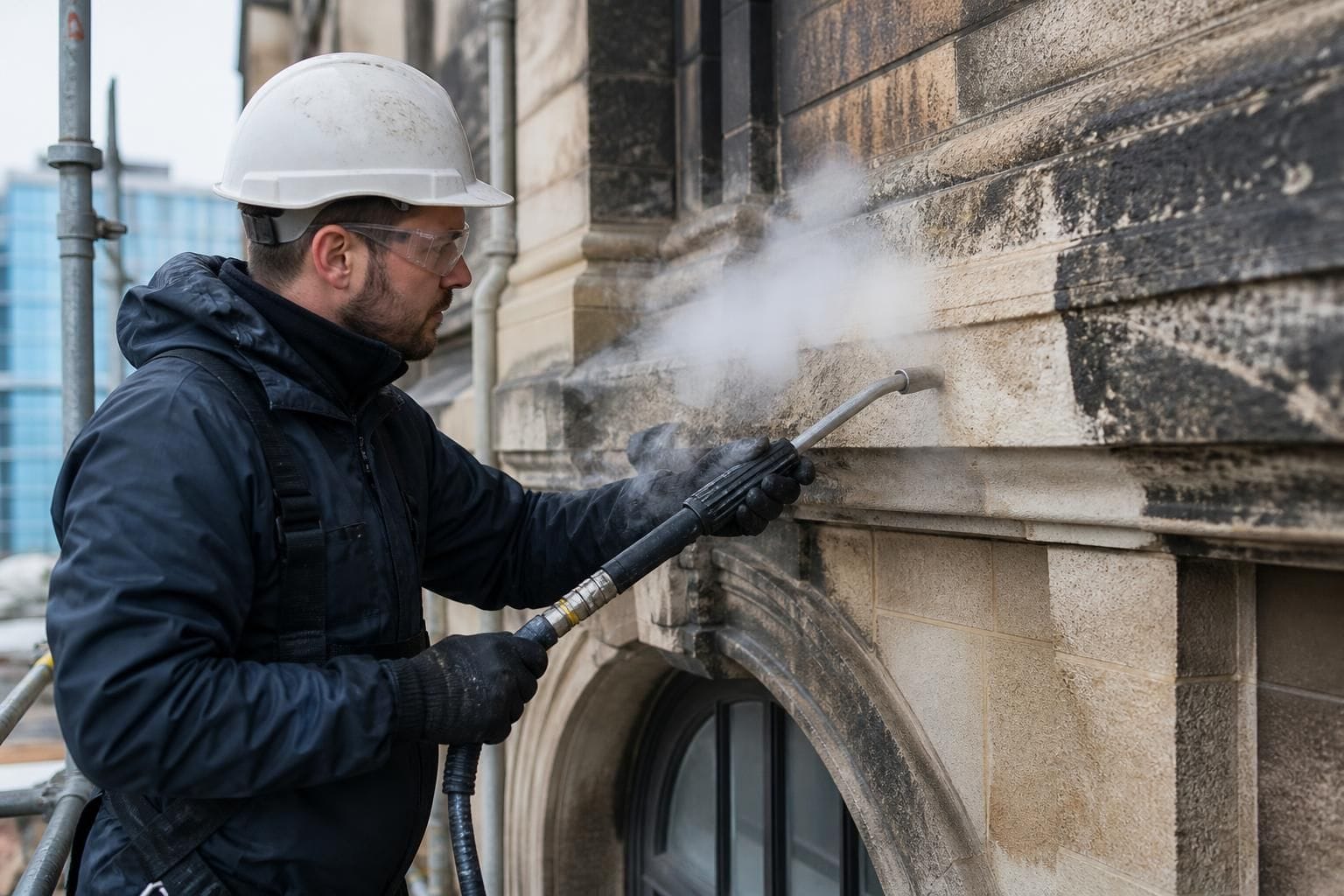
Low-pressure steam cleaning can be effective where delicate masonry has ingrained dirt, biological growth, carbon deposits or staining that will not respond adequately to a mild soft wash. The combination of heat and controlled moisture can loosen contamination while limiting the mechanical force applied to the surface.
Steam cleaning still requires careful control. Excessive heat or prolonged application can affect coatings, sealants, paint, resin repairs and some composite materials. It may also drive moisture into porous masonry. The operator should work progressively, monitor the surface and avoid sudden temperature changes, particularly on glass, stone with existing defects or painted façades.
Choosing the method by material
- Soft or weathered brick: Use low-pressure washing with a compatible, non-aggressive solution. Avoid blasting, hard brushing and strong acids, which can remove the fired face of the brick and accelerate future deterioration.
- Natural stone: Identify the stone before cleaning, as limestone, sandstone, slate, granite and marble have different levels of porosity and chemical resistance. A neutral or material-specific treatment with gentle rinsing is often preferable. Acidic products can damage calcareous stone, while excessive pressure can open the surface or remove historic detail.
- Rendered and painted façades: Begin with the least aggressive approach, normally a low-pressure application and gentle rinse. Loose paint, cracked render and failed repairs should be identified before cleaning because water can worsen existing defects.
- Historic masonry and listed buildings: Cleaning should be conservative and proportionate. The aim is to remove harmful or visually disruptive contamination without making the surface look unnaturally new. Existing mortar, decorative features and previous repairs require particular care.
- Glass, glazed tiles and coated panels: Use compatible cleaning products, soft applicators and controlled rinsing. Abrasive pads, metal tools and unsuitable solvents can scratch or cloud the finish.
- Metalwork and coated cladding: Confirm the coating type and avoid chemicals that attack the finish. Low-pressure cleaning with thorough rinsing is generally safer than abrasive methods, particularly where corrosion or coating breakdown is already present.
A careful cleaning process
- Survey the façade: Record the material, age, condition, coatings, joints, repairs, access limitations and nearby sensitive areas. Look for cracks, hollow render, open joints, friable stone, failing paint and defective seals.
- Identify the soiling: Organic growth, traffic film, carbon deposits, rust, paint, efflorescence and biological staining do not respond to the same treatment. Misidentifying the deposit often leads to unnecessarily aggressive cleaning.
- Protect surrounding areas: Mask or shield glazing, entrances, vents, electrical equipment, signage, landscaping and drainage points where necessary. Keep occupants and members of the public away from the work area.
- Test a discreet section: Compare the proposed solution and application method on an inconspicuous area. Check for colour change, surface softening, staining, coating failure and any difference between cleaned and uncleaned material.
- Clean in controlled sections: Apply the selected treatment evenly, work from the least affected areas towards heavier deposits where appropriate, and prevent the solution from drying. Pressure, temperature and distance from the surface should be adjusted continuously rather than treated as fixed settings.
- Rinse and inspect: Remove residues using a controlled rinse, check joints and details, and repeat only where necessary. Over-cleaning can be as damaging as under-cleaning.
- Review the finished surface: Inspect the work in suitable lighting after drying. Any remaining stains should be assessed before further treatment, as some marks may be embedded in the material or related to an underlying defect.
Methods that commonly cause damage
High-pressure jetting is risky on porous, friable or coated surfaces because it can remove the surface layer, force water behind cladding or render, widen defects and dislodge pointing. Abrasive blasting and harsh mechanical scrubbing can permanently alter the texture of masonry and decorative features. Strong acids, alkalis and solvent-based products can etch stone, strip coatings, corrode metalwork or create salts that later appear as staining.
Cleaning should also be postponed where frost, very hot surfaces, driving rain or strong winds would prevent controlled application and drying. Weather conditions affect chemical dwell time, overspray, run-off and the risk of thermal or moisture-related damage.
For commercial façades, the appropriate method is therefore determined by condition and compatibility rather than by the quickest apparent result. A documented survey, test clean and method statement should set out the equipment, products, pressure or temperature controls, protection measures, run-off arrangements and inspection requirements. This approach provides the best balance between removing contamination and preserving the building material, its finish and any historic or protective features.
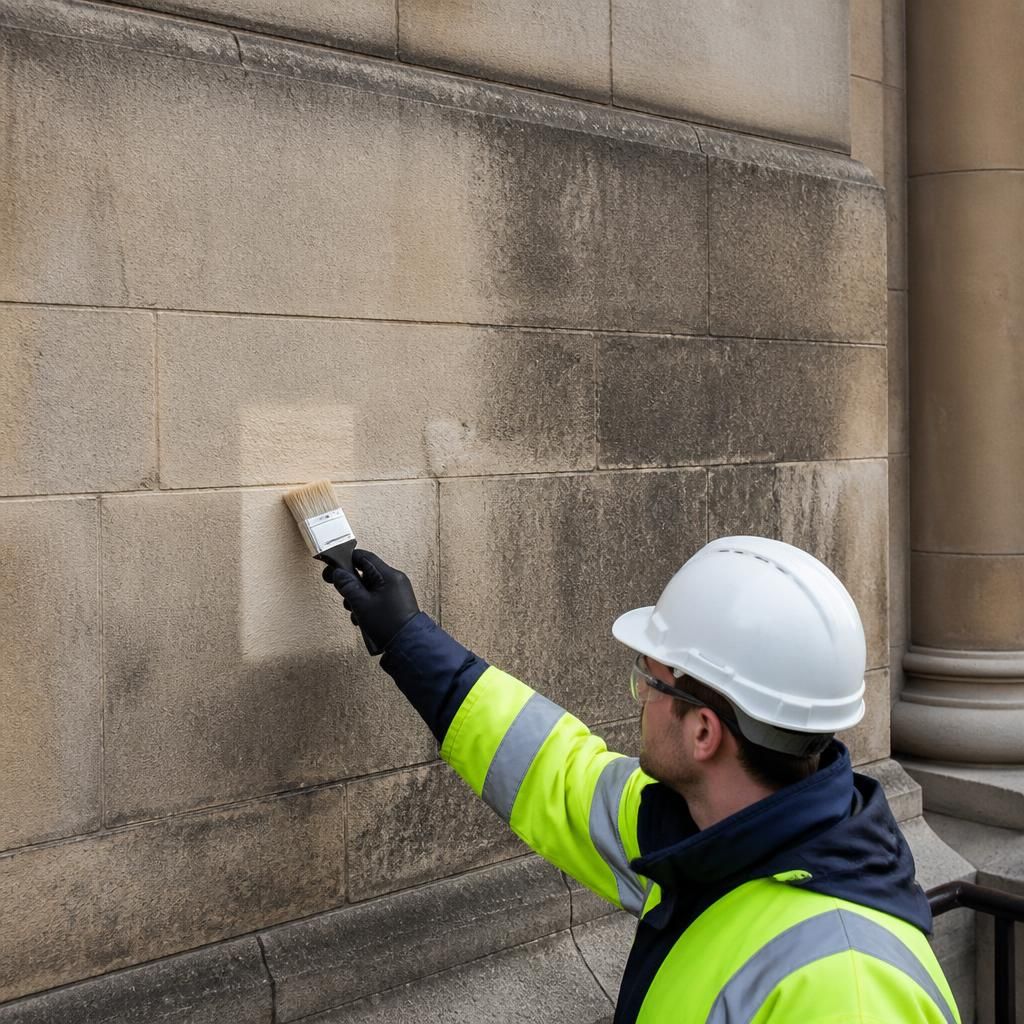
The safest way to clean a delicate building material is to carry out a discreet test clean before treating the full surface. This confirms whether the proposed pressure, temperature, cleaning solution and dwell time are compatible with the material and its existing coating.
The test area should be checked for colour change, etching, softening, staining, coating failure and damage to joints or pointing. The result also helps identify whether the contamination is organic growth, traffic film, carbon, rust or another deposit requiring a different treatment. Only once the surface responds safely should cleaning proceed in small, controlled sections.
Discuss the Best Cleaning Method for Your Building
Contact Encanto Exterior Cleaning to discuss the safest method for cleaning your building’s delicate materials, whether soft washing, steam cleaning or controlled manual treatment is most appropriate. We can assess the surface, existing condition and access requirements before recommending a suitable cleaning plan.