
What factors influence the cost of exterior building and wall cleaning services?
The cost of exterior building and wall cleaning depends mainly on the surface material and condition, total area, cleaning method, access requirements and the level of preparation or repair needed. Site location, water and waste arrangements, traffic management, safety controls and whether the work is a one-off clean or planned maintenance can also affect the final quotation.
The cost of exterior building and wall cleaning is mainly influenced by the size and condition of the surfaces, the material being cleaned, the required cleaning method, and how safely the work can be accessed. Site location, contamination levels, water and waste arrangements, traffic controls, working hours and whether the service is a one-off clean or planned maintenance will also affect the quotation.
Commercial cleaning should be priced after assessing the building and its surroundings rather than by applying a simple rate to the visible wall area. Two buildings with similar dimensions may have very different costs if one has straightforward ground-level access and the other requires specialist access equipment, additional protection or careful treatment of delicate materials.
Surface area and building design
The total area to be cleaned is an important starting point, but it is not the only measure used. Large, uninterrupted elevations are generally more efficient to clean than small sections separated by windows, signage, balconies, plant, vents or architectural details. Recessed areas, ledges, reveals and complex façades take longer because operatives must work more slowly and reposition equipment.
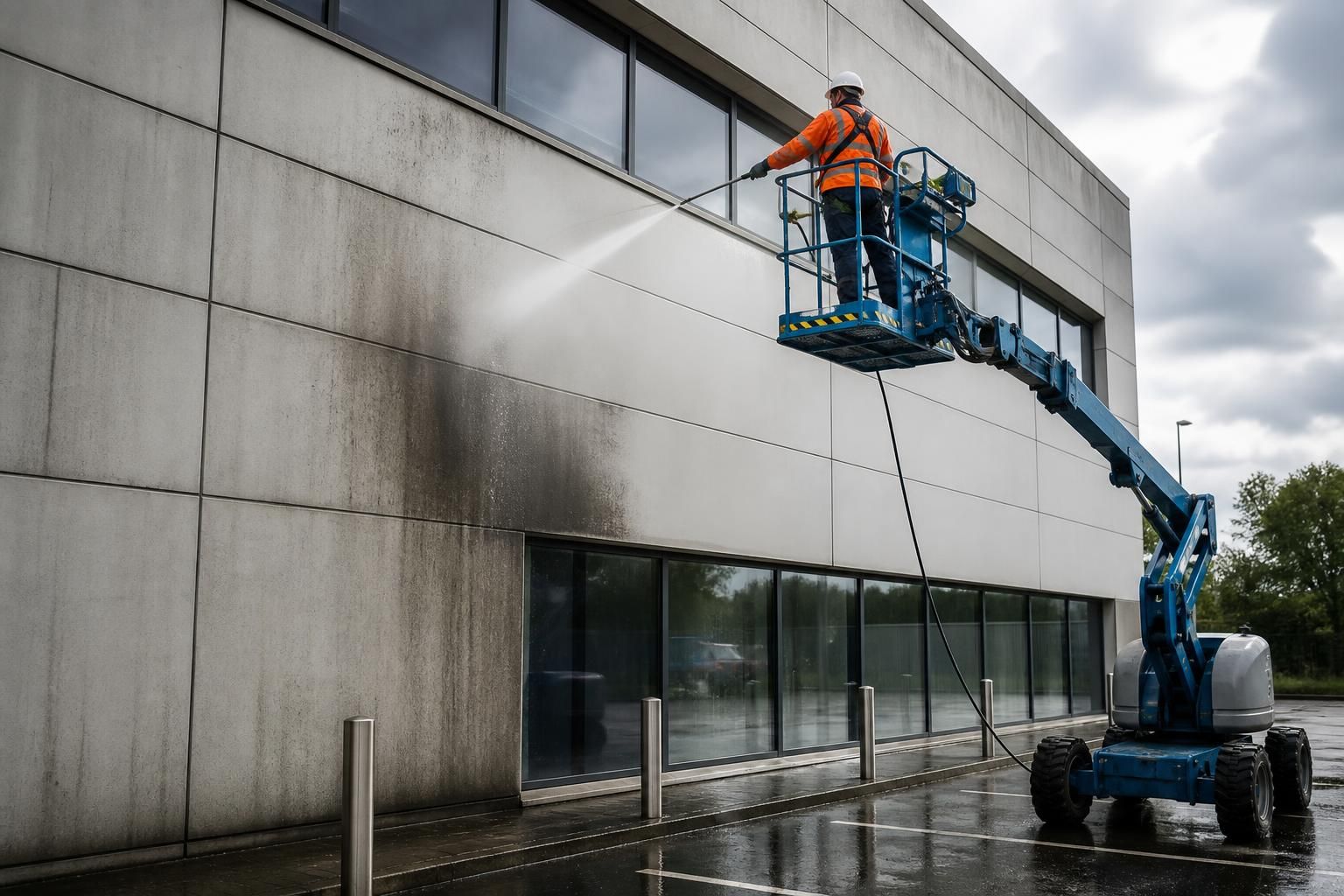
The building’s height and layout also affect productivity. A low warehouse wall may be accessible from ground level, whereas a multi-storey office, retail unit or industrial facility may need mobile elevating work platforms, scaffolding, rope access or other specialist systems. The cost of hiring, transporting and operating that equipment is normally reflected in the quotation.
Material type and sensitivity
Different exterior materials require different levels of preparation and control. Brick, concrete, stone, render, masonry, metal cladding, painted surfaces and composite panels can each respond differently to pressure, heat, chemicals and moisture. A method that is suitable for robust concrete may damage soft stone, aged mortar, paint or weathered render.
Delicate or historic materials may require low-pressure washing, steam cleaning, controlled chemical treatment, extended dwell time or small-scale testing before the main work begins. These methods can take longer than high-pressure cleaning, particularly where the finish must be monitored closely. The need to protect joints, coatings, glazing, seals, vents and nearby finishes can also increase preparation time.
Condition of the surface
Heavily soiled surfaces usually cost more to clean than lightly marked areas because they may require pre-treatment, repeated passes or more than one cleaning technique. Common factors include accumulated traffic film, algae, moss, bird fouling, atmospheric pollution, oil, rust staining, paint, cement residue and graffiti.
The condition of the substrate is equally important. Cracked render, loose pointing, friable brick, failing coatings or damaged cladding may need to be recorded and reported before cleaning. Cleaning does not correct structural defects or restore failed finishes, and attempting to remove contamination from an unstable surface may cause further damage. Where appropriate, the quotation may allow for additional controls, exclusion zones or a recommendation for remedial work before cleaning proceeds.
Cleaning method and level of treatment
The selected method has a direct effect on labour, equipment and consumable costs. Pressure washing can be efficient on suitable hard-wearing surfaces, while steam cleaning may be preferred where lower pressure and controlled heat are needed. Soft washing or chemical treatment may be appropriate for biological growth or particular stains, but it requires correct dilution, contact time, rinsing and protection of surrounding areas.
Some projects involve more than cleaning alone. For example, graffiti removal may require identifying the affected coating, removing the paint without stripping the underlying finish, and applying a protective coating afterwards. Oil or chemical contamination may require specialist collection and disposal arrangements. Sealant, paint or protective coating removal can also involve additional preparation compared with routine surface cleaning.
Access, protection and safety controls
Access is often one of the most significant cost factors on commercial and industrial sites. The quotation may need to account for access platforms, scaffolding, edge protection, harness systems, lifting equipment, additional operatives or a separate access contractor. Ground conditions, overhead obstructions, restricted entrances and the distance between parking and the work face can affect equipment selection and setup time.
Work near roads, public footways, entrances, loading bays or occupied premises may require barriers, signage, banksmen, pedestrian diversions, traffic management or timed working. Areas beneath the cleaning operation may need to be isolated to protect staff, visitors, vehicles and members of the public. These controls are necessary for safe delivery and can add preparation and supervision time to the project.
Where cleaning takes place at height, near electrical equipment or in areas used by other contractors, the work may require additional planning, permits, risk assessments and method statements. A quotation should account for these requirements rather than treating them as unexpected extras.
Water, drainage and waste management
The availability of a suitable water supply can affect both the method and the duration of the work. If a mains connection is unavailable or unsuitable, water may need to be transported to site. Conversely, some premises have restrictions on water use or drainage that require a reduced-water method.
Run-off cannot always be allowed to enter surface water drains. Cleaning residues, chemicals, silt, paint particles, oil and contaminated water may need to be contained, filtered, recovered or disposed of through an appropriate waste route. Drain protection, collection equipment and disposal documentation can therefore form part of the overall cost, particularly on industrial sites or where contamination is present.
Site location and working arrangements
Travel distance, parking, equipment transport, congestion and access to the site can influence the quotation. Remote sites or locations with restricted delivery times may require additional planning. City-centre premises may need permits, timed access, road-space management or out-of-hours working to minimise disruption.
Working hours also matter. If the premises must remain open, cleaning may need to be scheduled around staff, customers, residents, deliveries or production activities. Evening, night or weekend work can involve different labour and supervision requirements. A phased programme may be more practical than completing the entire building at once, but moving equipment between phases can affect the total cost.
Preparation, reinstatement and additional services
Before cleaning begins, operatives may need to move or protect vehicles, outdoor furniture, stock, signs, lighting, air-conditioning equipment and vulnerable landscaping. Windows, doors, vents and electrical fittings may require masking or temporary protection. After cleaning, the area may need rinsing, drying, inspection and reinstatement.
Additional work such as removing heavy graffiti, treating biological growth, cleaning adjoining hardstanding, clearing gutters or applying a protective treatment should be identified separately in the scope. Separating these items helps the client understand which costs relate to the main wall cleaning and which relate to optional or remedial work.
One-off cleaning compared with planned maintenance
A neglected façade normally needs more intensive work than a surface maintained at regular intervals. Planned cleaning can reduce the build-up of pollution and organic growth, improve access planning and make future visits more predictable. A maintenance agreement may also allow work to be scheduled during suitable periods and coordinated with other planned site activities.
However, the right frequency depends on the material, exposure, surrounding pollution, nearby vegetation, building use and appearance requirements. A maintenance plan should be based on the site’s actual condition rather than an assumed schedule.
What is needed for an accurate quotation?
Useful information includes the site address, approximate areas, building height, surface materials, photographs, known contamination, access restrictions, preferred working hours and any requirements relating to water, drainage or traffic. A site survey is particularly valuable where the building is high, the materials are delicate, contamination is severe or the premises remain operational during the work.
During the assessment, the cleaning contractor should consider the substrate, test the proposed method where necessary, identify hazards, confirm access arrangements and explain any exclusions. The quotation should set out the areas included, cleaning method, preparation, access equipment, protection, waste handling, traffic controls and any items that may be charged separately. This provides a more reliable basis for comparing quotations and reduces the likelihood of unforeseen costs once work has started.
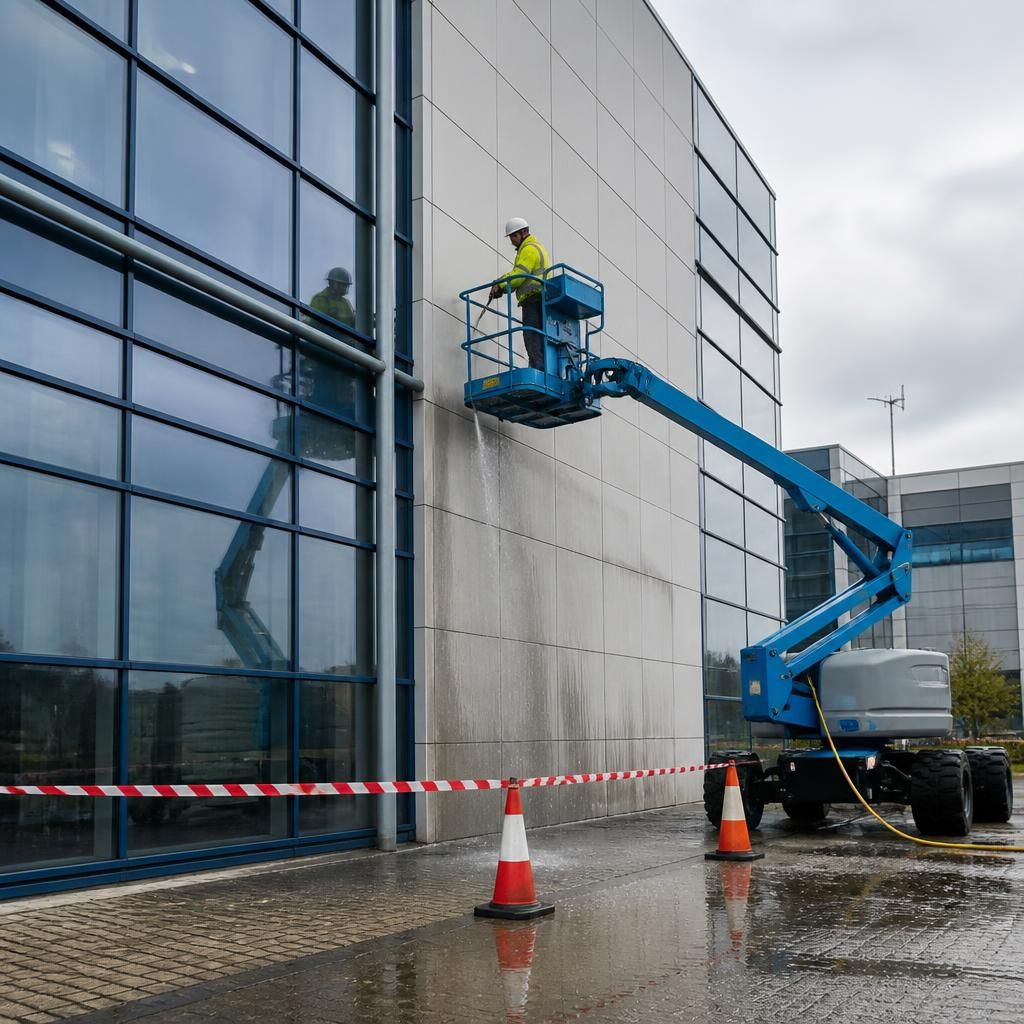
Access requirements are often a major factor in the cost of exterior building and wall cleaning. Ground-level walls may be cleaned efficiently with standard equipment, while high, recessed or obstructed elevations can require a mobile elevating work platform, scaffold, rope access or additional safety controls.
The quotation may also include equipment delivery, setup, exclusion zones, traffic management and protection for people, vehicles and nearby property. Providing photographs, building height, access restrictions and details of surrounding roads or walkways helps us select the safest practical method and produce a more accurate commercial quotation.
Request an accurate exterior building and wall cleaning quotation
Send us the site address, photographs, surface details and access requirements so we can assess the work accurately. We can then recommend a suitable cleaning method and provide a clear commercial quotation for your exterior building and wall cleaning.