
What are the key considerations when selecting an exterior cleaning service for commercial properties?
When selecting a commercial exterior cleaning service, assess its experience with your property type, cleaning methods, health and safety procedures, environmental compliance, access capabilities, insurance and ability to work around your operations. A reliable contractor should provide a clear site-specific scope, risk assessment, quotation and maintenance plan, rather than applying the same approach to every surface.
The right commercial exterior cleaning service should be selected on its ability to deliver safe, surface-appropriate and legally compliant work with minimal disruption to your operations. Price is relevant, but it should be considered alongside experience, cleaning methods, access capabilities, health and safety controls, environmental procedures, insurance, communication and the quality of the proposed maintenance plan.
Relevant commercial experience
Start by checking whether the contractor has experience with properties similar to yours. Offices, retail units, warehouses, industrial premises, schools, apartment blocks, car parks and public buildings can have very different cleaning requirements. A contractor working on a large industrial façade, for example, should understand the risks associated with cladding, loading bays, vehicle movements, roof edges and operational areas.
Ask whether the service provider has worked with the materials present on your building, including brick, stone, render, concrete, metal cladding, glass, coated surfaces and painted finishes. Experience should include more than operating pressure-washing equipment. It should cover the assessment of staining, biological growth, atmospheric pollution, oil, traffic film, graffiti and previous coatings, as well as the potential effect of cleaning on joints, sealants, drainage systems and surface finishes.
A proper site assessment and clear scope of work
A reliable contractor should inspect the site or review sufficient technical information before preparing a quotation. The assessment should consider the building’s height, condition, access restrictions, nearby pedestrians and vehicles, water and power availability, drainage, working hours and areas that need protection.
The written scope should state which elevations, roofs, walls, hard surfaces, cladding panels, windows or ancillary areas are included. It should also explain the expected cleaning result, preparation requirements, stain treatment, rinsing, waste-water handling and any exclusions. This prevents misunderstandings, particularly where some staining is permanent, surfaces are already weathered or repairs are needed before cleaning.
Where appropriate, a small test area can help confirm the safest method and the likely finish. Testing is especially useful on delicate masonry, aged coatings, historic surfaces and cladding with uncertain treatment histories. The contractor should explain any limitations rather than promising that every mark can be removed without affecting the substrate.
Suitable cleaning methods and equipment
The cleaning system should be matched to the material and type of contamination. Pressure washing can be effective on robust surfaces, but pressure, flow rate, nozzle selection and working distance must be controlled. Steam cleaning or lower-pressure methods may be more suitable for sensitive materials, detailed façades or areas where chemical use needs to be limited. Soft washing and specialist treatments can help with biological growth, but the products must be compatible with the surface and applied according to their instructions.
Ask how the contractor will prevent damage caused by excessive pressure, heat, chemicals or water penetration. Competent operatives should protect openings, electrical equipment, vents, signage, coated finishes, landscaping and vulnerable joints. They should also identify whether cleaning could disturb lead paint, asbestos-containing materials or other hazardous substances. Exterior cleaning should not proceed over suspect materials until the relevant assessment and controls are in place.
Access capability
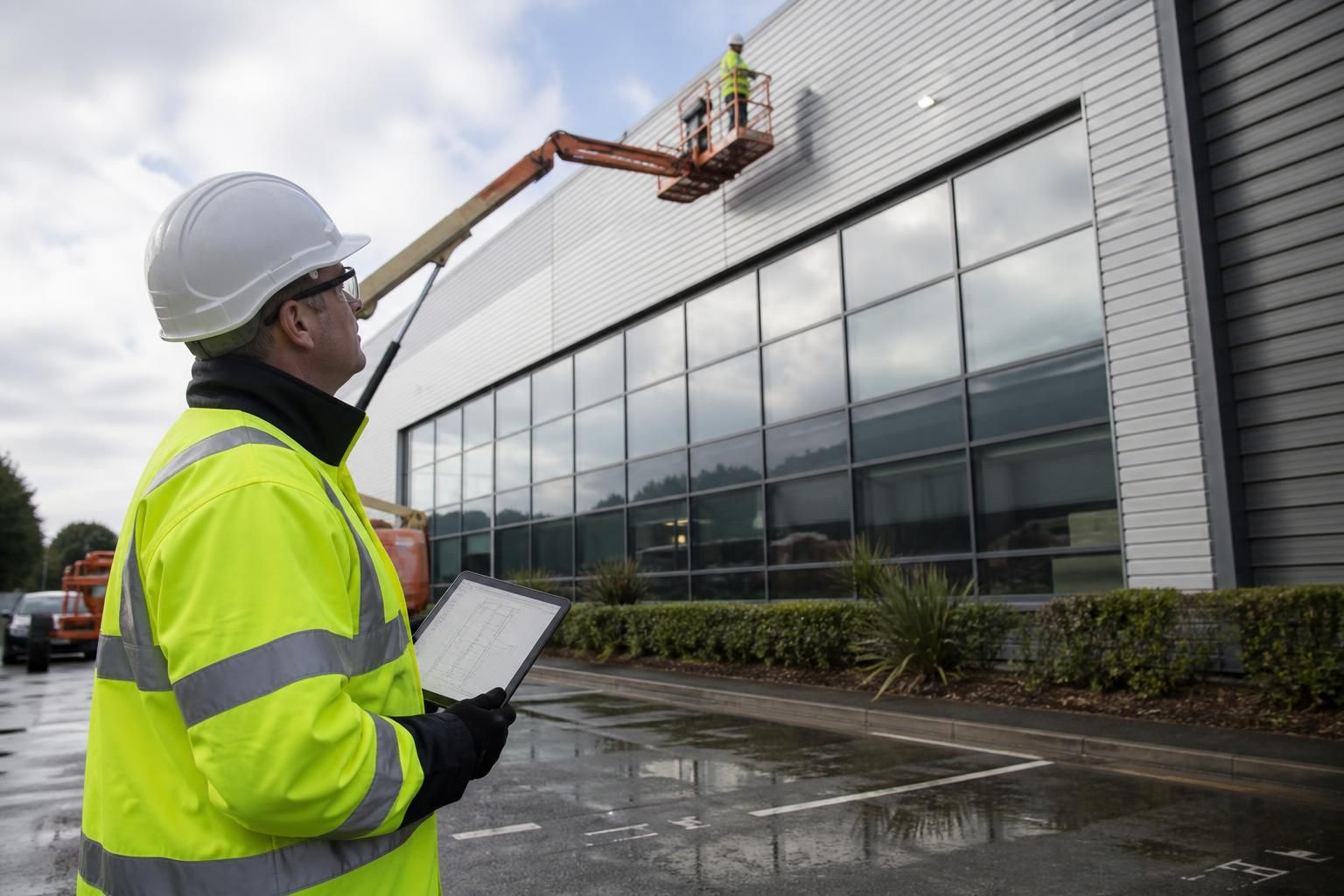
Access arrangements are a major consideration for commercial buildings. Depending on the site, work may require mobile elevated work platforms, towers, scaffold, abseiling, long-reach equipment or controlled ground-based systems. The contractor should select equipment based on the building, surface, ground conditions and surrounding activities, not simply on what is readily available.
Confirm who is responsible for access equipment, permits, exclusion zones, traffic management and any required coordination with the building manager. Work at height must be properly planned, supervised and carried out by competent people in accordance with applicable UK requirements. The method should also account for rescue arrangements, weather conditions, overhead services and the risk of falling equipment or debris.
Health, safety and environmental controls
Before work begins, request site-specific risk assessments and method statements. These should address pressure and steam equipment, chemicals, slips, work at height, public access, vehicle movements, electrical hazards, noise, falling materials and emergency procedures. Where cleaning products are used, the contractor should provide appropriate control measures and follow COSHH requirements.
Environmental arrangements are equally important. Cleaning water, detergents, oils, paint residues and contaminated debris must not be allowed to enter surface-water drains or nearby watercourses without suitable controls. The contractor should explain how runoff will be contained, filtered, collected or disposed of, and how waste will be handled. Requirements can vary according to the site, local authority and water authority, so a generic statement about environmentally friendly cleaning is not sufficient.
Check that the service provider has suitable public liability and employers’ liability insurance, and ask whether additional cover is needed for specialist access, high-value buildings or work carried out on your premises. Training, equipment inspection records and relevant competency evidence should be available where the work demands them.
Working around your operations
Commercial cleaning often takes place while a building remains occupied or operational. Discuss the proposed working hours, noise, water use, restricted areas, deliveries, customer access and parking arrangements before agreeing the programme. A competent contractor should be able to phase work around tenants, staff, visitors, production areas and time-sensitive activities.
Agree how the work area will be segregated and signed, how access routes will be kept safe, and who will be contacted if unexpected contamination, damaged surfaces or access problems are found. Clear communication is particularly important for multi-site programmes or properties managed by several stakeholders.
Quotation, value and ongoing maintenance
Compare quotations on a like-for-like basis. The lowest price may exclude access, stain treatment, protective measures, out-of-hours working, wastewater controls or areas that another contractor has included. A useful quotation should identify labour, equipment, access, materials, preparation, cleaning stages, waste handling, reinstatement and any applicable additional charges.
Consider whether the contractor can provide a practical maintenance schedule rather than a one-off clean only. The appropriate interval depends on the building material, location, exposure to traffic and pollution, surrounding vegetation, biological growth and the required presentation standard. Planned inspections can identify blocked drainage, recurring staining, graffiti or surface deterioration before these issues become more difficult or expensive to manage.
Finally, assess the contractor’s reporting process. Completion photographs, areas treated, products used, observations about defects and recommendations for follow-up work provide a useful record for property managers and facilities teams. Taken together, these checks help establish whether a commercial exterior cleaning service can deliver controlled, transparent and suitable maintenance for the whole life of the project.
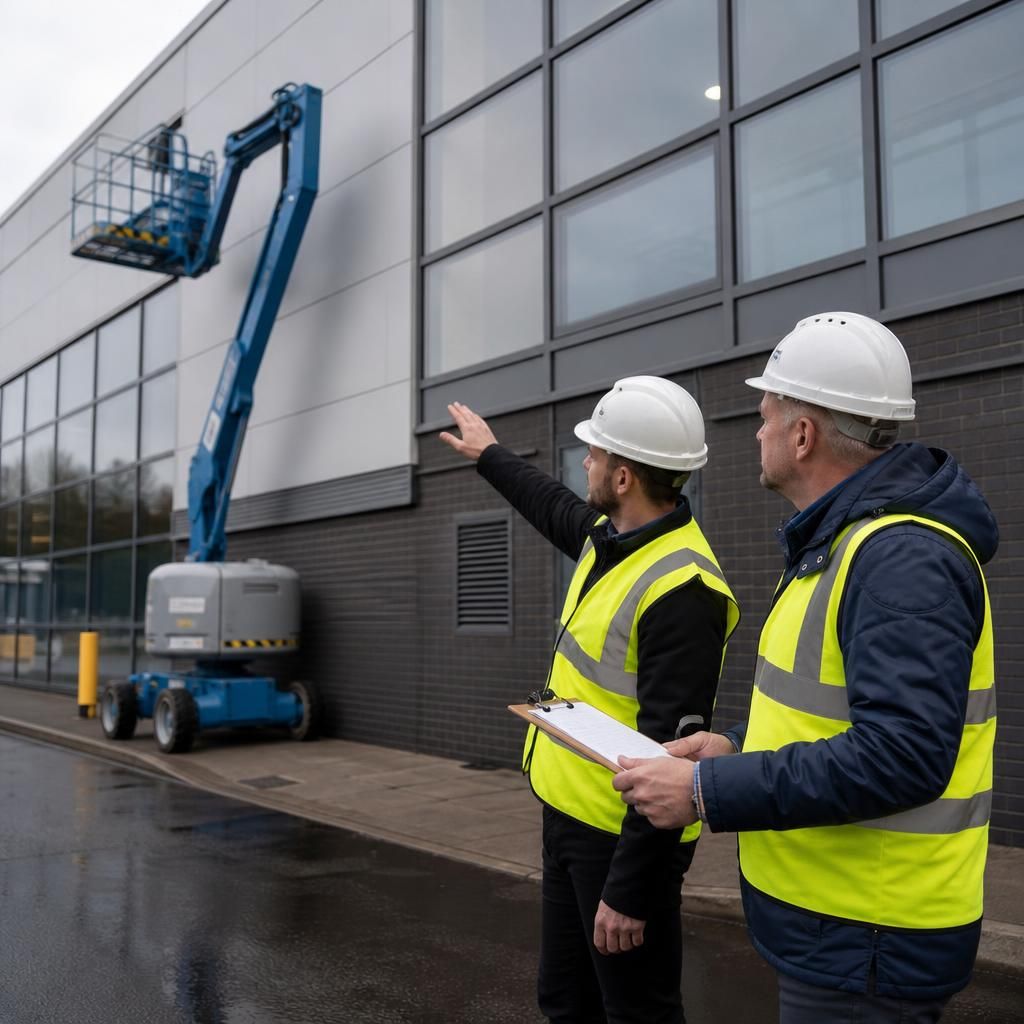
A site-specific assessment is one of the most important checks when selecting a commercial exterior cleaning service. Before quoting, the contractor should review the building materials, contamination, height, access restrictions, drainage, nearby vehicles and pedestrians, and the effect of cleaning on daily operations.
The quotation should then set out the areas included, proposed cleaning methods, access equipment, protection measures, wastewater controls, working hours and any exclusions. This makes it easier to compare contractors on a like-for-like basis and reduces the risk of unexpected charges or unsuitable work. Where the surface or coating is uncertain, a small test area can help confirm the safest method and realistic cleaning result.