
What are the factors that determine the cost of exterior building and wall cleaning services?
The cost of exterior building and wall cleaning services is mainly determined by the size and condition of the surfaces, the cleaning method required, access requirements and the level of soiling. Additional factors include the building’s materials, site location, health and safety controls, waste-water management and whether the work is a one-off project or planned maintenance.
The cost of exterior building and wall cleaning services is determined primarily by the area to be cleaned, the surface material and condition, the level and type of soiling, the cleaning method required and how easily the work can be accessed. A reliable quotation also accounts for site location, health and safety controls, equipment, wastewater management, working hours and whether the work is a one-off clean or part of a planned maintenance programme.
Surface area and overall scale
The size of the façade, walls, cladding or other external surfaces is usually the starting point for pricing. Larger sites require more labour, water, equipment and time, but the cost is not always calculated simply by multiplying a rate by the surface area. A compact building with difficult access or heavy contamination may take longer to clean than a larger, straightforward elevation.
The quotation may need to include several separate areas, such as main elevations, rear service yards, loading bays, boundary walls, entrance canopies, architectural details and hardstanding around the building. Clear measurements, drawings, photographs or a site survey help identify the full scope and reduce the risk of unexpected additions.
Type and condition of the building material
Different materials require different levels of care. Brickwork, natural stone, concrete, render, painted surfaces, metal cladding, glazed areas and composite panels can all respond differently to pressure, heat, detergents and agitation. A hard-wearing concrete surface may accept a more intensive process, while aged masonry, fragile pointing, painted render or weathered stone may require a low-pressure or steam-cleaning approach.
The condition of the surface also affects the work. Loose coatings, cracked render, failed mortar joints, corroded fixings or damaged cladding may need to be recorded before cleaning. Cleaning can expose defects that were previously hidden by dirt, but it does not normally include repairs, repainting, repointing or replacement unless these services have been specifically agreed.
Type, age and severity of the soiling
General traffic film and light dust are usually less demanding to remove than ingrained pollution, oil deposits, algae, moss, bird fouling, lichen, cement residue, efflorescence or graffiti. Some contaminants require specialist chemicals, dwell time, repeated treatment or controlled rinsing. Cement and mortar splashes, for example, must be treated carefully so that the underlying material is not etched or discoloured.
Organic growth may require removal followed by a suitable treatment to help control regrowth. Graffiti removal can involve identifying the affected substrate, testing a removal product and applying a compatible protective coating. The extent, thickness and location of the contamination all influence labour and materials costs.
Cleaning method and equipment
Pressure washing, soft washing, steam cleaning, hot-water cleaning, chemical treatment and manual methods have different operational costs. The most powerful method is not automatically the most suitable or economical. Selecting the wrong process can damage masonry, coatings, sealants or joints and may create additional remedial work.
Steam cleaning or controlled low-pressure cleaning may be appropriate for delicate façades and historic materials, but these methods can require slower, more precise work. Hot-water pressure washing may improve the removal of grease and organic deposits, while specialist detergents may be needed for particular contaminants. The quotation should identify the proposed method and explain any testing or staged cleaning required.
Access and working at height
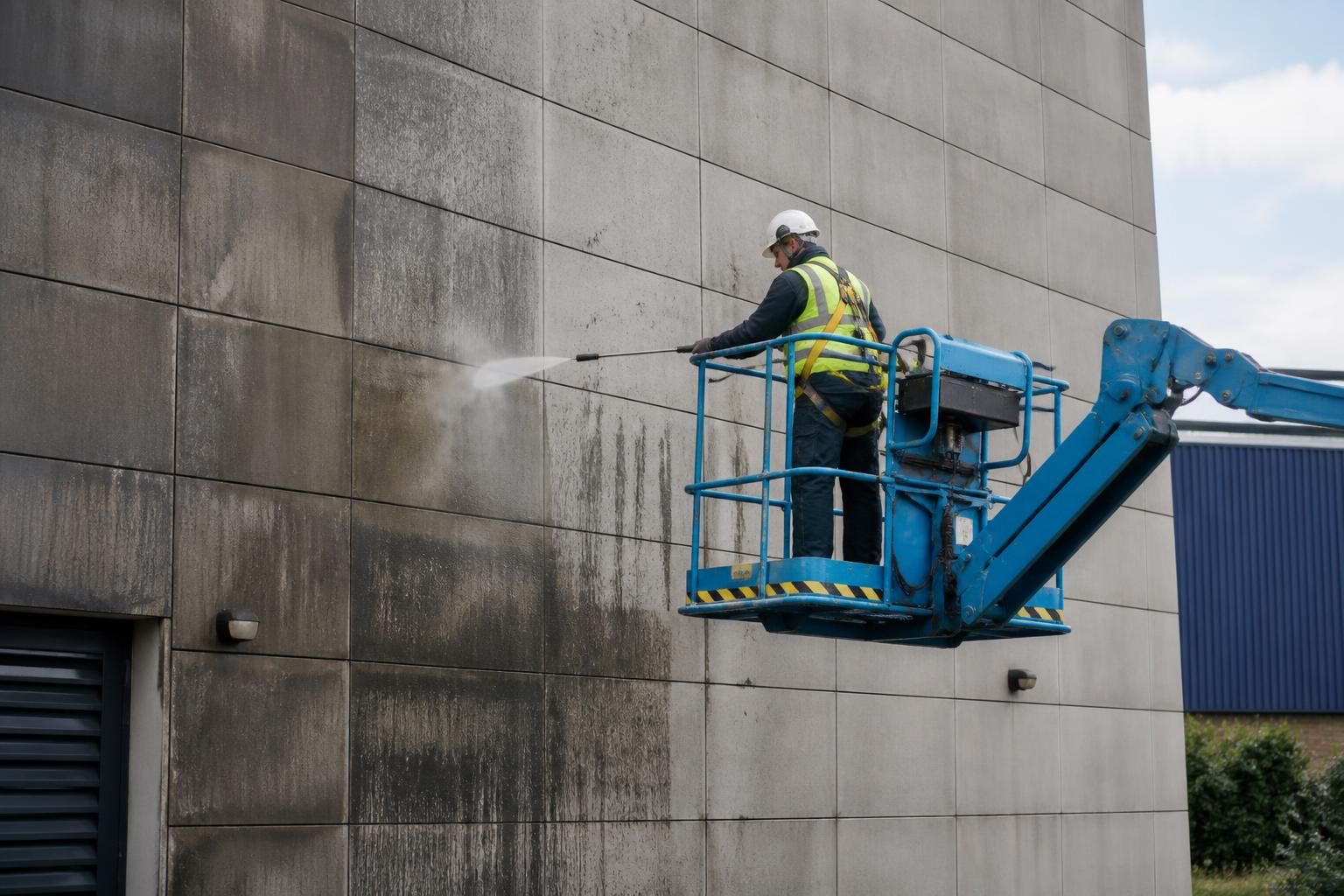
Access is often one of the most significant cost factors. Ground-level walls with clear access are generally simpler to clean than upper elevations, enclosed courtyards, rooflines or areas above busy entrances. Requirements may include mobile elevated work platforms, tower scaffolds, scaffold systems, cradles, abseiling or specialist rope-access arrangements, depending on the building and risk assessment.
Access costs are affected by the height and layout of the building, the available space for equipment, ground conditions, overhead obstructions, traffic routes and the need to protect pedestrians, vehicles or neighbouring property. Equipment may also need to be delivered, set up, moved between elevations and removed at the end of the work. Where access equipment is hired, the hire period and any attendance requirements can form part of the quotation.
Site restrictions and preparation
Cleaning can take longer where the site has restricted parking, narrow entrances, limited water supplies, fragile landscaping or sensitive neighbouring properties. Commercial premises may remain operational during the work, requiring barriers, exclusion zones, phased cleaning or coordination with the site manager.
Preparation can include moving or protecting vehicles, signage, external furniture, lighting, planting, air-conditioning units, electrical equipment and customer or staff access routes. Security procedures, induction requirements and permits to work may also affect the time needed on site. If the building is beside a public pavement or road, additional controls may be necessary to protect passers-by and manage overspray or falling debris.
Health and safety requirements
A professional quotation should reflect the controls needed to carry out the work safely. These may include a site-specific risk assessment and method statement, equipment inspections, work-at-height planning, personal protective equipment, traffic management, pedestrian segregation and emergency arrangements.
Higher-risk sites, complex access arrangements and premises that must remain open during cleaning generally require more planning and supervision. The cost may also include coordination with the client’s facilities team, principal contractor or other trades. These controls are an essential part of the work rather than an optional extra.
Water supply and wastewater management
The availability of a suitable water supply can affect the method, productivity and equipment needed. Where a reliable supply is unavailable or unsuitable, water may need to be transported to site. Water consumption also depends on the cleaning process and the surface being treated.
Run-off cannot always be allowed to enter surface-water drains. Detergents, oils, paint residues, biological contamination and other pollutants may need to be contained, collected, filtered or disposed of in accordance with the site and environmental requirements. Drain protection, wet vacuum recovery, bunding and responsible wastewater disposal can add to the project cost, but they help prevent pollution and protect the client from avoidable compliance issues.
Location, travel and site logistics
The site’s location affects travel time, transport, equipment delivery and mobilisation. Projects across Birmingham, the West Midlands and elsewhere in the UK may involve different access conditions, parking arrangements and local site requirements. Several buildings on one site can often be planned more efficiently than separate visits, provided the work areas and access arrangements are ready at the agreed times.
Urban sites, industrial estates, construction locations and premises managed by local authorities may each have their own delivery windows, security checks or permit systems. These requirements should be discussed before the quotation is finalised.
Timing and working hours
The requested programme can influence the price. Work carried out during standard daytime hours may be more straightforward than cleaning required overnight, at weekends or during a restricted shutdown period. Weather can also affect external cleaning, particularly where surfaces need to dry, chemicals need to dwell or wind conditions make access equipment unsafe.
Urgent response work may require rapid mobilisation, while planned cleaning can usually be scheduled around suitable weather, equipment availability and the building’s operational needs. Cleaning in phases may be appropriate where a site cannot be closed, although this can increase mobilisation and set-up time.
One-off cleaning compared with planned maintenance
A one-off restoration clean may involve heavier contamination, more preparation and more detailed testing than routine maintenance. Once a surface has been brought to an agreed standard, scheduled cleaning can often prevent deposits from becoming deeply ingrained and may make each visit more predictable.
Planned maintenance pricing depends on the agreed frequency, areas included, response times, access arrangements and whether additional services such as graffiti removal or periodic roof and cladding cleaning are included. A maintenance plan should define the expected cleaning standard rather than assuming that every visit will produce the same result on every material.
How a quotation is assessed
Before pricing, the contractor should establish:
- which elevations, walls and associated surfaces are included;
- the materials, coatings and condition of those surfaces;
- the type, distribution and severity of the contamination;
- the required cleaning outcome and any areas that must remain untouched;
- access equipment, traffic controls and protection requirements;
- water, power, wastewater and waste-disposal arrangements;
- working hours, site restrictions and the preferred programme; and
- whether repairs, sealing, protective treatments or follow-up visits are required.
Photographs can support an initial assessment, but an inspection or test patch is often needed before selecting a method for delicate, stained or previously treated surfaces. Testing helps confirm the likely result, identify any risk of colour change or damage and make the final price more accurate.
What should be clear in the final price
Ask for the quotation to state the areas included, proposed method, access arrangements, preparation, wastewater controls, equipment, labour, waste disposal and any exclusions. It should also explain whether the price includes VAT, overnight or weekend working, repairs, protective coatings and repeat treatments. If the condition of the surface cannot be confirmed until deposits are removed, the quotation should describe how additional work will be authorised.
The lowest initial price may not represent the lowest overall cost if it excludes safe access, environmental controls, testing or the treatment needed to protect the substrate. Comparing quotations on the same scope and cleaning standard provides a more useful assessment than comparing headline prices alone.
For an accurate cost assessment, provide site photographs, approximate dimensions, details of the building materials, information about the contamination and any access or operating restrictions. A site survey can then confirm the cleaning method, equipment and controls required, allowing the price to reflect the actual conditions rather than a broad estimate.
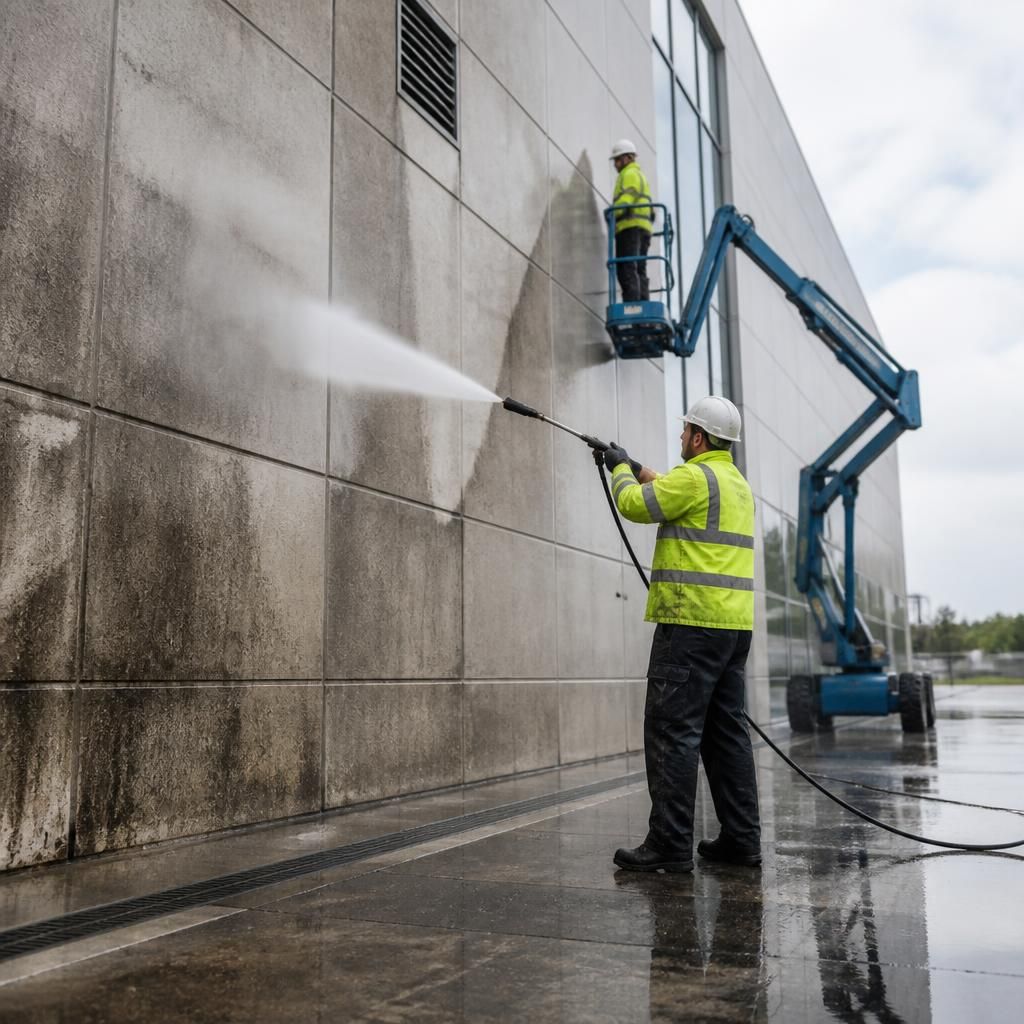
The cost of exterior building and wall cleaning is often affected more by access and surface condition than by size alone. Upper elevations, enclosed courtyards and areas beside busy entrances may require specialist access equipment, exclusion zones and additional preparation, while delicate or heavily contaminated materials usually need slower, controlled cleaning.
A site survey or test patch helps confirm the safest method, likely cleaning result and equipment required before work begins. It also allows the quotation to account for protecting nearby surfaces, managing wastewater and working around your operations, reducing the risk of unexpected charges once cleaning is underway.
Request an Accurate Exterior Cleaning Cost Assessment
Provide site photographs, approximate dimensions and details of the surfaces, contamination and access restrictions so we can assess the work accurately. We can then recommend the appropriate cleaning method, equipment and site controls before preparing a clear quotation.