
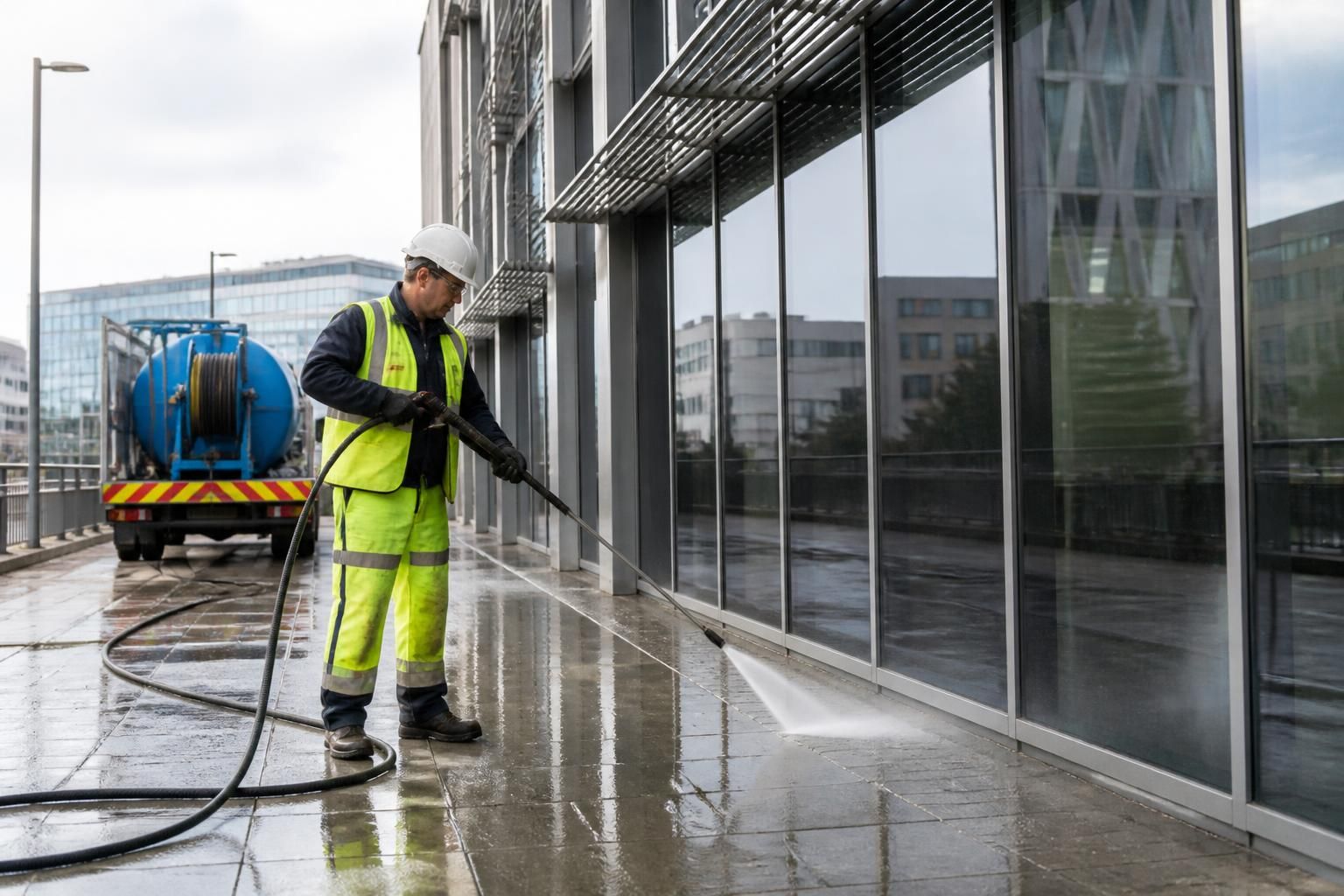
What are the environmental and safety regulations to consider when performing exterior building and wall cleaning?
Exterior building and wall cleaning in the UK must comply with environmental controls on contaminated water, chemicals and waste, alongside health and safety requirements covering risk assessments, COSHH, work at height, equipment and public protection. Before work begins, the cleaning plan should identify the building materials, control runoff and chemical use, use suitable access equipment and PPE, and ensure wastewater is collected, treated or disposed of lawfully.
Exterior building and wall cleaning in the UK must be planned and carried out in accordance with environmental controls and health and safety law. The main requirements concern contaminated wastewater, chemical use, waste disposal, protection of drains and watercourses, risk assessment, control of hazardous substances, work at height, equipment safety and protection of workers, building occupants and the public.
Requirements vary according to the building materials, cleaning method, site location and pollutants present. A compliant cleaning plan should be prepared before work starts and should record the proposed method, access arrangements, risks, environmental controls, emergency procedures and arrangements for collecting or disposing of wastewater.
Environmental controls for wastewater and runoff
Pressure washing, steam cleaning and chemical treatments can remove oil, silt, paint, mortar, traffic film, algae, biological growth and other contaminants. This water should not be allowed to enter surface-water drains, roadside gullies, streams or other watercourses unless it is demonstrably suitable and discharge is permitted. Surface-water systems commonly discharge directly to the environment rather than to a treatment works.
- Identify all drains, gullies, soakaways and watercourses before cleaning begins.
- Use drain covers, bunding, temporary dams, vacuum recovery or other suitable measures to prevent uncontrolled runoff.
- Collect contaminated water where necessary and arrange suitable treatment, storage or disposal.
- Do not discharge trade effluent to a foul sewer without confirming that the sewer operator permits the discharge and whether consent or pre-treatment is required.
- Keep wastewater away from areas where it could enter soil, groundwater or neighbouring property.
- Stop work and review the controls if the water changes colour, becomes heavily contaminated or reaches an unprotected drain.
Environmental permitting requirements may apply where waste, contaminated water or certain treatment activities are stored, transported, treated or discharged. The Environmental Protection Act, the Environmental Permitting regime, the Water Resources Act and the Water Industry Act are among the legal frameworks that can be relevant. The exact obligation depends on the activity and location, so the contractor should confirm requirements with the relevant sewerage undertaker, local authority or environmental regulator rather than assume that a nearby drain is suitable.
Chemical use and COSHH
Detergents, biocides, fungicides, degreasers, acids, alkalis, solvents and paint-removal products must be selected and used in accordance with the Control of Substances Hazardous to Health Regulations. A COSHH assessment should identify the hazards, exposure routes, people at risk, required controls, storage arrangements, first-aid measures and spill response. Safety data sheets and manufacturer instructions should be available to the operatives using the products.
- Choose the least hazardous product and lowest effective concentration that will achieve the required result.
- Check chemical compatibility with the façade, coatings, sealants, glazing, metals, vegetation and adjacent surfaces.
- Prevent spray, mist and vapour from reaching workers, occupants, pedestrians, vehicles or neighbouring premises.
- Store products securely in labelled containers and keep them away from incompatible substances.
- Provide suitable gloves, eye or face protection, protective clothing and respiratory protection where the assessment requires it.
- Prevent chemical residues and rinse water from entering drains or the wider environment.
Biocidal products should be used only for an appropriate purpose and in accordance with their label and instructions. Chemical application is not automatically safer or more environmentally responsible than pressure or steam cleaning; the correct method depends on the material, contamination and discharge controls available.
Waste, residue and hazardous materials
Removed paint, sludge, masonry debris, algae, oil residues, chemical containers and contaminated absorbent materials must be classified and handled as waste. Waste should be stored securely, kept contained and transferred using an authorised waste carrier to an appropriate facility. Waste transfer documentation and other records should be retained where required.
Older buildings may contain asbestos-containing materials, lead-based paint or other hazardous substances. Cleaning should not disturb suspect materials until they have been assessed by a competent person. Abrasive cleaning, high-pressure water and paint removal can release hazardous dust, fibres or fragments, so the method must be revised or specialist advice obtained where such materials are present.
Cleaning near nesting birds, protected species, bats, established vegetation or sensitive habitats also needs consideration. The timing and method may need to be changed where work could disturb wildlife or damage habitats. Any existing contamination, staining or biological growth should be assessed before it is disturbed, particularly on industrial, transport or derelict sites.
Risk assessment and method statement
Under the Health and Safety at Work etc. Act and the Management of Health and Safety at Work Regulations, risks should be assessed and controlled before work begins. A site-specific method statement should explain how the work will be carried out safely, not simply describe the cleaning equipment.
The assessment should consider falling objects, slips, trips, wet surfaces, high-pressure injection injuries, chemical exposure, electrical hazards, manual handling, noise, vibration, flying debris, unstable surfaces, traffic, members of the public, weather and emergency access. It should also identify who may be affected, including employees, subcontractors, residents, visitors and other contractors.
Controls should follow the hierarchy of control: eliminate unnecessary exposure where possible, use safer methods and equipment, isolate the work area, provide collective protection and then use PPE for residual risks. Operatives should receive suitable instruction, training and supervision, and the site should be monitored throughout the work.
Work at height and access equipment
Where walls, façades, roofs or high-level features cannot be reached from ground level, the Work at Height Regulations apply. Work at height should be avoided where reasonably practicable. Where it is necessary, the access method should be selected following a competent assessment of the height, surface, duration, reach, ground conditions, weather and risk of falling materials.
- Use suitable platforms, scaffolds, towers, mobile elevating work platforms or other access systems for the task.
- Inspect access equipment before use and after events that could affect its integrity.
- Use fall prevention or fall arrest systems where required, with suitable anchorage and rescue arrangements.
- Maintain exclusion zones beneath elevated work and prevent tools, hoses and materials from falling.
- Do not use ladders as a work platform where the task requires prolonged, strenuous or sideways-reaching work.
- Stop or modify the work when wind, rain, ice, poor visibility or other conditions make access unsafe.
Scaffolds, platforms and powered access equipment should be assembled, operated and inspected by people with suitable competence. Harnesses and other fall-protection equipment require compatible systems, pre-use checks and a realistic rescue plan; relying solely on the emergency services is not an adequate substitute for planning.
Equipment, pressure and electrical safety
Pressure washers, steam cleaners, pumps, hoses and powered access equipment must be suitable for the task and maintained in safe working order. The Provision and Use of Work Equipment Regulations require equipment to be suitable, maintained and used by trained people. Hoses should be routed to prevent trips, vehicle damage and sudden movement, while couplings, lances and guards should be checked before use.
Where lifting equipment is used, including certain powered access platforms, the Lifting Operations and Lifting Equipment Regulations may require thorough examination, safe planning and competent operation. Electrical equipment should be suitable for wet conditions, protected against damage and used with appropriate supplies and residual-current protection. Equipment should be isolated before maintenance or clearing blockages.
Pressure-washing injuries can be severe even when the jet does not visibly break the skin. Operatives should never direct a lance at a person, use unsuitable pressure on fragile materials or bypass safety controls. The work area should be segregated to control spray, debris, noise and access by unauthorised people.
Public, occupant and traffic protection
Commercial and industrial premises often remain occupied during cleaning. The site plan should coordinate with the client, building manager and other contractors, identifying working hours, entrances, fire exits, deliveries, pedestrian routes, vehicles and any sensitive operations. Warning signs alone are rarely sufficient where people could enter the spray or fall zone.
- Use barriers and clearly defined exclusion zones around the work area.
- Provide safe alternative routes and keep emergency exits available.
- Control vehicle movements and protect hoses where they cross access routes.
- Prevent spray and debris from affecting adjacent roads, footways, vehicles or occupied rooms.
- Notify occupants about noise, odour, water restrictions or temporary access changes.
- Use a banksman or other traffic control where the site assessment requires it.
Fire, emergency and incident arrangements
The method statement should include procedures for chemical splashes, spills, equipment failure, unexpected contamination, loss of containment, falls, injury, fire and sudden deterioration in weather. Spill kits, eyewash, first-aid equipment and suitable communication arrangements should be available where the assessment identifies a need. Operatives should know how to raise an alarm, isolate equipment, contain a spill and obtain medical assistance.
Incidents involving pollution, injury, uncontrolled discharge or hazardous materials should be reported through the appropriate client, regulator, sewerage provider or emergency route. Work should not resume until the cause has been addressed and the controls are adequate.
Records and contractor competence
A well-managed project should retain the risk assessment, method statement, COSHH information, equipment inspection records, training and competence evidence, waste documentation, discharge permissions where applicable, incident records and any required photographs or monitoring results. These records help demonstrate that the work was planned and that environmental controls were actually implemented.
For complex façades, high-level work, contaminated sites or sensitive buildings, the cleaning contractor should involve the principal contractor, facilities manager or other responsible person under the Construction (Design and Management) Regulations where those regulations apply. The important test is not whether a job is described as routine cleaning, but whether its risks, interfaces and construction-related activities have been properly assessed and managed.
Before work begins, the client should provide information about the building, previous coatings, known hazardous materials, drainage, occupancy and site restrictions. The cleaning team should then confirm the method, access system, chemical controls, wastewater arrangements and emergency plan. This coordination is the most reliable way to protect people, prevent pollution and avoid damage to the building while meeting the relevant UK requirements.
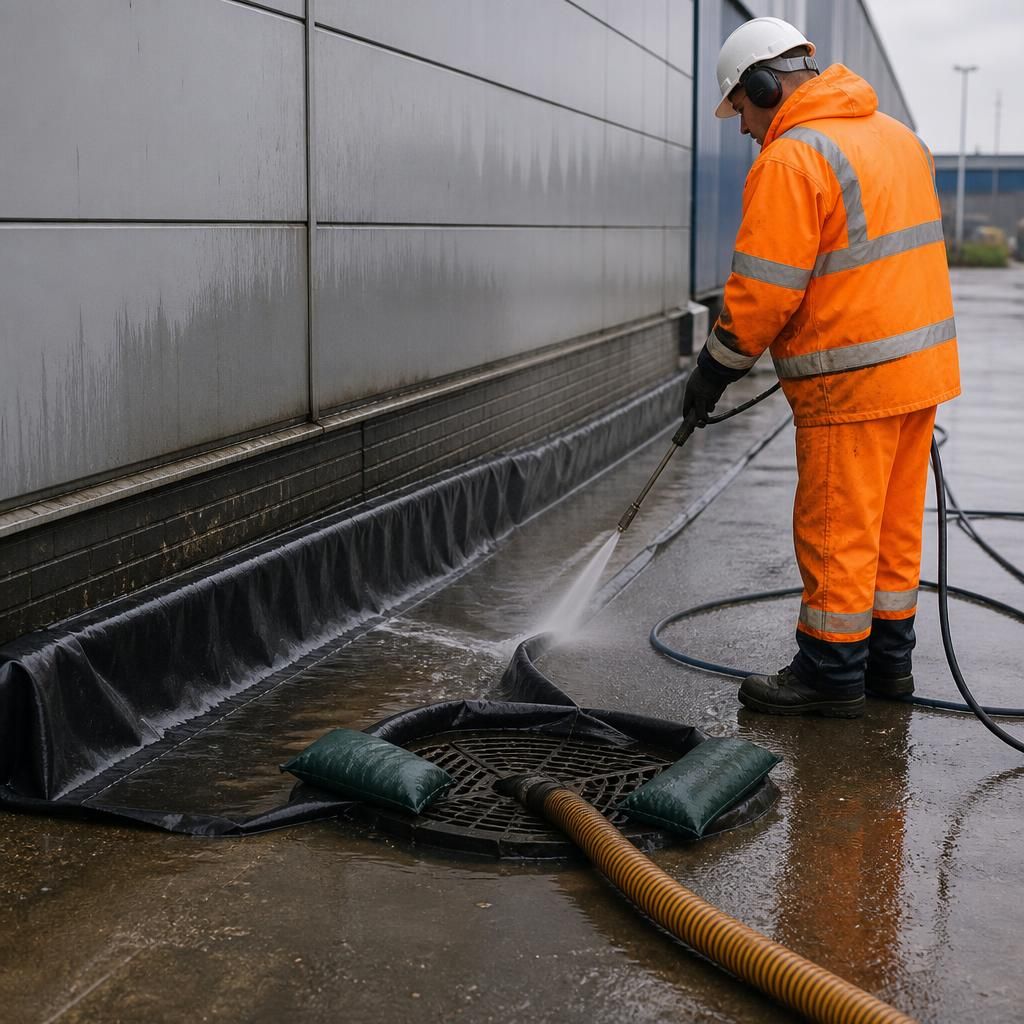
Controlling wastewater is a central environmental requirement during exterior building and wall cleaning. Pressure washing, steam cleaning and chemical treatments can carry oil, paint residue, biocides, silt and other pollutants into surface-water drains or nearby watercourses, where they may reach the environment without treatment.
Before cleaning starts, the team should identify drainage routes and assess whether runoff needs to be contained. Suitable controls may include drain covers, temporary bunding, vacuum recovery and the collection of contaminated water for appropriate treatment or disposal. Trade effluent should not be discharged to a foul sewer unless the sewerage provider permits it and any required consent or pre-treatment arrangements are in place. These controls protect the site, surrounding property and local water environment while helping demonstrate that the cleaning work has been properly planned.