
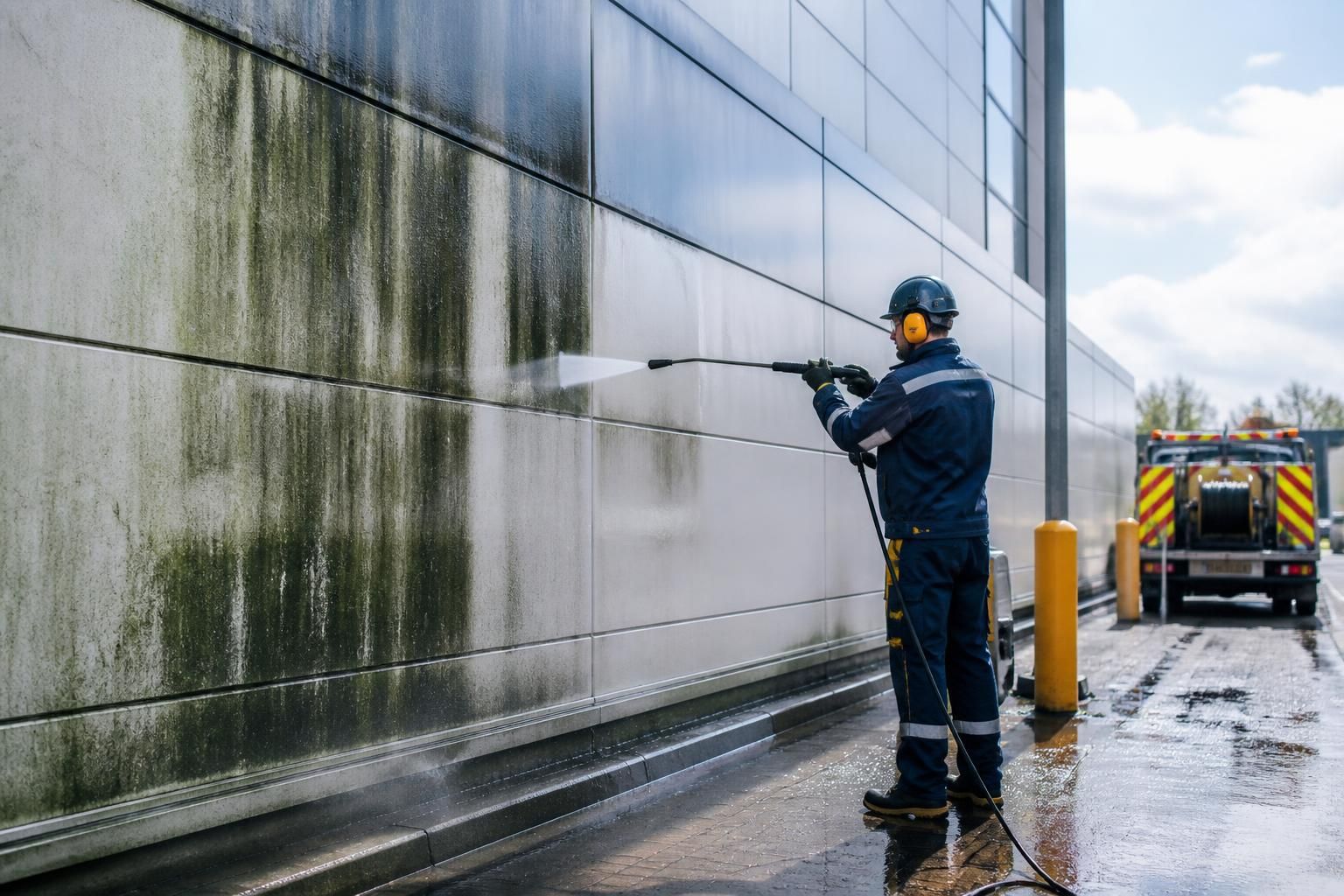
What are the benefits of professional exterior building and wall cleaning?
Professional exterior building and wall cleaning removes dirt, pollution deposits, algae, moss, staining and graffiti using methods suited to the surface. It improves kerb appeal, supports safer access areas, helps protect building materials from avoidable deterioration and maintains a clean, professional appearance for occupants, visitors and customers.
Professional exterior building and wall cleaning improves the appearance, safety and condition of commercial premises by removing pollution deposits, dirt, algae, moss, staining, biological growth and graffiti with methods selected for the building material. The main benefits are a more presentable property, reduced risk of surface deterioration, safer external areas and a consistent standard that is difficult to achieve with ad hoc or unsuitable cleaning.
Improved kerb appeal and professional presentation
External walls and façades are exposed to traffic fumes, dust, rainwater run-off, bird fouling, organic growth and general weathering. These deposits can make a well-maintained building appear neglected, even when the interior and other facilities are in good condition. Professional cleaning restores a more uniform appearance across brickwork, render, stone, concrete, cladding and other external surfaces.
This is particularly important for offices, retail premises, managed developments, public buildings, industrial sites and properties being prepared for occupation, inspection or handover. A clean exterior supports the professional presentation of the organisation using the building and can help maintain consistent standards across a wider estate.
Protection against avoidable deterioration
Dirt is not always simply a cosmetic issue. Organic growth can retain moisture against a surface, while atmospheric pollution and other deposits may contribute to staining and gradual degradation if they are left untreated. Moss and algae can spread across walls, ledges and adjacent hard surfaces. Graffiti can also become more difficult to remove if it is allowed to weather into porous materials.
Professional cleaning removes contaminants before they become more established. It does not replace repairs, repointing, waterproofing or planned fabric maintenance, but it can form an important part of a building care programme. Cleaning also makes it easier to identify defects such as cracked render, failed joints, damaged cladding, blocked drainage details or areas where water is penetrating.
Safer walls, entrances and surrounding areas
Algae, moss and other organic growth can make paths, steps, ramps and access routes slippery, particularly when wet. Removing these deposits from external walls and nearby hard surfaces can help reduce avoidable slip hazards. Cleaning can also remove loose contamination that may otherwise be transferred onto hands, clothing, vehicles or equipment.
A cleaning contractor should assess the whole work area rather than focusing only on the visible face of a wall. This includes entrances, loading areas, pedestrian routes, low-level walls, plant enclosures and surfaces affected by run-off. Where contamination is associated with bird fouling, waste, oil or other potentially hazardous substances, appropriate controls and disposal arrangements are required.
Appropriate treatment for different materials
Professional exterior cleaning is not a single process. The correct method depends on the substrate, the type of contamination, the condition of the surface and the surrounding environment. Pressure washing may be suitable for robust surfaces, while steam cleaning or lower-pressure methods can be more appropriate for sensitive masonry, painted finishes or areas where water penetration is a concern.
Before work begins, the surface should be inspected for defects, previous coatings, open joints, fragile areas and features that could be damaged by water or pressure. A controlled test area can help confirm the cleaning method, operating pressure and dwell time. Using the least aggressive effective method helps reduce the risk of etching, discolouration, mortar loss, coating failure and unnecessary water ingress.
More effective graffiti removal
Graffiti removal is usually more successful when the product and cleaning technique are matched to both the paint and the underlying material. Porous brick, concrete and stone may require a different approach from painted cladding, metalwork or coated render. Incorrect use of solvents, excessive pressure or abrasive techniques can spread the marking or permanently alter the surface.
Professional treatment can remove the visible marking while limiting damage to the substrate. Where suitable, an anti-graffiti coating may make future removal easier, although its use should be considered in relation to the appearance, breathability and maintenance requirements of the material.
Better access to difficult areas
Façades, high-level walls, parapets, atria, canopies and industrial structures often cannot be cleaned safely from ground level. Professional contractors can plan suitable access using equipment such as mobile elevated work platforms, towers, specialist poles or other controlled access systems, depending on the site and height involved.
Access planning considers ground conditions, overhead obstructions, pedestrian and vehicle movements, exclusion zones, weather and emergency arrangements. This allows high-level cleaning to be completed without relying on improvised ladders or exposing building occupants and members of the public to unnecessary risk.
Reduced disruption to the site
Commercial exterior cleaning can be planned around operating hours, deliveries, tenants, visitors and other site activities. A professional method statement and schedule can identify where water, equipment, noise, access restrictions or temporary closures may affect the premises. Segregating the work area and protecting nearby doors, vents, windows, vehicles and sensitive landscaping helps keep disruption controlled.
For larger sites, cleaning may be divided into manageable phases or incorporated into planned maintenance visits. This makes the work easier to coordinate with facilities teams, property managers and other contractors.
Support for planned maintenance and compliance
Regular external cleaning provides an opportunity to monitor the condition of the building envelope. Records of completed work, identified defects, photographs, access arrangements and any recommendations can support facilities management and future maintenance planning. Cleaning schedules should reflect the building’s location, exposure to pollution, use, material type, surrounding vegetation and history of organic growth or graffiti.
Cleaning itself does not guarantee compliance with every health and safety, environmental or building-management requirement. However, a competent contractor should work with suitable risk assessments, control measures, equipment checks, trained operatives and arrangements for managing wastewater and contaminants. Site-specific requirements should be agreed before the work starts.
Potentially lower long-term maintenance costs
Planned cleaning can reduce the need for aggressive restoration by dealing with contamination before it becomes deeply embedded. It may also help avoid premature repainting, extensive stain removal or replacement of surfaces that have been damaged by neglect or unsuitable cleaning. The financial benefit depends on the material, condition, access requirements and frequency of cleaning, so it should be assessed as part of the property’s wider maintenance plan rather than treated as a guaranteed saving.
Professional exterior building and wall cleaning is therefore most valuable when it is treated as controlled building maintenance rather than a purely cosmetic service. A suitable programme combines surface inspection, an appropriate cleaning method, safe access, protection of surrounding areas and clear aftercare recommendations. This approach helps maintain the appearance and usability of commercial premises while protecting the external fabric from avoidable cleaning-related damage.
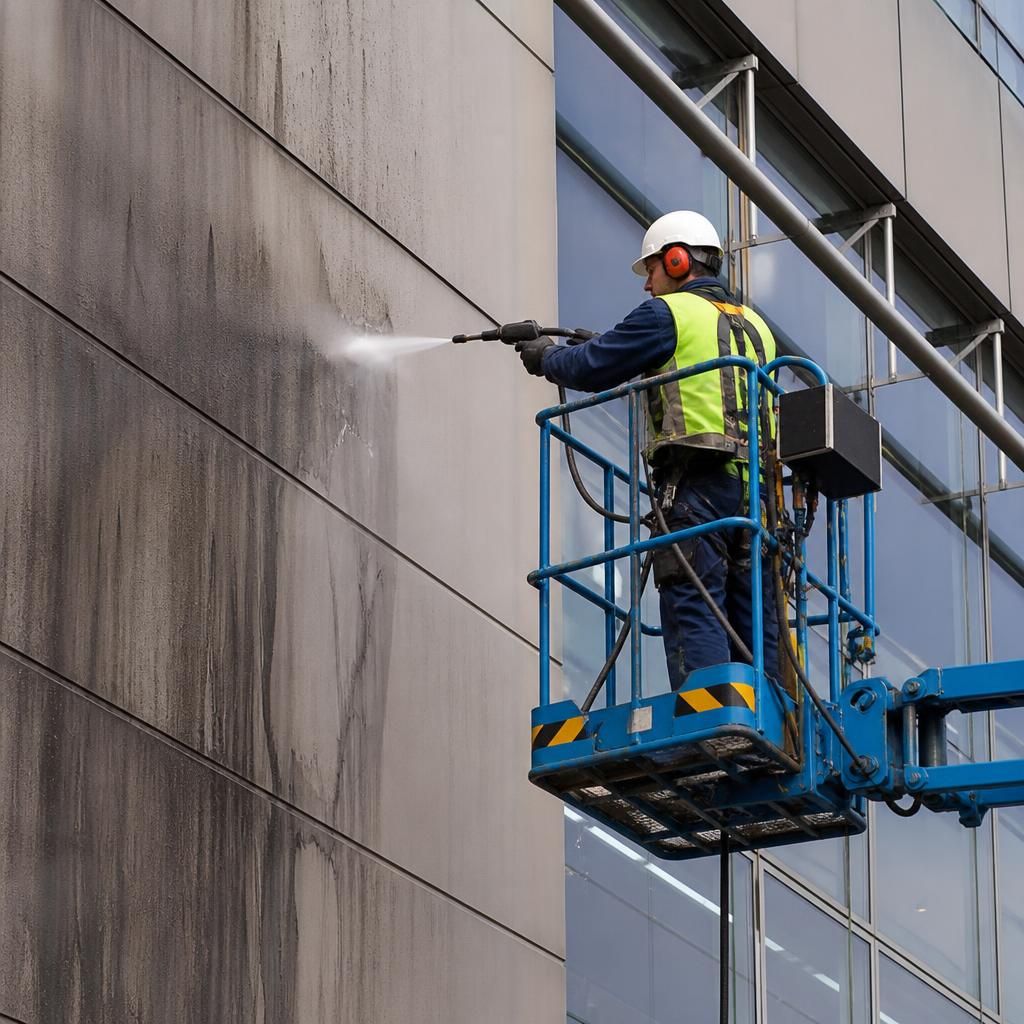
Professional exterior building and wall cleaning helps protect commercial surfaces by removing pollution deposits, algae, moss, bird fouling and other contamination before it becomes more firmly established. These deposits can retain moisture, worsen staining and contribute to deterioration when left unmanaged.
Cleaning also gives the contractor an opportunity to identify cracked render, damaged cladding, failed joints, blocked drainage details or signs of water penetration. It does not replace repairs or other fabric maintenance, but it supports a planned programme by keeping surfaces serviceable and making defects easier to identify.