
How often should exterior building and wall cleaning be performed?
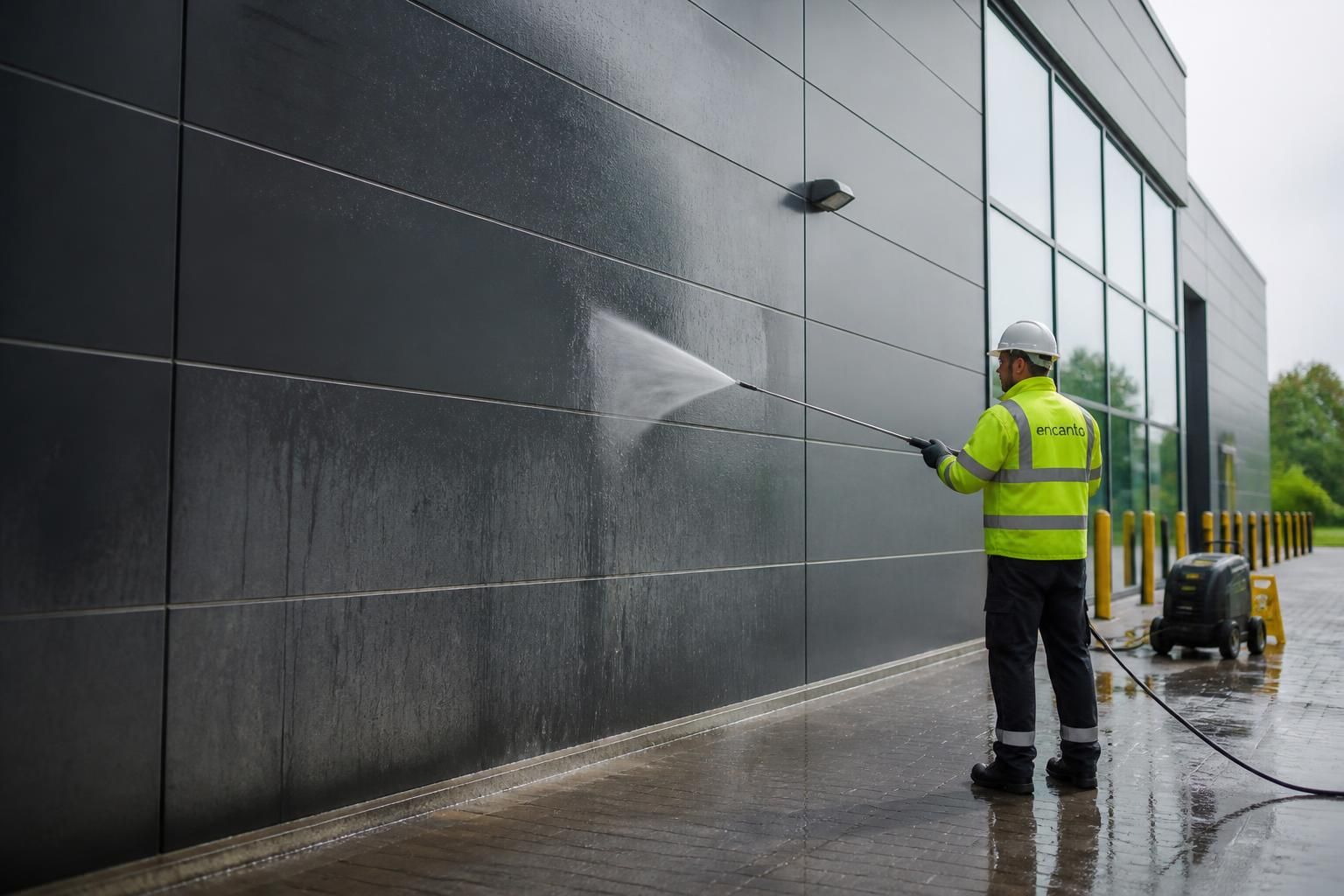
Exterior building and wall cleaning should generally be reviewed annually, with cleaning scheduled according to the building material, level of pollution, exposure and visible soiling. High-traffic, industrial or heavily weather-exposed properties may need more frequent cleaning, while well-maintained façades in cleaner environments may only require periodic treatment as part of a planned maintenance programme.
Exterior building and wall cleaning should be reviewed at least annually, with the actual cleaning frequency based on the building material, local pollution, weather exposure, surrounding activity and visible soiling. A high-traffic commercial property, industrial site or building close to construction work may need more frequent cleaning, while a well-maintained façade in a relatively clean environment may only require periodic treatment within a planned maintenance programme.
Cleaning should not be arranged solely because a fixed date has been reached. The purpose of a regular review is to identify soiling before it becomes difficult or damaging to remove, check for defects that could affect the cleaning method, and decide whether cleaning is required across the whole façade or only in specific areas. This approach helps prevent unnecessary treatment while maintaining a consistent appearance and protecting exterior materials.
A practical maintenance approach
- Inspect the building regularly: Check façades, walls, entrances, loading areas, window surrounds, roofs and other exposed surfaces for dirt, staining, algae, moss, bird fouling, graffiti and biological growth.
- Carry out a formal annual review: Assess the condition of the exterior, changes in surrounding pollution or construction activity, previous cleaning results and any repairs or alterations to the building.
- Schedule cleaning before deposits become established: Surface contamination is generally easier to remove when it has not been allowed to bond, penetrate porous materials or encourage biological growth.
- Record changes over time: Photographs and maintenance records can help identify areas that soil quickly and support a more accurate ongoing schedule.
Factors that increase cleaning frequency
Buildings in busy urban locations are commonly exposed to traffic film, airborne particles and exhaust-related deposits. Properties near industrial operations, demolition, construction or heavy vehicle movements may also accumulate soiling more rapidly. Entrances, boundary walls and lower façade sections are particularly vulnerable to splashback, dust, mud and contact marks.
Weather and the position of the building also influence the required frequency. Shaded elevations that remain damp may develop algae, moss or other organic growth, while façades exposed to prevailing weather can collect windblown debris and become marked by rainwater run-off. Poorly directed downpipes, leaking gutters, defective seals and damaged pointing can create localised staining that will return unless the underlying issue is corrected.
Buildings used by the public or visited by customers may need closer monitoring because appearance, hygiene and safe access are operational considerations. Graffiti, bird fouling and spillages may require responsive cleaning rather than waiting for the next planned façade-cleaning visit.
How the material affects the schedule
Exterior cleaning must be matched to the surface. Brick, stone, concrete, render, painted finishes, metal cladding, glass and composite panels have different levels of porosity and different tolerances for pressure, heat, moisture and chemical treatment. A robust surface may tolerate a more direct cleaning process, whereas delicate, weathered or coated materials may require a gentler method and closer monitoring.
Porous masonry can retain moisture and pollutants, so repeated aggressive cleaning may cause avoidable wear. Render and painted surfaces can be marked or stripped if excessive pressure or unsuitable detergents are used. Metal cladding may be affected by corrosion, failing coatings or chemical residues. For these reasons, frequency should be considered alongside method: cleaning more often with a controlled, low-impact process may be preferable to allowing heavy deposits to build up and then requiring intensive treatment.
A competent contractor should assess the material, identify existing defects and carry out a suitable test area before larger-scale work. The test should confirm that the chosen method removes the contamination without damaging the substrate, coating, joints or surrounding features.
When cleaning may be needed sooner
- There is visible blackening, streaking, algae, moss or general traffic film.
- Graffiti, bird fouling, oil, food residue or other localised contamination is present.
- Rainwater run-off is creating repeated marks beneath roofs, sills, gutters or downpipes.
- Construction, refurbishment or nearby works have deposited dust or residues on the building.
- Entrances, walkways, walls or other areas have become slippery or present a hygiene concern.
- The property is due to be inspected, re-let, handed over, refurbished or presented to tenants, visitors or the public.
- A previous cleaning treatment has produced rapid re-soiling, suggesting that the method, surrounding conditions or a building defect needs to be reviewed.
Cleaning should form part of wider maintenance
Exterior cleaning improves the condition and presentation of a building, but it does not replace fabric maintenance. Cracked render, open joints, damaged pointing, failed sealant, defective rainwater goods and leaking services should be reported and addressed through the appropriate repair process. Cleaning over a defect without resolving its cause can result in staining returning and may make deterioration harder to identify.
It is also useful to coordinate façade cleaning with roof, gutter, window, access and grounds maintenance. Completing related work in a suitable order can reduce the risk of freshly cleaned walls being marked by run-off, dust or equipment. Any planned works should take account of tenant access, public areas, vehicle movements and the need to keep entrances and escape routes safe.
Choosing a suitable schedule for a commercial property
For many commercial buildings, an annual condition review combined with planned cleaning is a sensible starting point. The schedule can then be adjusted after assessing how quickly each elevation becomes soiled. High-exposure areas may need responsive or more frequent attention, while less exposed elevations may be cleaned on a longer cycle when their condition allows.
Large or complex sites are often best managed through a written cleaning plan. This should identify the surfaces included, known hazards, access requirements, preferred cleaning methods, areas requiring extra monitoring and the conditions that would trigger an additional visit. The plan should be reviewed after major building works, changes in site use, severe weather or repeated staining.
There is no single interval that is appropriate for every building. The most reliable approach is to inspect the exterior routinely, review it formally each year and schedule cleaning according to evidence from the site. This protects façades from avoidable build-up, supports a consistent professional appearance and helps ensure that cleaning is carried out safely and with the least aggressive effective method.
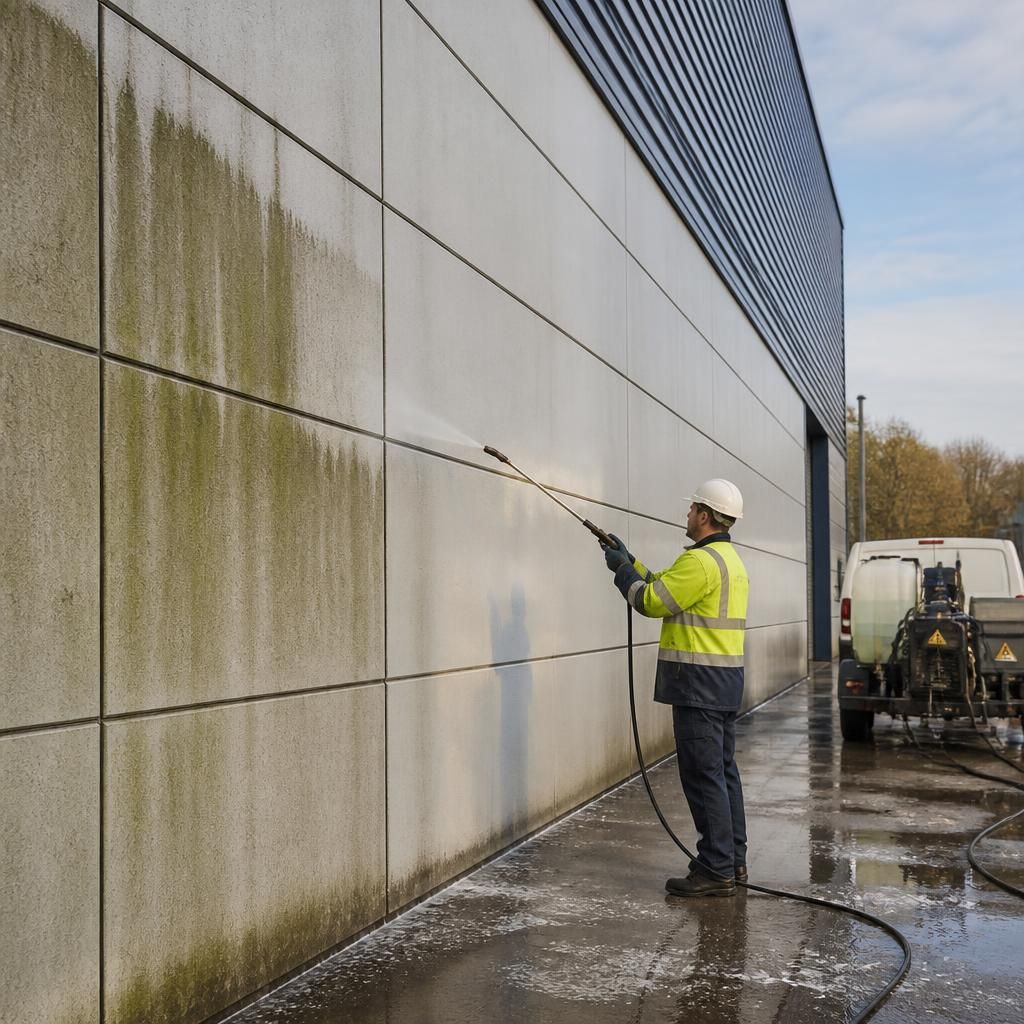
Exterior building and wall cleaning should be reviewed annually, but the cleaning interval should reflect the building’s material, exposure and level of soiling. High-traffic sites, industrial premises and shaded elevations may need more frequent attention, while less exposed façades can often be cleaned as part of a longer-term planned maintenance schedule.
Regular inspections help identify traffic film, algae, moss, bird fouling, graffiti and rainwater staining before deposits become established. They also provide an opportunity to check for leaking gutters, damaged pointing, cracked render or failed sealant, which should be repaired so that staining does not quickly return after cleaning.