
How does environmental pollution impact the exterior cleaning needs of buildings?
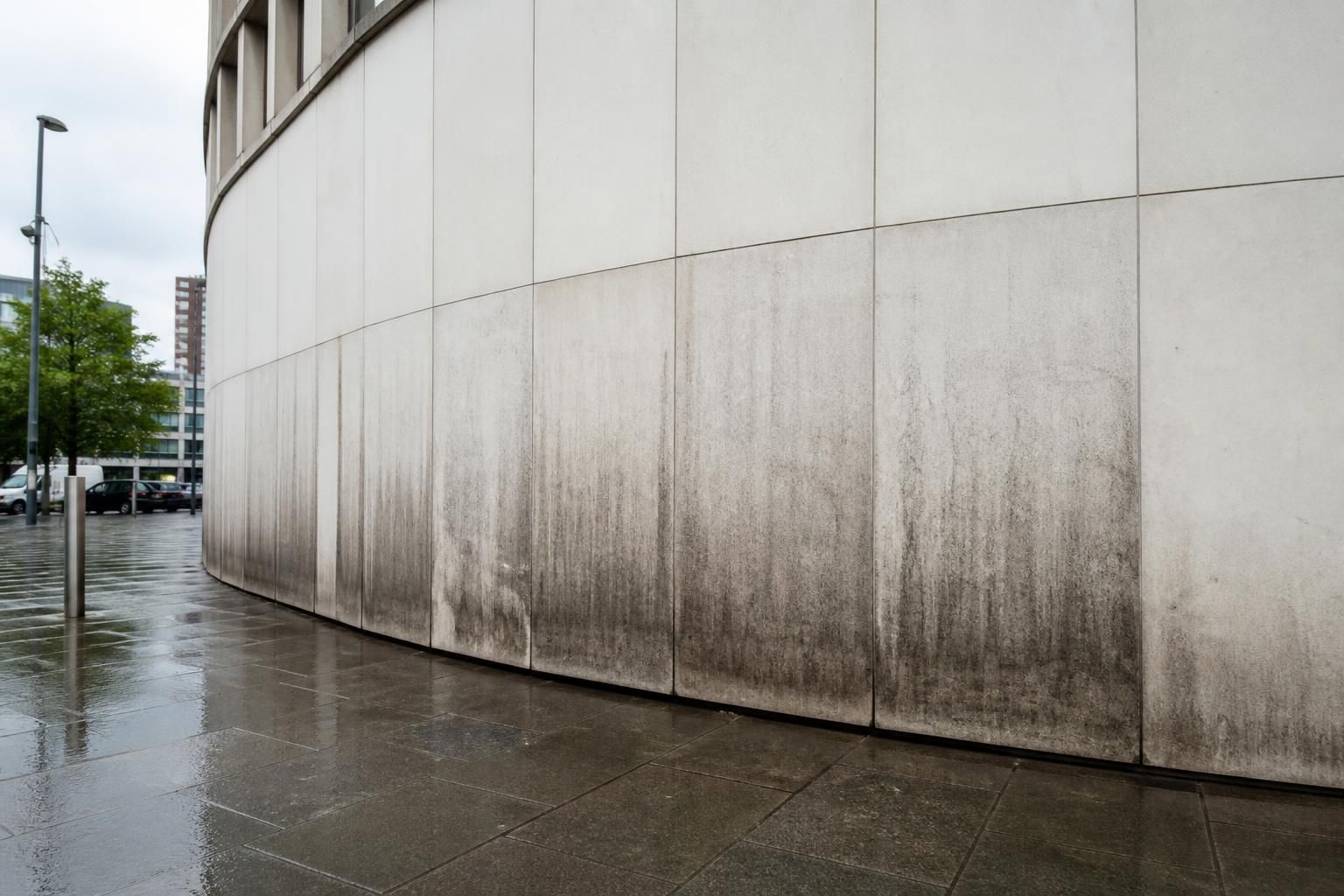
Environmental pollution deposits soot, dust, traffic film, airborne chemicals and biological growth on building façades, roofs and cladding, making surfaces appear dirty and potentially accelerating staining, corrosion and material deterioration. As a result, buildings in polluted or high-traffic areas may need more frequent, carefully selected cleaning using methods such as pressure washing, steam cleaning or soft washing to remove contaminants without damaging the surface.
Environmental pollution increases the frequency, complexity and care required for exterior building cleaning. Soot, dust, traffic film, airborne oils, industrial residues, acidic pollutants and biological growth can accumulate on façades, roofs, cladding, windows, paving and other external surfaces. If these deposits are left in place, they can cause persistent staining, retain moisture, encourage corrosion or deterioration, and make future cleaning more difficult.
Common pollution deposits on building exteriors
- Traffic film: Roads, loading areas and busy car parks expose nearby walls and façades to a mixture of road dust, diesel residue, rubber particles, oil and moisture. This often creates a grey or dark film around entrances, lower wall sections and areas facing roads.
- Soot and fine particulate matter: Combustion-related deposits can settle on rendered walls, stone, brickwork, cladding and roof surfaces. Fine particles may become embedded in textured or porous materials, so simple rinsing may not remove them effectively.
- Airborne industrial residues: Buildings near manufacturing, construction or energy-related activity may collect dust, mineral deposits and chemical residues. The correct cleaning method depends on the substance involved and the surface it has affected.
- Acidic pollutants: Certain airborne pollutants can combine with rainwater and moisture to form acidic deposits. Over time, these may contribute to the weathering of stone, mortar, coatings and some metals, particularly where deposits remain concentrated in sheltered areas.
- Biological growth: Pollution, shade and retained moisture can create favourable conditions for algae, moss, lichen and mould. These growths are common on roofs, paving, shaded elevations and north-facing walls, and can make surfaces slippery or discoloured.
How pollution affects different exterior materials
Pollution does not affect every material in the same way. Porous brick, stone, concrete and unsealed render can absorb dirty water and fine particles, leading to ingrained staining or uneven results if they are cleaned too aggressively. Painted surfaces and powder-coated cladding may lose their finish if exposed to excessive pressure, unsuitable chemicals or repeated abrasive cleaning. Metals can develop surface corrosion where pollutants and moisture remain around joints, fixings and damaged coatings.
Roofs and rainwater goods are also affected. Soot, leaves, moss and airborne debris can collect in valleys, gutters and drainage outlets, restricting water flow and increasing the risk of staining below blocked or overflowing sections. On commercial premises, polluted hard surfaces may also become slippery when combined with oil, organic matter or persistent dampness.
Why polluted buildings may need more frequent cleaning
Cleaning intervals should reflect the building’s location and exposure rather than follow a fixed timetable. Premises beside busy roads, industrial estates, rail routes, construction sites or large car parks generally collect contaminants more quickly than buildings in cleaner, less exposed settings. The design of the building also matters: recessed entrances, ledges, canopies and textured façades trap deposits and may require targeted maintenance.
Regular planned cleaning prevents light contamination from becoming established staining. It can also make defects easier to identify, including cracked render, damaged coatings, failed sealant, corroded fixings, blocked drainage and loose masonry. Where pollution is allowed to accumulate for extended periods, restoration may require more time and a more controlled method than routine maintenance cleaning.
Choosing a suitable cleaning method
The cleaning method should be selected after assessing the pollutant, the material, the condition of the surface and the surrounding environment. A professional assessment may include visual inspection, identification of staining, checks for friable or damaged areas, and a small test clean where the surface response is uncertain.
- Steam cleaning: Low-pressure steam can be effective for traffic film, soot and general surface contamination where controlled heat helps loosen deposits without relying on aggressive pressure.
- Pressure washing: Controlled pressure washing is suitable for robust materials and larger areas, including some concrete, paving and sound masonry. Pressure, nozzle selection and water volume must be adjusted to avoid driving water into porous surfaces or damaging joints and coatings.
- Soft washing: A carefully selected treatment can help remove organic growth and certain biological residues from surfaces that should not be subjected to high pressure. The solution must be compatible with the material and managed to prevent uncontrolled run-off.
- Specialist façade cleaning: Delicate stone, historic masonry, coated cladding and heavily ingrained deposits may need low-pressure cleaning, controlled chemical treatment or other specialist techniques. Abrasive methods should not be used without establishing that the surface can withstand them.
- Mechanical preparation: Brushes, scrapers or other controlled tools may be used for localised deposits, but excessive abrasion can remove protective finishes and alter the appearance of the substrate.
Managing pollution during and after cleaning
Polluted wash water may contain oil, sediment, cleaning residues and other contaminants. It should be contained and managed in line with applicable drainage and environmental requirements rather than allowed to enter surface-water systems uncontrolled. The work area may need protection around drains, entrances, planted areas, vehicles and neighbouring premises. The appropriate controls depend on the site, the substances being removed and the local drainage arrangements.
Cleaning alone does not remove the source of pollution. Where practical, ongoing maintenance should include inspection of gutters and drainage, prompt treatment of biological growth, repair of damaged coatings or joints, and attention to areas where splashback or vehicle deposits are concentrated. Protective coatings may be appropriate for some materials, but they should only be specified after confirming compatibility, breathability and the condition of the surface.
Assessing the right maintenance plan
For commercial and industrial buildings, an effective plan combines the site’s pollution exposure with the material risk and the operational importance of each area. High-visibility entrances, public walkways and areas prone to slip hazards may need priority treatment, while façades and roofs can be scheduled according to their rate of contamination and condition. Keeping records of cleaning dates, identified defects, methods used and areas requiring follow-up helps establish a practical maintenance cycle.
Environmental pollution therefore affects more than the appearance of a building. It influences how quickly surfaces become contaminated, which cleaning technique is safe, how wastewater must be controlled and whether early maintenance can prevent deterioration. A site-specific assessment allows façades, roofs, cladding, paving and other external areas to be cleaned effectively while reducing the risk of surface damage and unnecessary repeat work.
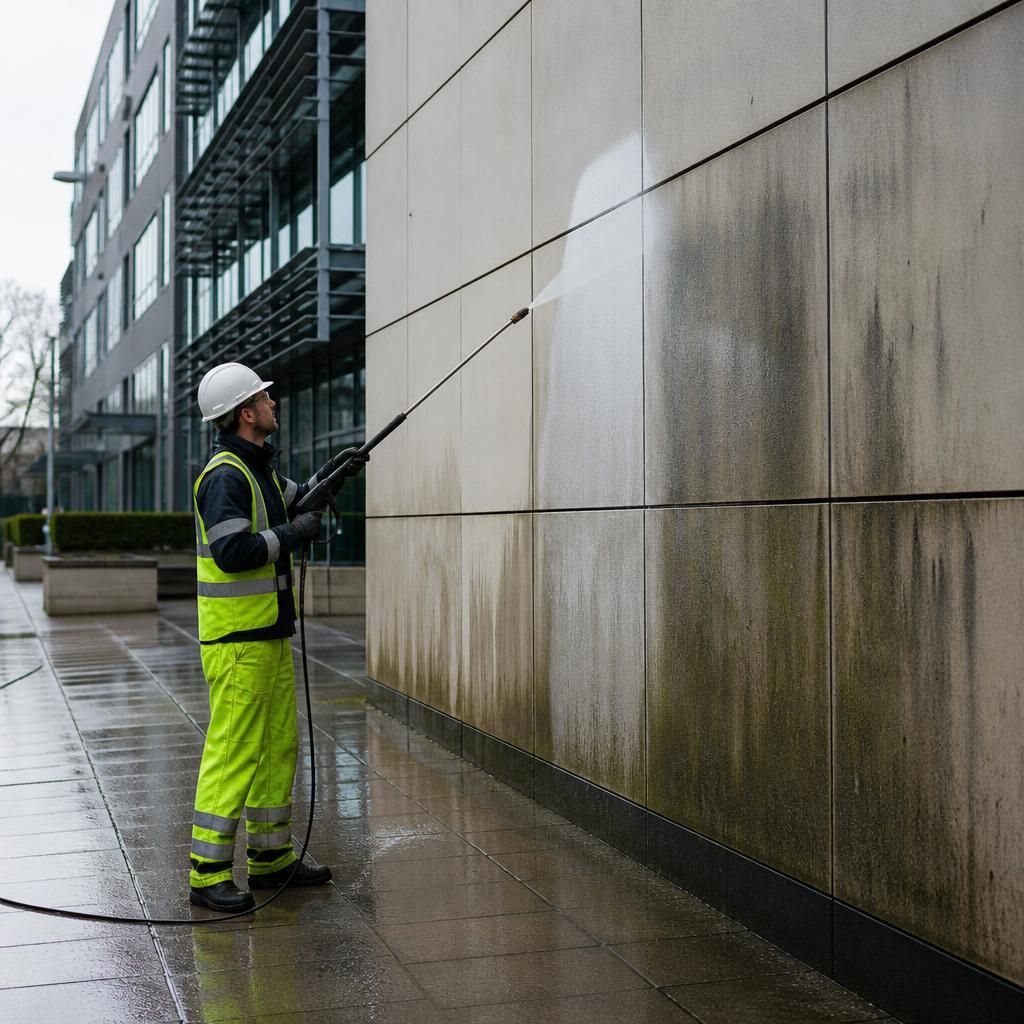
Environmental pollution can make exterior cleaning more demanding because soot, traffic film, oil residue and fine dust often become embedded in porous or textured surfaces. Removing these deposits safely requires the cleaning method to match both the pollutant and the material, rather than simply increasing water pressure.
For example, controlled steam cleaning may loosen traffic film and soot from suitable façades, while soft washing is often more appropriate for biological growth on vulnerable surfaces. Robust paving or sound concrete may tolerate carefully adjusted pressure washing, but coated cladding, delicate stone and older masonry require a lower-impact approach. A small test area helps confirm the method, pressure and treatment before wider cleaning begins.