
What surfaces are suitable for commercial power washing?
Commercial power washing is suitable for durable, water-resistant surfaces such as concrete, block paving, tarmac, masonry, brickwork, façades, cladding, roofs and car parks. The pressure, temperature and cleaning method must be matched to the material, with softer or delicate surfaces assessed first to prevent damage.
Commercial power washing is generally suitable for durable, water-resistant surfaces including concrete, block paving, tarmac, brickwork, masonry, building façades, cladding, roofs and car parks. The cleaning pressure, water temperature, nozzle, distance and detergent must be matched to the surface. A pre-cleaning assessment is essential, particularly where materials are aged, painted, jointed, coated or already damaged.
Concrete and concrete paving are commonly cleaned with pressure washing because they can withstand controlled water pressure and provide a stable surface for removing dirt, algae, oil residues, tyre marks and other contamination. Care is needed around cracks, damaged edges, expansion joints and areas where the surface has begun to deteriorate. Excessive pressure can dislodge the surface layer or leave visible cleaning lines.
Block paving and concrete slabs are suitable when the paving is sound and the joints are assessed beforehand. Cleaning can remove moss, weeds, organic growth and accumulated traffic dirt from pedestrian areas, courtyards, service yards and entrances. Water pressure should be controlled to avoid removing excessive jointing material. Where necessary, the surface may require re-sanding or another suitable finishing treatment after cleaning.
Tarmac and asphalt can be power washed, particularly across car parks, access roads, forecourts and loading areas. The method should be gentler than that used for robust concrete, as aggressive pressure or heat may loosen the surface, expose aggregate or damage vulnerable edges. Oil, fuel and chemical contamination may also require a targeted treatment rather than water pressure alone.
Brickwork, masonry and stone may be cleaned successfully, but the material type and condition determine the correct approach. Modern, dense brick and sound masonry can often tolerate controlled pressure. Older brickwork, soft sandstone, limestone, porous stone and weathered mortar may need low-pressure washing, steam cleaning or a carefully selected soft-washing method. Pointing, cracks and open joints should be checked before work begins because forcing water into defects can worsen deterioration.
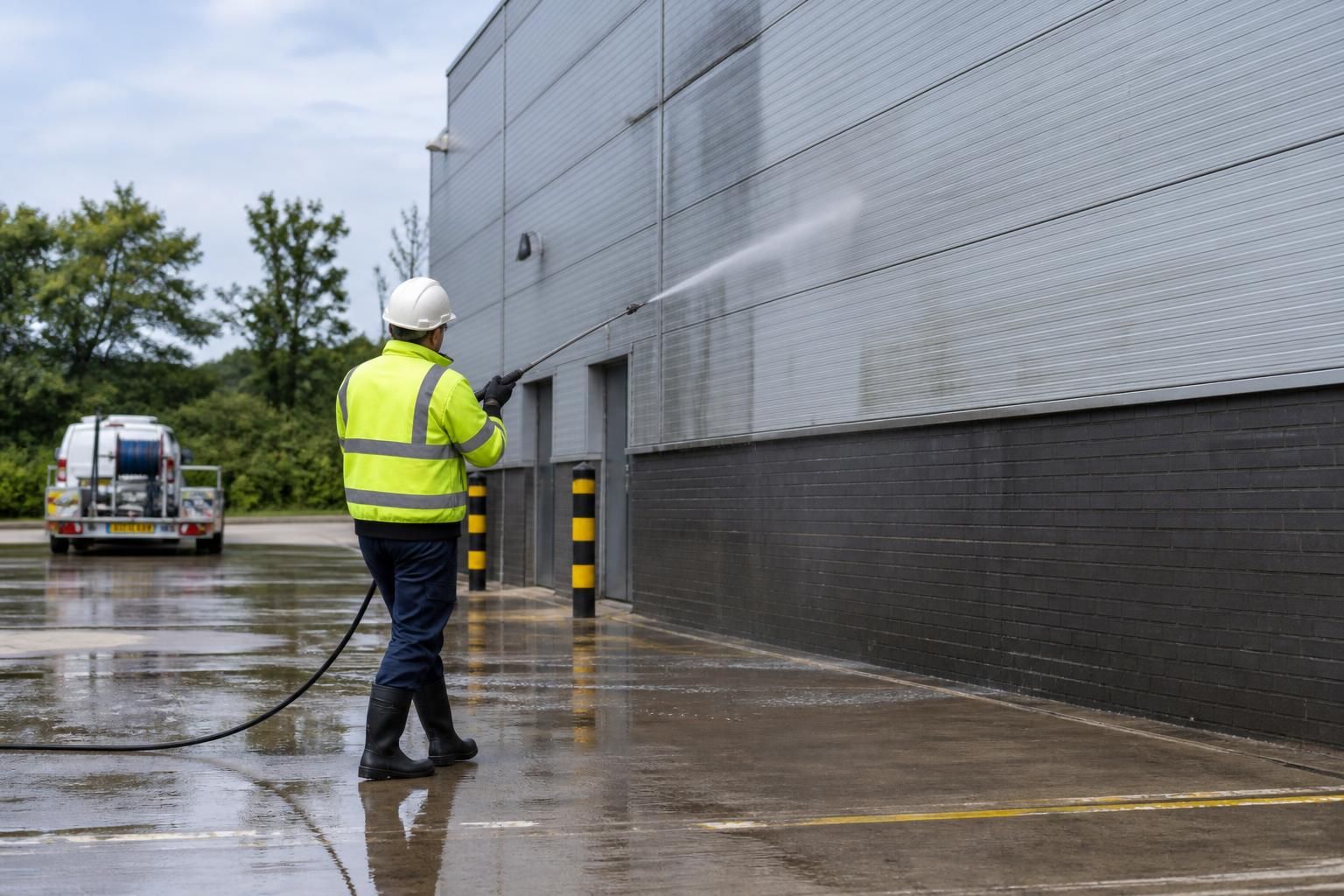
Façades and rendered elevations are suitable for commercial cleaning when the substrate, coating and condition have been identified. Render, painted surfaces and external wall systems can be more sensitive than bare concrete or brick. Lower pressure, appropriate detergents or steam may be preferable to high-pressure washing. Test cleaning in an inconspicuous area helps confirm whether the coating, colour and texture will remain unaffected.
Metal, composite and other cladding can usually be cleaned, but the process must account for the panel finish, joints, seals and fixings. Pressure should not be directed behind panels, into vents or at damaged sealant. Aluminium, coated steel, composite panels and insulated cladding may respond differently to heat and cleaning chemicals, so the method should be selected according to the manufacturer’s guidance where it is available.
Roofs can be cleaned when the roofing material and its condition make water-based cleaning appropriate. Metal roofing, some tiles and other robust roof coverings may tolerate controlled pressure or low-pressure washing. However, fragile tiles, aged membranes, felt, single-ply systems and roofs with failing seals can be damaged by direct high-pressure cleaning. Access arrangements, fall protection, drainage and the risk of water entering the building must be considered before work starts.
Car parks, service yards and loading areas are often well suited to commercial power washing because they combine hard, washable surfaces with heavy traffic contamination. Cleaning may address general dirt, algae, food residues, tyre marks and some oil deposits. The work plan should include protection for parked vehicles, entrances, drainage systems and nearby pedestrian routes, together with suitable collection or control of contaminated run-off.
Some surfaces should not be treated with standard high-pressure washing without specialist assessment. These include delicate natural stone, historic masonry, friable brick, timber, old paint, damaged render, loose coatings, waterproofing membranes and surfaces with exposed insulation. A lower-pressure process, steam cleaning, soft washing or manual treatment may provide a safer result. Power washing is not automatically the right method simply because a surface is outdoors.
Before cleaning, the surface should be inspected for cracks, loose materials, failing joints, corrosion, staining from chemicals, biological growth and previous repairs. Drainage points, electrical equipment, air intakes, doors, windows and sensitive landscaping should also be identified. A small test area can establish the suitable pressure and temperature, whether a detergent is required and whether cleaning will produce an acceptable appearance.
The most suitable method therefore depends on both the material and the contamination. Hard, sound, water-resistant surfaces generally accommodate controlled power washing, while aged, coated or porous materials often require reduced pressure or an alternative cleaning technique. For a commercial site, the final specification should also reflect access, working-at-height requirements, operating hours, wastewater controls and the need to keep surrounding areas safe and usable.
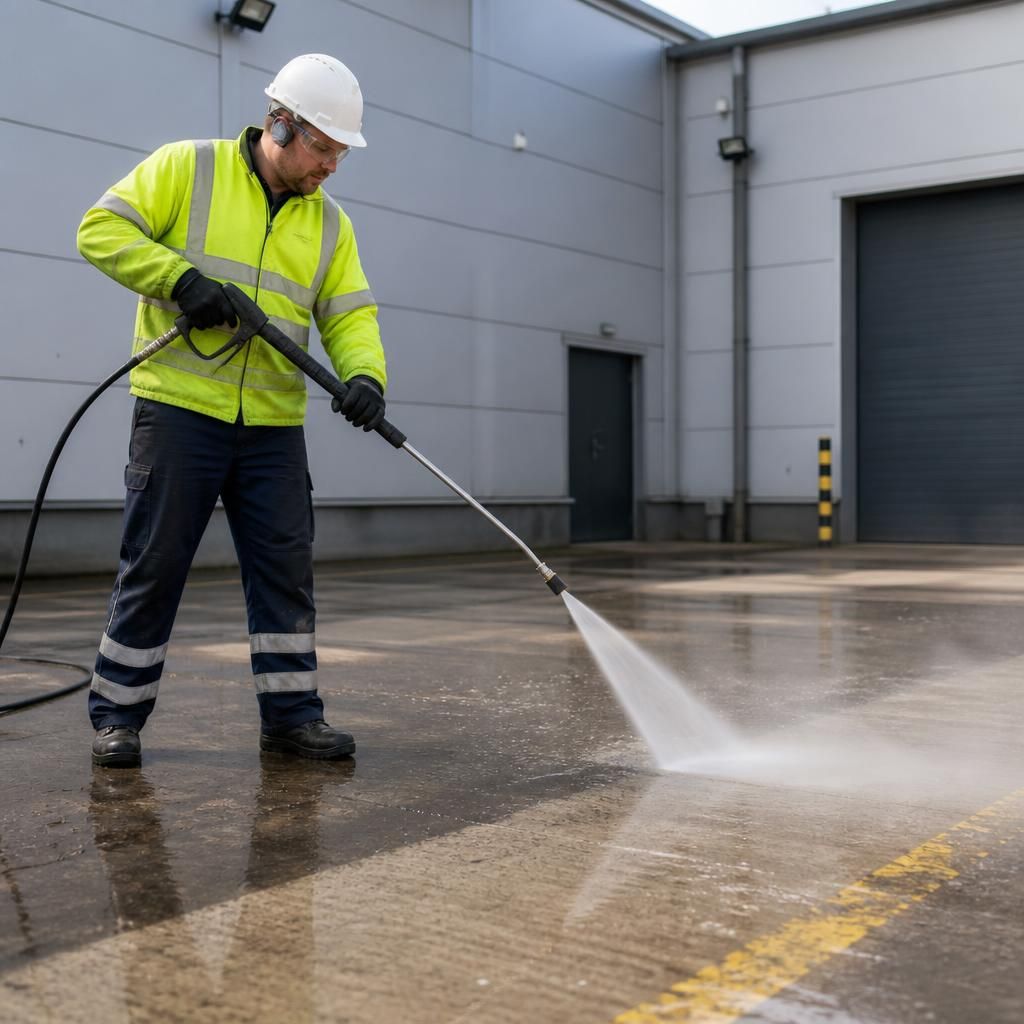
Commercial power washing is suitable for hard, water-resistant surfaces such as concrete, sound paving, tarmac, robust brickwork, cladding and some roof coverings. The cleaning method must be adjusted to the material and its condition, because excessive pressure, heat or detergent can damage coatings, joints, seals and porous surfaces.
Before work begins, the surface should be checked for cracks, loose pointing, failing paint, exposed insulation and damaged areas. Concrete and well-maintained paving may tolerate controlled pressure, while aged masonry, rendered walls, delicate stone, timber, membranes and fragile roof coverings may require low-pressure washing, steam cleaning or another specialist treatment. A small test area helps confirm that the chosen process removes the contamination without affecting the surface finish.