
What factors should I consider when choosing a commercial power washing service?
When choosing a commercial power washing service, assess the contractor’s relevant experience, cleaning methods, equipment, insurance, health and safety procedures, environmental controls and ability to work around your operations. Also confirm they can clean the required surfaces, provide a clear scope of work and quotation, and deliver suitable scheduling and access arrangements for your Birmingham, West Midlands or UK site.
Choosing a commercial power washing service means assessing more than the cleaning price. The right contractor should have relevant experience, suitable equipment, robust health and safety procedures, appropriate insurance, effective environmental controls and the capacity to work safely around your premises and operations. They should also provide a clear scope of work and quotation based on the surfaces, access conditions, level of soiling and any site-specific risks.
Relevant commercial experience
Check whether the contractor regularly handles commercial or industrial premises similar to yours. Cleaning a small domestic patio is very different from restoring a large façade, roof, car park, loading area or cladded building while site users, vehicles and other contractors are present.
Relevant experience should include an understanding of:
- the materials and construction methods commonly found on commercial buildings;
- the causes of the soiling, such as traffic film, algae, moss, oil, food deposits, construction residue or atmospheric pollution;
- the pressures and temperatures that different surfaces can safely withstand;
- how to plan work around pedestrians, vehicles, tenants, deliveries and other site activities; and
- the practical requirements of larger projects, including access, water supply, wastewater control and phased working.
Ask for examples of comparable work and confirm that the proposed team, rather than only a surveyor or project manager, has the relevant operational experience. A contractor that understands the likely condition of the surface can recommend an appropriate treatment instead of applying the most aggressive cleaning method by default.
Clear assessment and scope of work
A reliable service should assess the site before work begins, either through a site visit, detailed photographs or another suitable inspection process. The assessment should identify the surfaces to be cleaned, the extent of soiling, areas requiring special care and any access or drainage restrictions.
The quotation or work specification should make clear:
- which elevations, surfaces or zones are included;
- what preparation, stain treatment, rinsing or post-cleaning treatment is required;
- which cleaning method will be used and why it is suitable;
- whether high-level access equipment, traffic management or temporary barriers are included;
- how wastewater, debris and removed contaminants will be controlled; and
- what is excluded, such as repairs, repainting, sealant replacement or permanent stain removal.
This level of detail helps prevent misunderstandings, particularly where a building has several materials or where some staining has penetrated the surface. It also allows you to compare quotations on the basis of the work proposed rather than price alone.
Cleaning methods and equipment
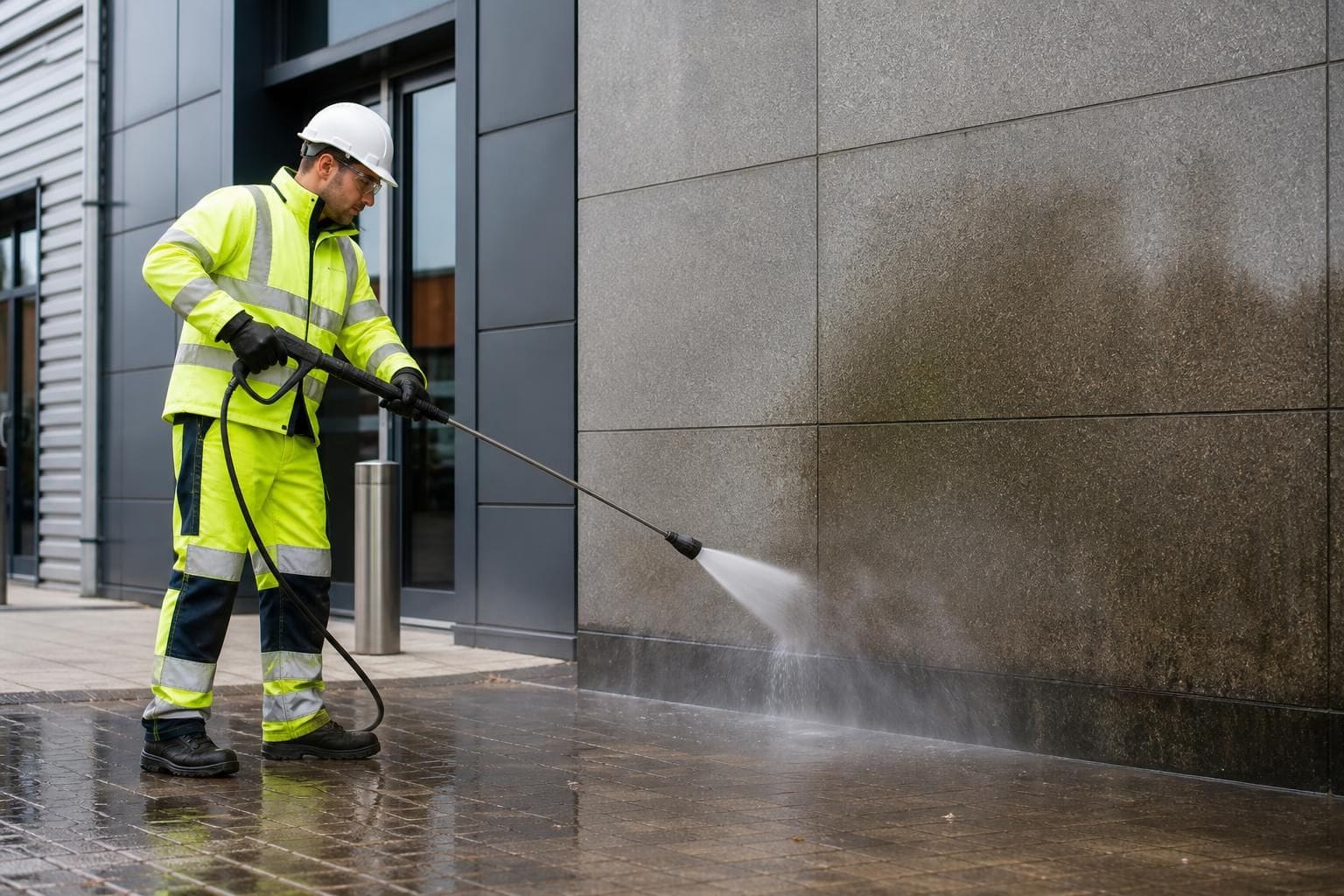
Commercial power washing should be adapted to the surface and the type of contamination. High-pressure water may be suitable for robust paving, concrete or some external hardstanding, but excessive pressure can damage pointing, coatings, masonry, timber, render and vulnerable cladding.
Ask whether the contractor can use a combination of pressure washing, soft washing, steam cleaning, detergents or other controlled techniques where appropriate. The method should be selected according to the substrate, not simply the equipment available. For example, steam or lower-pressure cleaning may be more appropriate for delicate façades, historic materials or areas where chemical use needs to be limited.
Equipment should be suitable for the scale and location of the project. This may include surface cleaners for large paved areas, specialist attachments for façades, hot-water systems for grease and oil, water recovery equipment and access equipment for high or difficult-to-reach surfaces. The contractor should also be able to explain how equipment will be positioned without damaging landscaping, paving, loading bays or building entrances.
Before extensive cleaning starts, a small test area is useful. It can confirm the likely result, reveal whether the surface coating or jointing is stable and allow pressure, temperature and cleaning products to be adjusted. Test cleaning is especially important on unfamiliar cladding, painted surfaces, stone, render and older masonry.
Health and safety arrangements
Commercial cleaning can involve pressurised water, wet surfaces, chemicals, moving vehicles, electrical equipment and work at height. Ask the contractor how these risks will be managed and request suitable documentation for your site requirements.
Depending on the project, this may include a site-specific risk assessment, method statement, COSHH information for cleaning products, equipment inspection records and a clear emergency procedure. Where access equipment or work at height is required, the plan should address ground conditions, exclusion zones, falling objects, weather, rescue arrangements and the protection of people below.
The contractor should be able to coordinate with your responsible person, facilities team or principal contractor. They should understand site induction requirements, permit systems, delivery routes, alarm arrangements and any restrictions affecting occupied buildings. Appropriate public liability and employers’ liability insurance should also be confirmed before work begins, with cover suitable for the nature and scale of the project.
Environmental and wastewater controls
Power washing can dislodge oils, detergents, silt, paint particles, biological growth and other contaminants. These materials should not be allowed to enter surface water drains or nearby watercourses without suitable controls. Ask how the contractor will identify drainage points, contain runoff, recover wastewater and dispose of collected material responsibly.
Other useful environmental considerations include controlled water use, low-impact cleaning products, avoiding unnecessary chemical application and protecting planting, soil and adjacent surfaces. If detergents are proposed, the contractor should explain why they are needed, how they will be applied and how residues will be managed. Environmental controls should be included in the method statement rather than treated as an afterthought on the day.
Access, scheduling and business continuity
The best cleaning plan is one that achieves the required result without creating avoidable disruption. Confirm when the work can take place, how long each phase is expected to take and whether areas need to be closed or separated from normal use.
For commercial premises, planning may need to account for staff and visitor movements, deliveries, car park use, retail or public opening hours, tenant access, noise, overspray, drying time and weather conditions. A contractor should be willing to phase the work, use barriers and signage, and maintain safe routes where the site cannot be closed completely.
Discuss access in practical terms. Confirm the availability of water and power, hose routes, drainage, parking for equipment, ground bearing capacity and any restrictions on lifting equipment. If the work involves a roof or high façade, the access solution should be selected during planning rather than improvised after arrival.
Quality expectations and limitations
Ask what level of cleaning can reasonably be achieved and how the result will be checked. Cleaning can remove surface contamination, but it may not reverse permanent staining, corrosion, faded coatings, damaged render or etching caused by chemicals. Clear advice about these limitations is more useful than an assurance that every mark will disappear.
Agree how completed areas will be inspected, who will approve the work and how any missed areas or concerns will be addressed. For larger contracts, photographs, phased inspections and a written completion record can help confirm what has been cleaned and identify any maintenance recommendations.
Quotation, communication and ongoing support
A competitive quotation should still account for safe preparation, suitable equipment, access, environmental controls, labour, travel and waste handling. Be cautious of a very low price that does not explain the cleaning method or excludes essential site controls.
Before accepting the work, confirm the quotation validity, payment terms, cancellation arrangements, treatment of additional work and the process for dealing with weather-related delays. A dependable contractor should communicate changes promptly, provide a named contact and keep you informed if the condition of the surface differs from the initial assessment.
If the premises require continuing maintenance, ask whether the contractor can recommend a practical cleaning schedule based on exposure, footfall, nearby traffic, vegetation and the type of surface. Planned maintenance can help prevent heavy build-up and may make future cleaning easier, but the frequency should be based on the site rather than an arbitrary standard interval.
In practice, the strongest choice is the contractor that combines relevant commercial experience with a well-defined method, safe working practices, responsible wastewater management and realistic expectations. Compare the complete scope and risk controls alongside the price, then choose a service that can deliver the required result without compromising the building, the people using it or the continuity of your operations.
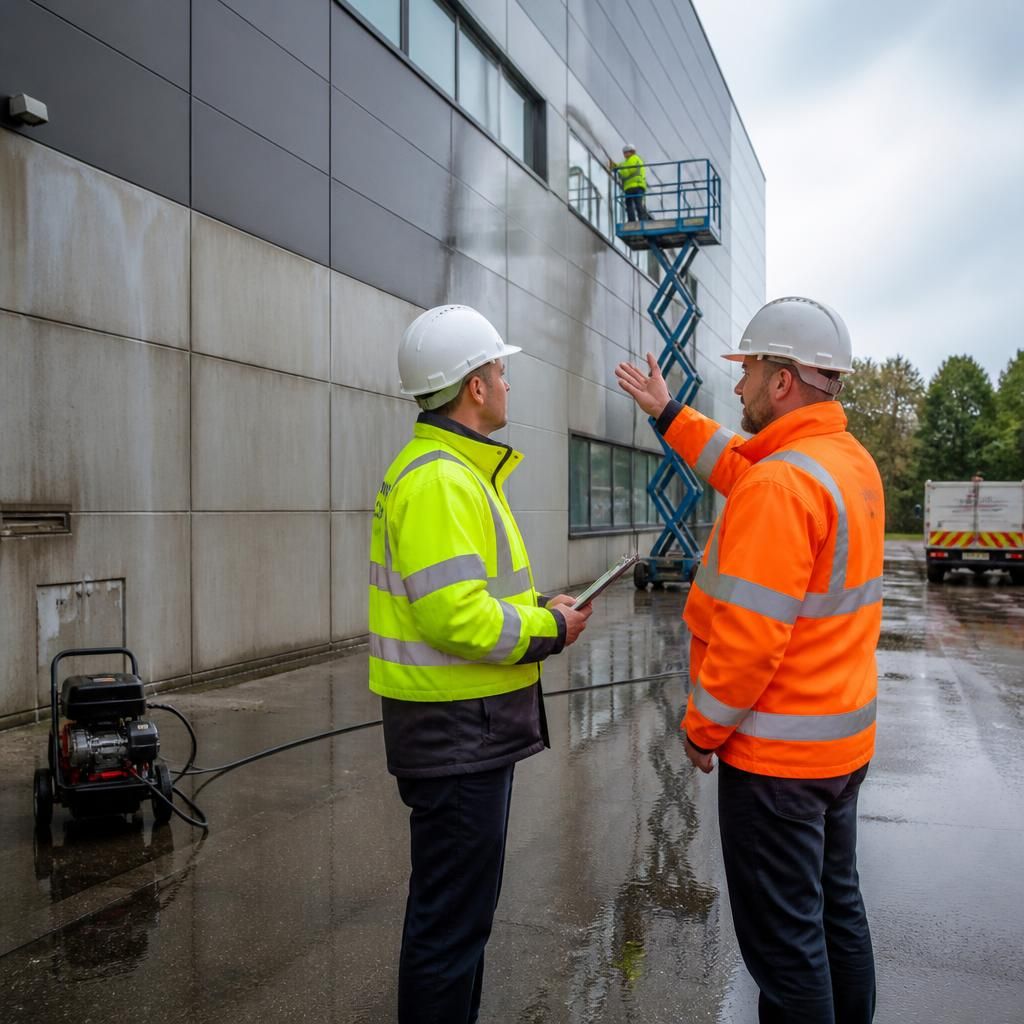
A reliable commercial power washing service should assess your site before recommending a cleaning method. The contractor needs to consider the surface material, type of soiling, access conditions, drainage and the potential effect on people, vehicles and neighbouring areas.
Ask for a clear explanation of the proposed process, including whether pressure washing, steam cleaning, soft washing or a detergent treatment is most suitable. A small test area can confirm that the chosen pressure and temperature will clean effectively without damaging coatings, pointing, masonry or cladding.
Your quotation should also state what is included, such as access equipment, traffic management, wastewater control and post-cleaning checks. Comparing this complete scope rather than the headline price helps ensure the work is safe, suitable for the building and properly planned around your operations.
Request a Commercial Power Washing Assessment
Request a commercial power washing assessment from Encanto Exterior Cleaning to review your surfaces, access requirements, soiling and site-specific risks. We can then recommend a suitable cleaning method and provide a clear scope of work for your Birmingham, West Midlands or UK premises.