
What environmental considerations are involved in commercial power washing?
Commercial power washing requires careful management of water use, cleaning chemicals, wastewater and surface runoff to prevent pollution and protect surrounding soil, drains and waterways. Responsible contractors use suitable low-impact methods, contain and dispose of wastewater correctly, and select cleaning products and equipment appropriate to the site and surface.
Environmental considerations in commercial power washing centre on controlling water use, cleaning chemicals, wastewater, surface runoff, energy consumption and waste. A responsible cleaning plan prevents contaminated water entering surface-water drains, soil or waterways, while selecting the least intensive method that will safely clean the surface.
Water use and efficiency
Power washing can use substantial volumes of water, particularly on large façades, car parks, roofs and industrial surfaces. Water consumption should therefore be assessed before work starts. Operators can reduce unnecessary use by selecting suitable pressure and flow settings, using trigger-controlled equipment, pre-treating heavy soiling and removing loose debris before washing. Steam cleaning or low-moisture methods may be appropriate where water use needs to be restricted, although the method must remain suitable for the surface and the type of contamination.
Using too much pressure or water does not necessarily improve the result. It can increase runoff, extend drying times and damage coatings, pointing, sealants or vulnerable cladding. An experienced contractor will match the equipment and technique to the material rather than using maximum pressure as a default.
Cleaning chemicals and detergents
Detergents, degreasers, biocides and other treatments should be selected according to the surface, contamination and discharge arrangements. Products should be used at the lowest effective concentration and in accordance with the manufacturer’s instructions and relevant safety data. A biodegradable product is not automatically suitable for unrestricted discharge: it may still affect aquatic life, soil or drainage systems, and the contaminated wash water may contain oil, metals, organic matter or other pollutants removed from the surface.
Where possible, mechanical cleaning, hot water or steam can reduce the need for chemical treatment. Chemicals should be stored securely, clearly labelled and protected from leaking into drains or ground. Their use should also be considered alongside COSHH assessments, particularly where workers, building occupants or the public may be exposed to spray, vapour or residues.
Runoff and drain protection
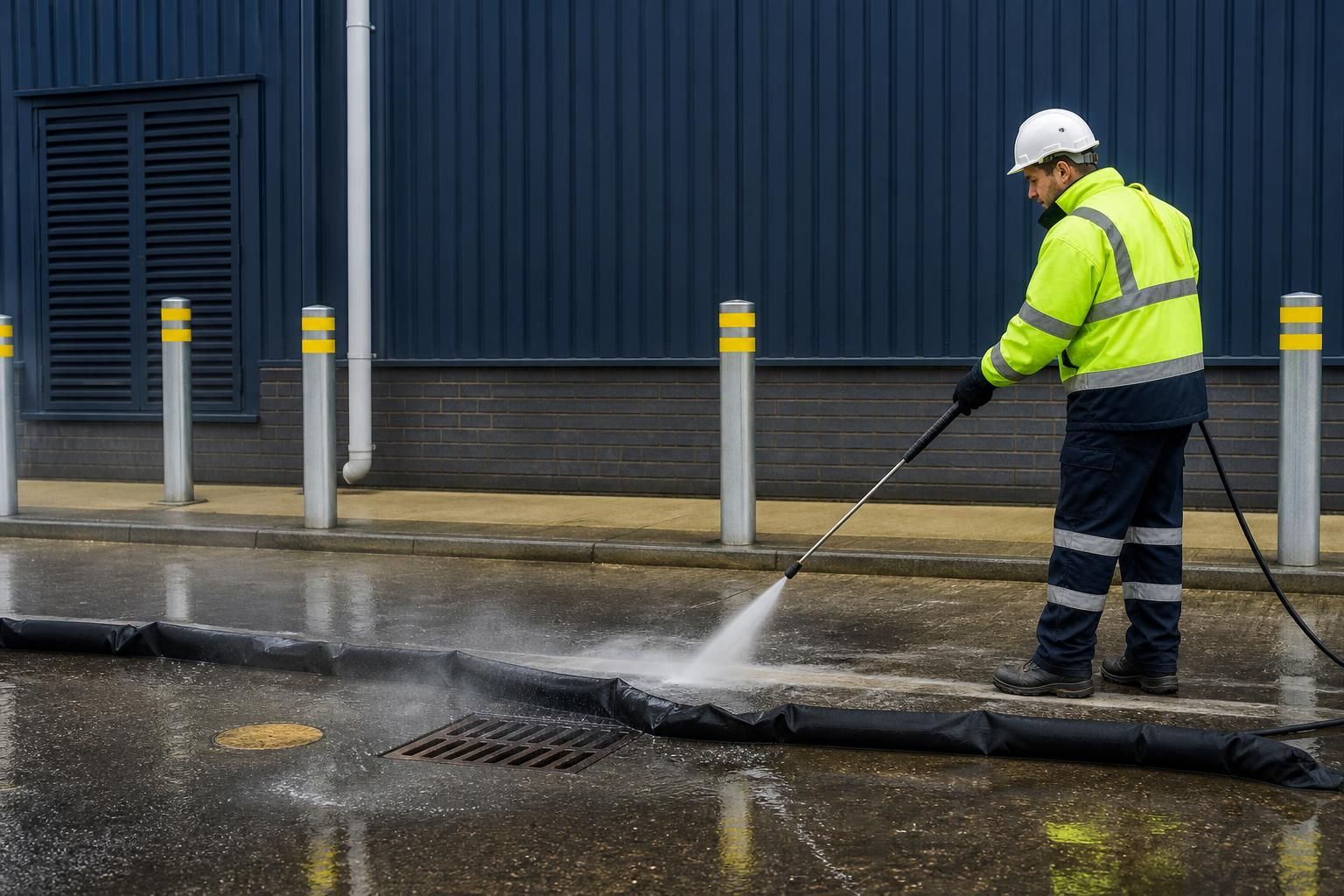
Runoff is one of the most important environmental risks in commercial power washing. Water from a car park, loading area, workshop or industrial façade can carry oil, fuel, sediment, paint particles, algae, cleaning products and heavy metals. It must not be allowed to flow uncontrolled into surface-water drains, open ground or nearby watercourses.
Before cleaning begins, the site drainage layout should be checked and surface-water and foul-water drains identified. Drain covers, bunds, booms, temporary barriers, wet vacuums and other containment equipment can be used to keep wash water within the work area. Particular care is needed on sloping sites, near rivers and ponds, around open channels, and where rain could spread pollutants beyond the cleaning area.
Drain protection must be planned rather than improvised. A surface-water drain generally carries rainwater to the environment, whereas foul drainage may lead to a treatment works. Contaminated water should only enter a foul sewer where the relevant requirements and consent have been confirmed with the sewerage or water company. If discharge is not permitted, the wastewater should be collected for appropriate treatment or disposal by a competent waste contractor.
Wastewater, sludge and solid waste
Collected wastewater may require screening, filtration, settlement or other treatment before it can be discharged or removed. Sludge, silt, paint flakes, moss, grease and debris recovered from the cleaning process should be contained and assessed rather than swept into drainage. The correct disposal route depends on what the material contains; waste contaminated with oil, chemicals or other hazardous substances may require specialist handling.
Waste transfer documentation and disposal records should be retained where applicable. This provides a clear record of how waste was managed and helps site managers demonstrate that environmental controls were considered. Wash-water recovery is particularly useful on sensitive sites or where the work involves heavily contaminated surfaces.
Protecting surfaces, soil and local ecology
Cleaning methods can affect more than the visible building surface. Excessive pressure may dislodge mortar, coatings or hazardous fragments, while chemical treatments can harm planted areas and soil if they are oversprayed or allowed to run off. Vegetation, planting beds and nearby habitats should be protected before work starts. Any treatment used to remove algae, moss or organic growth should be controlled so that residues do not migrate into surrounding ground or drains.
Façades, roofs and older structures may also contain materials that need additional assessment before washing. For example, damaged coatings, friable surfaces or suspected hazardous materials should not be disturbed until the appropriate survey and control measures are in place. Cleaning should be stopped if previously unknown contamination, unusual staining or a suspected pollution incident is discovered.
Energy, noise and air emissions
Powered pumps, hot-water systems, generators and access equipment consume energy and may produce noise or exhaust emissions. These impacts can be reduced by using well-maintained, efficient equipment, avoiding unnecessary idling and selecting electric equipment where the site supply and task allow. Work should be scheduled to limit disturbance to occupants, neighbours and sensitive operations, particularly in built-up areas or near hospitals, schools and residential properties.
Pressure washing can create aerosols and disperse fine particles, biological material or chemical mist. Spray direction, nozzle selection, isolation of the work area and suitable personal protective equipment help control this risk. Additional precautions may be required where nearby air intakes, pedestrians or vulnerable occupants could be affected.
Planning a lower-impact cleaning project
An environmental method statement should identify the surface and contamination, the proposed equipment and chemicals, expected runoff routes, drain protection, wastewater arrangements, weather conditions, waste handling and the response to a spill or uncontrolled discharge. Work may need to be postponed during heavy rain or high winds because containment becomes less reliable and spray drift increases.
For commercial premises, the most suitable approach is usually the one that achieves the required standard with the least water, chemical use and disturbance, while still protecting the material and workers. Confirming drainage arrangements and discharge permissions before work starts is essential. If a spill occurs, washing it further into the drainage system can make the impact worse; the area should be isolated, the source contained and the incident reported through the site’s agreed environmental procedure.
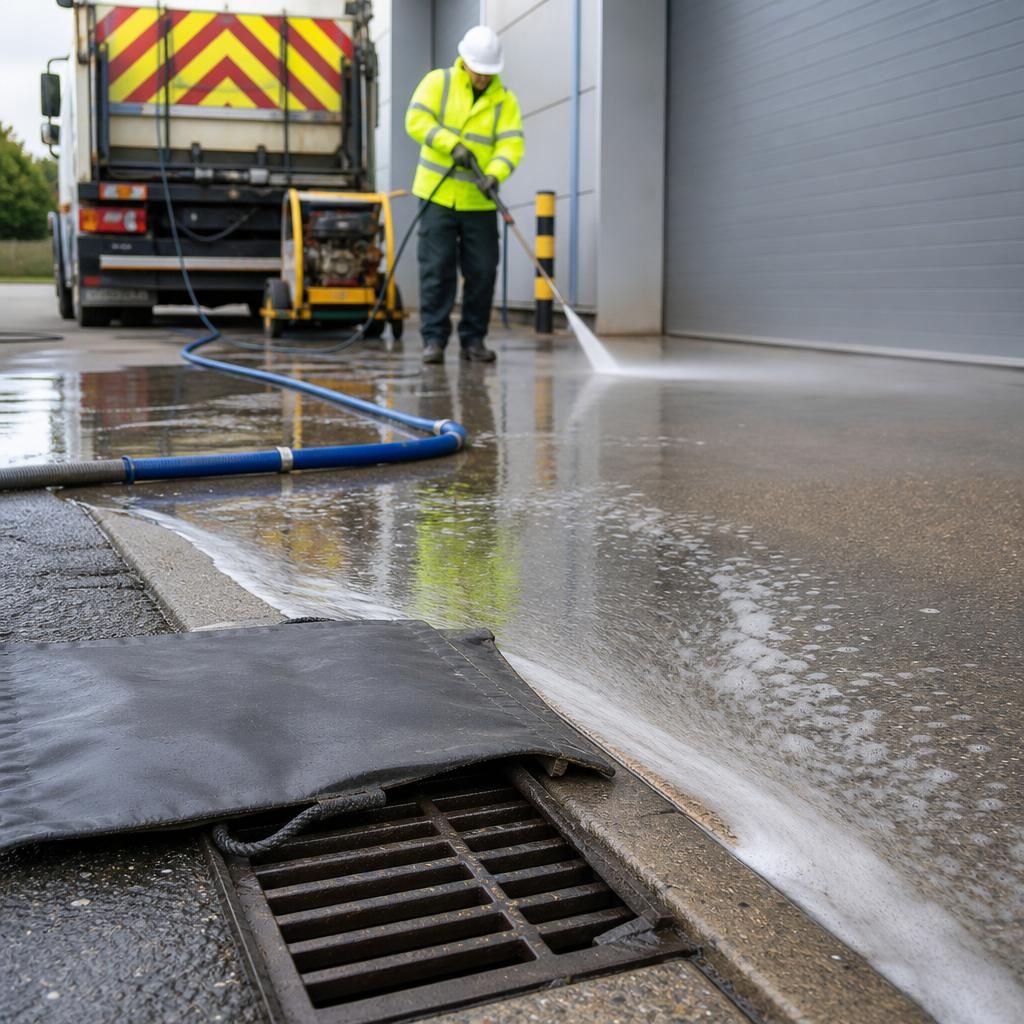
Controlling wastewater and surface runoff is a key environmental consideration in commercial power washing. Wash water from roofs, façades, car parks and loading areas can carry oil, sediment, detergents, paint particles and other contaminants into surface-water drains, soil or nearby watercourses.
Before cleaning begins, the drainage layout should be checked and the work area contained using drain covers, temporary bunds, booms or wet vacuums where appropriate. Collected water and sludge should be filtered, treated or removed through an approved disposal route. Contaminated water should only enter a foul sewer where the relevant discharge requirements have been confirmed; it should never be directed into a surface-water drain without proper assessment.