
What are the environmental benefits of commercial power washing?
Commercial power washing can reduce environmental impact by removing pollutants, oils, algae and chemical residues without relying on harsh cleaning products or abrasive methods. When water use is controlled and wastewater is captured and disposed of correctly, it supports cleaner premises while helping to protect drains, soil and nearby waterways.
Commercial power washing can benefit the environment by removing dirt, oils, biological growth and other pollutants efficiently, often reducing the need for harsh chemicals, abrasive cleaning and premature replacement of building materials. The environmental outcome depends on how the work is planned: water consumption must be controlled, cleaning products selected carefully, and contaminated wastewater prevented from entering surface-water drains, soil or nearby waterways.
Reduced reliance on aggressive chemicals
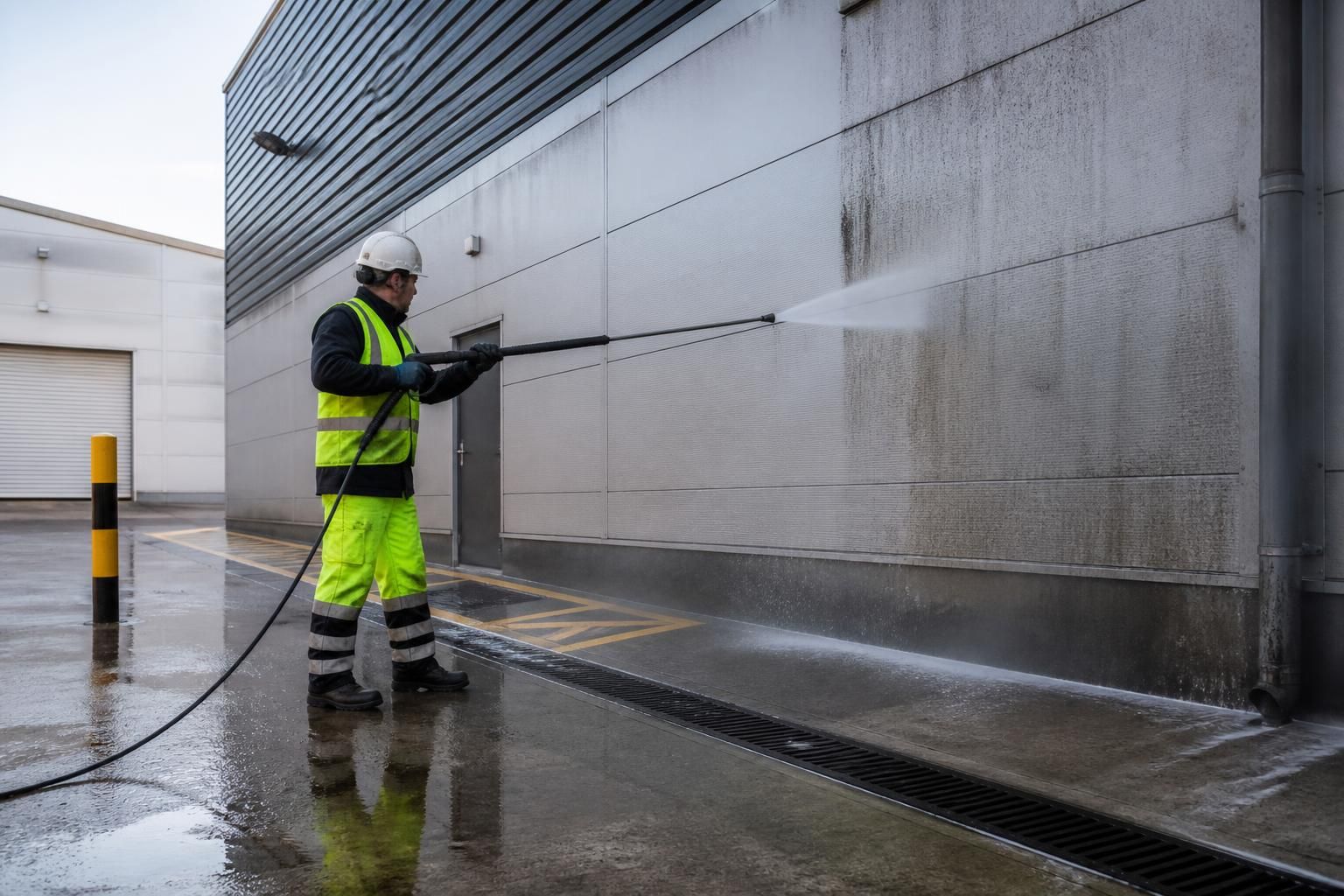
Pressure and power washing use water force, temperature and suitable equipment to break down and remove deposits from façades, cladding, roofs, paving, car parks and other external surfaces. This can reduce the need for strong chemical treatments, particularly where dirt, algae, moss, dust and loose residues can be removed mechanically.
Using fewer chemicals can reduce the risk of residues being carried into the surrounding environment. It also limits the amount of product that needs to be stored, handled and disposed of on a commercial site. Where a detergent or treatment is necessary, it should be selected for the surface and contaminant, applied in the correct concentration, and rinsed and recovered in accordance with the product instructions and site requirements.
Controlled water use
Professional equipment can deliver water at an appropriate pressure and flow for the surface being cleaned. This is more controlled than allowing water to run unchecked across a large area, and operators can adjust the method to avoid unnecessary rinsing or repeated passes. Pre-inspection also helps identify the correct technique, so delicate cladding, painted surfaces or joints are not damaged and then cleaned again unnecessarily.
Water-saving measures may include targeted application, suitable nozzles, trigger-controlled equipment, staged rinsing and, where practical, recovery or reuse systems. Steam cleaning can also be appropriate for some applications because it uses heated water to loosen contamination effectively, although the energy required to heat the water must be considered when assessing the overall environmental impact.
Better control of oils and pollutants
Car parks, loading areas, service yards and industrial surfaces can accumulate oil, fuel residues, tyre deposits, silt and other contaminants. If these are left in place, rain can wash them into drainage systems and watercourses. Power washing removes the deposits from the surface, but the wash water must then be managed as potentially contaminated wastewater.
Responsible commercial cleaning includes identifying drainage routes, protecting vulnerable outlets and using containment, filtration or recovery equipment where required. Wastewater should not be discharged to a surface-water drain simply because the surface appears clean. It must be collected, treated or disposed of through an appropriate route, particularly where it contains oil, chemicals, heavy sediments or other controlled contaminants.
Reduced dust and airborne contamination
Wet cleaning suppresses dust during the removal of accumulated dirt, construction residue and some industrial deposits. This can reduce the amount of loose material becoming airborne during cleaning compared with dry brushing, abrasive methods or uncontrolled mechanical preparation. The approach still needs to be assessed carefully where the surface may contain hazardous substances, because washing alone is not an appropriate control for every type of contamination.
Extending the usable life of external surfaces
Routine removal of moss, algae, salt deposits, oils and corrosive residues can help prevent contamination from contributing to staining, blocked drainage, surface deterioration and corrosion. Keeping façades, roofs, paving and cladding in service for longer can reduce the environmental burden associated with manufacturing, transporting and installing replacement materials.
This benefit depends on using the correct pressure, temperature and cleaning method. Excessive force can damage pointing, coatings, sealants, render or delicate finishes, creating additional repair work and waste. A pre-cleaning assessment is therefore an environmental control as well as a quality and safety measure.
Supporting cleaner, more efficient premises
Removing deposits from external equipment, ventilation surrounds, solar panels or hardstanding can support the proper operation and maintenance of some commercial assets. The effect varies by surface and equipment type, and cleaning should only be carried out where it is suitable and safe. Keeping access areas clear of oil, algae and other slip hazards can also reduce the likelihood of incidents that result in repairs, material waste or emergency maintenance.
How to make a commercial power-washing project more sustainable
- Inspect the site and identify the type of contamination before choosing pressure, temperature, detergent and access equipment.
- Use the minimum effective water flow and cleaning product concentration rather than applying a standard method to every surface.
- Protect surface-water drains and establish where wash water will go before work begins.
- Use bunding, drain covers, wet vacuums, water recovery or suitable filtration where contamination could enter drainage or soil.
- Keep oily, chemical or heavily contaminated wastewater separate where required, and arrange compliant disposal through an appropriate waste route.
- Avoid cleaning during rainfall or when site conditions could cause uncontrolled run-off.
- Use biodegradable or lower-impact products only where they are suitable for the contaminant and compatible with the surface; biodegradable does not mean that untreated wastewater can be discharged anywhere.
- Record the cleaning method and any wastewater controls for the site’s environmental and maintenance records.
Commercial power washing is therefore most environmentally responsible when it combines efficient cleaning with proper pollution prevention. The equipment can reduce chemical use, control dust and help preserve existing materials, but these benefits are undermined if water is wasted or contaminated run-off is allowed to reach drains, soil or waterways. For larger sites, the method statement should address water use, chemical selection, drainage protection, wastewater handling and the environmental risks specific to the premises.
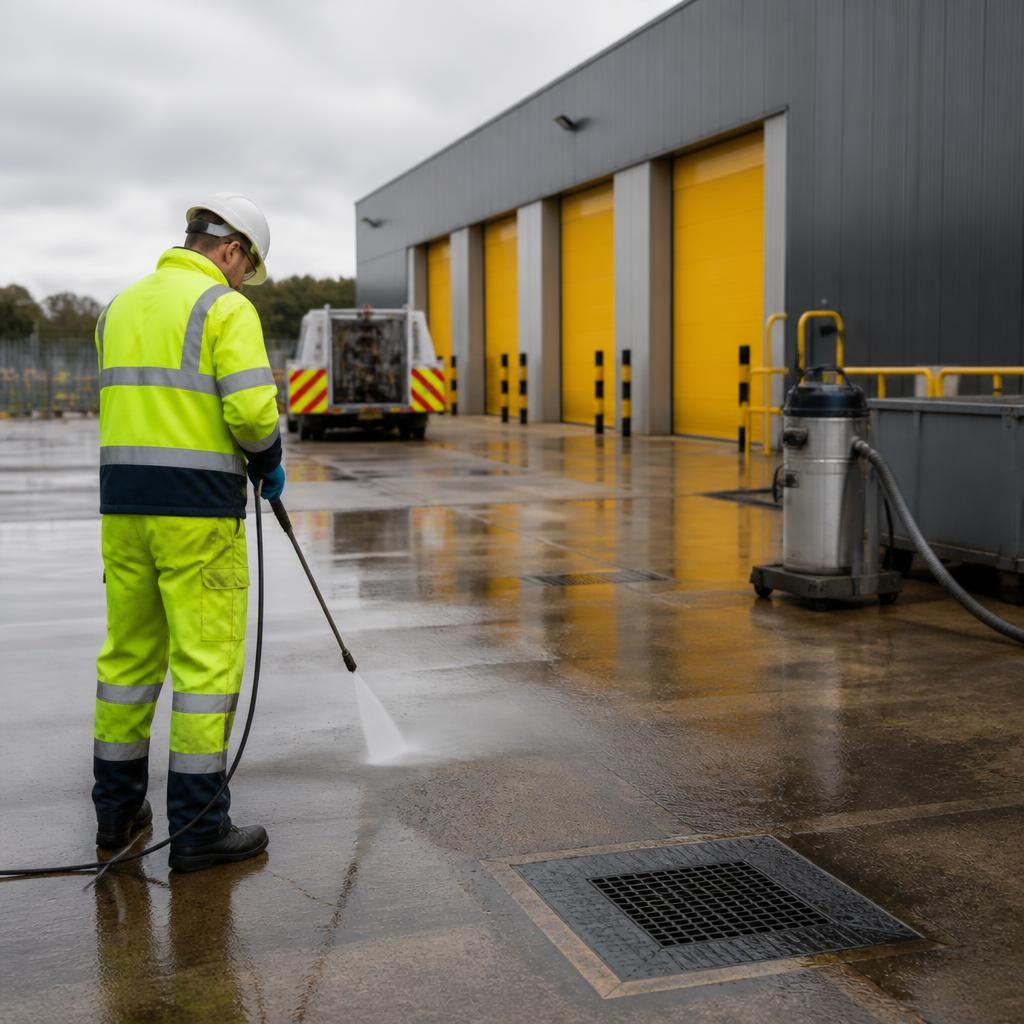
One of the most important environmental benefits of commercial power washing is the controlled removal and management of pollutants. Cleaning car parks, loading bays and service yards can lift oil, fuel residue, silt and other contaminants from the surface before rainfall carries them towards drains or watercourses.
The wash water must be treated as potentially contaminated. Drain covers, bunding, wet vacuums and water-recovery equipment can help prevent polluted run-off entering surface-water drainage systems or soil. Where detergents are needed, the product and dilution should be suitable for the surface and contamination, with wastewater collected and disposed of through an appropriate route.