
What are the benefits of using commercial power washing for business premises?
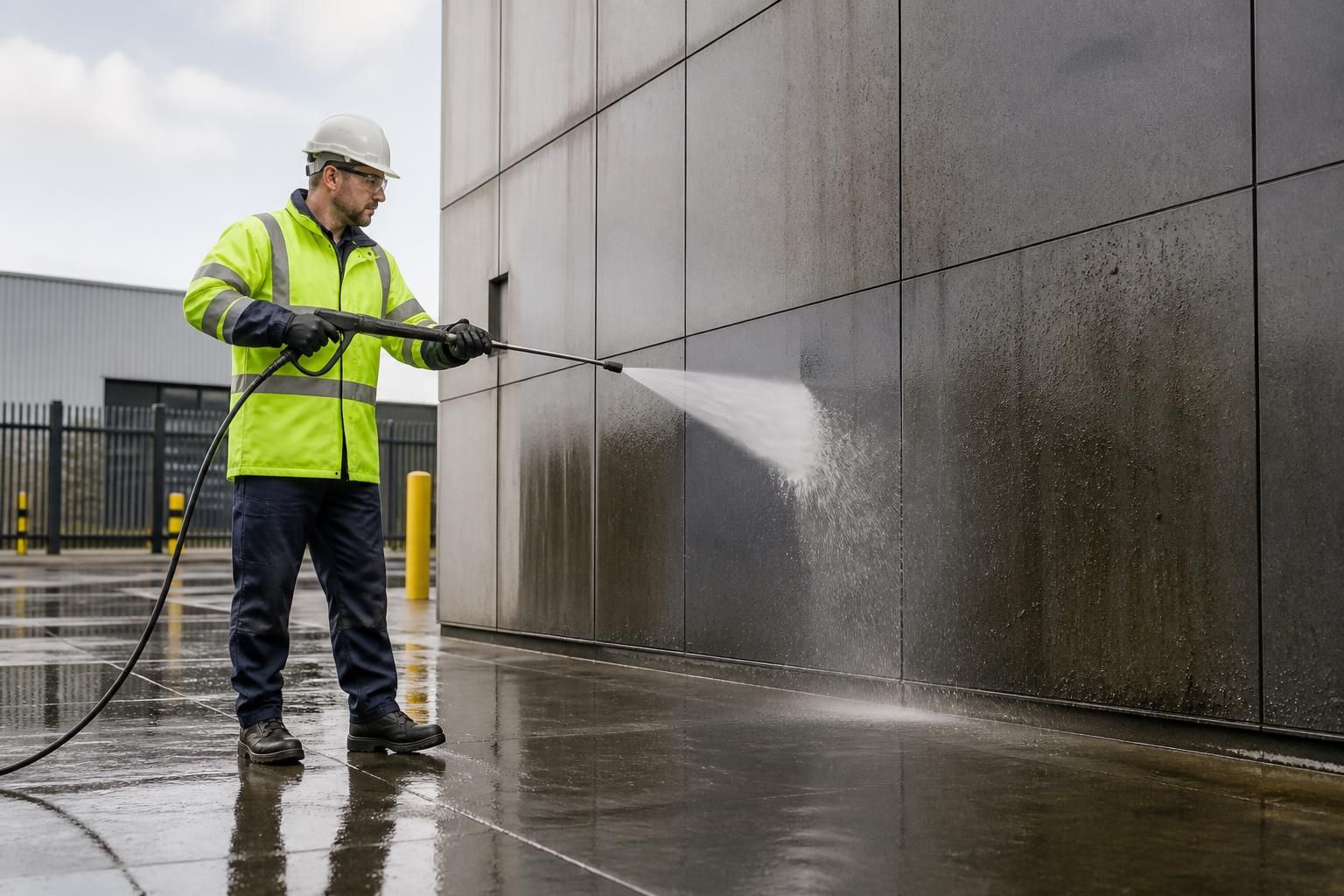
Commercial power washing removes dirt, oil, algae, moss, stains and other build-up from business premises, helping maintain safer surfaces and a clean, professional appearance. It can also protect building materials, support routine maintenance and reduce the disruption associated with more intensive cleaning or repairs.
Commercial power washing gives business premises a controlled way to remove accumulated dirt, oil, algae, moss, chewing gum, tyre marks, traffic film and other contamination from exterior surfaces. Used with the correct pressure, temperature, cleaning agent and recovery method, it can improve presentation, reduce slip and hygiene risks, protect suitable building materials and make routine property maintenance more manageable.
A cleaner, more professional appearance
External areas strongly influence how a site is perceived by customers, employees, tenants, visitors and other stakeholders. Power washing can restore the appearance of entrances, façades, cladding, forecourts, loading areas, paths, car parks and service yards by removing staining and surface deposits that cannot be removed effectively with routine sweeping or manual washing.
Regular cleaning is particularly useful for high-traffic commercial properties, where vehicle emissions, mud, food residue, oil and general urban pollution can build up quickly. Maintaining a consistent standard also helps property managers present premises appropriately between inspections, lettings, handovers or planned refurbishment work.
Safer external surfaces
Algae, moss, oil and other contamination can make paving, steps, ramps and access routes slippery, especially when wet. Removing these deposits can help reduce the risk of slips and falls, although cleaning should form part of a wider inspection and maintenance programme rather than being treated as a complete safety assessment.
Power washing can also improve visibility by removing dirt from steps, kerbs, loading bays, signage surrounds and marked areas. Once cleaning is complete, the surface should be checked for damaged paving, drainage problems, loose pointing, trip hazards and any contamination that requires a different treatment.
Protection of building materials
Deposits left on exterior materials can retain moisture and encourage biological growth. Some contaminants may also become more difficult to remove over time, increasing the need for aggressive cleaning or repairs. Planned washing helps identify and remove surface contamination before it contributes to deterioration.
The method must be matched to the material. Robust concrete and some hard paving may tolerate higher-pressure cleaning, while render, painted surfaces, natural stone, brickwork, roof coverings and cladding may require lower pressure, controlled steam, soft washing or a specialist detergent. Excessive pressure can damage joints, coatings, pointing and vulnerable finishes, so a professional assessment is important.
More manageable maintenance and cleaning costs
Planned exterior cleaning helps separate routine maintenance from reactive work. Removing contamination at suitable intervals can reduce the likelihood of heavy staining, blocked-looking drainage areas, persistent moss growth and neglected surfaces requiring more intensive restoration.
It can also help reveal defects that are difficult to see beneath dirt, including cracked paving, failed sealant, damaged cladding, leaking gutters and deteriorated mortar. Identifying these issues during scheduled cleaning allows them to be assessed and addressed before they become more disruptive or expensive problems. Power washing does not repair structural defects, but it can support a clearer and more informed maintenance plan.
Less disruption to business operations
Commercial cleaning contractors can plan work around opening hours, deliveries, tenant access, pedestrian movements and other site activities. A defined method statement and cleaning schedule can help coordinate access equipment, water use, barriers, signage and waste-water management so that the work does not interfere unnecessarily with normal operations.
Large areas can often be cleaned systematically using suitable pressure-washing equipment, surface cleaners or access equipment. The right approach may be quicker and more consistent than attempting to clean extensive surfaces with small domestic equipment or unplanned manual labour. Drying times, weather conditions and re-opening requirements should be agreed before work begins.
Improved hygiene and site standards
Exterior surfaces can collect organic matter, food residue, bird fouling, grease and general waste. Removing this contamination supports cleaner service yards, bin areas, entrances, pedestrian routes and communal spaces. Where biological or hazardous contamination is present, the contractor should use appropriate protective equipment, cleaning products, containment and disposal procedures.
Power washing is not a substitute for specialist decontamination where there is a known health hazard. However, as part of a planned cleaning regime, it can help maintain visibly cleaner and more hygienic external areas.
Support for compliance and property management
Clean, well-maintained access routes and work areas can support a site’s health and safety procedures, facilities management records and inspection routines. Keeping a record of cleaning dates, areas treated, methods used and any defects identified provides useful evidence of planned maintenance.
The exact requirements depend on the premises and the activities carried out there. Food-related sites, industrial facilities, public buildings, retail properties, construction sites and managed residential developments may each require different controls for access, contamination, drainage and waste-water. A site-specific assessment is therefore preferable to applying the same cleaning process everywhere.
Responsible use of water and cleaning products
Professional commercial power washing can be planned to use water and detergents appropriately for the surface and level of contamination. Where required, wash water can be controlled, collected or directed through suitable drainage arrangements rather than being allowed to carry oil, silt, chemicals or debris into surface-water systems.
Environmental controls should be agreed before work starts, particularly on industrial sites, near watercourses or where oil, chemicals, paint residue or other pollutants may be present. Selecting the least intensive effective method, such as steam cleaning or low-pressure treatment where suitable, can also reduce the risk of unnecessary surface damage and chemical use.
Results depend on the correct specification
The benefits of commercial power washing are greatest when the work is specified after considering the surface, contamination, access, drainage, weather, surrounding activities and required finish. A competent contractor should assess vulnerable areas, test cleaning methods where appropriate, protect nearby property and explain any limitations.
Power washing may not be suitable for every surface or every type of staining. Some graffiti, rust, oil, paint and deeply embedded marks require specialist treatments rather than increased pressure. After cleaning, recommendations may include sealing, repairs, moss treatment, improved drainage or a revised maintenance schedule. This approach delivers a more durable result while reducing the risk of damage to the building or surrounding environment.
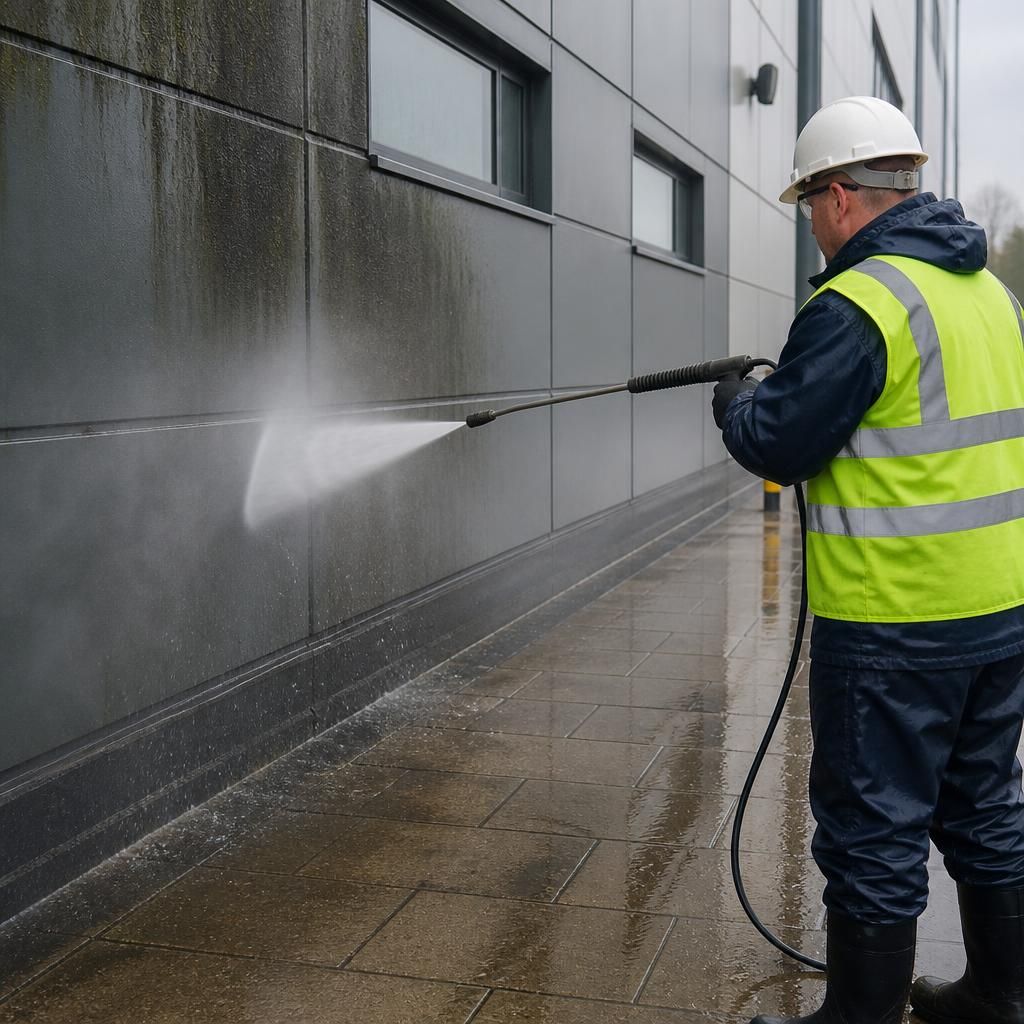
Commercial power washing helps protect suitable exterior materials by removing dirt, algae, moss, oil and other deposits that can retain moisture or become more difficult to treat over time. Planned cleaning also makes defects such as cracked paving, damaged cladding, failed sealant and deteriorated pointing easier to identify.
The cleaning method must match the surface. Concrete and robust paving may tolerate higher pressure, while render, brickwork, natural stone, coatings and cladding may require low-pressure washing, steam cleaning or specialist detergents. Using excessive pressure can damage joints, finishes and vulnerable materials, so a professional assessment and test area are important before work begins.