
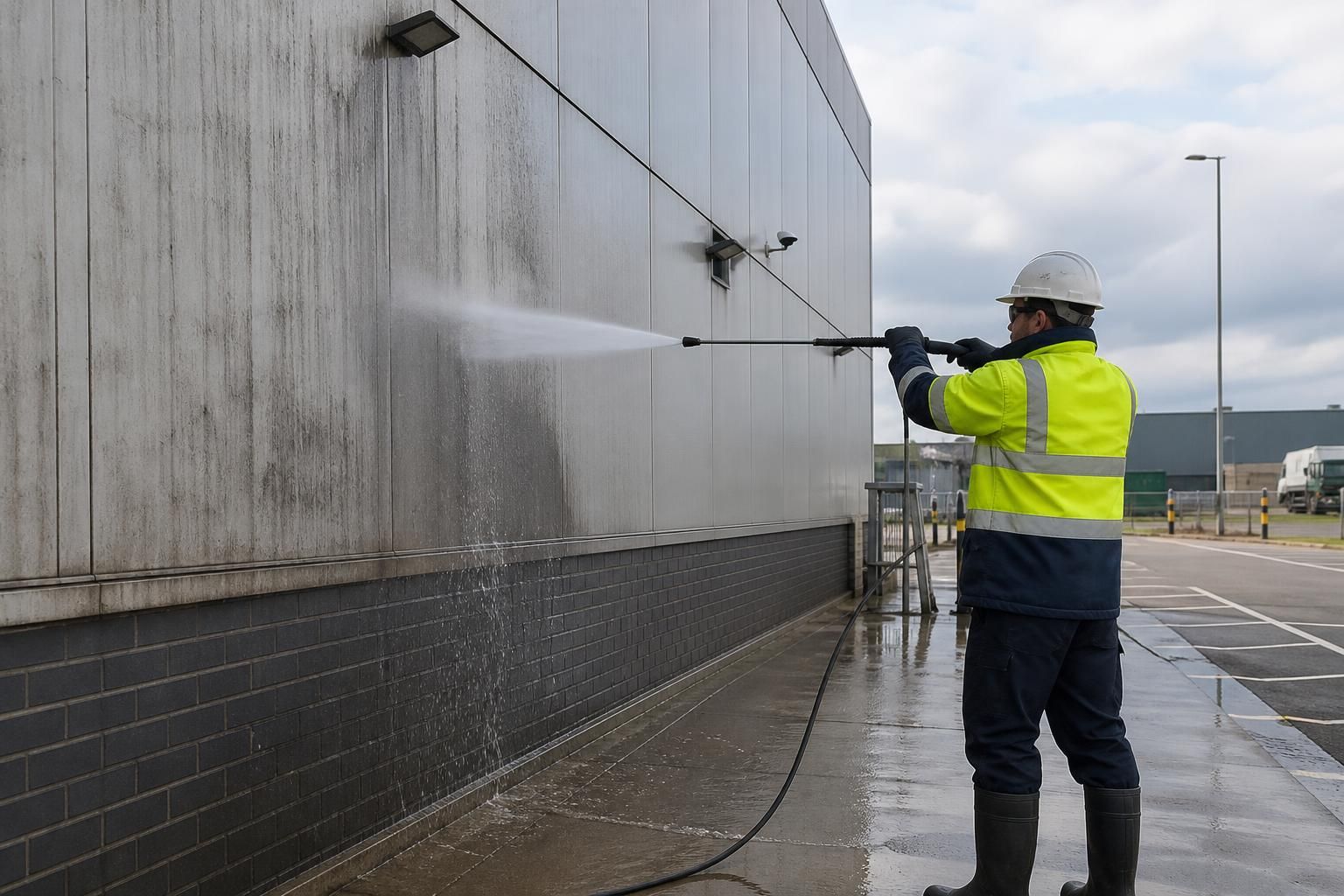
How often should commercial power washing be scheduled for building maintenance?
Commercial power washing should generally be scheduled annually as part of planned building maintenance, with more frequent cleaning for high-traffic sites, exposed façades, food premises, car parks and properties affected by pollution, algae or graffiti. The ideal interval should be based on the building’s materials, location, usage and inspection findings so cleaning prevents build-up without causing unnecessary wear.
Commercial power washing should usually be scheduled annually as part of planned building maintenance, but the correct interval depends on the property’s use, location, materials and exposure. High-traffic premises, food-related sites, car parks, loading areas and buildings affected by pollution, algae, moss or graffiti may require cleaning more frequently, while sheltered or lightly used buildings may only need periodic treatment following inspection.
A planned schedule is more effective than waiting until dirt becomes heavily established. Regular cleaning helps control the build-up of traffic film, atmospheric pollutants, organic growth, oil, chewing gum and other deposits that can make surfaces look neglected and may contribute to deterioration. It also allows defects such as damaged pointing, failed sealant, loose coatings or cracked paving to be identified before cleaning begins.
A practical commercial cleaning schedule may include:
- Routine inspection: Check façades, cladding, roofs, entrances, paths, loading areas and car parks for staining, organic growth, surface deposits and slip hazards.
- Planned annual cleaning: Use this as a general starting point for the building envelope and high-visibility external areas, adjusting the timing to suit the site.
- More frequent cleaning: Consider shorter intervals for busy public areas, entrances, retail frontages, transport facilities, industrial premises and sites close to roads or pollution sources.
- Seasonal work: Schedule cleaning when weather conditions and access arrangements are suitable, particularly where damp conditions encourage algae or moss.
- Reactive cleaning: Arrange additional treatment after graffiti, spillages, construction work, flooding, severe weather or other events that leave hazardous or unsightly deposits.
Site usage is one of the main factors. Entrances and pedestrian routes can accumulate soil, grit, food residue and other contaminants more quickly than less frequently used elevations. Car parks and loading bays may need closer monitoring because vehicle oils, tyre marks and heavy traffic can create both appearance and slip concerns. A building used by the public may also need more frequent presentation cleaning than a low-occupancy industrial unit.
Location and exposure also affect the interval. Buildings beside busy roads can collect exhaust-related grime and airborne dust. Properties in shaded or damp areas are more likely to develop algae, moss or other organic growth, particularly on porous paving, walls and roofs. Coastal or exposed locations may experience different deposits and weathering. Local conditions across Birmingham, the West Midlands and other parts of the UK should therefore be considered rather than applying one fixed programme to every site.
The surface material must determine both frequency and method. Concrete, brick, stone, render, metal cladding, painted surfaces, block paving and roofing materials do not respond identically to pressure. Aggressive or unnecessarily frequent cleaning can damage joints, coatings, finishes and softer materials. A competent contractor should inspect the surface, identify the deposits and select an appropriate combination of pressure, temperature, water flow and cleaning solution. Steam cleaning or a lower-pressure approach may be more suitable than conventional high-pressure washing in some situations.
Frequency should also reflect the condition and age of the building. A recently refurbished façade may need a carefully controlled maintenance approach to protect coatings and sealants. Older masonry may require gentler treatment and closer checks for loose mortar or existing defects. Where a surface has already been damaged, cleaning should not be used to conceal the problem; repairs and suitable preparation may be needed first.
Before setting a recurring programme, assess:
- the type, age and condition of each external surface;
- the level of pedestrian, vehicle and delivery traffic;
- nearby roads, industrial activity, trees, waterways or other sources of deposits;
- the presence of algae, moss, oil, graffiti, chewing gum or construction residue;
- drainage, water run-off and any risk of contaminated water entering surface water systems;
- access requirements, tenant activity and restrictions on working hours;
- the visual standards and health and safety requirements applying to the site; and
- previous cleaning results, including areas where deposits returned quickly.
For many commercial properties, the most reliable approach is a maintenance plan combining scheduled cleaning with condition-based inspections. The contractor can record the areas treated, cleaning methods used, surface condition and any recommendations for repair or follow-up work. This provides a useful basis for adjusting the next visit: if deposits return rapidly, the interval may need shortening; if surfaces remain stable and clean, the programme may be extended where appropriate.
Cleaning should be timed to minimise disruption to staff, visitors, tenants and deliveries. Work may be arranged outside trading hours or divided into sections so that entrances and essential routes remain available. Weather forecasts, drying time, water management and access equipment should be considered before work starts. Cleaning during unsuitable conditions can reduce the result and increase risks from spray, run-off, wind or slippery surfaces.
It is also important to distinguish appearance-led cleaning from safety-critical cleaning. A façade may remain visually acceptable while a car park, ramp, walkway or entrance has developed a slippery deposit. These areas should be inspected more often and cleaned when conditions create a foreseeable risk, rather than waiting for the next general building wash.
In practice, an annual review and planned clean is a sound starting point, with additional visits determined by inspection findings and site conditions. A tailored programme protects the building more effectively than either infrequent intensive cleaning or repeated high-pressure washing without assessment. For an existing maintenance contract, the schedule can be reviewed after each service and adapted to the building’s actual rate of soiling, operational needs and material condition.
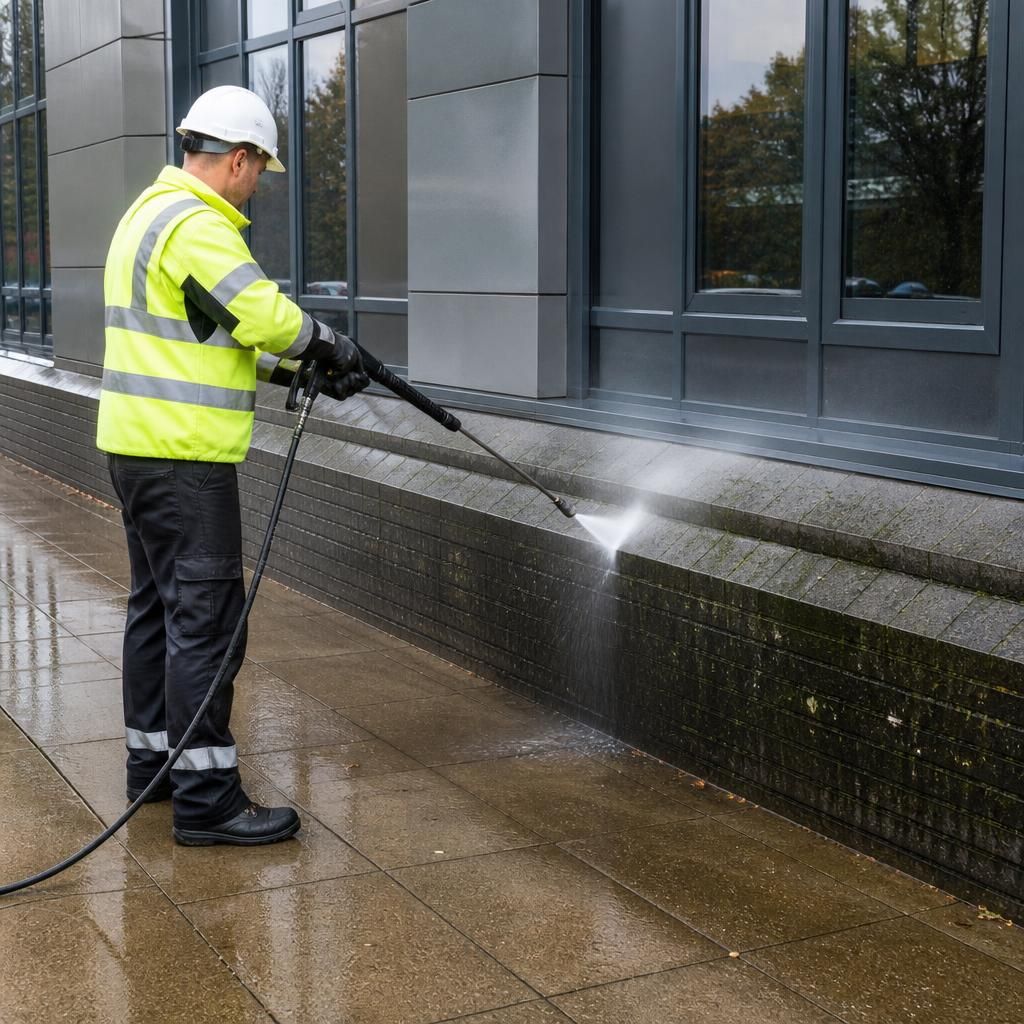
Commercial power washing should be scheduled according to how quickly a property becomes soiled, not simply by applying the same interval to every building. A planned annual clean is a useful starting point, but entrances, car parks, loading areas and exposed façades may need more frequent inspection and treatment.
Review the cleaning schedule when deposits return quickly or conditions change. Busy pedestrian areas can accumulate grit, food residue and traffic film, while shaded or damp surfaces may develop algae and moss. Oil, tyre marks, graffiti and construction residue may also require additional cleaning rather than waiting for the next routine visit.
Each inspection should consider:
- the condition and material of the surface;
- the level of pedestrian, vehicle and delivery traffic;
- nearby roads, trees, industrial activity and other sources of soiling;
- slip hazards, drainage and contaminated run-off; and
- the effect of cleaning on tenants, visitors and daily operations.
Recording these findings after each service helps establish a practical maintenance cycle. The interval can then be shortened where deposits return rapidly or extended where surfaces remain stable, while safety-critical areas continue to be checked more often than appearance-only surfaces.