
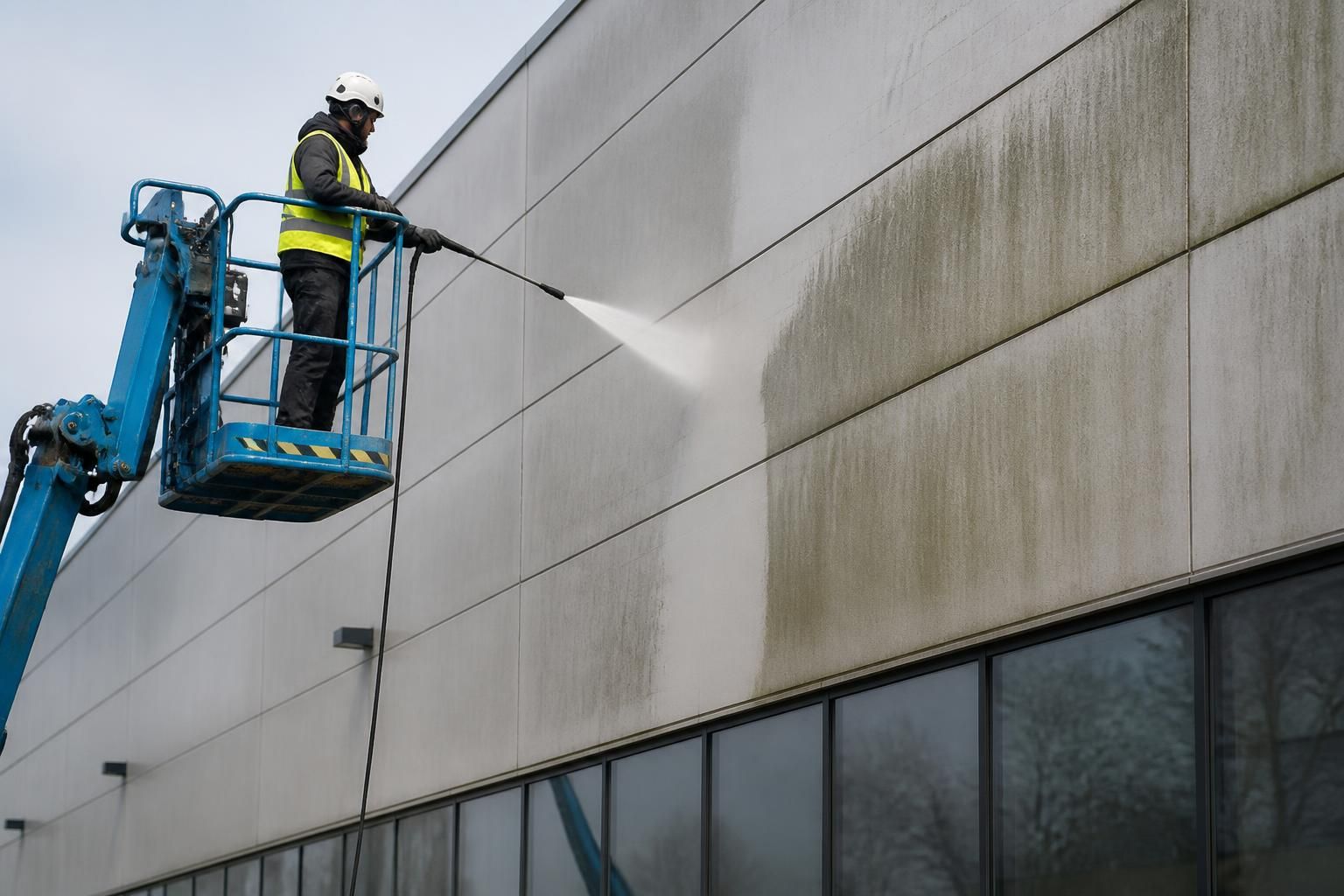
How does commercial power washing contribute to maintaining the integrity of building materials?
Commercial power washing helps maintain building-material integrity by removing dirt, pollutants, algae, moss and other residues that retain moisture and accelerate staining, corrosion and surface deterioration. When the pressure, temperature and cleaning method are matched to the material, it protects façades, roofs, cladding and paved areas without damaging coatings, joints or finishes.
Commercial power washing contributes to the integrity of building materials by removing contaminants that hold moisture against surfaces, promote biological growth, accelerate corrosion and conceal early defects. When the equipment, pressure, temperature and cleaning solution are matched to the material, cleaning removes harmful deposits without stripping coatings, opening joints or damaging the underlying substrate.
Buildings are exposed to airborne pollution, traffic film, dust, soot, organic debris and mineral deposits. On façades, roofs, cladding and paved areas, these contaminants can form a persistent layer that attracts further dirt and retains water. Algae, moss and lichen are particularly problematic because their growth can keep surfaces damp and may encourage deterioration of coatings, pointing, sealants and porous materials. Removing these deposits helps the surface dry more effectively and makes its condition easier to inspect.
Regular cleaning also helps protect finishes that act as a barrier between the building material and the weather. Painted metal cladding, render, masonry coatings and protective treatments can deteriorate more quickly when exposed to pollution, organic growth and corrosive residues. Power washing removes the surface contamination before it becomes embedded, allowing maintenance teams to identify fading, flaking, blistering or areas where recoating may be required.
The effect on different building materials depends on using an appropriate cleaning method:
- Brick and masonry: Controlled pressure and suitable detergents can remove atmospheric soiling, algae and staining while reducing the risk of eroding the face of the brick or damaging mortar joints. Older, soft or already weathered masonry may require a gentler approach.
- Concrete: Cleaning can remove oil, tyre marks, algae and general grime from walls, yards and car parks. Care is needed around cracks, spalled areas and exposed aggregate, as excessive pressure can enlarge defects or dislodge weakened material.
- Metal cladding: Removing pollutants and salts helps reduce conditions that contribute to corrosion. The method must take account of the coating, panel profile, fixings, joints and any exposed edges, with thorough rinsing where residues could remain.
- Render and painted surfaces: Low-pressure or soft-washing techniques are often more appropriate than aggressive blasting. Excessive pressure can mark the finish, force water behind the coating or remove paint from vulnerable areas.
- Roofs: Cleaning can remove moss, lichen, leaves and accumulated dirt that retain moisture and obstruct drainage. The roof covering, laps, flashings, seals and insulation must be considered before any pressure washing takes place.
- Natural stone and paving: Correctly controlled cleaning can improve appearance while removing biological growth and deposits that make surfaces slippery. Porous stone may need lower pressure, a suitable detergent and careful rinsing to avoid etching or discolouration.
Power washing also supports the integrity of joints and drainage details by clearing debris from interfaces where water needs to escape. Blocked channels, gullies and roof drainage can cause standing water and repeated saturation, increasing the risk of staining, frost damage, corrosion and leaks. Cleaning does not repair failed sealant, cracked pointing or defective waterproofing, but it can expose these issues so that they are dealt with before further deterioration occurs.
The cleaning process should begin with an assessment rather than simply applying the highest available pressure. A competent contractor will consider the age and condition of the surface, previous coatings, construction details, likely contaminants, nearby electrical equipment and the consequences of water entering the building. Test cleaning in an inconspicuous area helps confirm whether the selected pressure, nozzle, temperature and cleaning agent are suitable before work proceeds across the full elevation.
Pressure is only one part of the cleaning system. Steam or heated water may loosen oily and greasy residues effectively, allowing lower mechanical pressure to be used. Detergents can help break down organic or atmospheric soiling, while soft-washing methods may be preferable for delicate coatings and façades. The objective is controlled removal of contamination, not maximum force. Using excessive pressure can remove surface coatings, erode mortar, drive water into joints and create damage that may not be visible immediately.
Protecting building materials also depends on good preparation and site control. Windows, vents, door seals, lighting, signage, sensors and vulnerable fixtures should be protected where necessary. Run-off should be managed so that dirty water, detergents and loosened contaminants do not enter unsuitable drainage systems or spread staining to adjacent surfaces. After cleaning, surfaces should be inspected for remaining deposits, exposed defects, failed coatings and areas requiring repair or specialist treatment.
Commercial power washing is most effective as part of a planned maintenance programme. Cleaning schedules should reflect the building’s exposure, material type, surrounding traffic, nearby vegetation, industrial emissions and the presence of recurring moisture. High-risk areas such as shaded elevations, roof drainage, loading bays and heavily trafficked entrances may need closer monitoring than less exposed surfaces. Prompt removal of contamination is generally easier and less disruptive than allowing heavy deposits to become established.
It is important to distinguish cleaning from repair. Power washing can remove the conditions that contribute to deterioration and can reveal defects, but it cannot restore rotten timber, replace failed pointing, stop active corrosion or make a leaking roof watertight. Where damage is identified, the appropriate repair or protective treatment should be completed before or after cleaning as part of the wider maintenance plan.
For commercial properties, the result is better-controlled deterioration and more reliable maintenance decisions. Clean surfaces are easier to survey, coatings can be assessed more accurately and minor defects are less likely to remain hidden beneath dirt or biological growth. With a material-specific method and appropriate inspection before and after the work, commercial power washing helps preserve façades, roofs, cladding, paving and associated finishes while reducing the risk of avoidable damage.
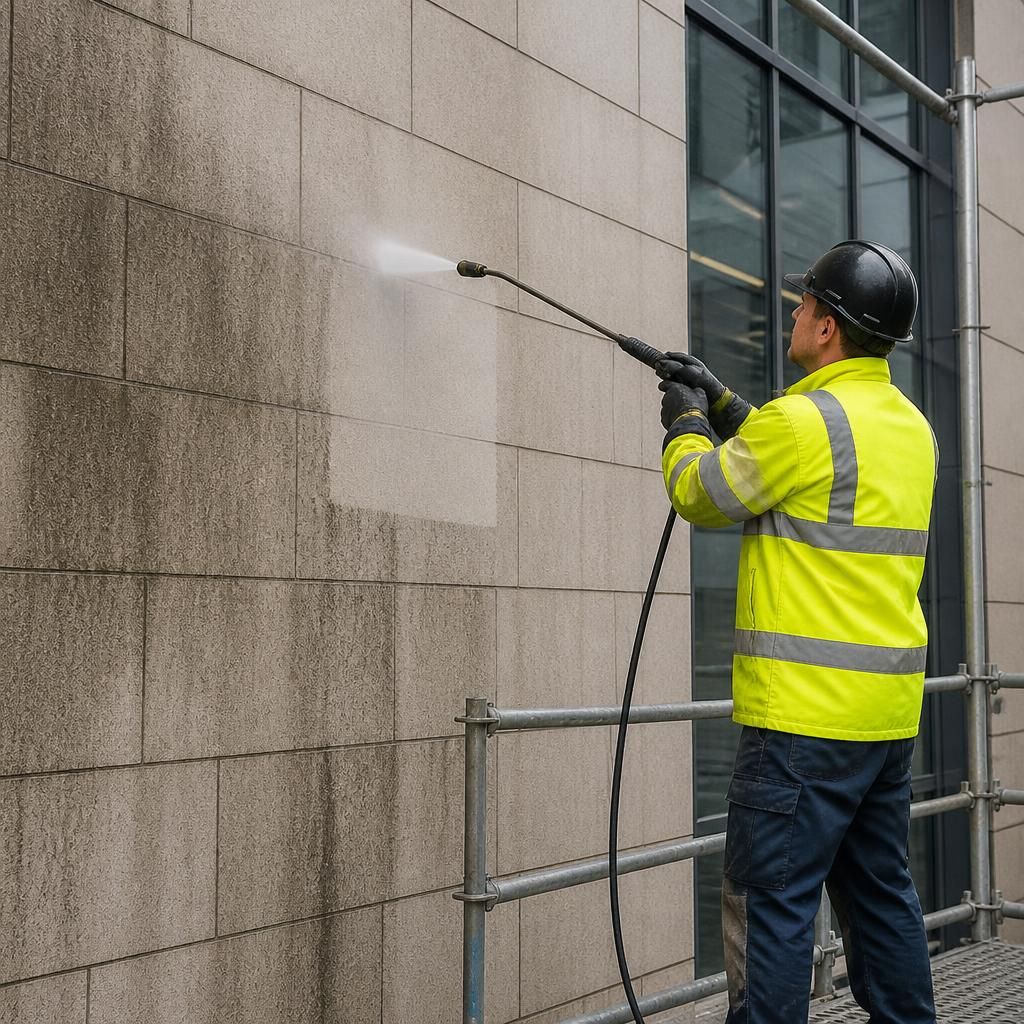
Commercial power washing protects building materials when the cleaning method is matched to the surface and its condition. Controlled pressure, suitable temperatures and appropriate cleaning solutions remove pollutants, algae, moss, oil and other deposits without unnecessarily eroding masonry, lifting coatings or forcing water behind cladding and joints.
A competent clean should begin with a surface assessment and a small test area. This helps confirm the correct pressure and technique for façades, roofs, render, metal cladding, concrete and paving. Lower-pressure or soft-washing methods may be more suitable for delicate finishes, while heated water can loosen greasy contamination without relying on excessive mechanical force. This controlled approach removes harmful deposits while leaving defects, failed sealants and damaged coatings visible for further maintenance.
Plan Safe Commercial Power Washing for Your Building
Arrange a professional assessment of your building’s façades, roof, cladding or paved areas to identify the safest cleaning method and any defects requiring attention. Contact Encanto Exterior Cleaning to plan commercial power washing around your maintenance requirements.