
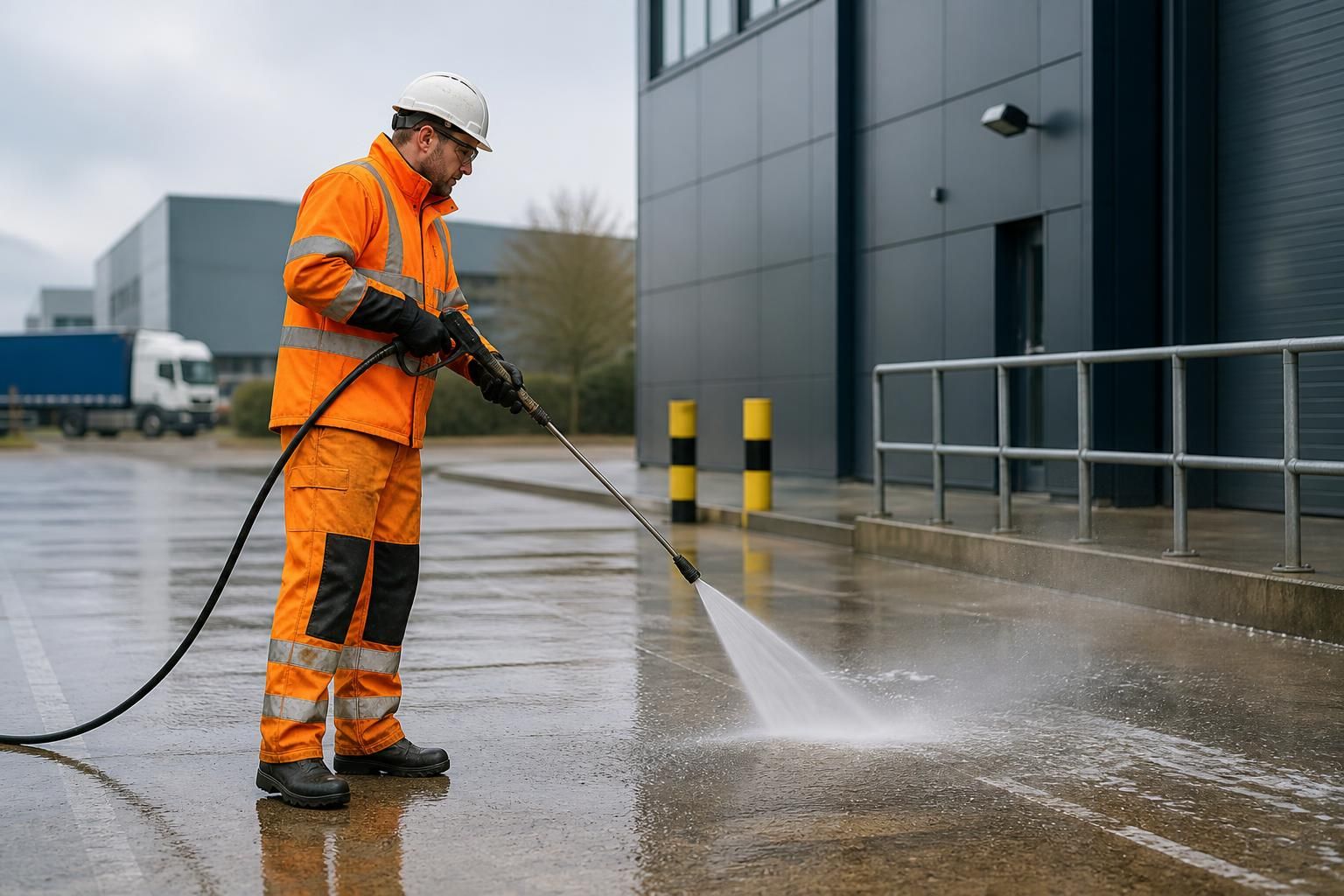
How can commercial power washing impact business operations positively?
Commercial power washing can improve business operations by removing dirt, oil, algae, and other contaminants that create safety risks, damage exterior materials, and detract from a professional appearance. Scheduled cleaning also supports preventative maintenance, helps keep access areas usable, and can reduce disruption by addressing exterior cleaning through planned, efficient works.
Commercial power washing can improve business operations by making external areas safer, more presentable and easier to maintain, while helping protect building materials and reduce avoidable disruption. Removing oil, algae, moss, traffic film, chewing gum, ingrained dirt and other contaminants from façades, paving, loading areas, car parks and service yards supports the day-to-day use of commercial premises.
Improved safety and access
Contaminants on external surfaces can create slip hazards, obscure changes in level and make pedestrian or vehicle routes difficult to use. Power washing can remove many of these deposits from walkways, entrances, ramps, steps, loading bays and car parks. Keeping these areas clean supports safer movement for employees, visitors, contractors and delivery drivers.
Cleaning should be planned around the condition and use of each surface. Oil and fuel deposits may require suitable detergents or degreasers, while algae and moss may need treatment as well as pressure washing to reduce rapid regrowth. Where contamination has caused permanent staining, cleaning may improve the surface without making it look entirely new. A site assessment helps identify the appropriate method and any areas requiring repair rather than cleaning alone.
Less disruption to normal operations
Planned external cleaning is generally less disruptive than responding to heavily contaminated areas, complaints or access problems at short notice. A commercial contractor can organise work around opening hours, deliveries, shift patterns, tenant access and other site constraints. Sections can be isolated and cleaned in a controlled sequence so that essential routes remain available wherever practicable.
Before work starts, the cleaning plan should identify access points, vehicle movements, drainage routes, sensitive equipment and areas that cannot be taken out of use. Clear communication with the site manager helps coordinate barriers, signage, water supply, equipment placement and final inspections. This is particularly important at industrial premises, retail sites, transport facilities and occupied commercial buildings.
A more professional external appearance
Façades, entrances, cladding, forecourts and car parks influence how customers, employees, tenants and other stakeholders view a business. Removing traffic film, atmospheric soiling, organic growth and graffiti can restore a cleaner, more consistent appearance across the site. This is useful before inspections, property handovers, planned maintenance, opening events or the occupation of refurbished premises.
Consistent cleaning can also prevent individual areas from becoming noticeably neglected. Entrances and high-traffic routes may need more frequent attention than less exposed elevations, so a maintenance schedule can focus resources where they have the greatest operational and visual benefit.
Protection of building materials and external assets
Dirt and organic growth can hold moisture against surfaces and conceal defects such as cracked pointing, failed sealant, damaged coatings or blocked drainage details. Routine cleaning makes these conditions easier to identify during inspection. Removing contamination can also reduce the time that corrosive or staining substances remain in contact with concrete, paving, metalwork and other external materials.
The cleaning method must match the substrate. Excessive pressure, unsuitable heat or aggressive chemicals can damage render, masonry, coatings, joints, timber and fragile cladding. Experienced operators select pressure, temperature, nozzle type, detergent and access equipment according to the material and the type of soiling. Test cleaning in an inconspicuous area is appropriate where the surface, coating or previous treatment is uncertain.
More efficient planned maintenance
Power washing can form part of a wider planned maintenance programme rather than being treated as an isolated cosmetic task. Cleaning schedules can be aligned with façade inspections, roof maintenance, line marking, landscaping, repairs and seasonal site preparation. Combining related activities may reduce repeated access arrangements and help site teams manage contractors more efficiently.
Regular records of cleaned areas, observed defects and follow-up requirements also support facilities management. A cleaning report can note staining that remains, areas requiring repair, drainage issues, damaged paving or recurring contamination. This gives the responsible team clearer information for prioritising remedial work and reviewing future cleaning frequencies.
Support for operational standards and compliance
Clean, accessible external areas can help a business maintain internal housekeeping standards, property management requirements and site rules. In some sectors, the condition of yards, waste areas, loading zones and access routes is particularly important because contamination can affect hygiene, workplace safety or the handling of goods.
Power washing does not replace risk assessments, repairs or other statutory controls. It is one part of maintaining a suitable premises. The work itself should be planned with appropriate precautions, including safe access, protection of electrical equipment, control of water run-off and suitable treatment of wastewater. Cleaning products and removed contaminants must be managed in accordance with the site’s environmental procedures and applicable requirements.
Better control of environmental and operational risks
Uncontrolled washing can move oil, silt, detergents, paint residue or other pollutants into surface-water drains. Responsible commercial cleaning therefore considers drainage before work begins, uses containment or recovery measures where required and avoids allowing contaminated run-off to leave the work area untreated. This protects surrounding areas and reduces the risk of creating a secondary operational problem.
Water and chemical use should also be proportionate to the task. Low-pressure soft washing, steam cleaning, recovery systems or targeted treatments may be more suitable than high-pressure cleaning in sensitive locations. Choosing the least aggressive effective method can protect surfaces, reduce unnecessary consumption and limit the need for repeat work.
What businesses should expect from a properly planned service
- A site assessment covering surfaces, contamination, access, drainage and operational constraints.
- A method statement and risk assessment appropriate to the premises and proposed equipment.
- Clear arrangements for pedestrian segregation, vehicle movements and temporary access restrictions.
- Surface-appropriate cleaning, with test areas where the material or coating may be vulnerable.
- Suitable controls for wastewater, detergents, oil, silt and other removed contaminants.
- A completion check identifying areas cleaned, remaining stains and defects requiring separate attention.
Commercial power washing has the greatest operational value when it is scheduled, risk-assessed and matched to the site rather than carried out as a one-size-fits-all pressure-washing exercise. Used in this way, it helps keep external areas usable, supports a professional premises standard, protects maintainable surfaces and allows cleaning work to be completed with clearer control over disruption and safety.
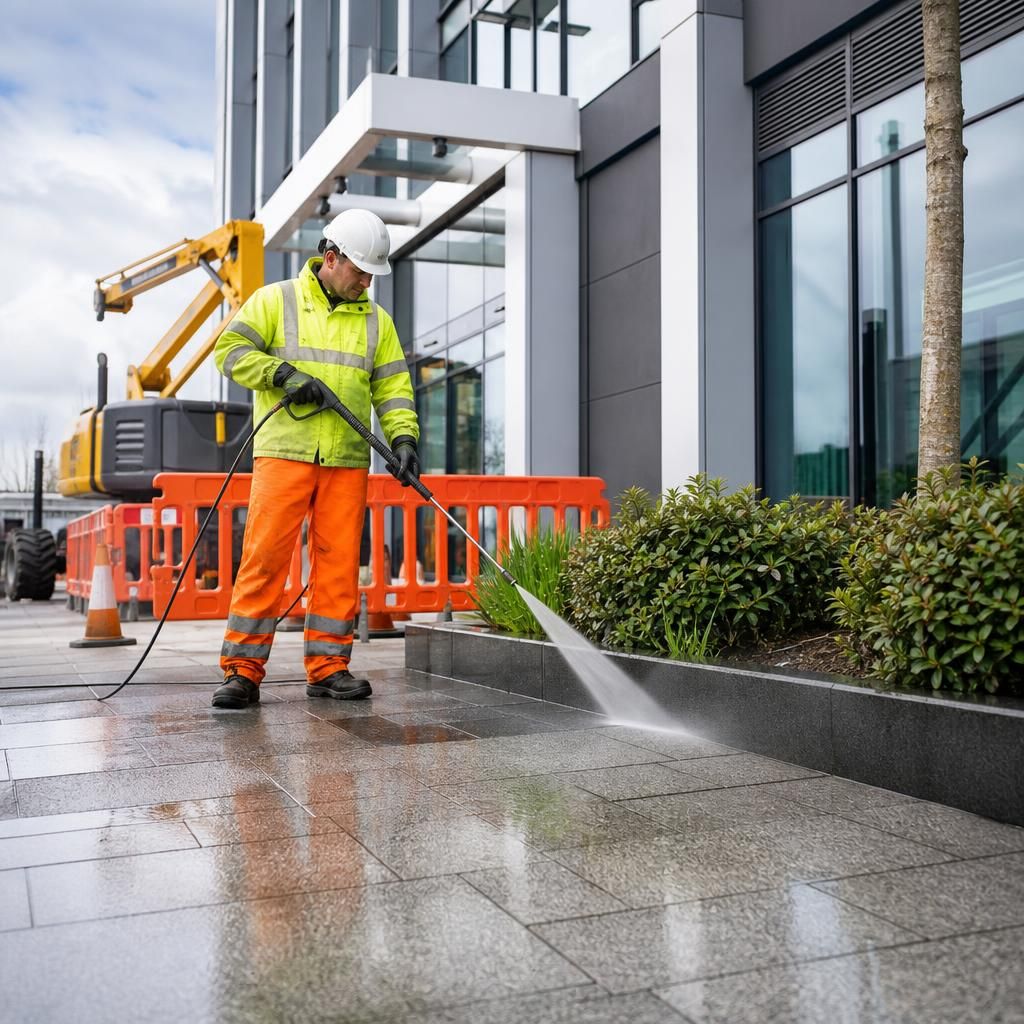
Commercial power washing can reduce disruption when it is planned around opening hours, deliveries, vehicle movements and pedestrian access. Cleaning can be completed in controlled sections, with barriers, signage and temporary routes agreed in advance so essential operations continue wherever practicable.
A suitable method statement should also cover water supply, drainage, wastewater recovery, equipment placement and protection of sensitive areas. Coordinating cleaning with inspections, repairs or other planned maintenance can reduce repeated access arrangements and give site teams clearer control over the work.