
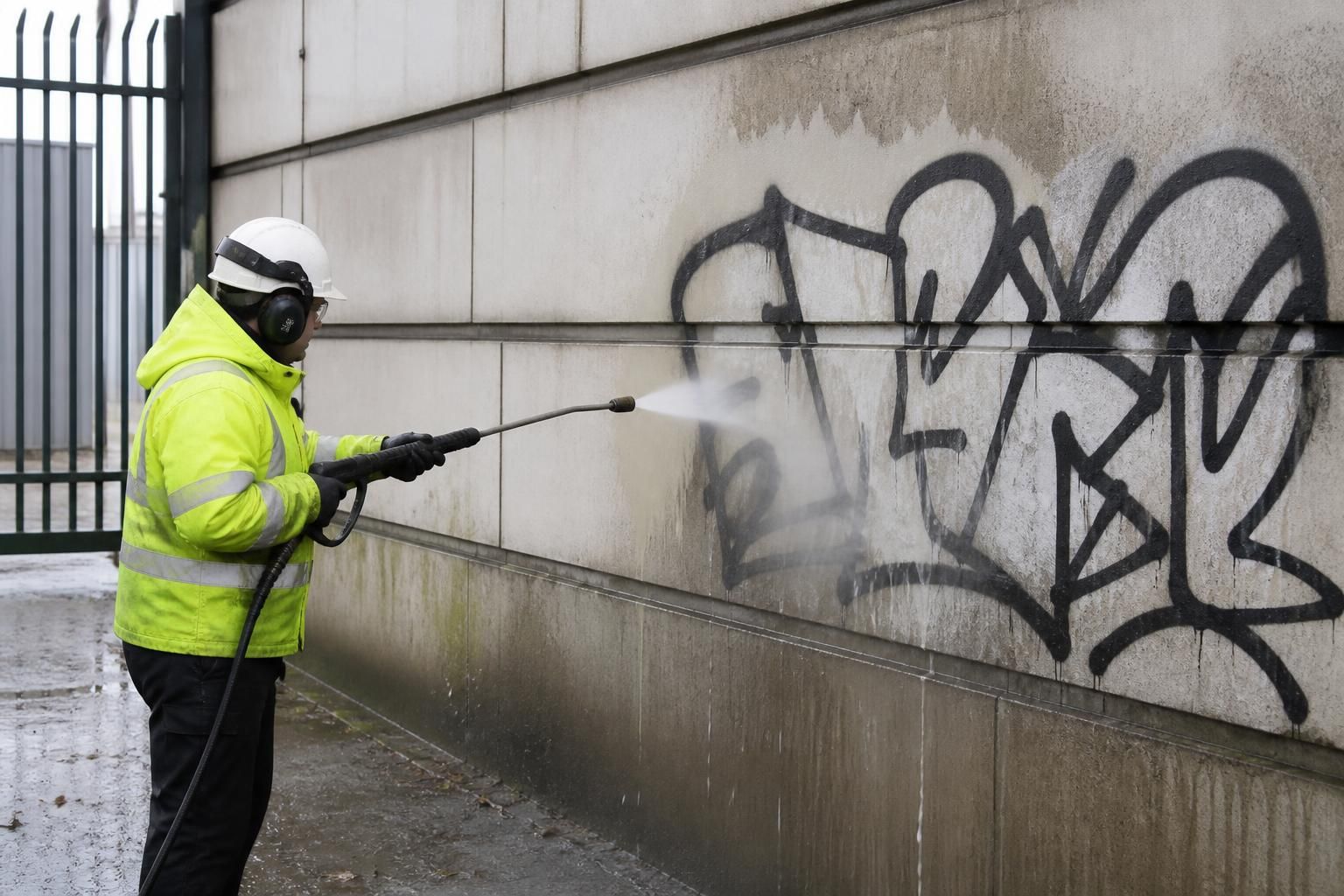
Can commercial power washing remove graffiti effectively?
Yes, commercial power washing can remove graffiti effectively from many masonry, concrete, brick and hard-surface façades when the pressure, temperature and cleaning method are matched to the substrate and paint type. A professional contractor will normally test a discreet area first and may use steam cleaning or specialist graffiti removers where high pressure could damage the surface or leave shadowing.
Commercial power washing can remove graffiti effectively from many hard, non-porous surfaces, including concrete, brickwork, masonry, paving and some metal façades. The result depends on the type and age of the paint, the condition and porosity of the substrate, and whether the cleaning method is correctly matched to the surface. Professional removal is not simply a matter of applying the highest possible pressure: excessive force can damage the façade, spread paint residue or leave a visible outline known as ghosting.
A suitable method is selected after assessing the graffiti and the surrounding surface. This assessment normally considers:
- the paint, marker ink or other substance used;
- how long the graffiti has been present and whether it has weathered;
- whether the surface is porous, painted, coated, textured or sealed;
- the condition of joints, render, pointing, cladding and other nearby materials; and
- how runoff, removed paint and cleaning products will be contained and managed.
Where the substrate can tolerate it, controlled pressure washing may lift the graffiti and rinse away the residue. Water temperature, pressure, nozzle selection and distance from the surface all affect the outcome. A trained operator works progressively, beginning with the least aggressive practical approach and increasing the treatment only when the surface allows it. This helps protect the underlying material while achieving an even finish.
Power washing is particularly effective on sound concrete, dense brick, stone and other robust masonry. It may also be appropriate for some metal surfaces, subject to the coating and condition of the finish. However, porous brick, soft stone, render, painted walls and aged or damaged façades require more careful treatment. Paint can penetrate into pores, while high pressure can remove pointing, erode the face of a brick, strip protective coatings or force water behind cladding and other finishes.
For delicate or heavily weathered surfaces, low-pressure cleaning combined with a specialist graffiti remover is often more suitable than conventional high-pressure washing. Steam cleaning can provide an effective alternative where heat helps soften the paint and lower mechanical pressure can be used. In some cases, a poultice or other targeted treatment may be needed to draw pigment from a porous substrate. If the graffiti has caused permanent staining or the original surface has already been altered, complete restoration to its previous appearance may not be possible without repainting, sealing or replacing affected materials.
A professional contractor should carry out a discreet test patch before treating the whole area. The test helps establish whether the chosen chemical, temperature and pressure will remove the graffiti without changing the colour, texture or finish of the substrate. It can also identify the risk of shadowing, where paint has penetrated more deeply than the visible surface layer. The test area should be allowed to dry and assessed in suitable light before the full clean proceeds.
An effective commercial graffiti removal process commonly includes the following stages:
- Site assessment: the operator identifies the substrate, access requirements, nearby people and vehicles, drainage arrangements and any vulnerable surfaces.
- Test cleaning: a small, inconspicuous section is treated using the least aggressive suitable method.
- Surface protection: adjacent signs, windows, doors, landscaping, electrical equipment and other areas are protected from water, chemicals and displaced residue.
- Graffiti removal: the selected pressure washing, steam cleaning or chemical treatment is applied in a controlled manner.
- Rinsing and inspection: the surface is rinsed where appropriate, checked for remaining pigment or ghosting, and treated again only if the substrate can safely tolerate further work.
- Runoff management: wastewater and paint residue are contained or diverted in accordance with the site requirements and applicable environmental controls.
- Optional protection: a compatible anti-graffiti coating may be applied after the surface is clean and dry, subject to the material and the client’s maintenance requirements.
Anti-graffiti coatings can make future incidents easier to manage, but they are not suitable for every façade. The coating must be compatible with the substrate, existing paint system and appearance of the building. Some systems form a sacrificial layer that is removed and renewed with the graffiti, while others create a more durable protective barrier. The specification should account for vapour permeability, colour, sheen, weather exposure and the proposed cleaning method.
Access and safety also affect the work. Graffiti on upper façades, bridges, car parks or industrial buildings may require mobile elevated work platforms, towers, long-reach equipment or other access systems. Work areas may need segregation from pedestrians, tenants, vehicles and operational activities. Operators should use appropriate personal protective equipment, control spray mist and chemical exposure, and take account of electrical equipment, traffic routes and slip hazards created by wet surfaces.
Commercial power washing is therefore an effective graffiti removal option when it is planned as a surface-specific cleaning process rather than a standard high-pressure treatment. For premises in Birmingham, the West Midlands and elsewhere in the UK, an accurate recommendation should follow an inspection or clear site information covering the affected materials, graffiti location, access and any restrictions on water use or runoff. Prompt treatment generally gives the best opportunity of removing the paint cleanly before it weathers further or penetrates more deeply into the surface.
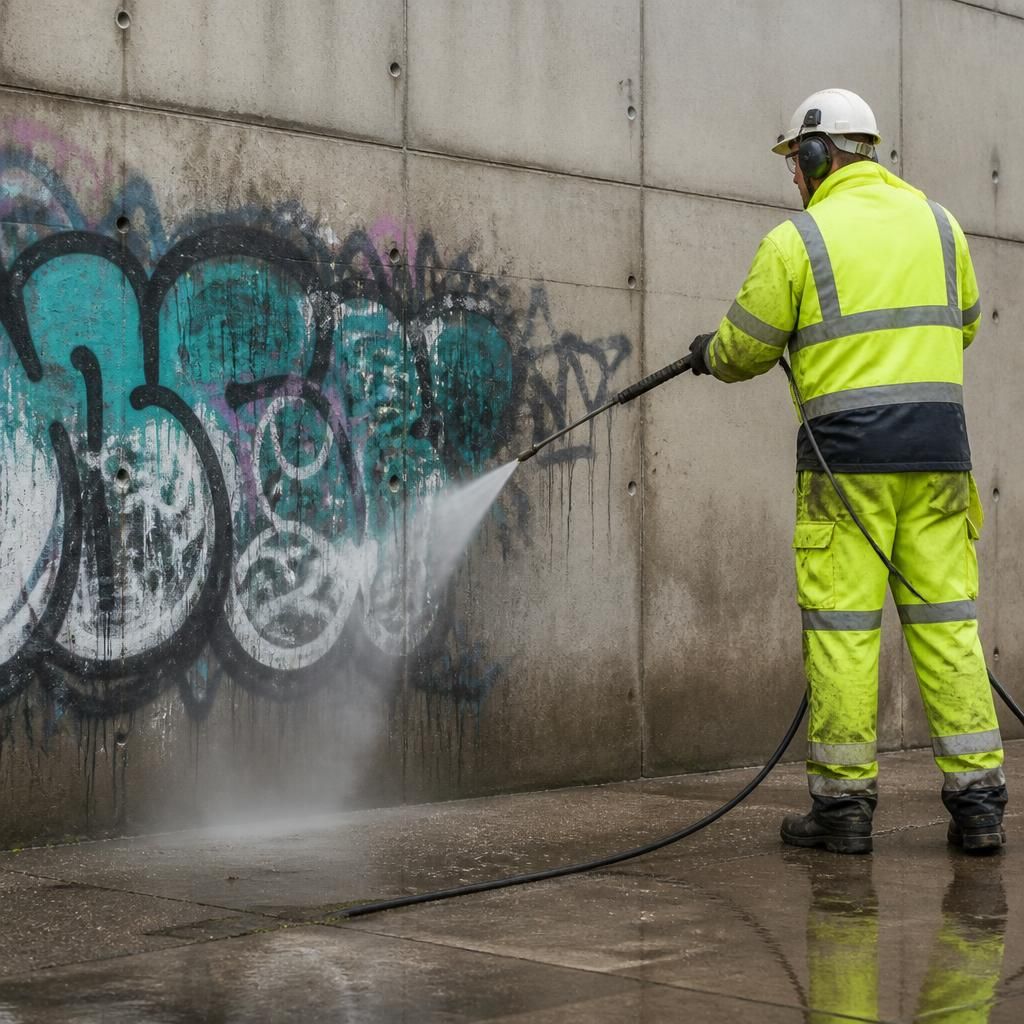
Commercial power washing can remove graffiti effectively when the cleaning method is matched to the paint and the underlying surface. Sound concrete, dense brick and other robust masonry may tolerate controlled pressure washing, while porous brick, render, soft stone and painted façades often require lower pressure, steam or a specialist graffiti remover.
A discreet test patch should be completed before the full treatment. This confirms whether the selected pressure, temperature and cleaning product will remove the graffiti without damaging the finish, spreading pigment or causing ghosting. It also helps determine whether adjacent surfaces, drainage points and access areas need additional protection during the work.
Arrange a Commercial Graffiti Removal Assessment
Arrange a commercial graffiti removal assessment so the affected surface, paint type, access requirements and runoff controls can be checked before treatment. We can then recommend the safest suitable cleaning method for your Birmingham, West Midlands or UK premises.