
What types of contaminants are commonly found in car parks and forecourts, and how are they effectively removed?
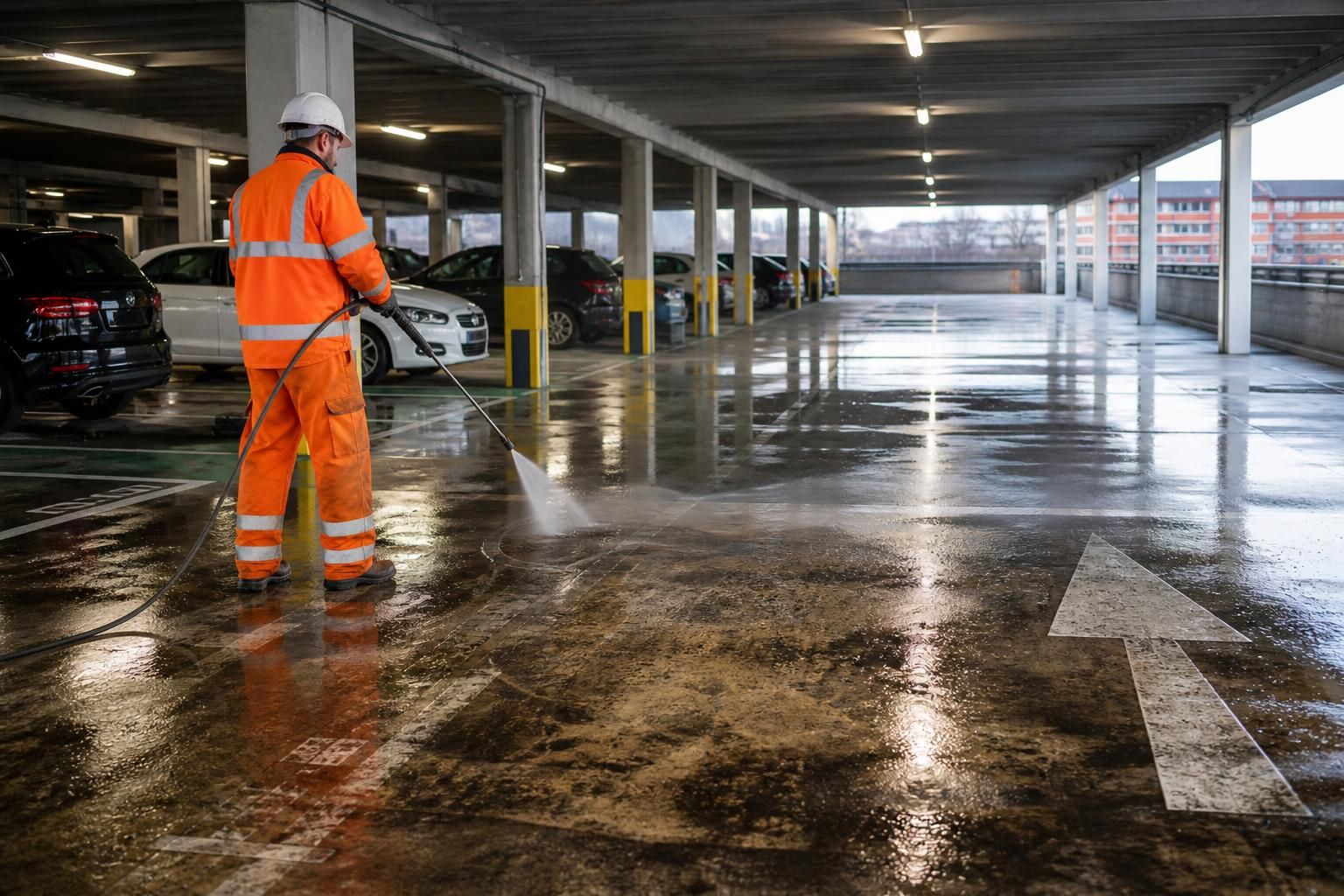
Car parks and forecourts commonly accumulate oil, fuel, grease, brake dust, tyre residue, dirt, algae, chewing gum, litter and graffiti. These contaminants are removed using methods matched to the surface and substance, including pressure washing, hot-water or steam cleaning, targeted degreasers, gum removal equipment, surface treatment and controlled wastewater recovery where required.
Car parks and forecourts commonly contain petroleum residues, oil, grease, brake dust, tyre deposits, road dirt, organic growth, chewing gum, litter, paint and graffiti. Effective removal depends on identifying the contaminant, assessing the surface and using the least aggressive method that will achieve a safe, clean result. Professional cleaning may combine mechanical sweeping, pressure washing, hot-water or steam cleaning, specialist detergents, targeted stain treatment and controlled wastewater recovery.
Contamination is rarely uniform across a site. Vehicle entrances, payment areas, parking bays, loading zones, fuel dispensing areas, ramps and drainage channels are exposed to different types and levels of soiling. A site assessment helps determine where contaminants have accumulated, whether they have bonded to the surface and how cleaning can be completed without damaging paving, concrete, asphalt, blockwork, coatings or line markings.
Oil, diesel, petrol and hydraulic fluid
Hydrocarbon contamination is common around parked vehicles, fuel pumps, service areas, delivery bays and plant access routes. Fresh spills may leave a slippery film, while older deposits can darken concrete and become embedded in porous surfaces. Fuel residues may also spread through vehicle traffic and rainfall.
Removal normally starts with absorbing or containing any fresh spill so it cannot migrate into drains or surrounding ground. A suitable degreasing treatment is then applied to break down the oil or fuel film. Agitation helps lift contamination from textured concrete and block paving before hot-water pressure washing or steam cleaning flushes the residue from the surface. On porous materials, more than one treatment may be necessary, and complete removal of an old stain cannot always be guaranteed if the contaminant has penetrated deeply.
Wastewater containing oil or fuel must be controlled rather than allowed to enter surface-water drainage. Recovery equipment, drain protection and appropriate disposal arrangements may be required, particularly at petrol forecourts, industrial sites and locations close to watercourses.
Grease, food deposits and general traffic grime
Grease and organic deposits can build up near food outlets, refuse storage areas, delivery points and heavily used pedestrian routes. Traffic grime is a mixture of dust, fine particles, exhaust residue, rubber, oil and other road-borne material. It often forms a dull film across concrete, asphalt, paving and kerbs.
Hot-water cleaning is effective against greasy films because heat softens the deposit and improves the action of the detergent. Pressure and agitation then remove the loosened material. Detergent selection should reflect the surface and drainage arrangements; excessive chemical strength can affect coatings, painted lines, jointing materials and nearby vegetation. Where practical, sweeping or vacuum recovery before washing reduces the amount of contaminated slurry produced.
Brake dust, tyre residue and rubber marks
Brake dust contains fine metallic and friction-material particles that settle around parking bays, ramps and turning areas. Tyres also leave rubber deposits, particularly where vehicles brake, turn sharply or accelerate. These marks can be visually prominent and may contribute to a slippery surface when mixed with oil and moisture.
Loose particles should be removed by sweeping or vacuuming before wet cleaning. Pressure washing, hot-water cleaning and suitable surface-safe detergents can lift bonded deposits. Rubber marks may need localised treatment and mechanical agitation rather than simply higher water pressure. Increasing pressure unnecessarily can scar concrete, strip coatings or damage jointing without improving the result.
Dust, soil, grit and construction residue
Windblown dust, mud, grit and aggregate are carried onto car parks by vehicles, pedestrians and nearby construction activity. Newly completed developments may also have cement film, mortar splashes, plaster, adhesive, paint or other building residue. These materials should be identified before cleaning because some require specialist treatment and must not be allowed to harden further.
Dry debris is generally removed first using sweeping or industrial vacuum equipment. Low- to medium-pressure washing can then clean the remaining film from suitable surfaces. Cement-based residue may require a carefully controlled specialist product, but acidic treatments should only be used following a surface assessment and with proper protection of metalwork, drainage systems, planting and adjacent finishes. Asphalt, resin-bound surfaces and decorative paving can be damaged by inappropriate chemicals or aggressive cleaning.
Algae, moss, lichen and other organic growth
Damp, shaded areas, poorly ventilated corners, ramps and drainage edges may develop algae, moss or lichen. Organic growth can make pedestrian routes and vehicle surfaces slippery, while roots and retained moisture may contribute to deterioration of joints and surface finishes.
Removal usually involves controlled pressure washing or steam cleaning, followed where appropriate by a compatible biocidal or preventative treatment. The treatment must be selected for the surface and used in accordance with its instructions. Simply washing away visible growth may provide only a temporary improvement if the underlying moisture problem remains. Blocked drainage, standing water, leaking downpipes and shaded accumulations should be addressed as part of the maintenance plan.
Chewing gum and sticky residues
Chewing gum is most often found near entrances, pedestrian crossings, benches, payment machines and retail areas. It bonds strongly to concrete and paving, becomes more noticeable as it collects dirt and can be difficult to remove with cold water alone.
Specialist gum-removal equipment uses heat, steam or a suitable treatment to soften the residue so it can be lifted with controlled agitation. Localised treatment is preferable to unnecessarily cleaning a large surrounding area. The operative must take care around painted markings, sealants, paving joints and sensitive finishes.
Litter, organic waste and spill residues
Paper, plastic, packaging, leaves, food waste, cigarette ends and other litter can obstruct gullies and create hygiene or fire risks. Organic waste may leave staining and unpleasant residues, especially around bins and sheltered corners.
Waste should be collected and segregated before washing begins. Sweeping and vacuuming remove loose material, while detergent-based cleaning deals with remaining residue. Drainage channels and gullies should be checked rather than simply washed over, as debris can be pushed into the drainage system and cause blockages.
Graffiti, paint and adhesive marks
Graffiti may be applied to walls, shutters, columns, signs, concrete, brickwork and other surfaces within or around a car park. Paint overspray, line-marking residue, stickers and adhesive can also occur after construction, maintenance or unauthorised signage.
Removal requires a surface-specific approach. Steam cleaning, controlled pressure washing, graffiti-removal products, poultice treatments or gentle mechanical methods may be suitable depending on the paint and substrate. The aim is to remove the unwanted material without spreading it, etching the surface or removing the original coating. A small test area is advisable before treating prominent or delicate surfaces. Wastewater and removed paint residues must be contained and disposed of appropriately.
Rust, limescale and mineral deposits
Rust staining can result from corroding metalwork, reinforcing materials, vehicle components or contaminated run-off. Limescale and other mineral deposits may form where hard water repeatedly dries on a surface, particularly around wash areas, taps and drainage points.
These marks are not removed in the same way as oil or dirt. A compatible specialist treatment may be needed, followed by thorough rinsing and, where appropriate, neutralisation. The product must be suitable for the substrate because acidic or chelating treatments can affect concrete, natural stone, metal, sealants and coloured finishes.
How the cleaning method is selected
- Contaminant: Oil, gum, algae, cement and graffiti each require different treatment chemistry and mechanical action.
- Surface: Concrete, asphalt, block paving, resin-bound surfacing, coated floors, brickwork and natural stone have different tolerances.
- Condition: Cracks, failed joints, loose coatings and degraded asphalt may be worsened by pressure or heat.
- Location: Fuel areas, enclosed car parks and sites near water require particular attention to ventilation, drainage and wastewater control.
- Operational requirements: Cleaning may need to be phased around vehicle movements, pedestrians, deliveries and access requirements.
Pressure washing is useful for removing general dirt and surface deposits, but it is not a universal solution. Hot-water pressure washing is generally more effective on grease and traffic film, while steam cleaning can provide controlled treatment for gum, sensitive areas and some bonded residues. Mechanical sweeping and vacuuming are important for removing loose debris and reducing contaminated run-off. Targeted detergents and stain treatments should be used only where they are compatible with the surface and the site’s drainage arrangements.
After cleaning, the area should be inspected for remaining stains, slippery films, blocked gullies, damaged markings and areas requiring further treatment. High-risk locations such as fuel dispensing points, ramps, pedestrian routes and loading bays may benefit from more frequent localised cleaning between planned full-site visits. Promptly dealing with spills and litter also prevents contaminants becoming embedded and reduces the amount of intensive cleaning required later.
For commercial and industrial sites, effective contaminant removal is therefore a managed process rather than simply washing the surface. Correct identification, suitable equipment, controlled water use, protection of drainage and appropriate disposal of residues are all needed to restore cleanliness while protecting the surface and maintaining safe access.
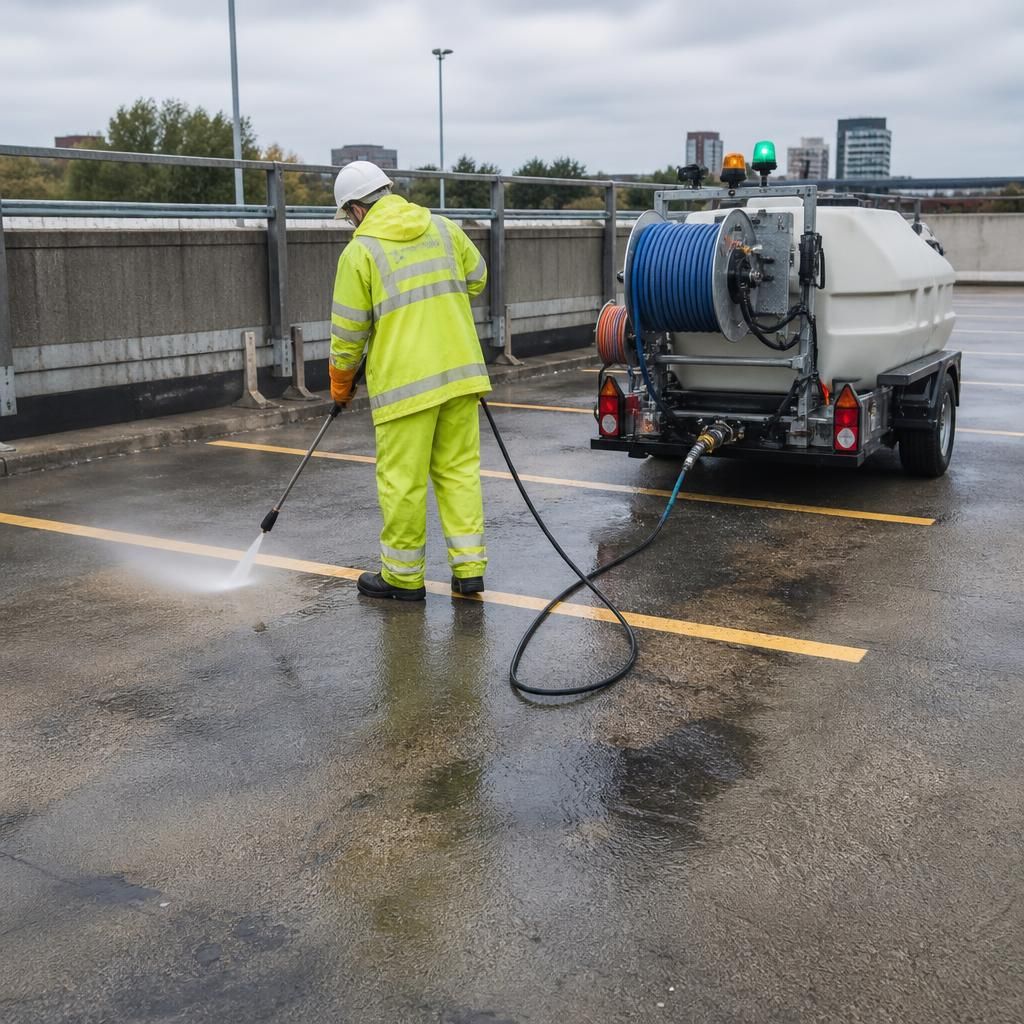
Effective contaminant removal depends on matching the cleaning method to both the substance and the surface. Oil and grease respond well to compatible degreasers followed by hot-water pressure washing, while chewing gum is better treated locally with steam or heat. Loose dirt, grit and litter should be swept or vacuumed before wet cleaning to prevent contaminated slurry spreading across the site.
Pressure and chemical strength should not be increased unnecessarily. Excessive force can damage asphalt, coatings, paving joints and line markings, while unsuitable products may affect drainage systems or nearby planting. At fuel areas and other high-risk locations, wastewater and residues should also be contained and recovered rather than allowed to enter surface-water drains.
Arrange a professional contaminant removal assessment
Arrange a professional contaminant removal assessment to identify the substances affecting your car park or forecourt and confirm the most suitable cleaning methods for each surface. Contact Encanto Exterior Cleaning to plan the work around site access, drainage controls and operational requirements.