
What specialised cleaning techniques are necessary for the specific surfaces within car parks and forecourts?
Different car park and forecourt surfaces require tailored cleaning methods: pressure washing suits robust concrete and paving, while lower-pressure or steam cleaning is safer for painted coatings, delicate façades, drainage areas and fuel forecourts. Specialist detergents, degreasers, rotary surface cleaners and controlled rinse-water recovery are selected according to the surface, contamination and environmental requirements.
Specialised cleaning techniques are necessary because concrete, tarmac, block paving, resin, painted coatings, drainage channels and fuel forecourt surfaces respond differently to pressure, heat, detergents and water. The correct method is selected after assessing the surface, its condition, the type of contamination, nearby drainage and the operational requirements of the site. Using the same high-pressure process everywhere can cause surface damage, spread pollutants or remove protective coatings.
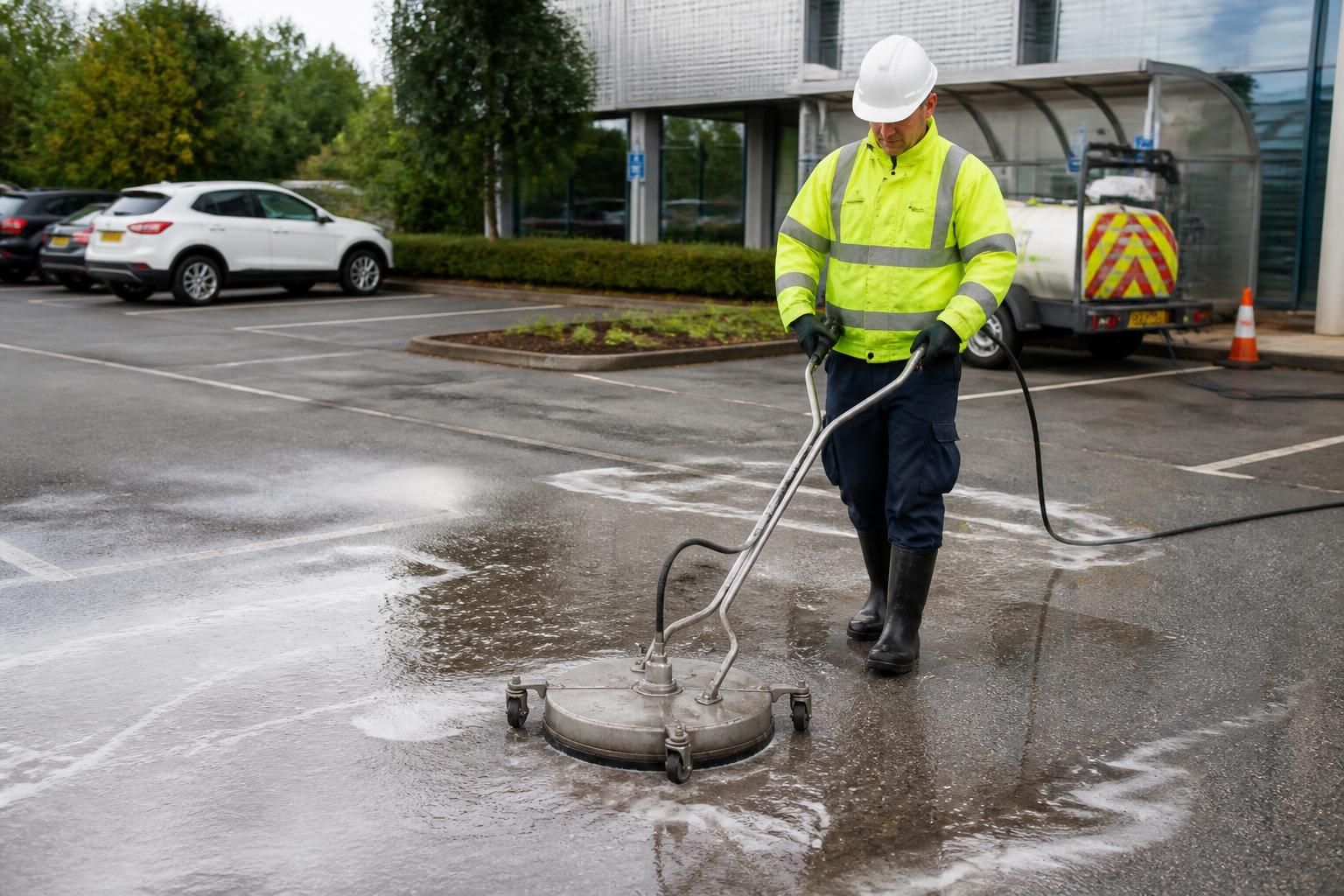
Concrete and reinforced concrete: Sound concrete can usually be cleaned with controlled pressure washing, preferably using a rotary surface cleaner to produce an even finish and reduce splash. A suitable alkaline detergent or traffic-film remover helps break down oil, rubber deposits, diesel residue, food waste and general grime before rinsing. Heavily oil-stained areas may need localised treatment and more than one application rather than excessive pressure, which can erode the cement matrix and leave visible scoring. Cracked or weakened concrete should be treated at lower pressure, with particular care around joints and exposed aggregate.
Tarmac and asphalt: Tarmac is more vulnerable to scarring, loosening and damage around worn edges than well-cured concrete. Cleaning therefore relies on moderate, controlled pressure, suitable fan settings and careful movement of the lance or rotary cleaner. Degreasers can be applied to oil and fuel contamination, but they must be compatible with the binder and thoroughly rinsed. Excessive heat or pressure can soften or displace the surface, particularly in warm weather or where the asphalt is already deteriorating. Any loose chippings, potholes or failed repairs should be identified before cleaning.
Block paving and concrete paving: Interlocking blocks can be cleaned with a rotary surface cleaner or controlled pressure washing, followed by a thorough rinse to remove loosened dirt from joints. Weeds, moss and organic growth may require targeted treatment rather than aggressive cleaning alone. The operator must avoid dislodging jointing sand, damaging the block surface or driving contamination into adjacent areas. Where joint sand has been removed, re-sanding may be required after the paving has dried, subject to the specification and condition of the installation.
Resin-bound and resin-bonded surfaces: Resin surfaces need a gentler approach because concentrated pressure, harsh solvents and excessive heat can disturb the resin or loosen aggregate. Low to moderate pressure, wide spray patterns and compatible detergents are generally more appropriate. Oil, chewing gum and tyre marks should be treated locally, with a small test area used first to confirm that the cleaner will not dull or soften the finish. Damaged or loose resin should not be mistaken for removable dirt; cleaning cannot restore failed surfacing.
Painted, line-marked and epoxy-coated floors: Car park bays, directional arrows, pedestrian routes and epoxy coatings should be cleaned with lower pressure and a controlled detergent application. A rotary cleaner may be suitable where the coating is sound, but the operator must avoid lifting edges, fading markings or creating a patchy appearance. Steam cleaning can remove greasy deposits with less water and may be useful in sensitive or enclosed areas. Abrasive pads, aggressive chemicals and concentrated jets should only be used where the coating manufacturer’s requirements allow them.
Multi-storey car park floors and ramps: These areas commonly combine concrete, painted markings, expansion joints, drainage channels and metal fittings. Cleaning is normally carried out in manageable sections so that dirty water does not flow across areas that have already been treated. Pressure is reduced around joints, cracks, sealants, columns and damaged concrete. On ramps, the method must also account for gradients and vehicle movement; standing water and residual detergent can create a slip hazard if they are not removed or allowed to drain safely.
Fuel forecourt surfaces: Forecourts require controlled degreasing and strict management of contaminated wash water. Fuel, diesel, lubricants, rubber and general traffic film should be loosened with a suitable oil-breaking detergent, then removed using pressure washing, steam cleaning or a combination of both. Steam can be particularly useful for localised fuel and gum deposits while reducing the volume of water used. Cleaning must protect pump islands, seals, electrical equipment, payment points and signage from direct spray. Wash water should be contained or recovered in line with the site’s drainage arrangements and applicable environmental requirements; it should not be allowed to enter surface-water drains unless authorised and suitably treated.
Drainage channels, gullies and kerbs: Drainage features often hold silt, oil, grit, leaves and other debris, so they require more than surface washing. Debris should be removed first, followed by controlled cleaning of the channel and surrounding kerb. High pressure may be used selectively on robust concrete, but care is needed around damaged grates, sealants and connections. Where contamination has entered a gully, it may require suction or specialist waste removal rather than simply flushing it further through the drainage system.
Metalwork, barriers and street furniture: Galvanised steel, painted metal, stainless steel bollards, guardrails and trolley bays should be cleaned at lower pressure with a neutral or material-compatible detergent. The process should avoid driving water into electrical fittings, bearings, joints and corroded areas. Chloride-containing or highly caustic products can stain or accelerate corrosion, particularly on galvanised and stainless-steel surfaces. After cleaning, these items should be rinsed appropriately and checked for coating failure, sharp corrosion or loose fixings.
Walls, cladding and covered areas: Façades, retaining walls, soffits and cladding adjacent to a car park or forecourt may need soft washing, steam cleaning or low-pressure cleaning rather than the same treatment used on the floor. The method depends on whether the surface is brick, render, powder-coated metal, composite cladding or painted masonry. Test cleaning helps establish the lowest effective pressure and prevents etching, coating loss or water penetration. Run-off must also be controlled so that loosened dirt does not stain paving or enter drainage channels.
Oil, chewing gum and tyre marks: These contaminants are best handled as localised treatments before the wider clean. Oil deposits may need a biodegradable degreaser and dwell time, while chewing gum can often be softened and lifted using steam or a suitable gum-removal process. Tyre marks may respond to controlled pressure and a compatible detergent, but repeated aggressive treatment can alter the appearance of coatings and resin surfaces. Spot treatment should always be blended into the surrounding area to avoid clean patches or shading.
Choosing the process: The cleaning team should inspect the surface, test a discreet area, identify drainage routes and select the lowest effective pressure, temperature and chemical strength. Rotary cleaning is useful for uniform hard surfaces; lance work is better for edges, kerbs and awkward details; steam is effective for localised grease and sensitive areas; and low-pressure soft washing is more appropriate for delicate vertical surfaces. Where wash water could carry oil, silt or chemicals into a drain, containment, recovery or an approved waste-handling arrangement should be built into the method statement.
Before work starts, the site should be divided into compatible cleaning zones and protected from vehicle and pedestrian traffic. After cleaning, the surface should be inspected for remaining contamination, coating damage, loose joints, blocked drainage and slip risks. This surface-specific approach produces a more consistent result while protecting the materials, markings and drainage infrastructure that keep car parks and forecourts safe and serviceable.
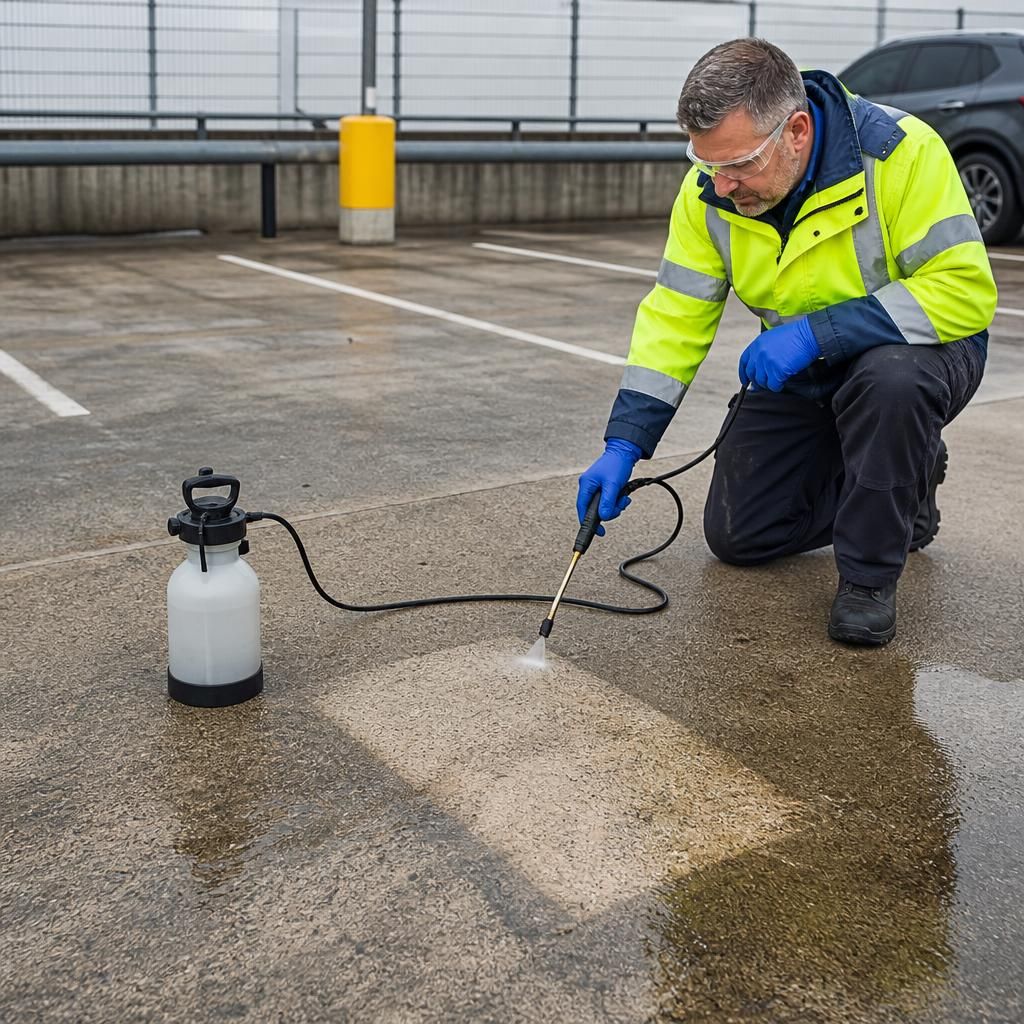
Surface testing is the essential first step in selecting a safe cleaning technique for a car park or forecourt. A discreet area is cleaned using a controlled combination of pressure, temperature and detergent, then checked for changes to the coating, aggregate, jointing material, colour and surface finish.
This assessment helps identify whether the surface can tolerate rotary pressure washing or requires a gentler method, such as steam cleaning, low-pressure washing or localised treatment. It is particularly important for resin-bound paving, painted line markings, epoxy coatings, ageing tarmac and areas around fuel pumps. The final method should use the lowest effective cleaning intensity, while drainage routes and wash-water controls are confirmed before work begins.