

What criteria should be used to evaluate the cost-effectiveness of car park and forecourt cleaning services?
The cost-effectiveness of car park and forecourt cleaning services should be evaluated by comparing the total cost with the quality, frequency and scope of work, including equipment, access, waste handling and traffic management. Also consider surface protection, safety and environmental compliance, disruption to operations, and whether regular professional cleaning reduces future repairs and maintenance costs.
Car park and forecourt cleaning is cost-effective when the total cost of the service is proportionate to the work delivered and the longer-term value created. Evaluation should therefore go beyond the quoted price and consider cleaning quality, service scope, safety, compliance, operational disruption, surface protection and the likely reduction in repairs, complaints and reactive maintenance.
Compare like-for-like quotations
Before comparing prices, confirm that each quotation covers the same areas, surfaces and tasks. A low price may exclude important elements such as oil and fuel stain treatment, gum removal, line and kerb cleaning, drainage channels, waste collection, high-level work or the cleaning of ramps and stairwells. The specification should identify:
- the total areas and specific zones to be cleaned;
- the expected cleaning standard and finish;
- the methods, equipment and cleaning products to be used;
- pre-treatment and stain removal requirements;
- wastewater, sludge and contaminated waste handling;
- traffic and pedestrian management;
- access equipment, out-of-hours working and any permits;
- preparation, rinsing, drying and post-cleaning inspection; and
- any exclusions, additional charges or remedial work.
A detailed written scope makes it easier to identify whether an apparently cheaper service simply provides less work.
Assess cleaning quality, not just visual improvement
Effective cleaning should remove the contaminants that affect appearance, safety and surface condition. In car parks and forecourts, this can include oil, diesel, grease, tyre residue, dirt, moss, algae, gum, litter and deposits around drainage points. Ask how difficult areas will be treated and how the contractor will verify the result. A suitable assessment may include a site inspection, agreed acceptance criteria, before-and-after records and a post-work check of high-risk or heavily contaminated areas.
Cleaning methods should also match the surface. Excessive pressure, unsuitable chemicals or poor rinsing can damage concrete, block paving, coatings, jointing, painted markings and drainage infrastructure. A service that leaves surfaces clean without causing avoidable deterioration is more cost-effective than one that creates additional repair or reinstatement work.
Consider the full lifecycle cost
The relevant cost is the total cost of ownership rather than the initial invoice alone. Regular removal of oil, organic growth and abrasive debris can help prevent contamination from becoming more difficult to remove and may reduce the need for intensive remedial cleaning. Keeping drainage channels, gullies and surface areas clear can also support site maintenance and reduce the risk of blocked drainage or standing water, although cleaning is not a substitute for drainage repairs.
When reviewing value, consider the potential cost of:
- premature surface repairs or replacement;
- repainting or reinstating worn markings;
- slips, trips, vehicle incidents or claims linked to poor housekeeping;
- complaints from customers, tenants or site users;
- unplanned closures and emergency cleaning; and
- loss of access or disruption to tenants and commercial operations.
A planned maintenance programme may provide better value than infrequent reactive cleaning, provided the frequency is based on traffic levels, contamination, weather, site use and the required presentation standard.
Review safety and compliance controls
Cost-effectiveness should include the way work is planned and controlled. A competent contractor should assess risks associated with moving vehicles, pedestrians, slips, pressurised equipment, chemicals, work at height, poor visibility and restricted access. The method statement should explain how areas will be isolated, how traffic will be managed and how the site will be returned safely to use.
Check that the service includes appropriate protection for staff, customers, vehicles and surrounding property. It should also address wastewater and contaminated residues so that run-off is controlled and disposed of responsibly. A low quote that relies on unsafe working, uncontrolled discharge or inadequate waste handling may expose the site operator to additional costs and compliance problems.
Include disruption in the calculation
The timing and organisation of cleaning can materially affect its value. A contractor should be able to explain whether the work can be completed in sections, during quieter periods or outside normal operating hours. Consider closure requirements, vehicle movements, drying time, noise, water availability and access to entrances, pumps, payment areas, delivery routes and pedestrian walkways.
The cheapest service is not necessarily the most economical if it requires a lengthy closure or causes avoidable disruption. Conversely, a more carefully planned service may cost more per visit while reducing lost access and allowing the site to remain operational.
Evaluate equipment, methods and efficiency
Equipment should be appropriate to the scale and condition of the site. Pressure washing, hot-water cleaning, steam cleaning, mechanical scrubbing, vacuum recovery and targeted chemical treatment each have different uses. The best approach may combine methods rather than applying one technique across every surface.
Ask whether the contractor has the equipment and access arrangements needed to complete the work efficiently, including water recovery where required, suitable hoses and surface cleaners, gum-removal equipment, scrubber dryers or access equipment. Efficient equipment can reduce labour time and disruption, but it should not be used as a reason to apply excessive pressure or rush preparation and inspection.
Check environmental performance
Environmental controls form part of financial value because poor practice can result in clean-up costs, enforcement action or damage to drainage and surrounding areas. Review how the contractor manages water use, chemical selection, wastewater recovery, sludge and contaminated materials. Products should be suitable for the surface and used at the correct concentration, with run-off prevented from entering drains where it could cause pollution.
Where appropriate, ask whether water recovery, low-water methods or targeted treatment can reduce resource use without compromising the required standard. Environmental claims should be supported by a clear method rather than general statements.
Examine reliability and evidence of competence
A reliable service delivers the agreed scope at the agreed time and provides clear communication when site conditions change. Relevant evidence may include method statements, risk assessments, training records, insurance details, waste documentation and examples of comparable car park or forecourt work. References or documented inspection records can help confirm that the contractor consistently achieves the required standard.
Clarify who will supervise the work, how defects or missed areas will be reported, and whether a return visit is included when the agreed result has not been achieved. Clear communication and accountability have practical value, particularly for multi-site portfolios and managed premises.
Assess contract flexibility and measurable outcomes
For ongoing cleaning, the agreement should define visit frequency, response times, inspection arrangements, additional works and review points. It should also allow the programme to be adjusted when traffic patterns, tenancy, construction activity, weather or contamination levels change. A rigid schedule can create unnecessary cost, while an inadequate frequency can allow contamination and surface damage to build up.
Useful measures include completion against the agreed scope, the condition of key areas after cleaning, response to reported issues, disruption caused and any recurring defects. These measures provide a more reliable assessment than price alone and help determine whether the cleaning plan remains suitable.
In practice, the strongest evaluation combines a like-for-like specification, whole-life cost assessment and a review of quality, safety, environmental controls and operational impact. A service represents good value when it consistently delivers the required clean, protects the site and its users, limits disruption, meets legal and environmental responsibilities, and reduces avoidable reactive costs over time.
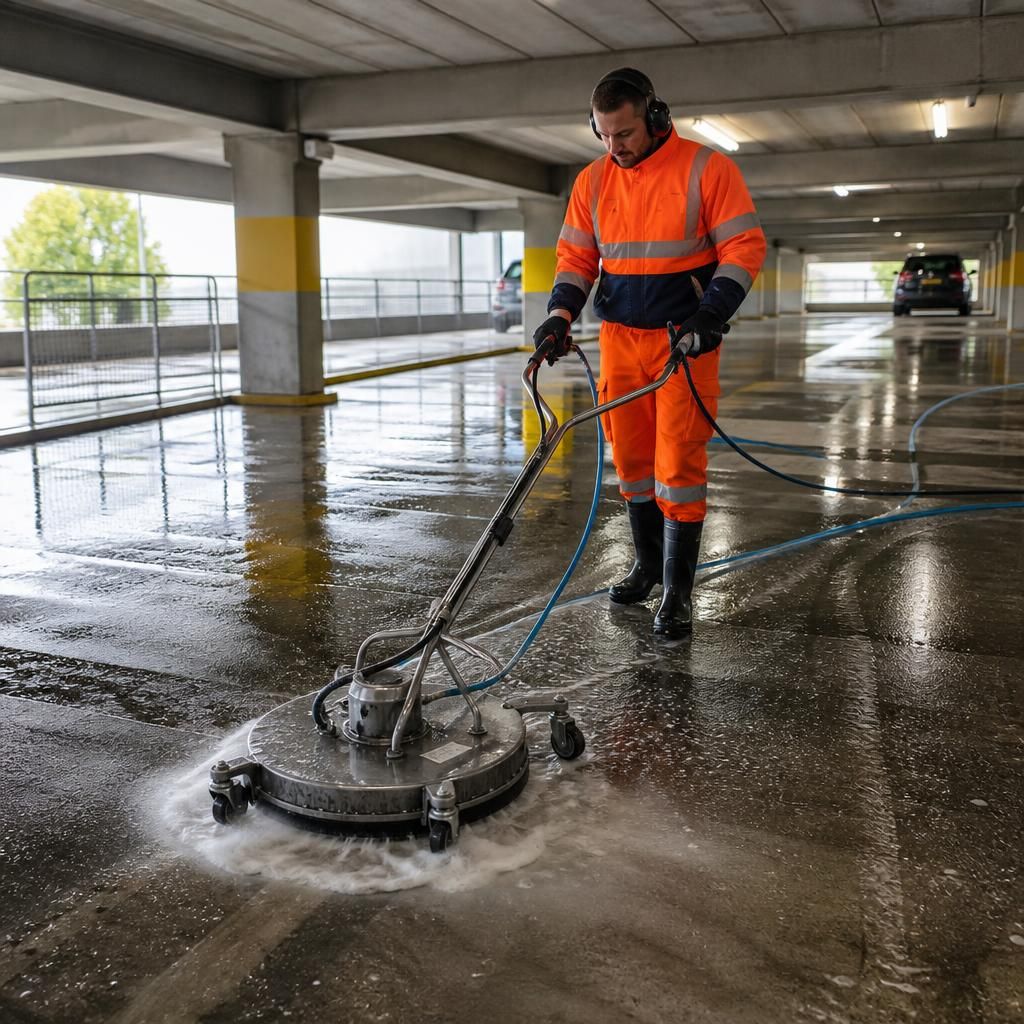
The most reliable way to assess the cost-effectiveness of car park and forecourt cleaning is to compare the total service delivered, not simply the quoted price. Each quotation should clearly state the areas included, cleaning methods, stain treatment, line and kerb cleaning, drainage work, wastewater handling, traffic management and any access or out-of-hours requirements.
A lower price may represent a narrower scope and leave oil deposits, gum, heavily soiled areas or contaminated wastewater for the site operator to manage. It is also important to consider longer-term value: suitable cleaning methods can help protect surfaces, reduce reactive maintenance and limit disruption caused by complaints, blocked drainage or unplanned remedial work. A detailed specification, agreed cleaning standard and post-work inspection make these differences easier to identify.