
What are the key benefits of integrating advanced cleaning technologies in car park and forecourt maintenance?
Integrating advanced cleaning technologies, such as pressure washing, steam cleaning and water recovery systems, improves car park and forecourt maintenance by removing oil, fuel residue, grime and traffic film more effectively. These methods help improve safety and appearance, protect hard surfaces, reduce environmental impact and minimise disruption to business operations.
Integrating advanced cleaning technologies into car park and forecourt maintenance improves cleaning performance, safety, surface protection and operational efficiency. Controlled pressure washing, steam cleaning, specialist surface-cleaning equipment and water recovery systems remove oil, fuel residue, tyre deposits, chewing gum, algae and traffic film more effectively than basic manual methods, while helping to manage wastewater and reduce disruption to site users.
More effective removal of hazardous contaminants
Car parks and forecourts collect contaminants that are difficult to remove with routine sweeping alone. Oil, diesel, hydraulic fluid and fuel residues can create a slippery film, particularly around parking bays, payment areas, loading zones and petrol pumps. Advanced cleaning equipment applies water, heat, pressure and, where appropriate, compatible cleaning agents in a controlled way. This breaks down bonded grime and lifts contaminants from textured concrete, asphalt and paved surfaces.
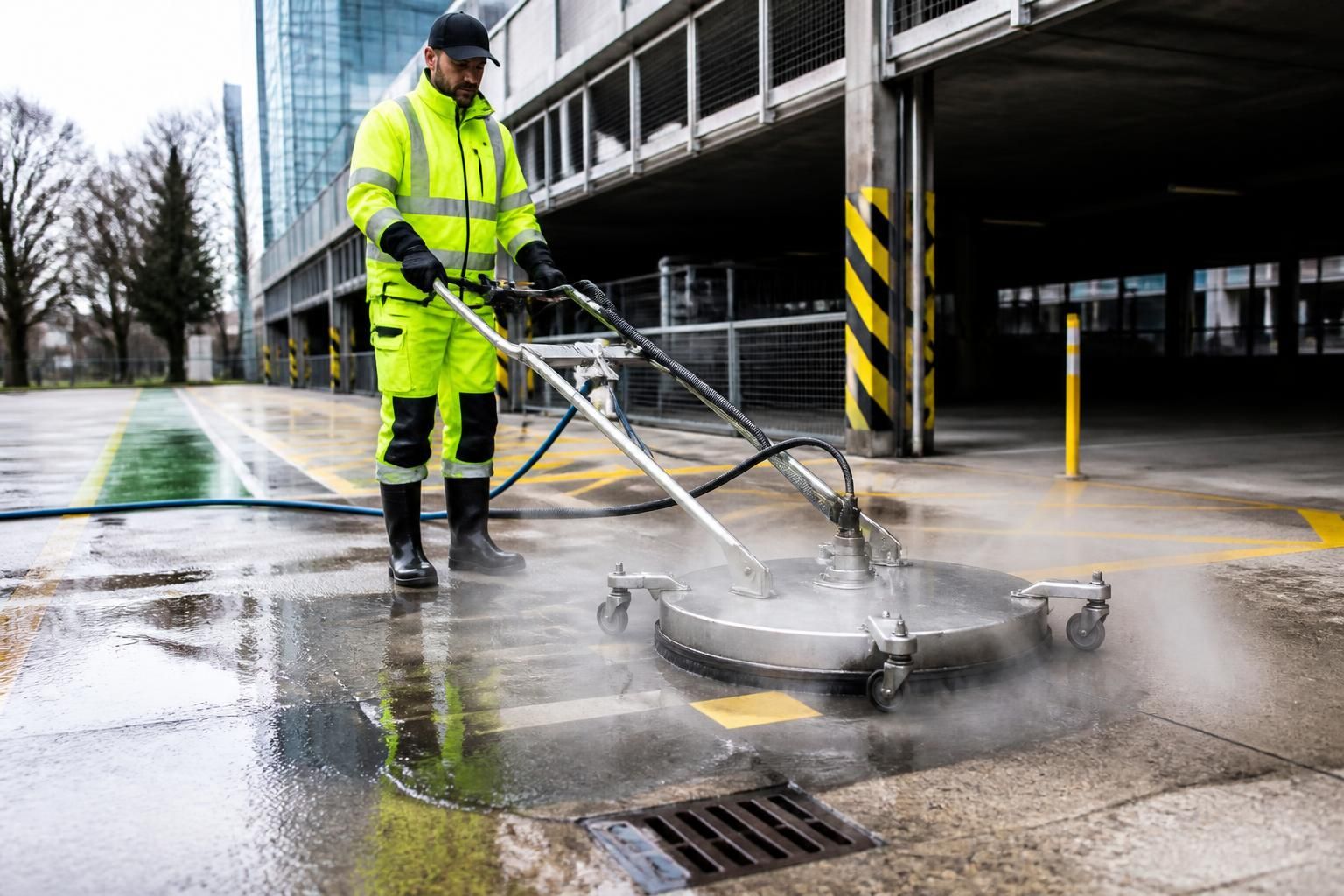
Surface-cleaning attachments can distribute pressure evenly across larger areas, helping to prevent untreated strips and reducing splash compared with using an uncontained lance. Steam cleaning is useful where lower water volumes, heat-based degreasing or more precise treatment are required. The correct method depends on the surface, the contaminant and the drainage arrangements at the site.
Improved pedestrian and vehicle safety
Removing oily deposits, algae, moss and accumulated dirt helps reduce slip risks for pedestrians and loss of traction for vehicles. Cleaning also makes defects, faded markings, damaged kerbs, trip hazards and drainage problems easier to identify during inspection. On forecourts, treating fuel residue promptly is particularly important because repeated contamination can spread across vehicle and pedestrian routes.
Cleaning technology supports safety, but it does not replace proper site controls. Work should still be planned around vehicle movements, access routes, fuel-handling risks, electrical equipment and weather conditions. Appropriate exclusion zones, warning signs, personal protective equipment and a controlled handover of wet areas remain essential.
Protection of hard surfaces and site assets
Well-controlled cleaning removes contamination without relying on excessive mechanical scrubbing or unnecessarily aggressive pressure. This helps protect concrete, block paving, asphalt, coated surfaces, painted lines, expansion joints and drainage features from avoidable damage. Operators should select pressure, temperature, nozzle type, cleaning solution and dwell time according to the material being treated.
Regular removal of oil, organic growth and embedded grime can also help prevent contaminants from becoming more firmly established. It will not correct underlying problems such as failed sealant, cracking, subsidence or defective drainage, so these conditions should be recorded and referred for repair rather than concealed through cleaning.
Better appearance and a more consistent professional standard
Advanced equipment produces a more even finish across large areas than unplanned spot cleaning. Removing traffic film from ramps, circulation lanes and parking bays helps restore the intended appearance of the surface, while careful treatment around kerbs, signage, entrances and pedestrian routes improves overall presentation.
For retail parks, commercial properties, distribution sites and public facilities, a clean external environment supports clear wayfinding and shows that the premises are being managed properly. Cleaning should be combined with suitable waste removal, graffiti treatment, gum removal and maintenance of markings where these are part of the site standard.
Reduced water use and improved wastewater control
Technologies such as steam cleaning and targeted pressure washing can reduce unnecessary water use by applying the treatment only where it is needed. Water recovery equipment can collect slurry and contaminated wash water rather than allowing it to enter surface-water drains. This is particularly important where oil, fuel or chemical residues are present.
Collected wastewater must be handled in accordance with the site’s drainage arrangements and applicable environmental requirements. It should not be discharged to a surface-water system simply because the area appears clean. A suitable method may involve recovery, containment, filtration or discharge to an approved foul-water connection, subject to permission and local requirements. Cleaning plans should identify drainage points, interceptors and spill-control arrangements before work begins.
Faster treatment of large or difficult areas
Commercial car parks and forecourts often contain extensive paved areas, ramps, stairways, service yards and restricted zones. Ride-on or rotary surface-cleaning equipment can cover open areas efficiently, while pressure lances, steam systems and specialist attachments provide control around edges, bollards, columns, kerbs and equipment. Access equipment may be required for elevated signs, façades, canopies or multi-storey car park structures.
The benefit is not simply speed. Matching the equipment to each part of the site helps maintain a consistent standard while allowing detailed work in areas where larger machinery cannot operate safely. A competent contractor will normally divide the site into work zones and select methods for each surface and contamination type.
Less disruption to business operations
Advanced cleaning methods can support phased or out-of-hours maintenance, reducing the number of parking bays, pumps, entrances or circulation routes that need to be taken out of use at one time. Water recovery can also reduce standing water and the time needed before an area is safely reopened, although drying time will still depend on weather, ventilation, surface condition and the amount of water used.
For busy sites, the cleaning plan should set out access restrictions, equipment movements, temporary closures, delivery conflicts, pedestrian diversions and the sequence for reopening each zone. Cleaning around peak trading, collection and delivery periods can help maintain normal operations without compromising safety.
More repeatable maintenance results
Advanced equipment provides greater control over the application of pressure, heat, water and cleaning solutions. When combined with a documented method statement and site-specific risk assessment, this makes results easier to repeat during planned maintenance visits. Before-and-after inspections can identify areas requiring additional treatment and help inform the next cleaning schedule.
Consistency is especially useful where several locations operate under the same facilities-management requirements. Records should note the surfaces treated, contaminants found, drainage controls used, areas requiring repair and any restrictions encountered. This creates a practical maintenance history rather than relying solely on visual impressions.
How to integrate the technology effectively
- Survey the site first. Identify surface materials, drainage routes, fuel or oil contamination, access limitations, electrical risks, pedestrian routes, traffic flow and areas requiring specialist access.
- Choose the method for the contamination. Use controlled pressure washing for general traffic film and hard-surface cleaning, steam for targeted degreasing or lower-water applications, and specialist equipment for gum, graffiti, organic growth or difficult deposits.
- Protect drainage and the surrounding environment. Prevent contaminated water from entering unsuitable drains and confirm how recovered water, slurry and waste materials will be contained and disposed of.
- Plan safe working zones. Agree closures, signage, barriers, vehicle controls, pedestrian diversions and reopening checks with the site representative.
- Inspect and document the result. Check for remaining contamination, pooling water, damage, blocked drainage and defects that need a separate repair. Record any recommendations for ongoing maintenance.
Advanced cleaning technology is most effective when it forms part of a planned maintenance programme rather than being used as a substitute for repairs or spill response. The appropriate frequency depends on traffic levels, vehicle and fuel activity, surface type, weather exposure, organic growth and the site’s safety and presentation requirements. Combining routine inspections with scheduled deep cleaning allows contamination to be addressed before it becomes a greater safety, environmental or operational problem.
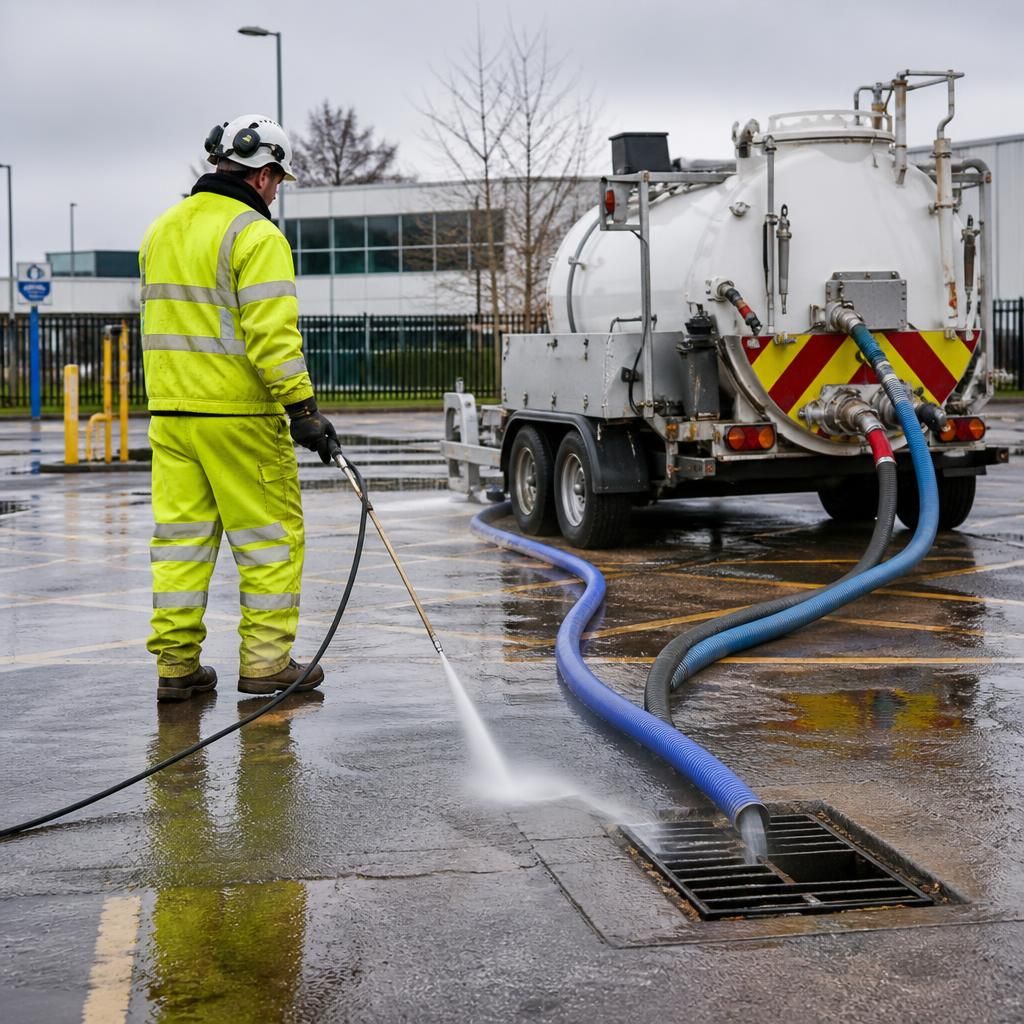
Water recovery systems improve car park and forecourt maintenance by collecting contaminated wash water, slurry and loosened debris instead of allowing them to spread across the site or enter unsuitable surface-water drains. This is particularly important where oil, fuel residue and other pollutants are present.
Used alongside controlled pressure washing or steam cleaning, recovery equipment helps keep surrounding areas cleaner and supports safer reopening after the work. It also allows the cleaning process to be planned around the site’s drainage arrangements, including gullies, interceptors and approved foul-water connections. Recovered water must be contained, filtered or disposed of in accordance with the site requirements and applicable environmental controls.
Before cleaning begins, the contractor should identify drainage points, establish spill controls and agree how wastewater will be managed. This makes advanced cleaning technology a practical part of responsible maintenance rather than simply a faster way to wash hard surfaces.
Discuss Your Car Park & Forecourt Maintenance Plan
Discuss your car park and forecourt maintenance plan with Encanto Exterior Cleaning to identify suitable cleaning methods, drainage controls and scheduling requirements for your site. We can help you plan safe, effective maintenance with minimal disruption to daily operations.