
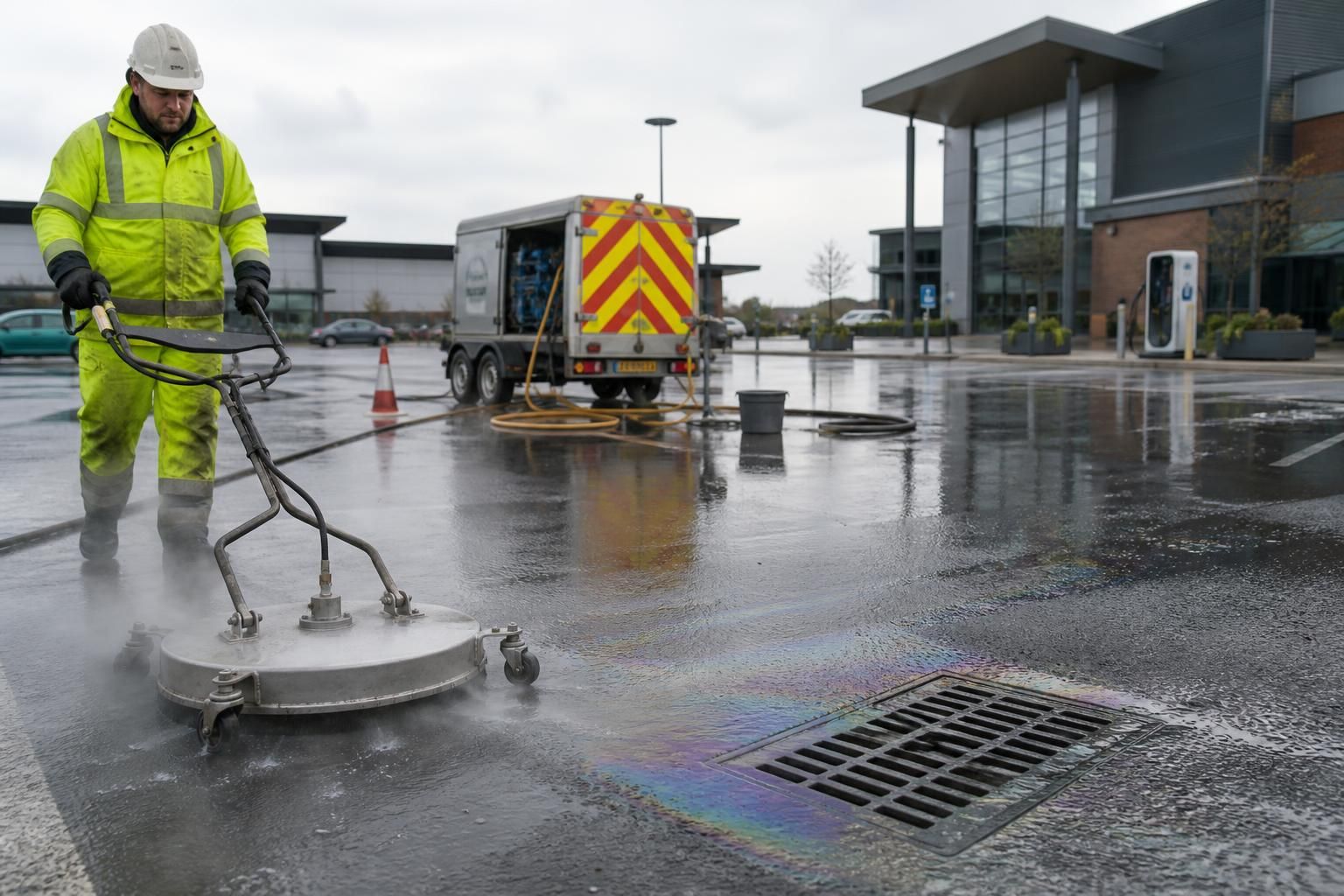
What are the environmental considerations involved in car park and forecourt cleaning?
The main environmental considerations in car park and forecourt cleaning are controlling water use, preventing contaminated runoff from entering drains or watercourses, selecting suitable low-impact cleaning products, and disposing of waste responsibly. Effective planning, targeted pressure washing or steam cleaning, and appropriate wastewater recovery help achieve a thorough clean while reducing pollution and resource use.
Environmental considerations in car park and forecourt cleaning centre on using water and energy efficiently, preventing contaminated runoff, choosing cleaning products carefully, and managing recovered waste lawfully. Oil, fuel, brake dust, rubber deposits, silt, litter and chemical residues can be washed into surface-water drains if the work is not properly contained. A responsible cleaning plan therefore considers the site’s drainage, surface, contaminants, cleaning method and wastewater arrangements before work begins.
Control water use at the source
Pressure washing can use substantial quantities of water when carried out indiscriminately. The most effective approach is targeted cleaning: treating heavily soiled areas, using suitable pressure and flow settings, and avoiding repeated passes over surfaces that are already clean. Where appropriate, steam cleaning or other low-water methods can reduce water demand, particularly for localised oil, chewing gum or ingrained deposits.
Water use should also be matched to the surface and the contaminant. Excessive pressure or prolonged washing can damage jointing, coatings, line markings and vulnerable concrete, creating additional maintenance and replacement requirements. Pre-sweeping and dry removal of loose dirt and litter can reduce the amount of water needed during the wet-cleaning stage.
Prevent polluted runoff
Runoff from a car park or forecourt may contain hydrocarbons, suspended solids, metals, detergents and other pollutants. It should not be allowed to flow uncontrolled into surface-water drains, open ground or nearby watercourses. Before cleaning starts, drain locations and flow paths should be identified, and vulnerable drainage points should be protected or isolated where appropriate.
Containment may involve drain covers, bunding, temporary barriers, wet vacuums or other recovery equipment. The correct arrangement depends on the site layout, the quantity and type of contamination, and whether the drainage system leads to foul sewer, surface water or an on-site treatment system. Water recovered from a petrol station forecourt, for example, requires particular care because it may contain fuel residues and other hazardous substances.
Cleaning operatives should never assume that a drain is suitable for contaminated discharge. The property owner or facilities team may need to confirm the drainage arrangements, while the cleaning contractor should agree how wastewater will be collected, treated, discharged or removed before the work begins.
Use cleaning products proportionately
Detergents, degreasers and biocidal products should be selected according to the contaminant and the surface being cleaned. Using a stronger product than necessary can increase environmental impact, create additional rinse-water demand and potentially damage coatings or landscaping. Product instructions, safety data and dilution requirements should always be followed.
Where a chemical is needed, suitable lower-impact or readily biodegradable options may be considered, provided they are effective for the task and compatible with the site’s drainage controls. Biodegradable does not mean that a product can be discharged without control: oil, heavy sediment and cleaning residues can still pollute drains and watercourses. Chemicals should be stored securely, mixed accurately and prevented from entering soil, planting beds and drainage systems.
On forecourts and other areas where fuel contamination is present, product selection must also account for fire safety, surface compatibility and the risk of spreading contamination. Cleaning products should not be used to disperse oil across a wider area or conceal a spill without recovering the resulting wastewater.
Recover and dispose of wastewater responsibly
Wastewater should be collected or controlled whenever it contains oil, fuel, substantial sediment, detergents or other contaminants. Recovery equipment can separate water from solids and surface pollutants, helping to prevent uncontrolled discharge. The resulting liquid and solid waste must then be handled in accordance with its composition and the applicable site and waste requirements.
Waste should be transferred only through suitable, authorised arrangements, with records retained where required. This may include contaminated silt, absorbent materials, disposable drain protection, oil residues and damaged or redundant cleaning materials. Waste should not be tipped onto land, poured into an unsuitable drain or left where rain can carry it into the drainage network.
Where discharge to a foul sewer is proposed, permission or acceptance from the relevant water and sewerage authority may be needed. Surface-water drainage commonly provides less scope for accepting contaminated cleaning water, so it should be treated as a pollution risk unless its suitability has been confirmed. Site-specific discharge conditions and local environmental requirements should be checked before cleaning begins.
Protect surrounding areas and drainage infrastructure
Work planning should include nearby planting, soil, watercourses, gullies, interceptors and neighbouring properties. Overspray can carry detergents and loosened contaminants beyond the cleaning area, while high-pressure water can disturb sediment in drains or wash pollutants beneath parked vehicles and equipment. Screens, controlled spray patterns and careful sequencing can help limit these effects.
Forecourts often include oil separators or interceptors that require inspection and maintenance. Cleaning can dislodge accumulated material, so the interceptor’s condition and capacity should be considered before work starts. It should not be treated as an unlimited means of disposing of wash water. Any unusually heavy contamination, spill or defective drainage should be reported to the responsible site contact and managed as an environmental incident where appropriate.
Consider energy, noise and emissions
Cleaning equipment uses electricity or fuel, and larger projects may also involve wastewater recovery vehicles, lighting and access equipment. Efficient planning can reduce unnecessary equipment movements, idling and repeat visits. Selecting equipment appropriate to the task avoids using a larger machine than necessary, while maintaining machinery properly helps it operate efficiently and prevents leaks.
Noise and spray can affect nearby occupants, pedestrians and neighbouring businesses. Work should be scheduled with consideration for the surrounding area, particularly at night or near residential premises. Operatives should also prevent fuel, hydraulic fluid and other maintenance substances from leaking onto the surface or entering drains.
Choose the least harmful effective method
No single cleaning technique is environmentally preferable in every situation. Pressure washing may remove broad areas of dirt efficiently, but it creates runoff that must be controlled. Steam cleaning can be useful for targeted deposits and may reduce water use, although it still requires suitable handling of loosened contaminants. Mechanical sweeping can remove dry litter and sediment with limited water, but collected material must be managed correctly.
The appropriate method should be based on the contamination, surface condition, drainage and required finish. Low-pressure cleaning may be preferable for delicate coatings or painted surfaces, while controlled hot-water cleaning can help remove oils without relying on excessive chemical use. Testing a small area first can prevent damage, unnecessary chemical application and avoidable repeat cleaning.
Build environmental controls into the cleaning plan
Before attendance, the cleaning team and site representative should agree access arrangements, parked-vehicle controls, drain locations, known spills, water and power availability, discharge arrangements and any sensitive receptors nearby. The plan should identify what happens if unexpected contamination, blocked drainage or a damaged interceptor is found.
During the work, operatives should inspect containment regularly, prevent solids from being pushed into gullies, and stop if recovered water cannot be controlled safely. On completion, drains, channels and surrounding areas should be checked, equipment and waste removed, and any pollution risk or site defect reported. These controls make environmental performance part of the cleaning process rather than an afterthought.
For an ongoing maintenance programme, environmental performance can be improved by combining routine litter and sediment removal with periodic deep cleaning. Keeping surfaces free from accumulated oil and debris reduces the need for aggressive treatment later. Reviewing water use, wastewater volumes, chemical consumption, incidents and waste records can also identify where the method or schedule should be adjusted.
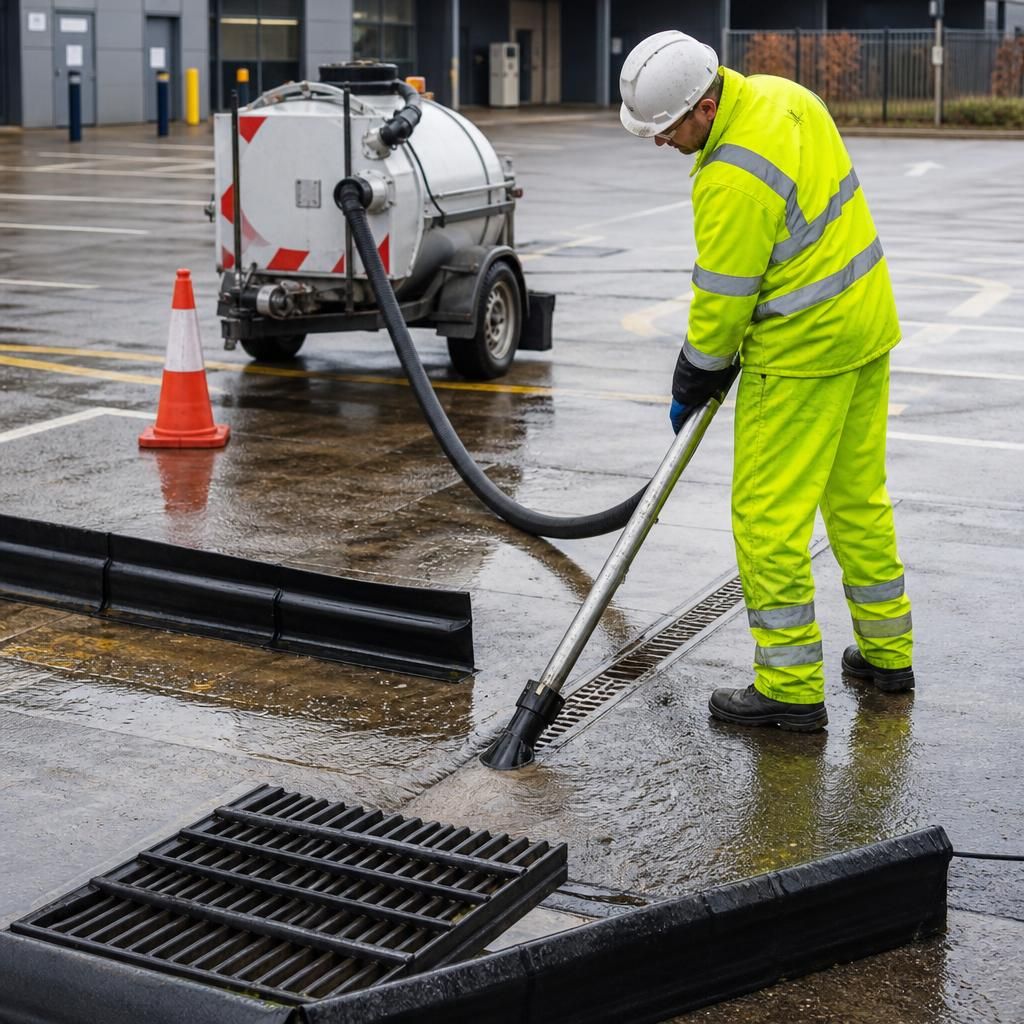
Containing contaminated wastewater is one of the most important environmental controls during car park and forecourt cleaning. Wash water can carry oil, fuel residues, brake dust, sediment and detergents into surface-water drains, soil or nearby watercourses. Before cleaning starts, the team should identify drainage routes, protect vulnerable gullies and agree how recovered water will be collected, treated or lawfully discharged.
Drain covers, temporary bunding and wet-vacuum recovery can help prevent uncontrolled runoff, but an interceptor should not be treated as an unlimited disposal route. If wastewater cannot be safely controlled, cleaning should pause until suitable arrangements are in place. Contaminated water, silt and absorbent materials must be handled through appropriate waste arrangements rather than poured into an unsuitable drain or left where rain can spread the pollution.
Plan environmentally responsible car park and forecourt cleaning
Speak to Encanto Exterior Cleaning about planning car park or forecourt cleaning with appropriate drainage protection, wastewater recovery and responsible waste arrangements. We can assess your site and agree a cleaning method suited to its surfaces, contaminants and environmental requirements.