
What specific techniques are used in multi-storey car park cleaning to ensure surface protection and efficiency?
Multi-storey car park cleaning uses controlled pressure washing, steam cleaning and targeted detergents, with pressure, temperature and chemical choice adjusted to suit concrete, asphalt, painted coatings and drainage areas. Methodical zoning, mechanical sweeping, suitable access equipment and effective water recovery help remove oil, dirt and contaminants efficiently while protecting surfaces and keeping disruption to users to a minimum.
Multi-storey car park cleaning combines controlled pressure washing, steam cleaning, mechanical sweeping, targeted detergents and managed water recovery. The cleaning method is selected according to the surface, contaminant, drainage arrangement and level of access, so that oil, traffic film, dirt and organic deposits are removed efficiently without unnecessarily wearing concrete, asphalt, painted coatings, expansion joints or protective finishes.
Site inspection and method selection
Before work begins, the car park is inspected to identify the construction materials, surface condition, drainage routes, oil contamination, damaged coatings, low-clearance areas and locations where water could affect users or adjoining premises. Existing cracks, failed joints, loose aggregate and flaking paint should be recorded because high-pressure cleaning can worsen defects that are already present.
The inspection also determines whether cleaning can be completed with water-based methods or whether a lower-moisture approach is more suitable. Pressure, temperature, nozzle type, cleaning distance and detergent choice are then adjusted to the surface rather than applying the same setting throughout the structure.
Preparation and zoning
Dividing the car park into manageable work zones improves efficiency and reduces disruption. A typical sequence includes:
- removing loose litter, grit and larger debris by hand or mechanical sweeper;
- protecting sensitive fixtures, electrical equipment, ventilation openings and nearby entrances;
- cordoning off the active work area and providing a safe route for pedestrians and vehicles where required;
- identifying drains, sumps and collection points before water is introduced; and
- cleaning from higher areas towards controlled collection points, avoiding the movement of contaminated water into previously cleaned zones.
Preparation prevents loose grit from being driven across the surface during pressure washing and limits the amount of water and detergent needed. It also makes it easier to monitor progress and return a zone to service as soon as it has been cleaned, rinsed and checked.
Controlled pressure washing
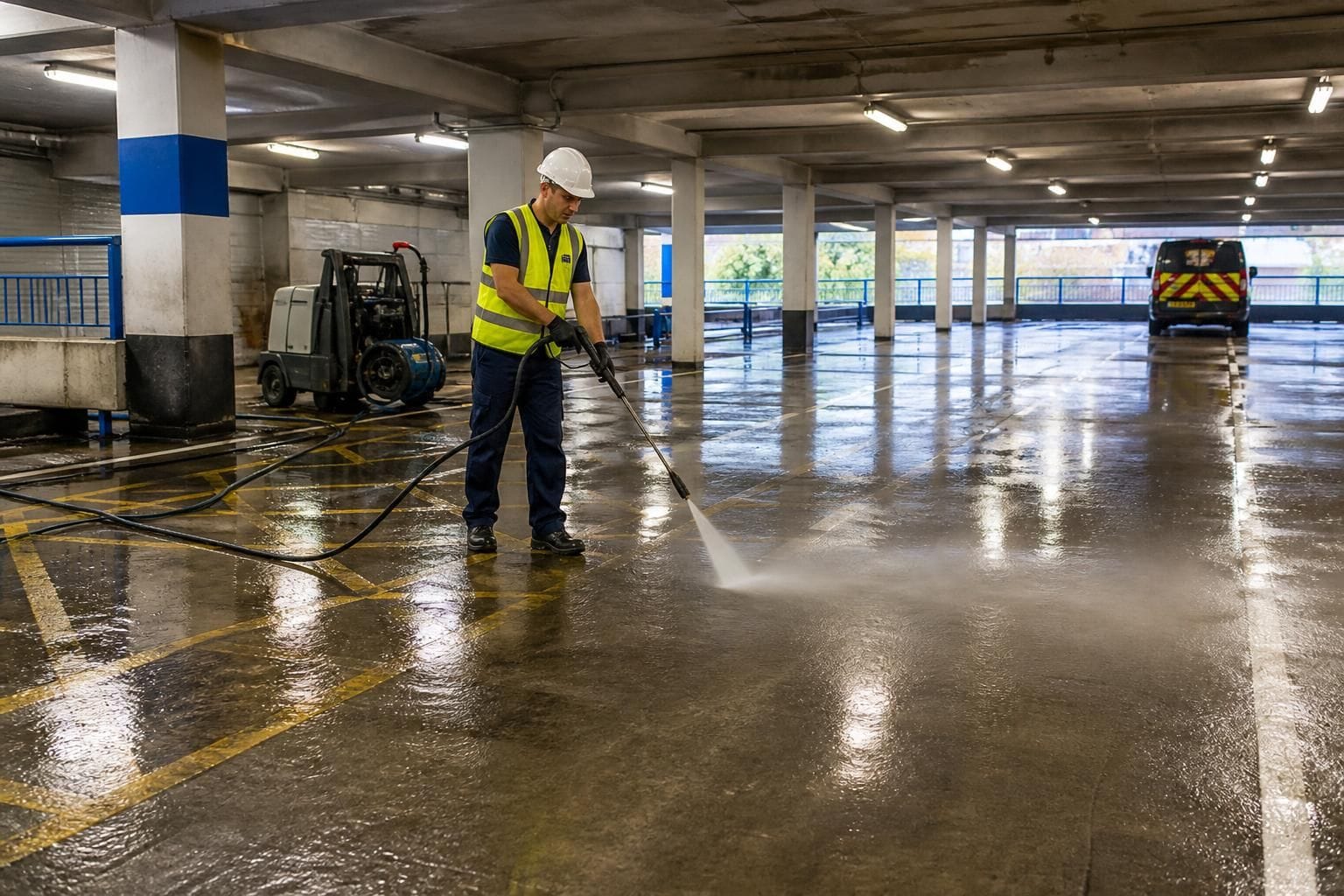
Pressure washing is effective for removing general dirt, tyre marks, algae, salts and traffic film from concrete, block paving and suitable coated surfaces. Surface protection depends on using the lowest effective pressure rather than treating maximum pressure as the most efficient option. Operators adjust the pressure, flow rate and nozzle pattern to the material and its condition, maintaining an appropriate working distance and avoiding concentrated spray on joints, cracks, edges and painted lines.
Flat-surface cleaners can help distribute pressure more evenly than a narrow lance and can improve productivity across broad concrete decks. However, they must still be used with care around damaged coatings, drainage channels and changes in level. Edges, corners, columns, ramps and stair approaches usually require slower, more targeted cleaning.
Where oil or hydraulic-fluid staining is present, a suitable degreasing product may be applied before rinsing. Dwell time is controlled so the product can break down the contaminant without drying on the surface. Excessive chemical use can damage coatings, affect drainage systems and increase the burden on wastewater management, so products are selected and diluted in accordance with the surface and manufacturer guidance.
Steam and low-moisture cleaning
Steam cleaning uses high-temperature water vapour, or a low-volume hot-water process, to loosen ingrained grease, gum, biological growth and deposits in areas where precise treatment is needed. It can be useful around ticket machines, kerbs, stairwells, wall edges, barriers and other detailed areas that are difficult to clean efficiently with broad pressure-washing equipment.
Lower water usage can also be advantageous where drainage capacity is restricted or contaminated runoff must be collected. Steam is not automatically suitable for every material: heat and moisture can affect some coatings, sealants, painted markings and sensitive components. A test area and controlled application help establish a safe method before wider cleaning takes place.
Targeted treatment of common contaminants
- Oil and fuel: absorbent materials, suitable degreasers, agitation and controlled rinsing are used to reduce slippery residues and staining. Runoff is managed so hydrocarbons are not simply moved to another part of the car park.
- Tyre marks and rubber deposits: a compatible detergent or mechanical agitation may be used, followed by measured rinsing. Aggressive abrasion is avoided on painted bays and resin systems.
- Algae, moss and organic growth: deposits are removed mechanically or with an appropriate treatment, with attention to damp areas, shaded ramps and drainage edges where regrowth is more likely.
- Salt and mineral deposits: deposits are dissolved or loosened using a compatible method rather than scraped aggressively, which can mark concrete or coatings.
- Graffiti and adhered substances: the removal technique is matched to the substrate and coating. Solvents, steam, specialist detergents or low-pressure methods may be considered after testing to avoid lifting paint or damaging the underlying finish.
Surface protection during cleaning
Protection involves more than reducing pressure. Operators also avoid prolonged saturation of vulnerable areas, prevent water being forced into movement joints, keep spray away from electrical fittings and use compatible detergents on resin, painted and sealed surfaces. Drain covers and collection systems are checked so they remain functional, while standing water is removed from ramps and pedestrian routes to reduce slip risk.
Test cleaning is particularly important where the surface has an anti-slip coating, line markings, waterproofing system or decorative finish. A small inconspicuous area can show whether the proposed pressure, temperature and chemical treatment will alter colour, texture or adhesion. If the result is unsuitable, the method can be changed before the full area is treated.
Water recovery and runoff control
Efficient car park cleaning includes controlling the water generated by the process. Squeegees, wet vacuums, pumps and suitable filtration or recovery equipment can collect slurry and contaminated water instead of allowing it to travel through the structure or enter an unsuitable drain. The correct disposal route depends on the contaminants, site drainage and applicable requirements.
Recovery also improves the finish because dirty water is not left to dry back onto the concrete. It reduces overspray, protects adjoining areas and helps the cleaning team work progressively through each zone. Where water use must be restricted, dry sweeping, localised steam cleaning and spot treatment can be combined with limited pressure washing rather than wet-cleaning every area indiscriminately.
Access equipment and difficult areas
Ramps, soffits, parapets, ventilation structures, stair cores and high-level walls may require telescopic equipment, water-fed poles, mobile elevated work platforms or other suitable access systems. The equipment is selected following a site-specific assessment, taking account of load limits, overhead obstructions, vehicle movements, ventilation and emergency access.
Using the right access method improves efficiency by allowing operators to reach difficult surfaces without excessive lance extension or unstable working positions. It also helps keep spray directed at the intended surface, which supports both cleaning quality and surface protection.
Final rinsing, drying and quality checks
After detergent and soil have been removed, surfaces are rinsed as necessary and excess water is recovered. The area is then checked for remaining oil, slippery residues, blocked drains, overspray, missed edges, disturbed markings and damage that may have become visible after cleaning. Ramps, pedestrian routes and access points should not be reopened until they are suitably clear and safe for use.
Cleaning records can note the methods used, products applied, affected zones, defects identified and any recommendations for repairs or preventative maintenance. This information supports future work because the cleaning team can refine pressure, chemical selection and frequency for each surface instead of starting from an unverified method on every visit.
In practice, the most efficient technique is a controlled combination of methods: mechanical removal for loose debris, targeted detergent for oil and staining, pressure washing for broad hard surfaces, steam or low-moisture cleaning for detailed or sensitive areas, and water recovery wherever contaminated runoff is produced. This approach delivers a consistent clean while limiting wear, water use, chemical exposure and disruption to car park operations.
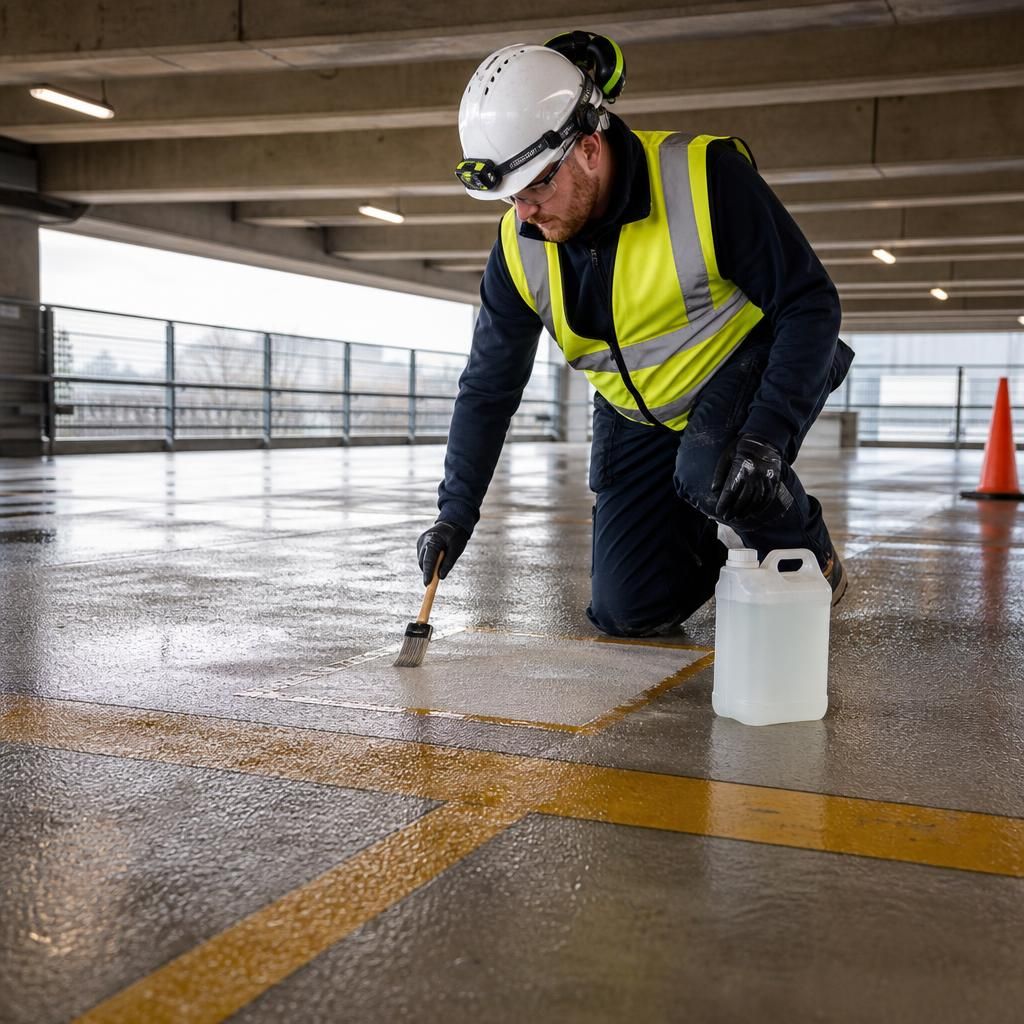
Surface protection in multi-storey car park cleaning starts with a small test area before full-scale pressure washing or steam cleaning. This confirms that the selected pressure, temperature, nozzle, working distance and detergent are suitable for the concrete, resin, paint, waterproofing system or line markings.
The cleaning method can then be adjusted before work progresses across the wider deck. This helps prevent coating damage, dislodged aggregate, faded markings and water being forced into joints, while targeted treatment and water recovery remove contamination efficiently.
Discuss your multi-storey car park cleaning requirements
Discuss your multi-storey car park cleaning requirements with our team to identify suitable cleaning methods, access arrangements and runoff controls for your site. We can help plan an efficient service that protects surfaces and minimises disruption.