
What factors should be considered when selecting a professional service provider for multi-storey car park cleaning?
Select a multi-storey car park cleaning provider based on relevant experience, robust health and safety procedures, suitable equipment, environmental controls, clear communication and transparent pricing. The provider should be able to plan work around traffic and access requirements, protect surfaces and drainage systems, and demonstrate the capacity to deliver consistent results across the entire site.
Select a multi-storey car park cleaning provider by assessing their relevant experience, safety controls, cleaning methods, equipment, environmental procedures, operational capacity and pricing clarity. The right contractor should be able to inspect the site properly, plan around vehicles and pedestrians, protect concrete and coated surfaces, manage wastewater responsibly and provide consistent results across all levels, ramps, stairwells and associated areas.
Relevant experience and scope of work
Multi-storey car parks require more than routine pressure washing. A suitable provider should have experience working in enclosed or partially enclosed structures, on sloping ramps, around parked vehicles and near sensitive drainage systems. Ask whether their previous work includes the full range of areas requiring attention, such as parking decks, entrance and exit lanes, ramps, columns, walls, staircases, lifts, pedestrian routes, kerbs, drainage channels and external façades.
Experience with comparable sites is particularly important where the car park serves a busy retail, residential, transport, healthcare or commercial facility. These environments may have different access restrictions, operating hours, security arrangements and pedestrian risks. A provider should be able to explain how its approach would be adapted to the construction, usage and condition of the specific car park rather than relying on a standard cleaning package.
Pre-work inspection and method statement
A professional assessment should take place before work begins. The survey should identify surface types, oil and fuel contamination, ingrained dirt, chewing gum, graffiti, algae, damaged concrete, blocked drains, standing water, low-clearance areas and locations where runoff could affect other parts of the site. It should also record access points, available water and power, ventilation, lighting, vehicle movements and areas that may need to remain open.
The provider should then produce a clear method statement and schedule. This should explain the proposed cleaning techniques, equipment, detergents, water management, work sequence, exclusion zones, drying requirements and arrangements for reopening each area. A properly prepared plan reduces disruption and makes it easier to compare quotations on a like-for-like basis.
Health and safety standards
Safety should be considered before price. Cleaning a multi-storey car park can involve moving vehicles, wet and slippery surfaces, powered machinery, chemicals, restricted visibility, work near edges and changes in level. The contractor should demonstrate a suitable risk assessment, method statement and site-specific control measures.
- Segregation of operatives from vehicles and pedestrians using barriers, signs and controlled work zones.
- Safe management of ramps, edges, stairwells and other fall or slip hazards.
- Appropriate personal protective equipment and training for pressure washing, steam cleaning and chemical use.
- Controls for electrical equipment, hoses, cables and machinery in wet conditions.
- Suitable ventilation and precautions where cleaning takes place in enclosed areas.
- Emergency arrangements, first-aid provisions and clear communication with the site contact.
Ask how the contractor will protect the public if sections of the car park remain in use. A credible plan should cover temporary closures, one-way traffic arrangements, marshal requirements and inspection of surfaces before they are returned to use.
Suitability of equipment and cleaning methods
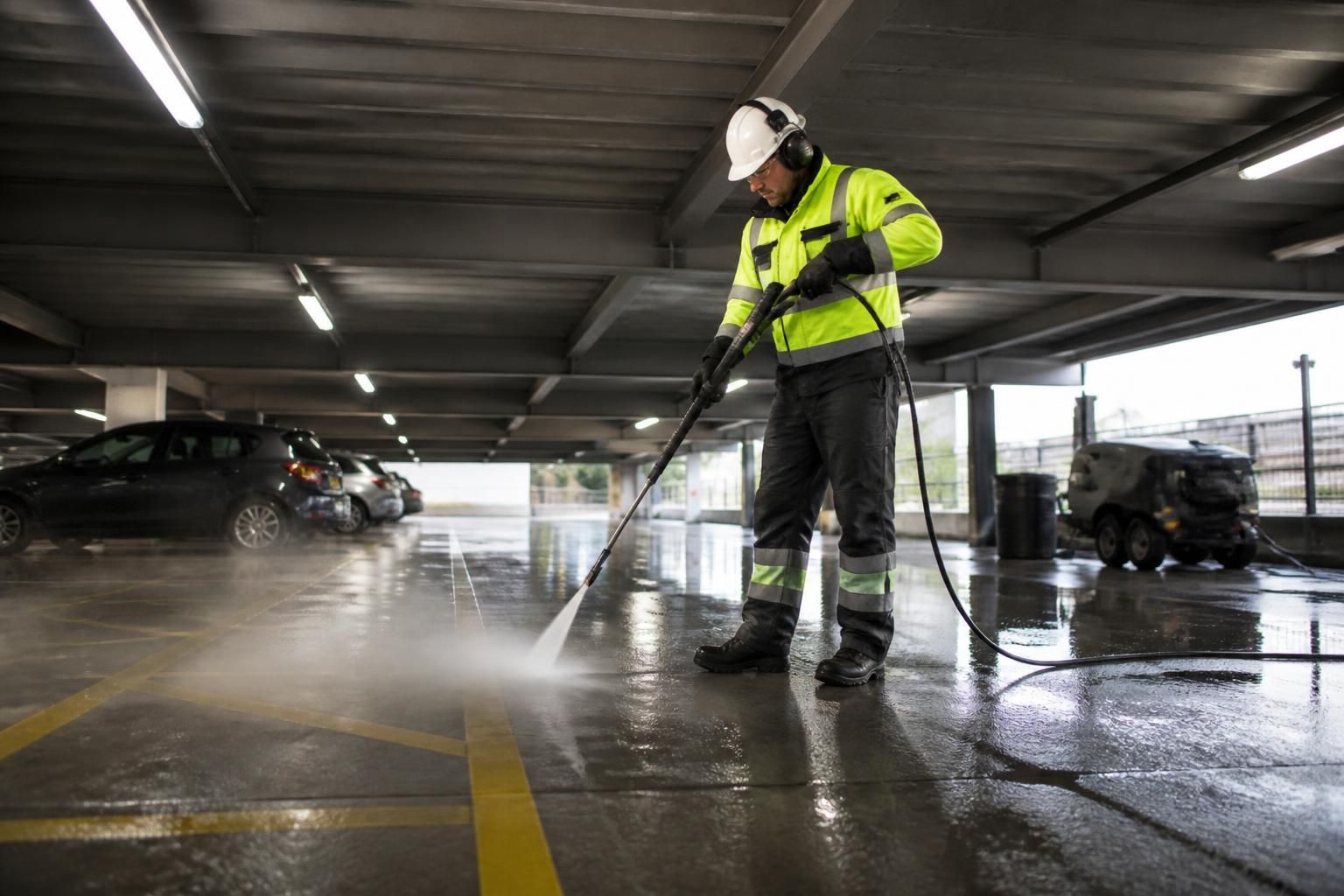
Equipment should match the surface, contamination and layout of the car park. Pressure washing can remove general dirt, road film and deposits efficiently, while steam cleaning may be more appropriate for targeted treatment or areas where lower water use and controlled application are important. Scrubbing equipment, wet vacuums and specialist attachments may help clean flat decks, corners, ramps and drainage channels without excessive overspray.
The provider should understand that excessive pressure, unsuitable nozzles or aggressive chemicals can damage concrete, jointing, line markings, protective coatings and painted surfaces. Ask how pressure and temperature will be controlled, whether cleaning solutions are compatible with the surface and whether a small test area will be completed before widespread treatment. The contractor should also have sufficient equipment and backup arrangements to complete the work without avoidable delays.
Water, wastewater and environmental controls
Car park wash water may contain oil, fuel residue, heavy dirt, tyre deposits, detergents and other contaminants. It should not be allowed to enter surface water drainage or surrounding ground without appropriate controls. The provider should explain how drains will be protected, how dirty water will be contained or recovered and how disposal will be handled in accordance with applicable requirements.
Useful environmental controls may include drain covers, bunding, wet vacuum recovery, filtration, controlled discharge and the careful selection and dilution of cleaning products. The contractor should avoid unnecessary water use, prevent overspray and keep chemical use proportionate to the contamination. Where the site has oil separators or other drainage infrastructure, the cleaning plan should account for their location and operating condition.
Access, traffic management and business continuity
A car park cleaning programme must fit the building’s operating requirements. Discuss working hours, peak periods, reserved spaces, delivery movements, height restrictions, loading areas, access for cleaning vehicles and any restrictions on water or power. The provider should be able to divide the work into manageable zones and maintain safe routes for users where complete closure is not practical.
For larger or regularly occupied sites, phased cleaning may reduce disruption. The schedule should state which areas will be unavailable, how long they are expected to remain wet or closed and who will be responsible for moving barriers and confirming that each area is safe to reopen. Clear arrangements are especially important where the car park is shared by tenants, visitors, residents or members of the public.
Quality assurance and protection of the structure
Cleaning should improve appearance without concealing defects or causing further damage. The contractor should distinguish between removable contamination and issues such as cracked concrete, failed sealants, corrosion, damaged coatings or deteriorating line markings. These defects may require separate repair or specialist treatment and should be reported rather than treated with increasingly aggressive cleaning.
Agree the expected standard before work starts. This might include removal of general dirt, oil staining, chewing gum, algae, litter residue or graffiti, together with the treatment of walls, ramps, staircases and drainage channels. A completion inspection, photographic record or written report can confirm what was cleaned, identify outstanding defects and provide a useful maintenance record.
Insurance, competence and compliance
Check that the provider has appropriate public liability and employer’s liability insurance, competent operatives and documented training relevant to the proposed work. Depending on the project, this may include training for pressure washing, chemical handling, work at height, access equipment, traffic management and safe use of powered machinery.
It is reasonable to request evidence of insurance, risk assessments, method statements and relevant policies before appointing a contractor. Membership of an industry organisation or possession of a certification can support an assessment, but it should not replace questions about how the work will actually be managed on the site.
Communication and contract management
The provider should nominate a clear point of contact and confirm how changes, access problems, weather disruption, newly discovered contamination and urgent safety issues will be handled. The quotation should identify the areas included, preparation and protection measures, cleaning methods, water and wastewater arrangements, working hours, exclusions and any conditions that could affect the final cost.
For ongoing maintenance, establish how inspections, repeat visits and defect reporting will be managed. Consistent communication helps the cleaning programme remain aligned with occupancy levels, refurbishment work, planned repairs and changes to the car park’s use.
Transparent pricing and overall value
The lowest quotation is not necessarily the most economical option if it excludes important areas, wastewater recovery, traffic controls or final inspections. Compare what each quotation includes and check whether costs may be added for difficult access, heavy oil contamination, graffiti, specialist equipment, restricted working hours or additional waste handling.
A sound quotation should provide enough detail to understand the proposed level of service. Value comes from an appropriate method, safe delivery, limited disruption, protection of the structure and dependable completion, not simply from the amount of water pressure or the speed of the initial clean.
Before making a decision, request comparable project examples, confirm the planned method with the site requirements and ask practical questions about safety, drainage, access and reporting. A provider that gives specific, site-based answers and documents its controls is better placed to deliver a safe and durable multi-storey car park cleaning service.
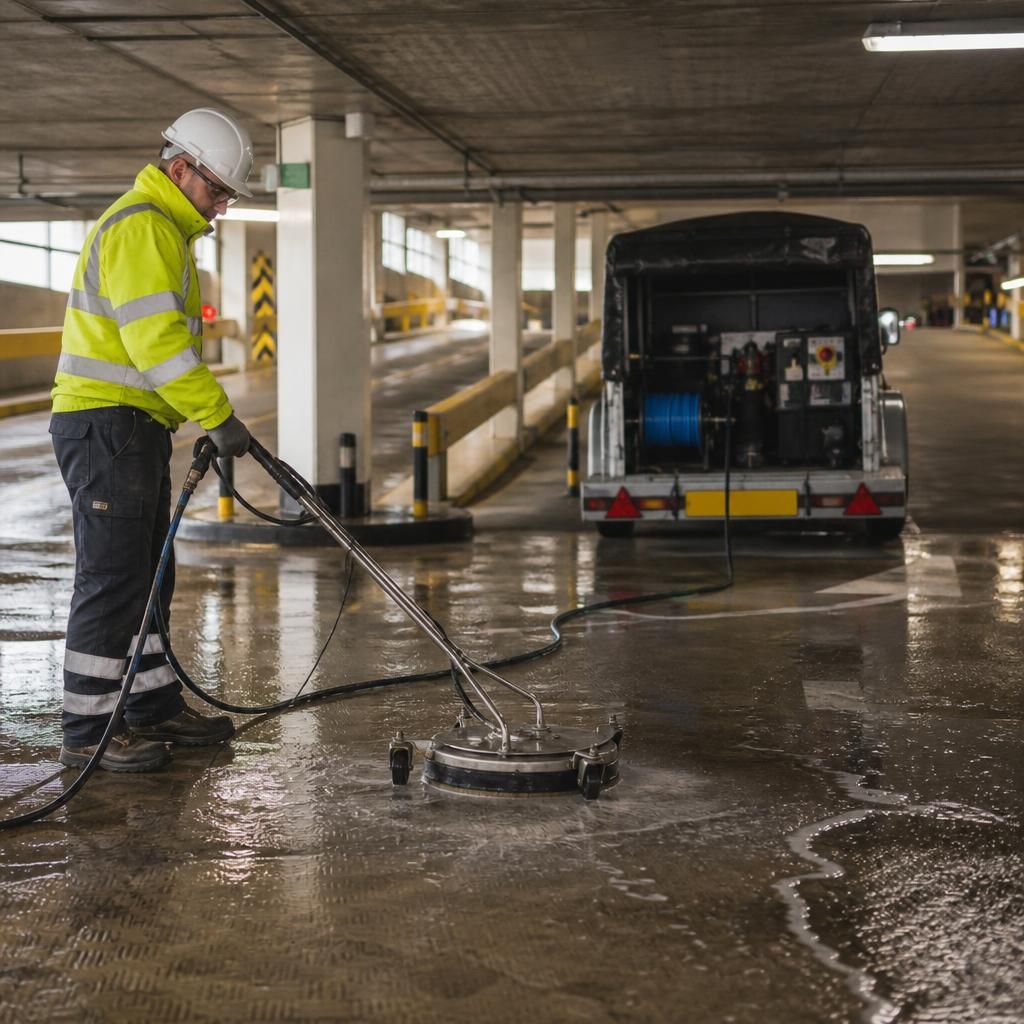
Selecting a professional multi-storey car park cleaning provider means checking that the contractor can produce a site-specific cleaning plan, not simply offer a standard pressure-washing service. The plan should account for the car park’s surfaces, contamination, drainage, traffic movements, ventilation, access restrictions and areas that must remain open.
Before appointing a provider, ask to see how they will:
- Inspect concrete, coatings, line markings, ramps, stairwells and drainage channels before cleaning.
- Protect drains and recover or control contaminated wash water.
- Separate operatives from vehicles and pedestrians with suitable barriers and signage.
- Choose cleaning pressures, temperatures and products that will not damage surfaces.
- Confirm when each area can safely reopen after cleaning.
A clear method statement and completion report provide useful evidence that the work has been planned properly and that any defects identified during cleaning have been reported separately.
Request a Site-Specific Car Park Cleaning Assessment
Arrange a site-specific assessment for your multi-storey car park to review surfaces, contamination, drainage, access and traffic-management requirements before cleaning begins.
Contact Encanto Exterior Cleaning to discuss a suitable cleaning plan and clear quotation.