
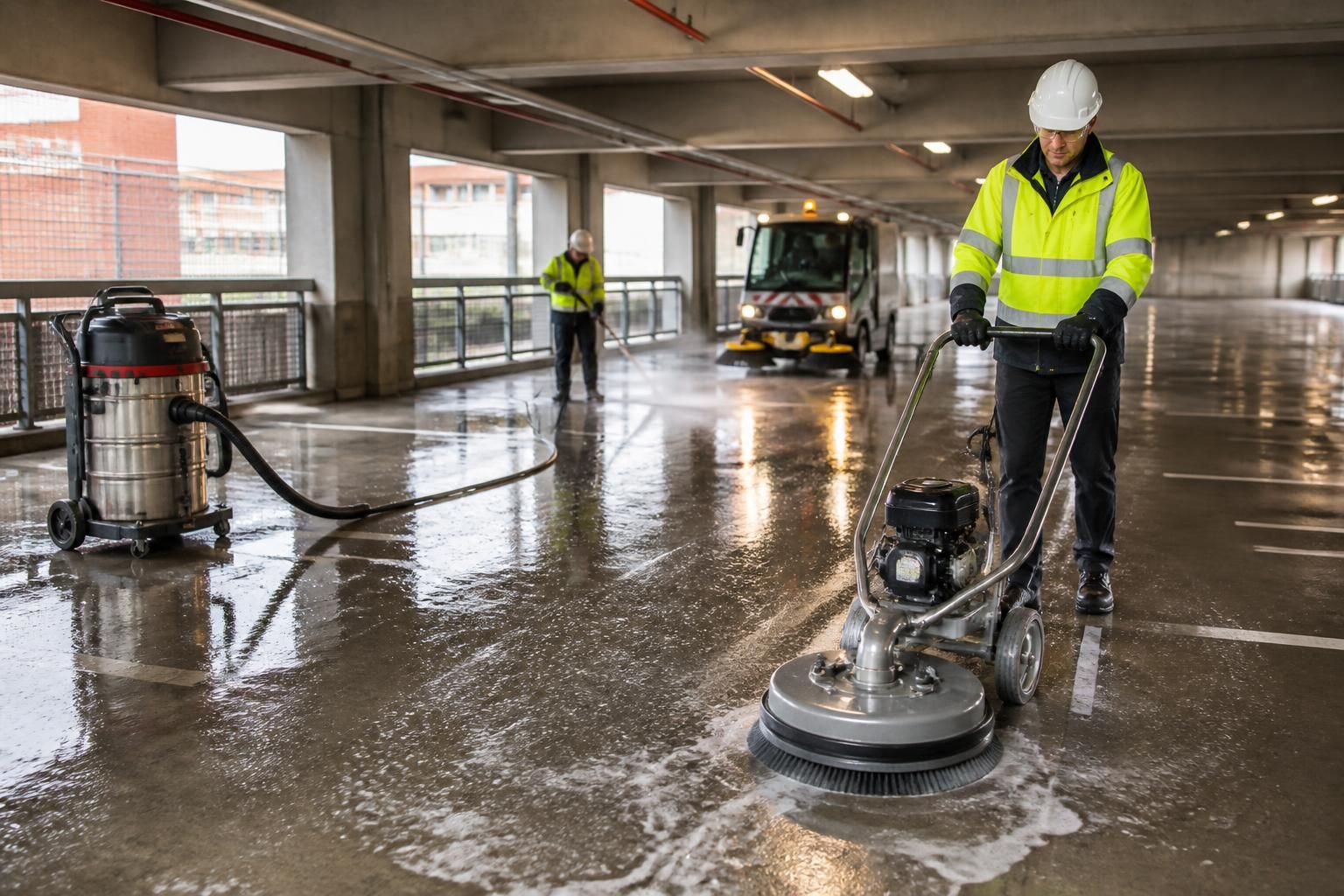
What equipment is typically used for cleaning multi-storey car parks?
Multi-storey car park cleaning typically uses industrial pressure washers, rotary surface cleaners, wet vacuums, mechanical sweepers and scrubber-dryers. Where façades, high-level areas or difficult access points require attention, trained operatives may also use steam-cleaning equipment, water-fed systems and suitable powered access equipment.
Multi-storey car park cleaning typically uses a combination of industrial pressure washers, rotary surface cleaners, wet vacuums, mechanical sweepers and scrubber-dryers. The precise equipment depends on the surface, level of soiling, drainage arrangements, ventilation, access restrictions and whether the work involves routine maintenance or deep cleaning.
Industrial pressure washers are used to remove ingrained dirt, traffic film, oil residues, algae, bird fouling and other deposits from concrete decks, ramps, walls and circulation areas. Operatives select the pressure, flow rate and water temperature to suit the surface. Excessive pressure can damage coatings, joints, painted markings or fragile finishes, so the equipment should be used by trained personnel rather than operated at maximum output as a matter of course.
Rotary surface cleaners attach to pressure-washing systems and contain rotating spray bars beneath a protective housing. They distribute cleaning action more evenly than a hand-held lance and help reduce splashback. This makes them particularly useful for broad areas of concrete, ramps and parking bays where a consistent finish is required. The correct head size and operating speed are important because lingering over one area can mark some surfaces.
Mechanical sweepers and vacuum sweepers remove loose debris before wet cleaning begins. They can collect grit, leaves, sand, broken glass, litter and accumulated dust from driving lanes, bays, stair approaches and kerb lines. Pre-sweeping prevents solid debris from blocking drainage channels and reduces the amount of material that must be handled by wet-cleaning equipment.
Scrubber-dryers are often used for internal decks, pedestrian routes and other relatively level surfaces. These machines apply cleaning solution, agitate the surface with brushes or pads, then recover the dirty water through a vacuum system. They are useful where the car park needs to be returned to service promptly, as they leave less standing water than conventional hose-down cleaning. Brush type, pad choice and chemical strength should be matched to the floor finish and the level of contamination.
Wet vacuums and water-recovery equipment collect slurry and contaminated water after pressure washing or localised spill treatment. Recovery is particularly important where wastewater could reach public drainage, neighbouring property, pedestrian routes or vehicle access points. Depending on the site, recovered water may be filtered, contained and removed in accordance with the agreed environmental controls.
Steam-cleaning equipment may be selected for targeted treatment of oil marks, chewing gum, grease, exhaust deposits and other stubborn contamination. Steam can reduce the need for chemical products in suitable applications, but it still requires careful control around painted surfaces, sealants, electrical fittings and areas where heat or moisture could cause damage. It is generally used as a complementary method rather than for every part of a large deck.
For façades, cladding, stairwells, soffits and high-level features, contractors may use water-fed poles, telescopic cleaning systems and low-pressure rinsing equipment. These systems allow operatives to clean some elevated areas from a safer position at ground or deck level. They are not suitable for every structure, particularly where heavy deposits need mechanical agitation or where the required reach creates a risk of uncontrolled water discharge.
Powered access equipment, such as mobile elevating work platforms, may be required for high walls, ceilings, signage, ventilation structures or enclosed ramps. The choice of platform depends on the available headroom, deck loading, surface gradient, turning space and the position of vehicles or pedestrians. Access equipment must be operated by competent, authorised personnel and incorporated into a site-specific method statement. In some locations, extension poles or fixed access systems are preferable to bringing a platform into a confined area.
Other supporting equipment is essential to a controlled operation. This can include:
- hoses, pressure lances, spray bars and adjustable nozzles for controlled water application;
- chemical dosing systems for applying suitable detergents or degreasers at a consistent concentration;
- drain covers, bunding, silt socks and temporary containment equipment where wastewater needs to be controlled;
- portable lighting and inspection tools for poorly lit decks, corners, plant areas and drainage channels;
- barriers, cones, warning signs and pedestrian-management equipment to separate work areas from users;
- personal protective equipment, including suitable footwear, gloves, eye and hearing protection, and task-specific protective clothing.
Equipment selection should always follow a site assessment. A contractor will normally consider the construction and condition of the deck, drainage routes, electrical installations, ventilation, water and power availability, cleaning windows, traffic movement and the type of deposits present. For example, a sweeper and scrubber-dryer may be appropriate for routine internal maintenance, while pressure washing with water recovery may be better suited to heavy contamination on open decks. High-level cleaning may require an access system, whereas lower-level features could be treated with a telescopic pole.
Well-maintained equipment is as important as the equipment category itself. Hoses, cables, recovery systems, filters, brushes, nozzles and safety controls should be checked before use. Operators should also test the chosen method on a discreet area where there is a risk of affecting coatings, line markings or joint sealants. This approach helps achieve a consistent clean while protecting the car park structure, controlling wastewater and keeping the facility safe for workers and users.
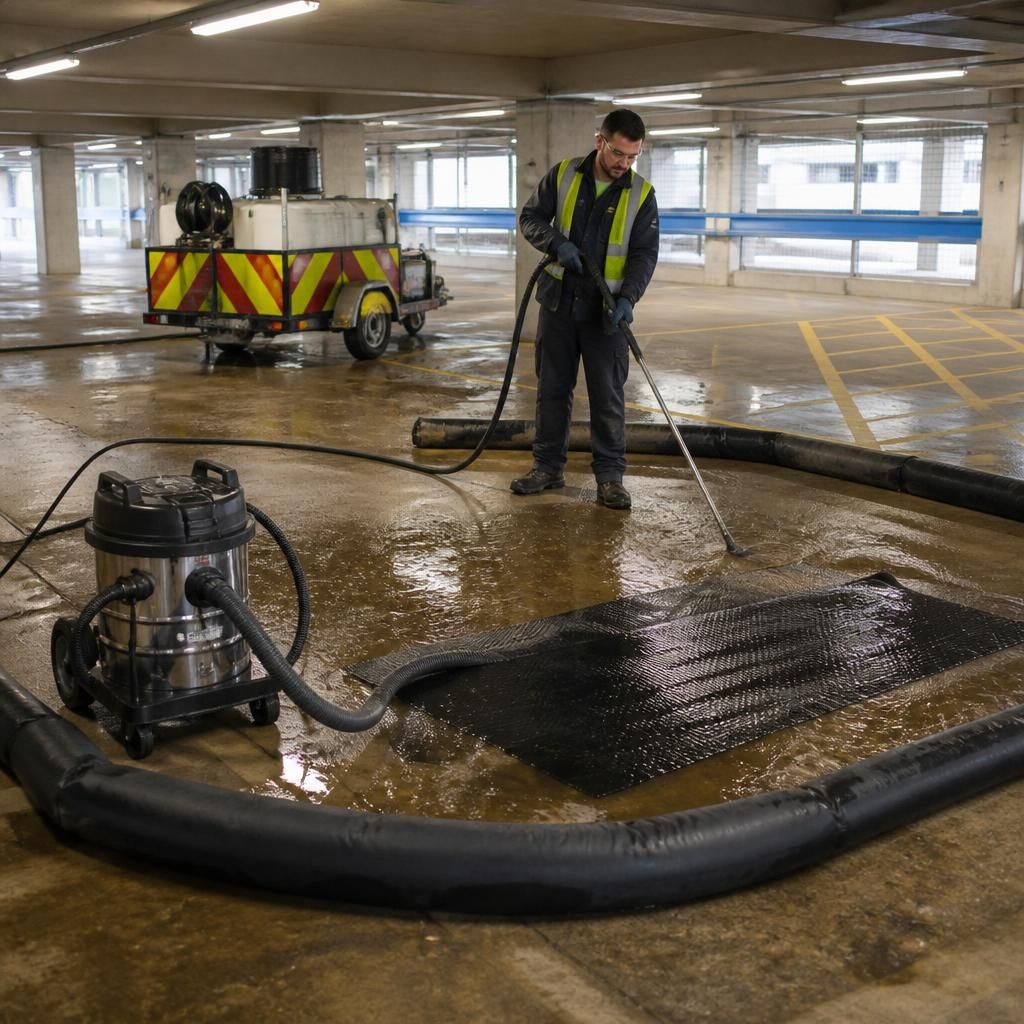
Water-recovery equipment is a key part of multi-storey car park cleaning, particularly when pressure washing removes oil, grit and other contaminated residues. Wet vacuums, recovery mats, silt socks and temporary bunding help collect slurry before it reaches pedestrian routes, neighbouring property or drainage systems.
The recovery method should be selected after checking the car park’s falls, gullies, drainage connections and discharge requirements. Recovered water may need to be filtered, contained and removed from site rather than released directly into surface-water drainage. This allows pressure washing and localised spill treatment to be carried out in a controlled way while reducing slip hazards and protecting the surrounding environment.