
What are the environmental considerations when cleaning multi-storey car parks?
The environmental considerations of multi-storey car park cleaning include controlling water use, selecting suitable low-impact cleaning agents, and preventing contaminated runoff from entering drains or watercourses. Professional cleaning should also use efficient equipment, recover or contain wastewater where necessary, and dispose of sludge, litter and chemical residues responsibly.
The main environmental considerations in multi-storey car park cleaning are reducing water and chemical use, preventing contaminated runoff, protecting drainage systems and disposing of recovered waste lawfully. A responsible cleaning plan considers the surface, the type of contamination, the available drainage and the condition of the wastewater before work starts.
Car parks commonly contain oil residues, fuel, brake dust, tyre particles, road grit, litter and accumulated sediment. Pressure washing can mobilise these pollutants, allowing them to enter surface-water drains, foul drainage systems or nearby watercourses. Cleaning therefore needs to be controlled rather than treated as a simple wash-down operation.
Water use and recovery
Water consumption should be kept to the lowest practical level without compromising the cleaning result. This can involve using equipment with controlled flow, selecting the correct pressure and nozzle, pre-sweeping loose debris and treating heavily soiled areas locally rather than washing the entire structure unnecessarily. Steam cleaning or other low-water methods may be suitable for particular stains and sensitive areas.
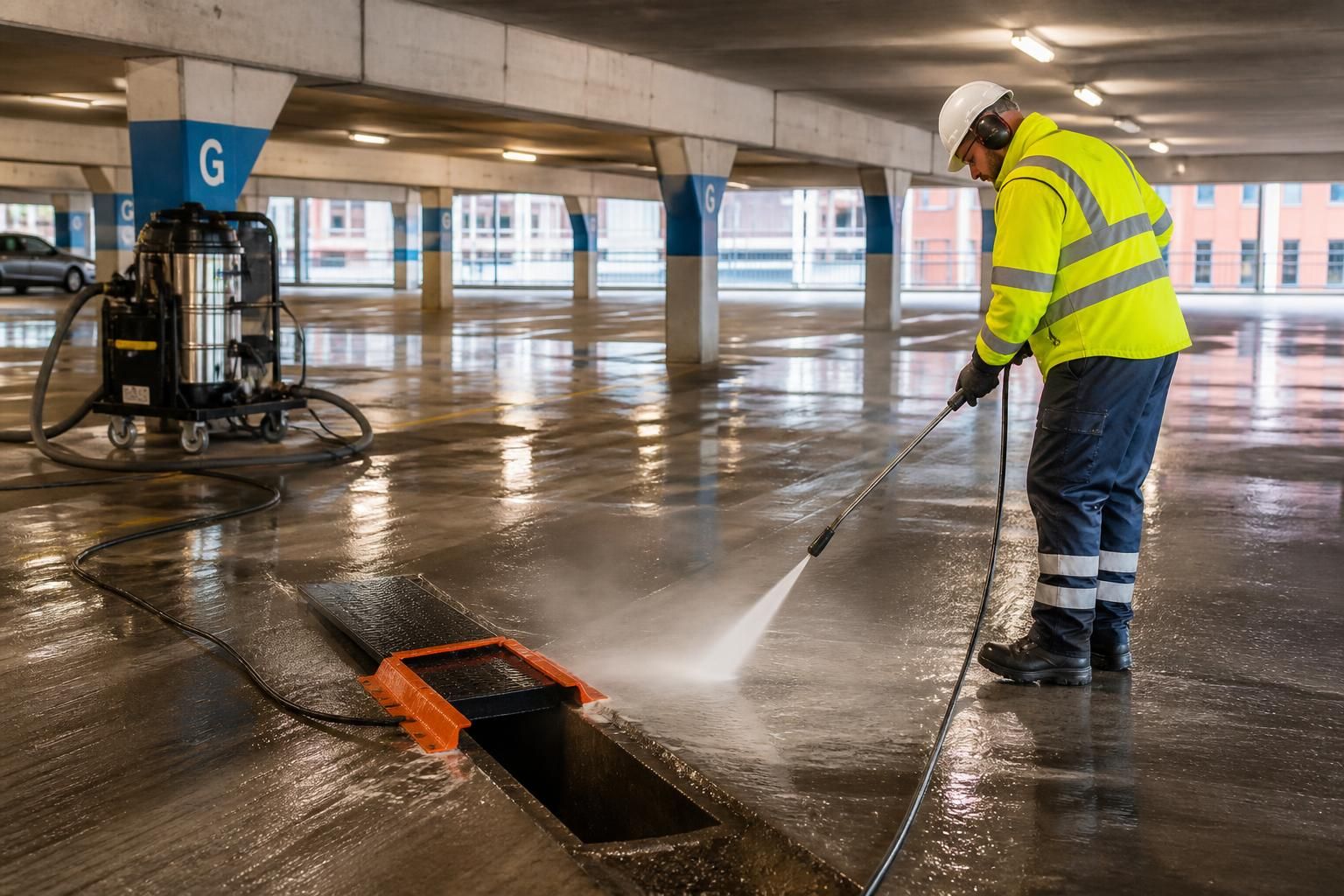
Where wash water is likely to contain oil, silt, detergents or other pollutants, it should be contained and recovered using appropriate wet-vacuum systems, drain covers, bunding or temporary barriers. The cleaning team should confirm where recovered water will go before work begins. It should not be directed into a surface-water drain simply because that drain is nearby.
Drainage and runoff control
Drainage arrangements vary between car parks. Some drains discharge to foul sewers, while others lead directly to surface-water systems. The responsible contractor should identify gullies, channels, sumps, interceptors and discharge points, and establish whether permission or a trade effluent arrangement is required. Local water and environmental authorities may impose specific requirements, particularly where contaminated water could reach a watercourse.
Oil separators and drainage interceptors should not be assumed to make all cleaning water safe for discharge. They need to be suitable for the contamination present, maintained correctly and used in accordance with their design. Silt, sludge and settled residues should be removed without allowing them to be flushed through the drainage network.
Choice and control of cleaning chemicals
Cleaning agents should be selected for the material being treated and the type of contamination present. Using a stronger product than necessary can increase environmental risk and may damage concrete, coatings, painted surfaces, sealants or metalwork. Products should be used at the correct dilution, prevented from spreading beyond the work area and rinsed or recovered in accordance with their instructions.
Biodegradable or low-impact labelling does not automatically mean that a product is suitable for unrestricted discharge. The product’s safety data, intended application, dilution requirements and disposal instructions should all be considered. Chemicals should be stored securely, with measures in place to prevent spills reaching drains. Staff should also understand the relevant control measures under the Control of Substances Hazardous to Health requirements.
Protection of surfaces and the surrounding area
Environmental responsibility includes preventing avoidable damage that creates additional waste or requires premature replacement. The cleaning method should be matched to the surface, whether it is exposed concrete, painted steel, cladding, blockwork, resin flooring or a previously sealed finish. Excessive pressure, aggressive chemicals and uncontrolled abrasion can remove coatings and release additional material into the wastewater.
Overspray should be controlled around entrances, planted areas, neighbouring properties, ventilation openings and pedestrian routes. Any nearby landscaping, water features or habitats should be protected from dirty water and chemical drift. Cleaning may need to be scheduled around rain, strong wind or periods of heavy use so that runoff and disruption can be managed properly.
Waste handling and disposal
Collected wastewater, oil-contaminated sludge, silt, litter, absorbent materials and chemical residues should be classified and handled appropriately. Waste must be stored securely, transferred using suitable containers and passed to an authorised waste carrier or disposal facility where required. It should never be tipped onto unmade ground, into a surface-water drain or into a watercourse.
Where practical, the waste hierarchy should guide the work: prevent contamination first, minimise the volume produced, recover reusable materials where appropriate and dispose of unavoidable waste responsibly. Keeping transfer notes, waste descriptions and disposal records provides a clear audit trail for the property owner or facilities manager.
Planning a lower-impact cleaning operation
Before cleaning starts, the contractor should document the method, equipment, chemicals, drainage controls, wastewater arrangements and emergency spill procedure. A site inspection should identify oil build-up, blocked gullies, damaged drainage, vulnerable finishes and locations where water cannot be safely contained. The plan should also explain how the car park will be kept operational while avoiding unnecessary vehicle movements and repeat cleaning.
After the work, drains, sumps and surrounding areas should be checked for residual sediment, chemical traces and escaped runoff. Any spill or discharge should be reported and managed promptly under the site’s environmental procedures. This approach reduces pollution risk while still delivering the level of cleanliness needed for a safe, presentable and well-maintained multi-storey car park.
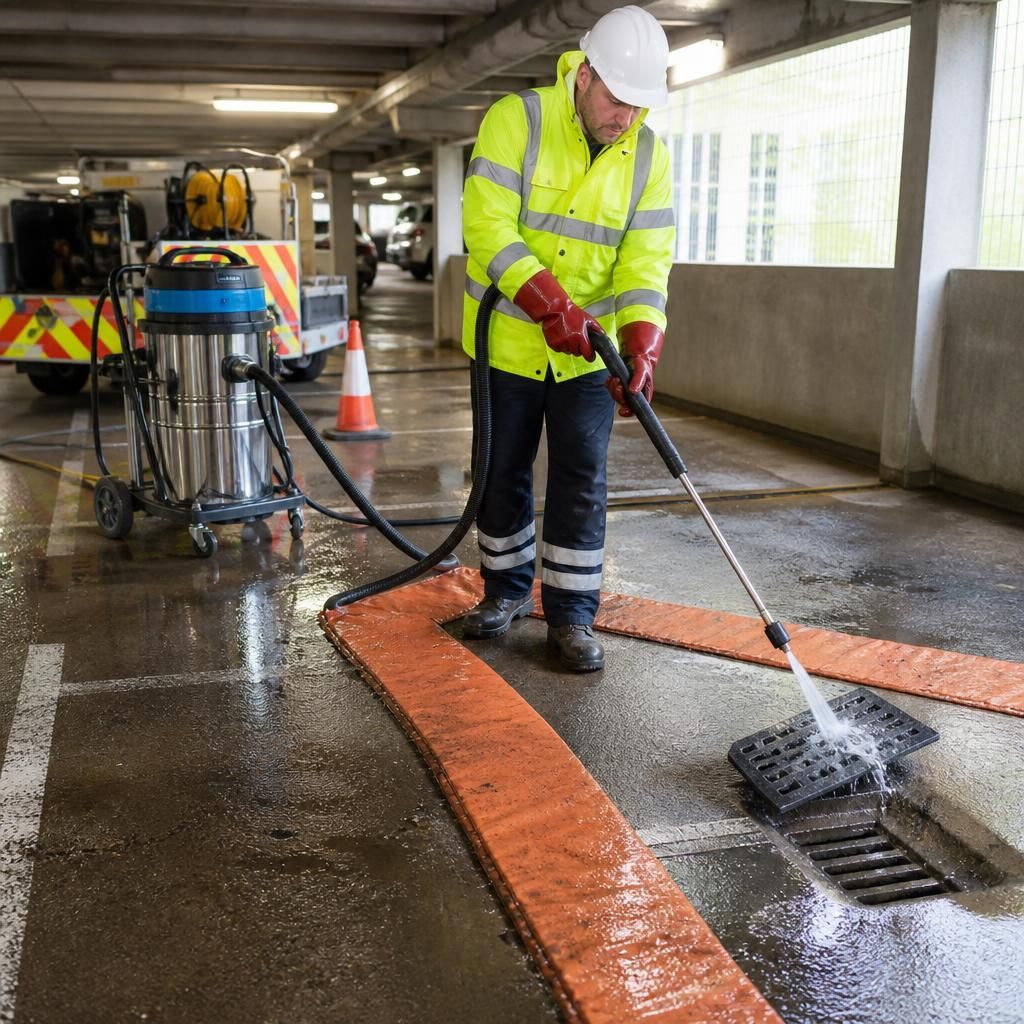
Controlling wastewater is one of the most important environmental measures when cleaning a multi-storey car park. Pressure washing can carry oil, fuel residue, brake dust, silt and cleaning chemicals into drainage systems, so dirty water should be contained, recovered or discharged only through an approved route.
Before work begins, the cleaning team should identify gullies, channels, sumps, oil separators and discharge points. Drain covers, temporary barriers and wet-vacuum equipment can help prevent polluted water entering surface-water drains. Recovered water and contaminated sludge should be stored securely and transferred for appropriate disposal through authorised arrangements. An interceptor should not be treated as permission to discharge without checking its condition, capacity and intended use.
This approach reduces pollution risk while protecting the drainage system and providing the facilities manager with a clear record of how wastewater and collected residues were handled.