
What are the environmental considerations involved in multi-storey car park cleaning?
Environmental considerations in multi-storey car park cleaning include controlling water use, preventing contaminated runoff from entering drains, and selecting cleaning products and methods that minimise harm to surrounding areas. Professional cleaning should also manage wastewater responsibly, reduce chemical use where possible, and use targeted pressure washing or steam cleaning to achieve effective results with fewer environmental impacts.
Environmentally responsible multi-storey car park cleaning depends on controlling water use, containing contaminated runoff, limiting chemical use and disposing of wastewater and solid waste correctly. A professional cleaning plan should remove oil, grime, traffic film, algae and staining without allowing pollutants to enter surface-water drains, soil, watercourses or neighbouring premises.
Water use and method selection
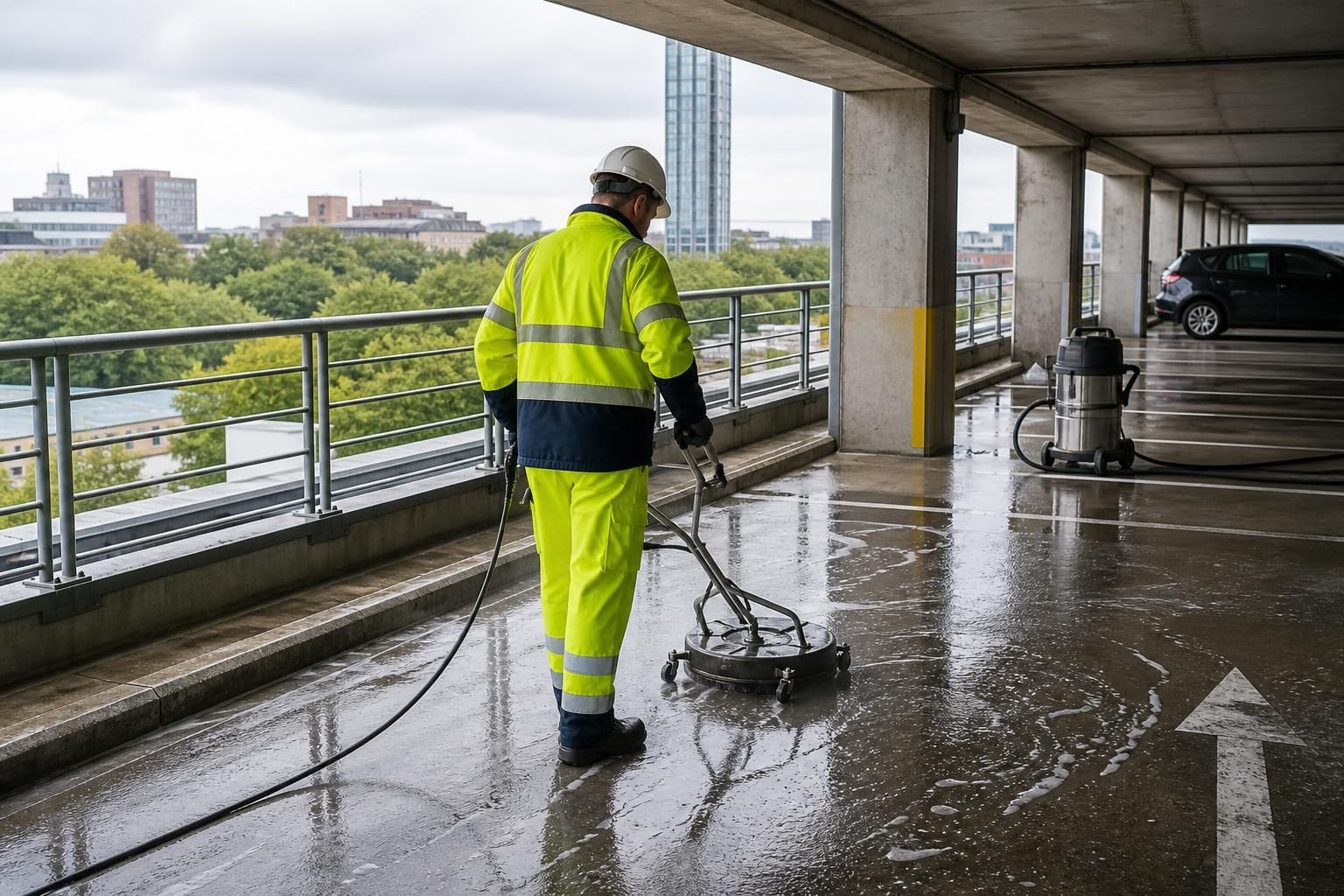
Water consumption should be proportionate to the condition and size of the car park. Targeted pressure washing, rotary cleaning and steam cleaning can remove specific deposits more efficiently than uncontrolled hosing. Operators should use suitable equipment settings, work in manageable sections and avoid repeatedly cleaning areas that do not require the same level of treatment.
Steam cleaning can be useful where deposits need to be softened or where a lower-volume process is appropriate. Pressure washing remains effective for larger areas, but the pressure, flow rate and nozzle selection must be matched to the surface. This protects coatings and concrete while helping to avoid unnecessary water use. Dry brushing, scraping or vacuuming loose debris before washing can also reduce the amount of water and detergent required.
Runoff and drain protection
Water from car parks can contain oil, fuel residues, brake dust, rubber particles, dirt, metals and cleaning chemicals. It should not be allowed to flow untreated into surface-water drainage systems, where it may reach local watercourses. Before work begins, the drainage layout should be identified and relevant outlets protected with suitable drain covers, berms or other containment equipment.
Cleaning should be carried out in controlled sections so that dirty water can be directed towards an agreed collection point. Wet vacuums, recovery systems and temporary bunding can help capture slurry and wastewater rather than allowing it to spread across ramps, pedestrian routes or external ground. Any oil separators or interceptors serving the site should be considered during planning, but they should not be treated as a substitute for proper containment and wastewater recovery.
Responsible use of cleaning chemicals
Cleaning products should be selected according to the deposit, surface and disposal arrangements. Using a stronger chemical than necessary can increase environmental risk and may damage concrete, paint, protective coatings, vehicle barriers or drainage components. Where a detergent or degreaser is required, the operator should follow the manufacturer’s instructions for dilution, contact time, handling and disposal.
Biodegradable or lower-impact products may be suitable in some circumstances, but the term “eco-friendly” does not mean that a product can be discharged without controls. Even products described in these terms can affect aquatic environments or contravene site drainage requirements. Chemical selection should therefore be considered alongside wastewater capture, the material safety data and the receiving facility’s requirements.
Wastewater disposal
Recovered wastewater and sludge should be treated as potentially contaminated until its contents have been assessed. It must be stored securely, kept separate from clean water where necessary and transferred through an appropriate disposal route. Discharging wash water to foul or surface-water drainage should only take place where it is permitted and compatible with the site’s drainage arrangements and local requirements.
Records of the cleaning method, products used, waste transfer arrangements and any discharge permissions can provide useful evidence that the work was planned and completed responsibly. Where contamination is significant, specialist advice may be needed before wastewater is removed or discharged.
Preventing damage to surfaces and surrounding areas
Environmental performance also includes avoiding premature replacement of building materials. Excessive pressure, unsuitable chemicals and prolonged saturation can damage concrete, joints, membranes, coatings, paintwork and drainage fittings. A controlled method that preserves these materials reduces repair work, material consumption and associated waste.
Cleaning teams should check for vulnerable areas such as expansion joints, waterproofing systems, electrical equipment, ventilation openings, planted areas and neighbouring façades. Any required pre-treatment should be tested in an inconspicuous location before wider application. This helps identify whether a lower-impact technique can achieve the required result without unnecessary chemical or water use.
Energy, emissions and disturbance
Pressure washers, steam equipment, lighting and access machinery all use energy or fuel. Planning the work efficiently can reduce unnecessary running time, transport movements and idling. Equipment should be maintained so that it operates effectively, and electric or lower-emission equipment may be appropriate where the site’s power supply, ventilation and operating conditions allow.
Noise, spray drift and exhaust emissions should also be controlled, particularly in enclosed car parks, residential locations and areas close to offices, schools or public footways. Work sequencing, ventilation and suitable operating hours can reduce disturbance while maintaining safe conditions for workers and car park users.
Waste and site housekeeping
Collected silt, leaves, packaging, used absorbents, disposable filters and empty chemical containers should be separated where practical and handled through suitable waste streams. Oil-affected absorbents and sludge may require different handling from ordinary litter or recyclable packaging. Waste should not be swept into drains or left where it can be washed away during rainfall.
Good housekeeping also reduces the risk of accidental spills. Chemicals, fuel and recovered wastewater should be secured during the cleaning operation, and spill response materials should be available. Any spill should be contained promptly and reported in line with the site’s procedures.
Planning a lower-impact cleaning programme
The most sustainable approach is usually a planned maintenance programme rather than infrequent intensive cleaning. Regular removal of loose debris, oil deposits and organic growth can prevent heavy build-up and make each visit more controlled. The programme should reflect the car park’s traffic levels, construction, drainage, exposure to weather and history of contamination.
Before starting, the contractor and site representative should agree the areas to be cleaned, water and power availability, drainage controls, access arrangements, wastewater collection and disposal responsibilities. A site inspection is particularly important where the car park has open sides, underground levels, sensitive surroundings, oil separators or drainage that is not clearly marked.
For multi-storey car park cleaning across Birmingham, the West Midlands or elsewhere in the UK, environmental controls should be included in the method statement and risk assessment rather than added after work has begun. This ensures that the chosen pressure washing, steam cleaning or recovery process is suitable for the surfaces and that water, chemicals, wastewater, waste and emissions are managed from preparation through to completion.
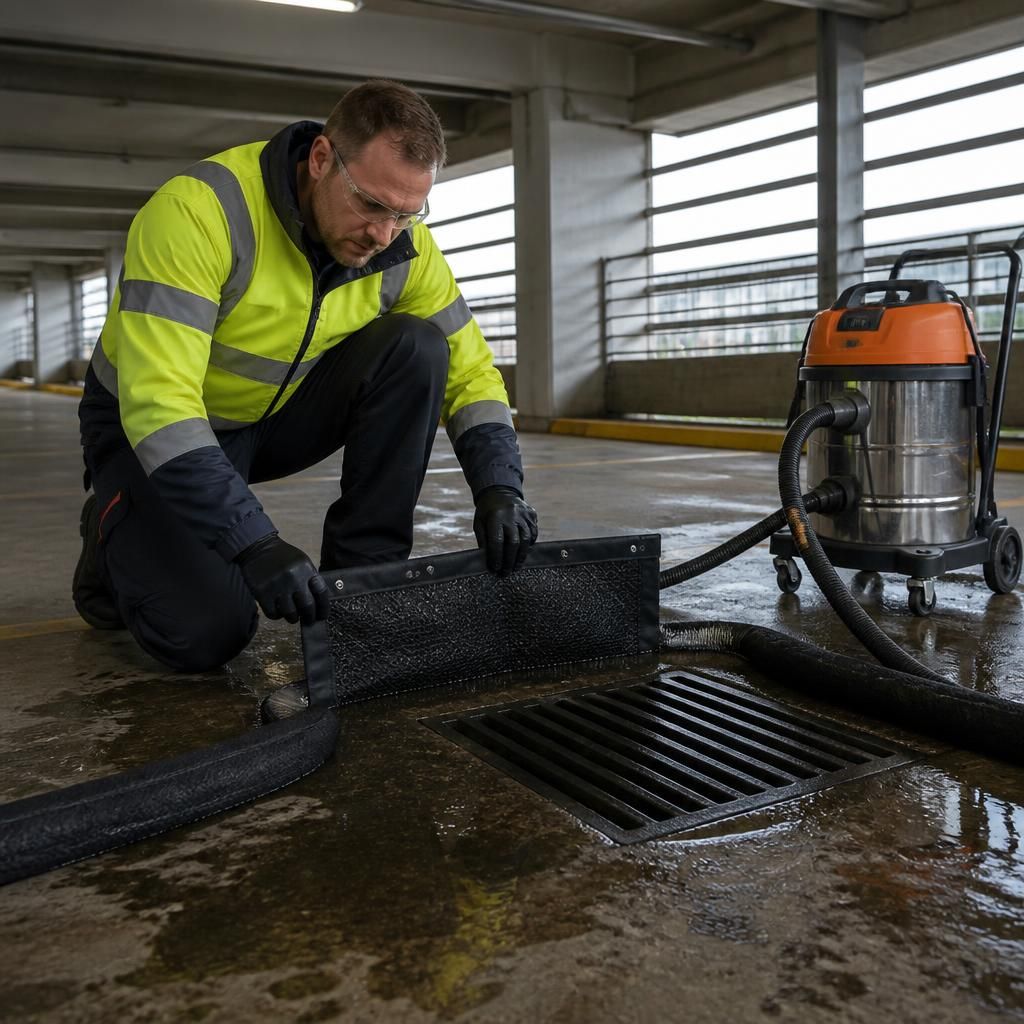
Controlling contaminated runoff is one of the most important environmental considerations in multi-storey car park cleaning. Wash water can contain oil, fuel residues, brake dust, rubber particles, sediment and cleaning chemicals, so it should not be allowed to enter surface-water drains or flow into surrounding ground.
Before cleaning begins, the drainage layout should be checked and vulnerable outlets protected with suitable drain covers, bunds or other containment equipment. Work can then be completed in manageable sections, using wet vacuums or recovery systems to collect wastewater and slurry. Recovered waste should be stored securely and transferred through an appropriate disposal route, with any discharge carried out only where it is permitted by the site’s drainage arrangements and local requirements.
Plan environmentally responsible car park cleaning
Speak to Encanto Exterior Cleaning about planning environmentally responsible multi-storey car park cleaning, including runoff control, wastewater recovery and suitable low-impact methods. We can assess your site and agree a cleaning approach that protects surfaces and surrounding drainage.