
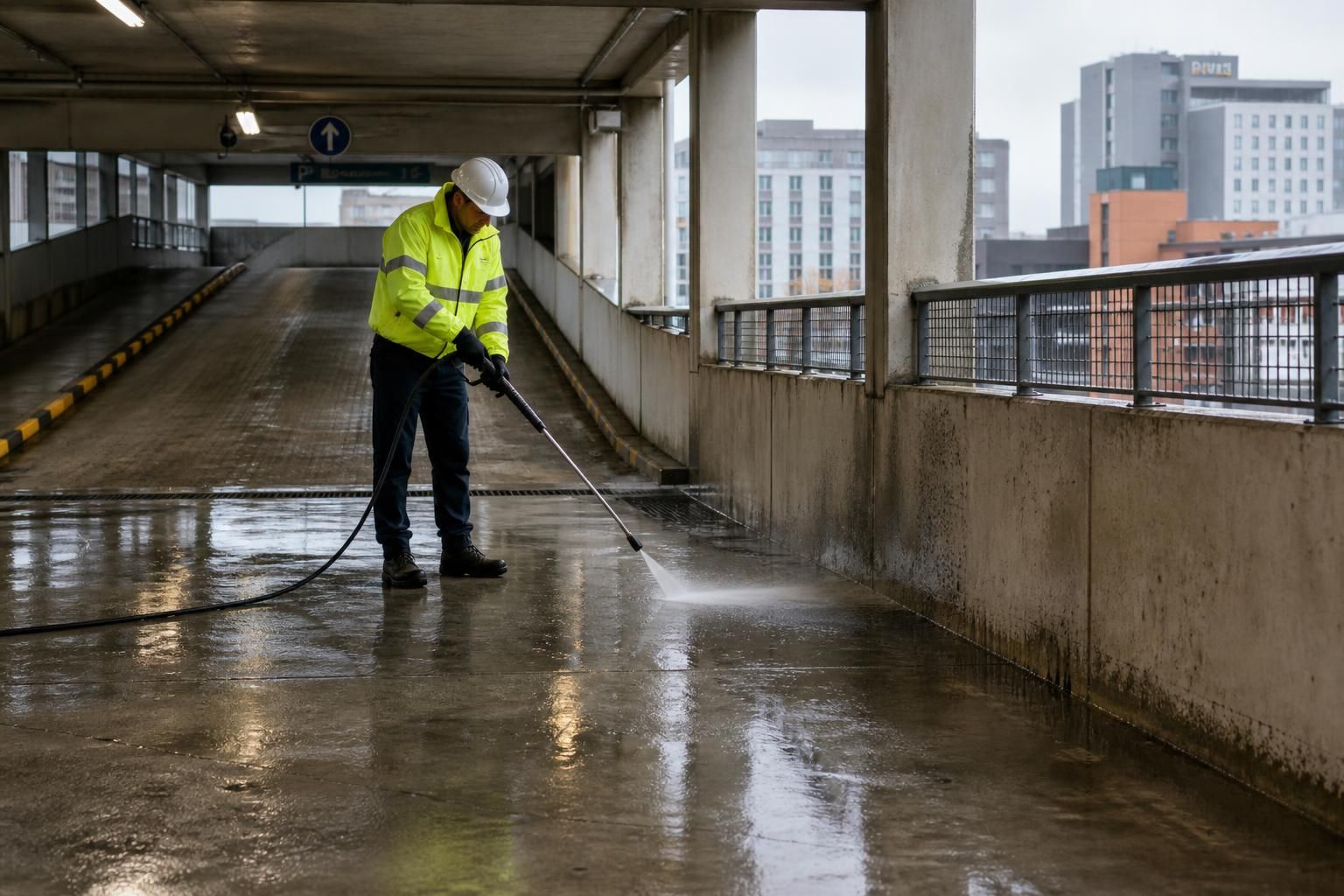
What are the benefits of using professional cleaning services for multi-storey car parks?
Professional cleaning services for multi-storey car parks remove oil, grime, debris, algae and other contaminants that can create slip hazards, damage surfaces and reduce the quality of the environment. Specialist equipment, trained operatives and safe working procedures also help protect the structure, maintain its appearance, minimise disruption and extend the service life of floors, ramps, walls and drainage areas.
Professional cleaning services help keep multi-storey car parks safe, presentable and operational by removing contaminants that routine sweeping or occasional in-house cleaning may not address. Specialist operatives can clean vehicle decks, ramps, bays, walkways, stairwells, walls, façades, drainage channels and other high-use areas using methods suited to the surface and the level of contamination.
Improved safety for drivers and pedestrians
Oil, diesel, coolant, rubber deposits, dirt and organic growth can reduce traction, particularly on ramps, turning areas and pedestrian routes. Wet weather can make these contaminants more hazardous. Professional cleaning removes accumulated residues and loose debris, helping to reduce slip and skid risks when the correct cleaning method is used.
Cleaning also improves visibility by removing dirt from signs, kerbs, columns, lighting surrounds, stairways and access routes. Clearer markings and unobstructed walkways make it easier for users to navigate the structure and identify changes in level or traffic flow. Spillages and heavily contaminated areas can be treated as part of a planned maintenance programme or addressed promptly when a specific risk is identified.
Protection of floors and structural surfaces
Contaminants left on concrete, asphalt, resin, painted surfaces or metalwork can contribute to deterioration. Oils may penetrate porous materials, while trapped grit can increase abrasion under vehicle and pedestrian traffic. Organic matter and standing water can also encourage staining and biological growth.
Professional cleaners assess the surface before work starts and select appropriate pressure, temperature, cleaning agents and recovery methods. This helps remove contamination without unnecessarily damaging coatings, joints, drainage components or vulnerable finishes. Regular cleaning does not replace structural inspections or repairs, but it can support a wider maintenance strategy by keeping surface defects and drainage issues easier to identify.
Better appearance and user experience
A clean car park presents a more professional environment for staff, customers, residents and visitors. Removing oil marks, tyre deposits, grime, algae, litter and graffiti improves the appearance of parking bays, ramps, walls, stairwells and entrance areas. Clean line markings, signs and directional features are also easier to see.
Appearance is particularly important where a car park serves offices, retail premises, residential developments, hospitals, transport facilities or public buildings. Consistent cleaning helps maintain the standard of the wider property and can reduce complaints associated with neglected or unpleasant communal areas.
More effective drainage and water management
Leaves, litter, silt and other debris can collect around gullies, channels and outlets. If these areas become restricted, water may remain on decks and ramps for longer, increasing slip risks and contributing to staining, frost damage or deterioration of adjacent materials.
Cleaning teams can remove surface debris and identify visible blockages, pooling and areas where water is not draining as expected. Wastewater and extracted debris should be managed in accordance with site requirements and applicable environmental controls. Cleaning is not a substitute for drainage maintenance, but it can form part of a planned approach to keeping drainage routes functioning effectively.
Longer-lasting finishes and reduced maintenance pressure
Removing abrasive debris and corrosive residues before they build up can help protect concrete, protective coatings, painted metalwork, barriers and other finishes. A cleaner surface also makes it easier to spot damaged coatings, failed sealants, cracks, corrosion or potholes before they become more difficult to manage.
This supports planned maintenance because repairs can be prioritised using a clearer view of the car park’s condition. It may also reduce the need for aggressive remedial cleaning when contamination has been allowed to accumulate over a long period. The appropriate cleaning frequency depends on traffic levels, weather exposure, the type of contamination and the condition of the surfaces.
Access to specialist equipment and trained operatives
Multi-storey car parks contain confined areas, sloping ramps, low-clearance sections, elevated decks and surfaces with different cleaning requirements. Professional contractors have access to commercial pressure-washing and steam-cleaning equipment, water recovery systems, scrubber-dryers and suitable access equipment where required.
Trained operatives can adjust the method to the task rather than applying the same pressure or chemical treatment throughout the site. They can also plan hose routes, equipment movements, wastewater recovery and work zones to reduce risks to people, vehicles and the building.
Reduced disruption to car park operations
Professional cleaning can be planned around occupancy, peak traffic, access arrangements and other contractors working on site. Areas may be cleaned in sections, with suitable signage, barriers and temporary closures used to separate operatives from vehicles and pedestrians.
Clear planning helps maintain access while allowing contaminated or wet surfaces to be isolated until they are safe to use. For larger projects, the work schedule can be coordinated with inspections, line-marking, repairs or other planned maintenance, reducing repeated closures.
More controlled environmental performance
Specialist cleaning can provide better control over water use, cleaning products and wastewater than informal or poorly planned washing. Operatives can use targeted cleaning methods, recover dirty water where appropriate and prevent contaminated runoff from entering unsuitable drainage systems. Any detergents should be selected for the surface and contamination, used according to their instructions and handled in line with site and environmental requirements.
Overall, professional multi-storey car park cleaning combines safety improvement, surface care, appearance management and operational planning. The greatest benefit comes from treating cleaning as part of ongoing facilities maintenance, supported by site-specific risk assessments, suitable equipment, documented procedures and a schedule based on how the car park is used.
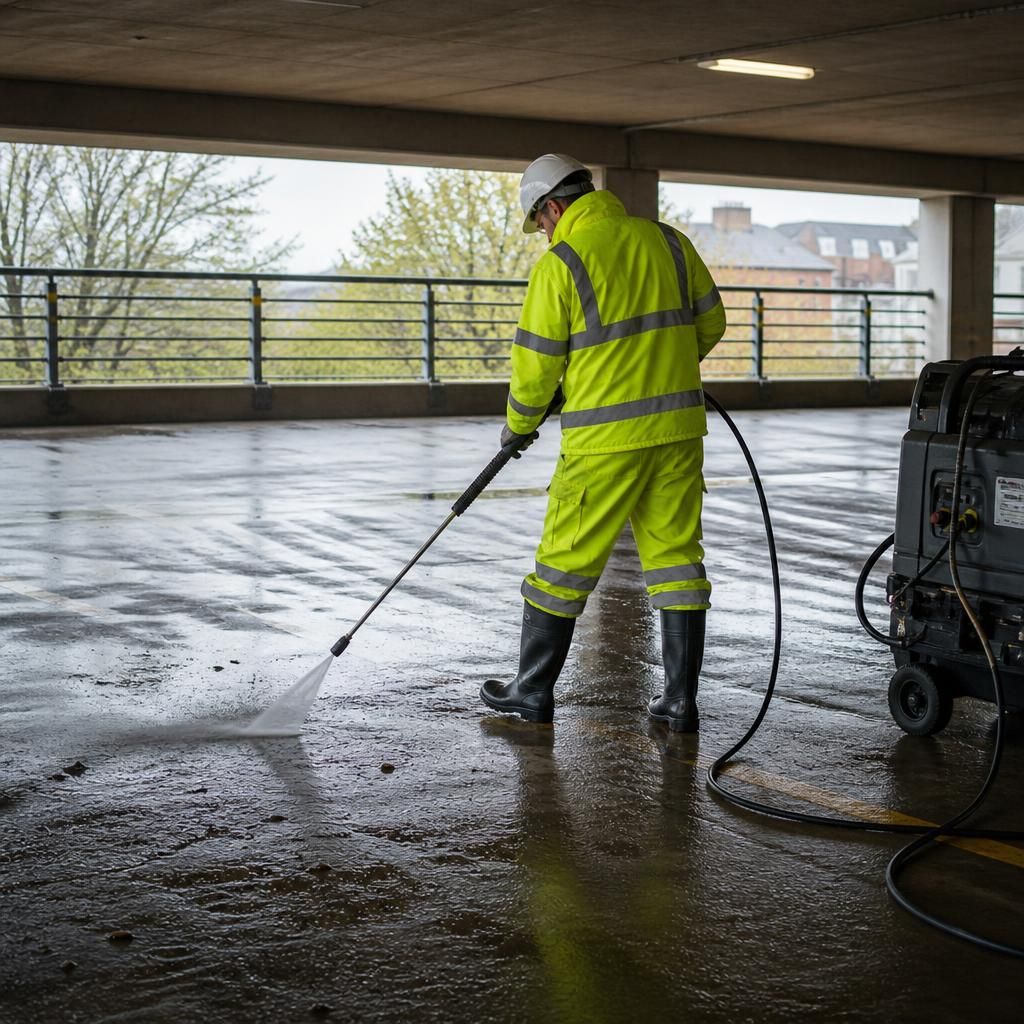
Professional cleaning helps protect multi-storey car park surfaces by removing oil, grit, silt and organic contamination before it contributes to staining, abrasion or deterioration. Using a method suited to the deck, ramp, coating or drainage area reduces the risk of damage caused by excessive pressure, unsuitable chemicals or poorly controlled water.
Cleaning also gives maintenance teams a clearer view of the structure. Once deposits and debris have been removed, visible issues such as blocked channels, standing water, coating failure, corrosion, cracks or damaged joint sealants are easier to identify and address through planned maintenance.
Request a professional multi-storey car park cleaning quote
Contact Encanto Exterior Cleaning to discuss your multi-storey car park cleaning requirements and request a site-specific quote. We can recommend a suitable cleaning programme based on the surfaces, contamination levels, access arrangements and operational needs of your site.