
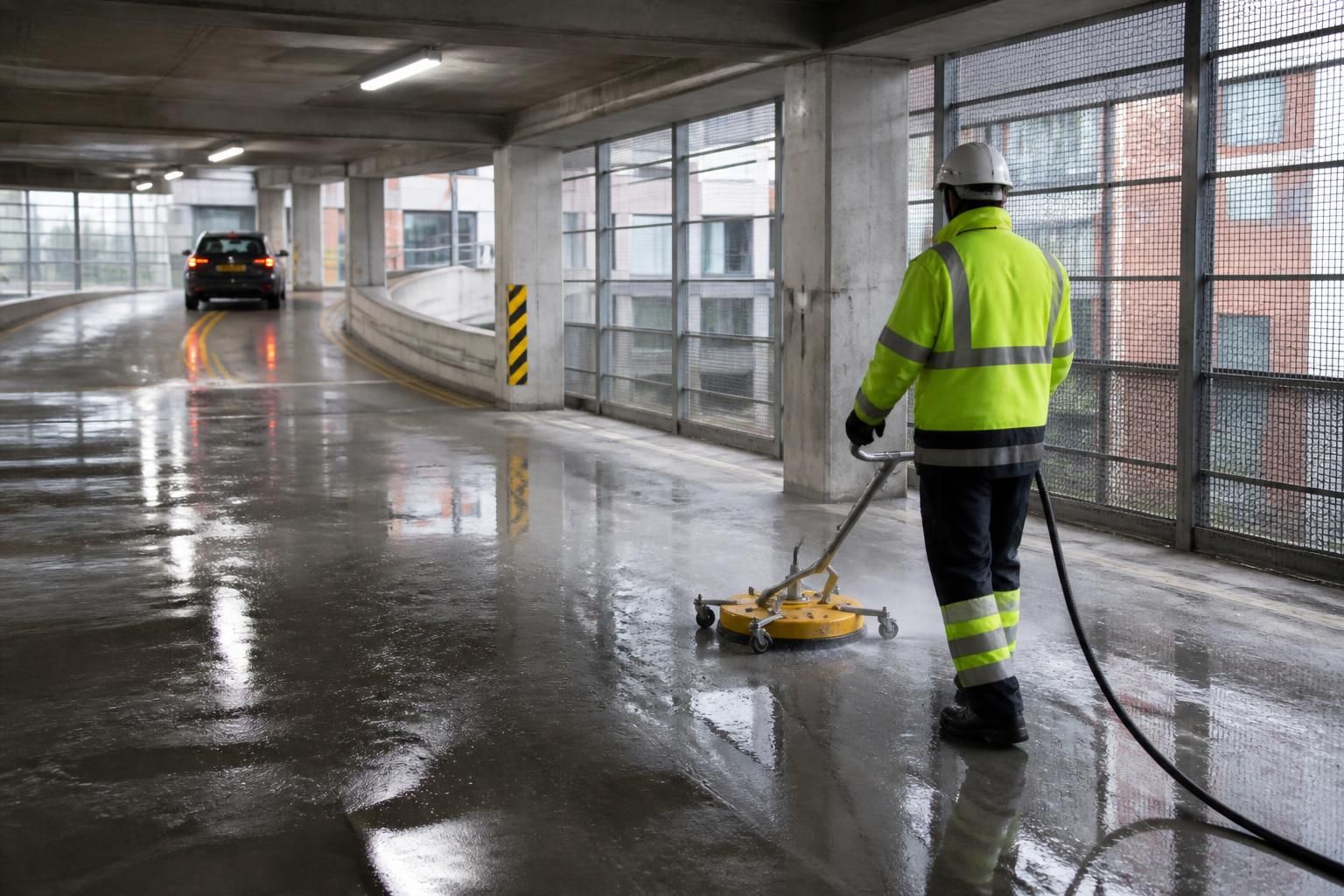
How often should multi-storey car parks undergo professional cleaning to maintain optimal safety and aesthetics?
Most multi-storey car parks benefit from professional cleaning at least quarterly, with more frequent visits where there is heavy traffic, food or oil contamination, adverse weather, or a high risk of slip hazards. Supplement scheduled deep cleaning with regular inspections and prompt treatment of spills, graffiti, blocked drainage and heavily soiled areas to maintain safety, protect surfaces and preserve a professional appearance.
Most multi-storey car parks should receive a professional deep clean at least quarterly, with more frequent cleaning where traffic levels, contamination or weather conditions create additional safety and appearance risks. This scheduled work should be supported by routine inspections, prompt spill removal and targeted treatment of graffiti, oil deposits, blocked drainage and heavily soiled areas.
There is no single cleaning interval that suits every car park. The appropriate frequency depends on how the site is used, the condition of its surfaces and the level of risk presented by accumulated dirt or contamination. A busy facility serving a town centre, hospital, transport hub or retail destination will usually need a more demanding programme than a lightly used private car park.
Factors that determine cleaning frequency
- Vehicle and pedestrian traffic: Frequent use introduces dust, grit, rubber residue, fuel traces and general debris. It also increases the amount of dirt carried between parking decks, ramps, stairwells and pedestrian routes.
- Type of contamination: Oil, diesel, hydraulic fluid, food waste and chewing gum require more than routine sweeping. If left untreated, some deposits can create slip hazards, attract further dirt or become more difficult to remove from concrete and coated surfaces.
- Weather exposure: Rain can wash contaminants into drainage channels, while wind can carry leaves and litter into corners and gullies. Frost, ice treatments and wet conditions can also increase the need for inspection and cleaning of ramps, entrances and walking routes.
- Location and surrounding activity: Sites near construction works, industrial premises, busy roads or trees may accumulate dust, mud, debris and organic matter more quickly than enclosed or sheltered facilities.
- Surface and building design: Open-sided decks, exposed ramps, textured concrete, painted bays and protective coatings each retain dirt differently. Poorly draining areas may require more frequent attention than surfaces that shed water effectively.
- Appearance requirements: A car park attached to offices, retail premises, hotels or managed residential developments may need more regular façade, entrance, lift lobby and stairwell cleaning to maintain the expected standard for visitors and occupiers.
A practical cleaning programme
A quarterly professional clean is a useful starting point for many sites. It allows accumulated grime to be removed before it becomes embedded and provides regular opportunities to identify defects, drainage problems and areas where contamination is recurring. However, a quarterly visit should not replace day-to-day housekeeping or localised response work.
High-use or high-risk facilities may require monthly or otherwise more frequent deep cleaning. This may be appropriate where there are persistent oil deposits, frequent spills, high pedestrian use, food outlets nearby, significant seasonal debris or a history of slip incidents. Conversely, a lower-use site may be able to operate with less frequent full cleaning if inspections confirm that surfaces remain safe and presentable.
Cleaning frequency should also be reviewed after changes to the site, such as increased occupancy, construction activity, resurfacing, revised traffic arrangements or the introduction of electric vehicle charging areas. New sources of dirt or fluid leakage can alter the maintenance requirement.
What should happen between professional cleans?
- Inspect ramps, pedestrian routes, staircases, lift entrances and payment areas regularly.
- Remove oil, fuel and other liquid spills as soon as they are identified.
- Keep drainage channels, gullies and grilles clear of leaves, litter and sediment.
- Arrange prompt removal of graffiti before it becomes more difficult to treat or affects the wider appearance of the facility.
- Record recurring contamination so that the underlying cause, such as a leaking vehicle, damaged drainage point or waste problem, can be addressed.
- Use suitable warning signs and restrict affected areas where cleaning or contamination creates a temporary hazard.
Routine inspections are particularly important after heavy rain, freezing conditions, storms, events or periods of unusually high occupancy. They help identify hazards that may develop between planned visits and provide evidence that the site is being actively maintained.
Seasonal considerations
Cleaning plans should be adjusted throughout the year. Autumn often brings increased leaves and organic debris, while winter can introduce grit, salt residues, mud and water carried into the structure by vehicles. Spring cleaning may be useful for removing winter deposits, and summer inspections should consider dust, pollen, food-related waste and increased visitor activity. Open-sided car parks may need additional attention after storms or periods of strong wind.
Why consistent frequency matters
Regular professional cleaning helps control slip risks, preserve concrete and coated surfaces, maintain drainage performance and prevent contamination from becoming harder to remove. It also supports a consistent standard across decks, ramps, entrances, stairwells, lift areas and external approaches. Leaving deep cleaning until the site looks visibly neglected can increase the scope of work and may require more intensive methods.
The most effective approach is a site-specific maintenance schedule based on traffic, contamination, surface type, drainage, weather exposure and the required presentation standard. For many multi-storey car parks, quarterly professional cleaning combined with frequent inspections and immediate treatment of hazards provides a sound baseline. The schedule should then be increased or reduced in response to actual site conditions, inspection records and operational requirements.

A quarterly professional deep clean is a practical baseline for many multi-storey car parks, but the correct interval depends on traffic, contamination, weather exposure, drainage and the required presentation standard. Busy facilities, sites near construction or food outlets, and car parks with recurring oil or fuel deposits may need more frequent cleaning.
Scheduled cleaning should be supported by regular inspections and prompt spill removal between visits. Ramps, pedestrian routes, stairwells, lift entrances, payment areas and drainage channels require particular attention because accumulated grit, fluids, leaves and sediment can create safety hazards. Reviewing inspection records helps adjust the cleaning programme to the car park’s actual operating conditions.