
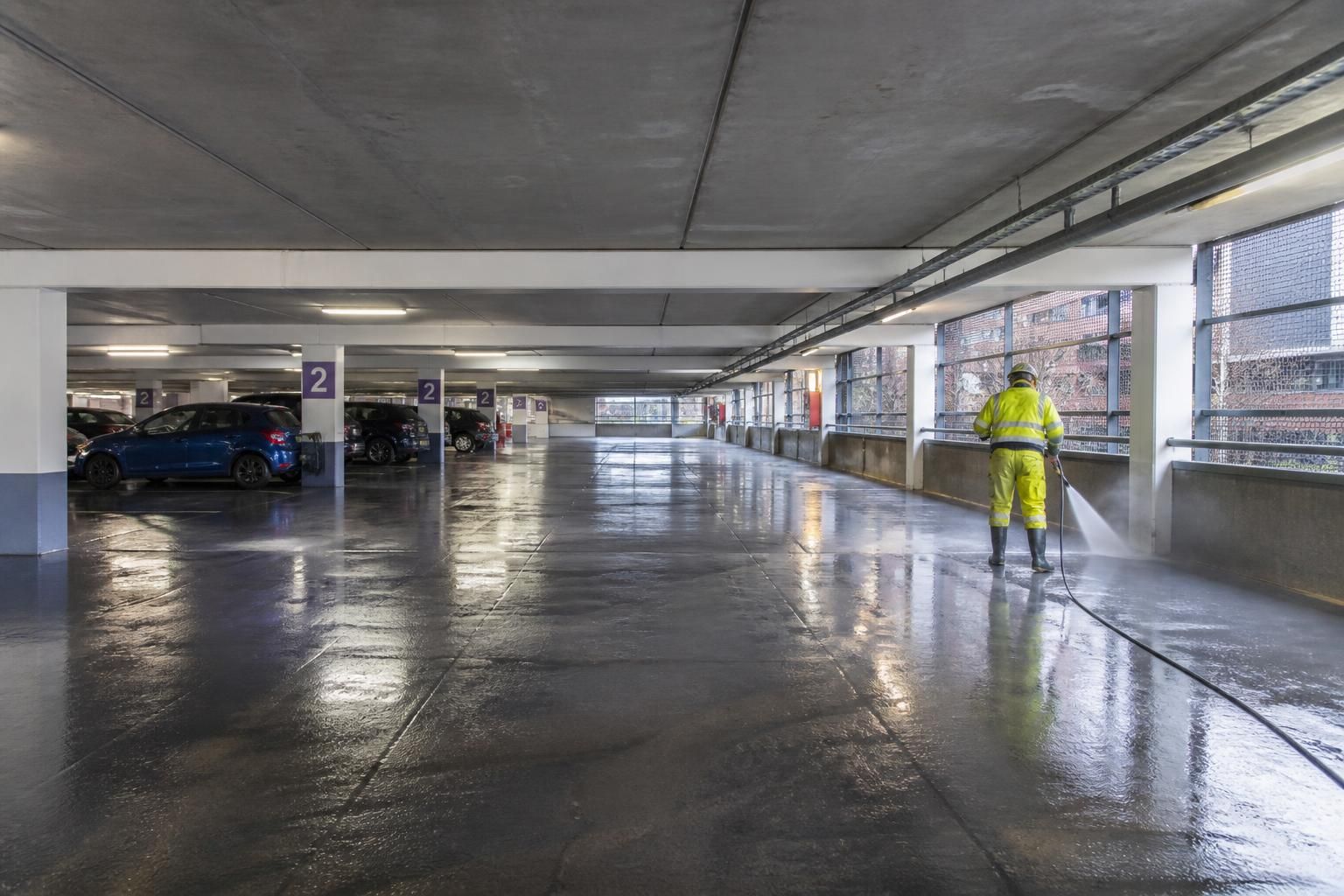
How can regular maintenance of multi-storey car parks enhance user satisfaction and operational efficiency?
Regular maintenance of multi-storey car parks improves user satisfaction by keeping driving surfaces, pedestrian areas, lighting surroundings and signage clean, safe and presentable. It also supports operational efficiency by helping identify defects early, reducing disruption, protecting building materials and maintaining reliable access for users, contractors and emergency services.
Regular maintenance of a multi-storey car park improves user satisfaction by keeping driving surfaces, pedestrian routes, lighting surroundings and signage clean, safe and presentable. It also improves operational efficiency by identifying defects early, reducing unplanned closures, protecting building materials and maintaining dependable access for visitors, contractors and emergency services.
Maintenance should combine planned cleaning with routine inspections and timely remedial work. Cleaning removes the deposits that affect safety and appearance, while inspections help operators identify problems that require a specialist contractor, such as damaged concrete, failed joints, blocked drainage, corrosion, defective lighting or deterioration to protective coatings. Cleaning does not replace structural surveys or engineering inspections, but it provides an important opportunity to observe the condition of accessible areas.
How maintenance improves the user experience
- Cleaner driving and walking surfaces: Removing oil, fuel residue, rubber deposits, mud, litter and general grime creates a more orderly environment and helps reduce the risk of slips in pedestrian areas. Spillages should be dealt with promptly because some contaminants can become more difficult to remove and may affect surface condition if left in place.
- Better visibility and wayfinding: Clean walls, columns, kerbs, signs, arrows and bay markings are easier to see. Clear directional information helps drivers find entrances, exits, payment areas, lifts, stairwells and accessible spaces without unnecessary circulation.
- A more professional environment: Stained surfaces, graffiti, overflowing waste and heavy dust can make a facility appear neglected. Regular removal of these issues gives users a clear indication that the site is monitored and managed.
- Improved perception of safety: Good lighting is essential, but the areas around light fittings, ceilings and walls must also be kept sufficiently clean for the facility to look well maintained. Clean sightlines and unobstructed routes can make it easier for users to move confidently through the building.
- More reliable access: Keeping ramps, entrances, exits and pedestrian routes free from debris supports smoother movement and reduces the likelihood that a local issue will require an area to be cordoned off.
These improvements are particularly important for facilities used by commuters, shoppers, residents, hospital visitors, staff and delivery drivers. Users generally expect a car park to be clean, easy to navigate and free from avoidable hazards. Small defects or cleanliness issues can have a disproportionate effect on their view of the wider property.
How maintenance improves operational efficiency
- Fewer reactive call-outs: A planned programme gives the operator a structured way to deal with dirt, staining, graffiti, blocked drainage and minor defects before they become urgent problems. This helps reduce disruption and makes expenditure easier to plan.
- More efficient cleaning operations: Cleaning can be scheduled around occupancy, traffic patterns and other site activities. Areas can be managed in zones, with suitable access equipment and cleaning methods selected in advance. This reduces unnecessary movement of equipment and limits interference with users.
- Reduced closure requirements: When routine work is carried out before contamination becomes severe or drainage problems worsen, fewer areas may need to be taken out of service. Where temporary restrictions are necessary, advance planning allows the operator to communicate them and maintain safe alternative routes.
- Protection of surfaces and building components: Oil, de-icing residues, bird fouling, pollutants and persistent moisture can contribute to staining, corrosion or deterioration of some materials. Appropriate cleaning helps prevent deposits from remaining on surfaces for extended periods. The method must be matched to the substrate, as excessive pressure or unsuitable chemicals can cause damage.
- Better records and asset planning: A consistent maintenance schedule creates useful evidence about recurring staining, drainage performance, graffiti locations and areas of accelerated wear. This information can inform budgets, repairs, refurbishment decisions and future cleaning frequencies.
Drainage is a particularly important part of car park maintenance. Leaves, silt, litter and surface deposits can obstruct gullies, channels and outlets, allowing water to collect on decks, ramps or pedestrian routes. Standing water can increase slip risk, inconvenience users and expose concrete, joints and other components to prolonged moisture. Cleaning teams should report blocked or damaged drainage rather than assuming that washing alone will resolve the issue.
Planned maintenance also supports safe traffic management. Before work begins, the operator and contractor should agree the working areas, vehicle and pedestrian routes, access restrictions, signage, barriers and emergency arrangements. Cleaning activities may involve water, hoses, machinery, pressure, steam or elevated access equipment, so users should be separated from the work wherever practicable. Scheduling work during quieter periods can reduce conflict with traffic, but it should not replace proper segregation and supervision.
The maintenance approach should be based on the condition and use of the facility. A busy car park with open sides, exposed ramps, food outlets nearby, construction activity or a history of oil contamination may need more frequent attention to particular areas than a lightly used, enclosed facility. Entrances, ramps, payment areas, lift lobbies, stairwells, pedestrian crossings, drainage points and accessible bays often require specific monitoring because they experience concentrated use or have a direct effect on user safety.
Effective maintenance is not simply a matter of making every surface look uniformly clean. The contractor should assess the material, identify the type of contamination and select a process that removes it without damaging concrete, painted finishes, coatings, metalwork, cladding, line markings or drainage systems. Water recovery and responsible disposal should also be considered where contaminated wash water is produced. Any defects discovered during the work should be clearly documented with their location, condition and recommended follow-up.
For operators, the most useful outcome is a repeatable maintenance process: inspect the facility, prioritise hazards and defects, clean using suitable methods, record findings, complete necessary repairs and review the programme against actual site conditions. This approach keeps the car park more presentable for users while reducing avoidable disruption and helping the asset perform reliably over the long term.
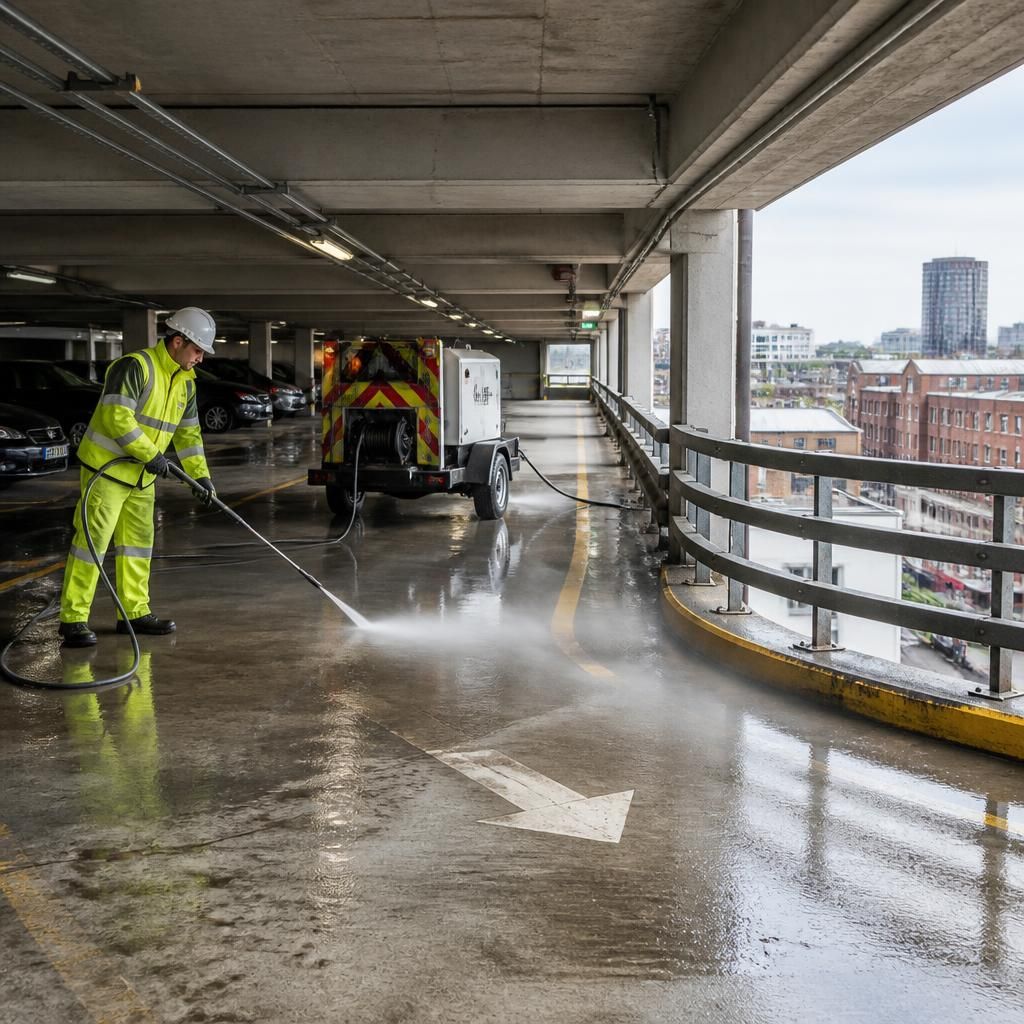
Regular maintenance of a multi-storey car park is a planned combination of cleaning, inspection and timely remedial work that keeps the facility safe, accessible and operational. It helps operators address oil residues, litter, graffiti, blocked drainage and surface deterioration before these issues require urgent closures or cause avoidable disruption.
A consistent programme also improves the user experience. Clean ramps, pedestrian routes, bay markings, signs, stairwells and lift approaches are easier to use and navigate. During each visit, accessible areas can be checked for defects such as damaged concrete, failed joints, corrosion, poor drainage or damaged lighting, with findings recorded for follow-up by the appropriate specialist.
Work should be scheduled around occupancy and coordinated with traffic management arrangements. Zoning the work area, providing clear signage and separating users from equipment, hoses and wash water allows cleaning to proceed efficiently while maintaining safe alternative routes where required. This planned approach gives operators better control of maintenance costs, access restrictions and future repair requirements.